

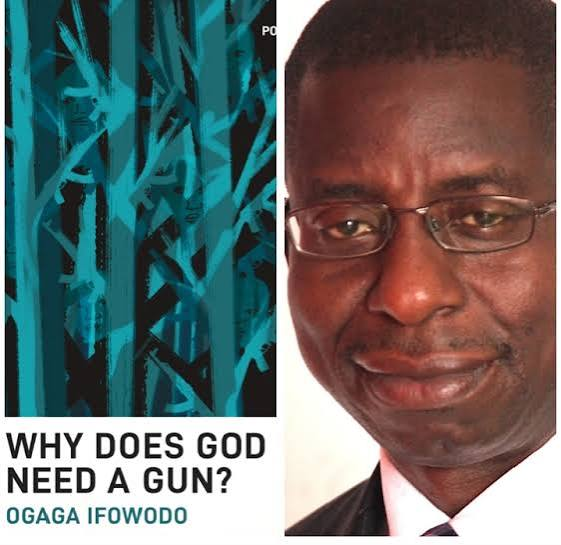
Ogaga Ifowodo is one of Nigeria’s most consequential living poets — a writer whose life and work have been shaped by the very forces he interrogates on the page. Born on 14 May 1966 in Oleh, Delta State, he studied law at the University of Benin before spending eight years as a rights activist with Nigeria’s foremost human rights group, the Civil Liberties Organisation. Between 1997 and 1998, he was arrested and held in solitary confinement by General Sani Abacha’s military regime, without access to family, lawyers, or doctors, following his return from the Commonwealth Heads of Government Summit in Edinburgh where he had been part of the campaign for stronger sanctions against the military dictatorship and return to civil rule. He was never officially charged. He received the PEN/Barbara Goldsmith Freedom to Write Award and the Free Word Award of Poets of All Nations, The Netherlands, in 1998 while still imprisoned, recognitions that helped secure his release.
Ifowodo’s poetic career began with Homeland and Other Poems, which won the 1993 ANA poetry prize. He followed it with Madiba (2003), winner of the ANA/Cadbury poetry prize, and The Oil Lamp (2005), winner of the ANA/Gabriel Okara prize. A Good Mourning (2016) was shortlisted for the NLNG Nigeria Prize for Literature, and Augusta’s Poodle (2022) was longlisted for the same prize. His work has been translated into German, Dutch, Romanian, Turkish and French, and published in The Times Literary Supplement, Poetry International, AGNI, The Massachusetts Review, Crazyhorse, Presence Africaine, Anthropocene, and English in Africa, among many others. He holds an MFA and a PhD from Cornell University, taught poetry and literature at Texas State University until 2014, and is the author of a scholarly monograph, History, Trauma, and Healing in Postcolonial Narratives (Palgrave Macmillan, 2013).
His sixth collection, Why Does God Need a Gun? (Masobe Books, 2026), has brought him back to the shortlist of the Nigeria prize for literature — this time as one of three finalists from an initial pool of 223 submissions. The book takes the abduction of Leah Sharibu and the Dapchi schoolgirls as its emotional and ethical centre, giving voice to a captive’s interior world with what the prize board called “a rich allegorical style” structured around “body, mind and spirit”. It is a work of imaginative empathy and moral witness and it brings us to this conversation. He spoke to the culture and lifestyle desk led by Adebayo Adegbite

Your poetic career began in 1982 at Federal Government College, Warri, when a senior student asked you to write a poem for an inter-house competition. You’ve said you would institute a poetry prize at FGC Warri if you win the NLNG Nigeria prize for literature. What did that school give you that you could not have found elsewhere, and has this society truly rewarded its storytellers?
It gave me a setting and the opportunity to discover myself as a poet that I may either not have discovered at all or too late. Certainly, my trajectory as a writer would have been different. During that time at Federal Government College, Warri, we had an annual festival of arts and culture, no doubt inspired by the 2nd World Black Festival of Arts and Culture, a remarkable spectacle hosted in Lagos by the Nigerian government, just five years before I entered the school as a boarding student. I had not even thought of stringing two words together for a poem before the sixth former, Uyi Worghiren, who went on to read law, threw me the challenge one evening at our table in the dining hall. That extra-curricular goal of cultivating young students, of stirring their creativity through serious literature and the arts has, I believe, almost totally disappeared from our secondary schools and may never be fully recovered in the age of artificial intelligence, social media characterized by twitch tweeting, trolling, automatic posting for outrage or likes, self-promotion videos and short attention span. It can be said that the information technology revolution apart, society may have gradually ceased to value its literary story-tellers less.
2. Your poem “Sixty Lines by the Lagoon” is dedicated to Odia Ofeimun, and you’ve described meeting him in your second year at Uniben as a pivotal moment. What did Ofeimun give you that was not just encouragement but formation, and has his example, his insistence on poetry as a public act, shaped the way you think about your own responsibilities as a poet?
My response is going to be a bit long, I’m afraid! When a would-be writer meets a literary hero, the impact is often beyond precise description. What he gave me beyond instant validation of my ambition and encouragement was awareness that the writer’s workshop is voracious reading, books she has read, some to be reread, and a never-ceasing desire to read. His was a sort of roadhouse for writers coming or passing through Lagos. By close association with him — I not only bunked in his place at Seriki Aro Street in Ikeja, whenever I was in Lagos but also spent the entire one year of training for the bar at the Nigerian Law School, then only in Victoria Island, in his house — I also had the privilege of meeting many other writers, young and old, in particular Kole Omotoso, Harry Garuba, Femi Osofisan, Niyi Osundare, Ezenwa Ohaeto, Uche Nduka (who bunked there on and off too), Afam Akeh, Carlos Idzia Ahmad, among others. Listening to their discussions, the writers they admired and spoke passionately about, helped shape my inchoate understanding of literature and writing, especially as I was a law student. Then there were the books he directly recommended. I will never forget his reactions to two early poems that I showed him. To the first entitled “Maroko’s Blood, a long poem which I later thought the better of collecting, he said, “Every young poet wants to write a slum poem. Have you read Germinal by Émile Zola?” I had neither seen the book nor heard of any author by that name. Promptly, he went into his bedroom which was more properly a lived-in library and fished the novel out for me to read. The second was the draft of the poem “Greed Will Kill the Beast” which I did collect in Homeland and Other Poems. I had handed it to him by way of greeting in his parlour as he walked towards his bedroom on returning from The Guardian where he was a member of the editorial board. A minute later, the door of his bedroom slammed shut and he came back to the parlour, threw the three to four sheets of paper at me and said, “My friend, if you want to write a letter to the editor, then do so but don’t pretend you are writing a poem.” His exact words. He was not for coddling the young writer or giving detailed feedback on subject, diction, imagery or verse choices but would take the whole thing in a breath and give you his frank opinion. Either brutal admonition or recommendation of a poem or book I needed to read, such as Harry Garuba’s Shadow and Dream, Miroslav Holub’s Selected Poems, Derek Walcott’s The Star-Apple Kingdom (especially the poem “The Schooner Flight”), Rainer Maria Rilke’s Letters to a Young Poet, and so on, as the subject of the moment bid him. Most times, I just feasted on his famous library. But perhaps most important for me was when he published three — or was it two, that was a long time ago — of my poems in the Poet of the Week column of The Guardian which he curated, thus permitting me to dare to dream of becoming a poet one day. I have written in greater detail about what Odia Ofeimun meant to me in the special publication of essays and tributes to mark his 70th birthday, so let me just add that as much as he was eager to encourage me to become a poet, he also wanted to be sure I didn’t fritter away the chance of becoming a lawyer by mooning as a would-be poet. One day, he came back from The Guardian to see my face buried in a tome. “What are you reading?” he asked. Thinking I would impress him, I excitedly answered, War and Peace! He was not impressed, or, if he was, chose to berate me instead! “Young man, I never you see reading a law book. If you don’t finish that law degree of yours, you will never write another poem!” Actually, I had finished the LL.B at the University of Benin and was at the Nigerian Law School for the Barrister at Law or B.L. certification. Or, I should say, was waiting to be admitted as Uniben’s Vice-Chancellor, Prof. Grace Alele-Williams, had withheld my reference form as punishment for my activism as Secretary-General of the Students Union and, ironically enough, for successfully suing her and the university when she expelled me and some other student activists, including the present Senate Majority Leader, Opeyemi Bamidele. I was finally admitted one month to the Bar Exam courtesy of the strenuous intervention of the unforgettable Alao Aka-Bashorun. But as I was saying, Ofeimun had been a little hyperbolic and it didn’t matter if he was unclear about the exact stage of my training as a lawyer. He was just keen to drive home the point, such as when he swore never to host me again if I ever left the campus of the University of Benin and came to Lagos for the “foolishness” of attending poetry readings organised by Naiwu Osahon and his Committee for the Advancement of New Authors! He feared that my desire to be a poet might end up leading me astray from the very thing I aspired to be. His was a tough elder brother’s love and, indeed, I was often mistaken for his younger brother.
A Good Mourning is often read as your most autobiographical collection, moving through childhood, surgery, and the June 12 betrayal. How deliberate was that autobiographical thread? Were you consciously constructing a portrait of the poet as a young Nigerian?
On the contrary, especially in the light of the true autobiographical work, the book that followed, Augusta’s Poodle — although, admittedly, it is a poetic journey to my earliest childhood, up to the point when I entered boarding school at the age of 12, a kind of homage to Rilke. But I can see why it may be seen that way in the light of your description.
In A Good Mourning, you bring together MKO Abiola, Festus Iyayi, Bola Ige, and victims of Rwanda and Auschwitz. You’ve called this “the intimacy of evil.” When you wrote about Abiola — a wealthy businessman who had somehow come to symbolise the pro-democracy struggle — and Iyayi, whom you counted as a comrade and older writer, did the poetry demand a different kind of handling than a poem about a distant atrocity?
Well, Auschwitz-Birkenau was a distant place, even though I visited it in 1999 as guest of PEN Germany to the PEN International conference in Warsaw of that year. With the phrase “the intimacy of evil,” I was consciously hewing very close to Hannah Arendt’s “the banality of evil” which was so apparent in the tragedies that inspire the collection. And, yes, it demanded a different kind of handling, precisely because I was in the heart of the June 12 (1993) civil society struggle for the restoration of the electoral mandate of Abiola, leading to my own detention without trial for six months. To achieve the necessary balance between personal witness and poetic reflection and indirection, I would have to dig even deeper into the prosodic choices available. I think that the poems “A Rwandan Testimony,” “Algiers, April 2000,” “Where is the Earth’s Most Infamous Plot?” and, to a lesser extent, “To Name a Hero” and “The Frightened Tree” (tributes to Festus Iyayi and Bola Ige who were murdered in suspicious circumstances that implicate the Nigerian government), all of which delve in the realm of trauma that is so resistant to transparent representation, demonstrate the extent to which a different handling was demanded of me in that collection.

5. You wrote a poem called “A Good Mourning”, deploying Christian allusions and inverting clear biblical verses into troubling questions. The title poem of the collection, of course, plays on the same irony: “good morning” becoming “good mourning.” Could you talk about how you use that Christian framework of the echo of resurrection, of betrayal, of Pilate and his thirty pieces of silver to interrogate the political betrayal of June 12?
I think you capture it well and there’s really very little else to add. The theme being betrayal spurred by greed, vaulting ambition, duplicitousness and a vicious will to power, the biblical narrative presented the perfect analogue. The fact that it is well known, has entered into world lore, made that choice irresistible. Not to be forgotten is that the dictator, General Ibrahim Babangida, who annulled the election, was Abiola’s very good friend, that Abiola had at first been hesitant to embrace the only practical option of resistance, with the masses already called into the streets by the Campaign for Democracy (CD), because he thought that his good friend would surely not betray him by upholding the annulment.

The judges noted your use of multiple voices in A Good Mourning. What force can poetry bear upon the nation outside of memory? Is the poem’s work simply to remember, or can it do something else like indict, console, transform?
I think that implicit in memory kept alive is indictment, consolation and transformation. To remember an atrocity is to indict those who committed it, empathise with and console the victims or survivors, and to point towards transformation by the sheer fact of the indictment implicit in the preservation of the memory of it. That, for instance, is the reason for physical monuments and memorials to such atrocities, such crimes against humanity, as the slave trade and the Jewish Holocaust.
You’ve described the writing of Why Does God Need a Gun? as emerging from the story of Leah Sharibu, and you’ve said the question at the heart of the book is one that Leah herself asks. But Leah is a composite figure in your book, not just the actual Leah Sharibu. What were the ethical considerations in giving voice to a girl who is still, as far as we know, in captivity?
Yes, she is a composite figure, the symbol, the poster-child, of the countless victims of the peculiar inhumanity and evil of the Islamic terrorists of Al-Qaeda in Africa and its affiliates — the Islamic State of West Africa Province (ISWAP) as well as its Nigerian offspring, Jama’atu Ahlis Sunna Lidda’awati Wal-Jihad, more properly known as Boko Haram (Book is Forbidden). Her extraordinary courage in rejecting the offer of freedom on the condition that she renounce her Christian faith and adopt that of her captors deserves celebration a million times over, in her own (assumed) voice and in a medium, a book, to spite her captors. She reminds me so strongly of Nelson Mandela who turned down the offer of personal liberty several times unless all of his fellow prisoners would also be released and apartheid would end so all South Africans could be free. Mandela was a full-grown man, celebrated worldwide with his birthday marked globally even while he was in prison. Leah, on the other hand, was a mere child snatched from her dormitory in school. I’m awed by her strength of conviction at such a tender age. Not many, old or young, myself included, could be trusted to show such stunning courage and conviction. Through the piercing interrogation of her captors, even in her moments of despair when she wonders whether God sees her and those who take his name in vain, she invites scrutiny of the core tenets of religious belief. As I say in my Note on the Poems, I chose to make Leah speak, even though we have not heard a single word from her ever since the accursed night of her abduction, precisely because silence, invisibility, total erasure is what her abductors desire above all. And that, consequently, far from her subjection she would be a subject, dead or alive.

The title of your latest collection is a question attributed to Leah Sharibu, the composite figure of the abducted Chibok and Dapchi girls. That’s a devastating question to put at the center of a book, it implicates not just the captors but the entire theological architecture that allows violence to be done in God’s name. Can you talk about how you arrived at that question as the organizing principle of the collection?
I also give a clear indication of that in my prefatory note. The collection did not, actually, begin life under that title which came as a last-minute decision. The working title was originally Creeds and the Incredulous. Then it became The (In)credulous, so it could be read as The Incredulous or The Credulous. Then after all the revisions and rewritings, when I was preparing the final draft for publication, I began to think differently about the title as I reread the poem, “Your Mission is to Save God?” In it, she says to her captors, “Your mission is to save God, weakling / hiding from His enemies in the skirt / of the sky? And yet you cry “God is Great? / Then you are greater than God!” Then the poem in which she poses the title-giving question to her captors, with varied emphases: “Why does God need a gun,” “Why does your God need a gun?” and “why would God need a gun?” (italics supplied here to highlight the shift in tone). By which time the question moves from her primary respondents to humanity at large, as a call to deeper reflection, to examine our understanding of who the Almighty Deity is and the exact duty of devotion and worship, what we as humans are capable of believing and do in fact believe, and what that means for our obligation to the other, to our neighbour, whatever their belief may be.
There is a distinctive deployment of forms and imagery between A Good Mourning and Why Does God Need a Gun? The earlier collection is expansive, polyvocal, reaching across continents; the new one narrows to a single question—God, the usage of God as a tool for manipulation and evil. Also, the happenstances that have plagued Nigeria, and Leah Sharibu speaking from within the forest of captivity. What informs that change? Did Leah’s voice demand a different structural architecture?
I think that the answer to Question 4, on whether the subjects and themes of A Good Mourning demanded a different handling applies here. I will only add that speaking for a child, a girl-child, snatched from school with over a hundred others and secreted to a forest, where she remains, and from whom we have not heard a single word directly, most definitely requires a different verbal manoeuvring. My aim being to sit the reader by her side, to see and hear her breathe, sigh, pray silently, cry, sleep and waken, write in her mind, or just stare through the trees, language has to be made to work on constantly varying registers —fear, hope, despair, anxiety, melancholy, gloom, rage, defiance, resignation, determination, faith-under-trial and the alternation between and among these emotional states.

Why is Does God Need a Gun? structured around body, mind, and spirit, according to the prize judges? Could you take us through how that tripartite structure emerged, was it planned from the outset, or discovered in the writing? And how does it shape the way the reader moves through the book?
Not planned, it arose organically. Perhaps because the realm of religion is that of the transcendental, of contemplating existence beyond the mortal or earthly plane. And because part of the work that the poems seek to do is to show other modes of believing in the transcendental, of apprehending a supreme being, which are not imperialistic or totalitarian, whose tenets cannot in any way be a justification for violent conversion. In other words, ways of believing that aim at spiritual wholeness with Godhead and nature. Although, as I have said, it wasn’t a conscious choice, I may add that I consider the so-called dimensions of body, mind or soul and spirit as intertwined, inseparable. Perhaps the true holy trinity! I think that part of the problem of religious doctrine or philosophy, especially as peculiar to Christianity and propounded by such founding figures as St Paul, the early Greek fathers and St Augustine (though Augustine was only bipartite in speaking only of body and soul, and not tripartite), is the attempt to separate body from mind and spirit. But it seems obvious that it is rather impossible to apprehend, or gain true knowledge of, the self, the world, any phenomenon, outside of the body, or outside of language which operates at the level of sign and referent, both of which are in turn determined by convention or consensus formed by mortal beings about meaning. For me, all three dimensions of experience and interpretation, of meaning-making even as projection or speculation, co-exist and a great risk of incoherence attends any effort to separate them.
In your conversation with Brittle Paper, you said that “all art is political” but also warned against the “pitfall of mere agitprop writing,” that “the medium saves it.” Why Does God Need a Gun? is deeply political, it takes on Boko Haram, religious extremism, the abduction of schoolgirls. How do you know, in the moment of writing, that the poem is still doing the work of poetry and not simply making an argument?
By the total immersion in the mode of expression, poetry. It is not only with political subjects that the poet has to respect the imperatives of her medium: even a nature poem, a pastoral, meditation, would fail as a poem if it ends up as message and little else. For ultimately, a poem, a story, a play, even a painting or sculpture, advocates a point of view, a perspective, a way of seeing or knowing and does so within or from a peculiar context which is not automatically shared by all, hence it’s advocacy component. And, hence, its politics. Personally, my initial and final stance is that the “message,” the impulse for the poem, what it seeks to communicate, fails if the art fails. Therefore, the first commitment is to the aesthetic demands of the medium. That is what saves the writer from the pitfalls of mere agitation and propaganda for any cause, whether or not it be overtly political in the way commonly understood.
12. You’ve said that poetry can “imagine and perhaps enact a different Nigeria.” What does that enactment look like, practically? Is it a matter of holding space for complexity, or of modeling a way of seeing that resists the flattening that violence produces?
If we speak of practicality or instrumentality, then, I’m afraid poetry would fail in that aspiration. But by presenting alternative realities, by keeping dreams alive, it preserves and reinforces the possibility of positive change. A poem speaks to minds, seeks to elevate thought by appealing to the more cultured aspects of our being, our better angels, so to speak, and so to make our actions more humane, more civilised. A poem, a novel or play, a painting or sculpture, art generally, operates at a different semantic level. It induces introspection, reflection and apprehension of being and phenomena mostly in an abstract form. In other words, it compels closer attention to the world in all of its dimensions, not just to the material or mundane and so, yes, it combats the flattening out of existence that the violence of religious fanatics and terrorists perpetrate. That may not be practical as a tool for action but certainly serves as a guide to action in the realm of thought, which precedes action.
13. The title Why Does God Need a Gun? suggests a question a child might ask as much as a theologian. In your poetry, how do you negotiate the gap between the innocence of that question and the enormous weight of the violence it responds to?
I absorbed so much of the bible from our daily reading of the King James Version in both English and Isoko when I was growing up that I suspect the observation by Jesus that his father, God, had hidden spiritual truths from the adults who rely only on their worldly wisdom but revealed them to children lingered somewhere in the recesses of my mind. The verse, as recorded in the Gospel according to St Matthew, is as follows: “I thank thee, O Father, Lord of heaven and earth, because thou hast hid these things from the wise and prudent, and hast revealed them unto babes.” I think that the way in which I tried to negotiate that gap between innocence and the crushing burden of the catastrophe that the Leah poet-persona is victim of, and responds to, is more particularly shown at the end of the prose poem, “Dear Dad, I Missed You So Much Today I’m Writing a Letter,” but also throughout the entire sequence of thirty-six poems under the title “From the Forest of a Million Demons (Leah Sharibu Lifts the Veil)”, which forms the spine of the collection. The guiding philosophy was what she could plausibly think and say within the realm of her experience as a (girl)child imprisoned in a forest far from parents and any friendly human companionship. Going by the precocity and extraordinary courage and conviction that she displays by rejecting freedom on the condition of renouncing her faith, I think we can say that that task was made a little easier.

Your activism cost you dearly. You were detained in solitary confinement without access to family, lawyers, or doctors, and you received the PEN/Barbara Goldsmith Freedom to Write Award while still imprisoned in 1998. How does a person write poetry after an experience like that — or perhaps more precisely, how did that experience change what you believed poetry could do?
I have to say that the experience was indeed the stuff of poetry, of writing in general. I don’t need to cite poems and novels about incarceration, torture and even indescribable forms of cruel and inhuman punishment and treatment, from slave ships and plantations to Nazi Jewish concentration camps. Actually, I wrote some poems in prison, which are included at the end of Madiba, my second collection. I think that poetry is especially suited to writing about the experience of imprisonment and other forms of violence deployed against the person by brutal power regimes because it is so amenable to spontaneity, intensification of feeling, and thrives on figurative language through which several levels of signification resistant to transparent narratives — trauma, for instance — can be present at the same time. And it is not surprising that such moments, even in prose, often turn poetic, as Toni Morrison so poignantly demonstrates in Beloved, in the sections of merger and possession or trans-identification of Sethe, the slave mother, and Beloved, the daughter she killed in order to save her from being returned to the unspeakable horror of the plantation she had just fled from.
In the Brittle Paper conversation, you said that Nigeria remains haunted by its history because “we have spent the decades since independence refusing to truly build a nation.” You also said that the elite have treated Nigeria as a place to “hunt for treasure and profit” rather than build. As someone who was imprisoned for his activism and has watched the country transform across multiple regimes, how has your understanding of Nigeria’s “haunting” evolved?
Only to the extent that waiting for a revolution, or the perfect political set-up for genuine patriots to be involved, or hoping that a spotless candidate will emerge to assume leadership of this country, of any country, can only lead to greater frustration and continuing deterioration. In 1999, after the left and radical progressives had fought the military to a standstill and caused the regime to accept the inevitability of a return to democracy, we became puritans and insisted that unless there was a sovereign national conference to renegotiate Nigeria and agree on new terms of association in a constitution truly made by “We, the people,” we would not participate in the General Abdulsalami Abubakar’s hastily arranged transition programme. While we were right to insist on that self-determination step, we did not have the balance of power to enforce our position, and so we were wrong to have turned our nose in the air and ceded the terrain to those who had been campaigning for four more years for General Sani Abacha. The result is the calamity we are confronting now nearly three decades after. What has changed in my understanding, then, is that while we must keep in view the goal of revolutionary or truly transformative change, we must also find ways to be involved in the political process that produces the leaders of the country at any point in time. Otherwise, while our backs are turned, those who will only ruin the country and our lives further would enjoy their monopoly of power.
16. Your first collection, Homeland and Other Poems, won the 1993 ANA Poetry Prize. Madiba followed in 2003 and won the ANA/Cadbury Prize. The Oil Lamp won the ANA/Gabriel Okara Prize in 2005. Looking back across three decades of work, do you recognize a throughline that connects those early books to Why Does God Need a Gun?, or has the poetry itself changed in ways you didn’t anticipate?
The one unchanging theme is the appalling state of the country, of the continent and the world. The poetry has, of course, changed. Each of those six books shows a different aesthetic direction, a voice speaking at different registers and distinct formal or prosodic choices. The line, verse, which is the one truly distinguishing characteristic of a poem, seeks to do a little bit more in each of the collections, tries to justify the decision whether to be freer here and tauter there in ways that I hope are apparent within the formal structure of the poems but, more especially, the subtending theme or subtext of each collection.
17. Who have you been reading in recent times? You seem to be a poet never willing to go into retirement. What poets, Nigerian or otherwise, are testing your sense of what is possible in the poem right now?
Retirement? Come on, I’m not that old! Certainly not when Osundare, Ojaide, Osofisan, not to mention Soyinka, are still writing. You must be aware, of course, of Soyinka’s A Humanist Ode for Chibok, Leah published in 2019 and his latest offering — and a tome at that! — the novel, Chronicles from the Land of the Happiest People on Earth, just five years ago? Anyway, back to the heart of the question, I don’t get my inspiration only from poets. Great prose inspires me as much as delightful poetry. A well-turned phrase in a novel or any prose piece would do as well as an apt metaphor or well-wrought image in a poem. In this, I’m reminded of Derek Walcott’s own observation that it was after Omeros , described as the great Caribbean epic of the dispossessed, that he realised the influence on him of all the great prose he had read and of the church hymns with their quatrains. For possibilities of extending the line to lift more baggage and vary tone and tension, however, I have found a lot to admire in Mahmoud Darwish and Yehuda Amichai, the national poets of Palestine and Israel, respectively. I have recently been led to find poems by the Australian poet Evelyn Araluen while also scouring poetry websites for some of the exciting new poetry being written. Of course, there are the ever reliable old masters who reveal new tricks on re-reading, heeding the counsel of W. B. Yeats in “Ego Dominus Tuus” that “style is found by sedentary toil / And by the imitation of great masters.”
You’ve been a mentor to younger writers, and you’ve taught at Texas State University. Are there younger Nigerian poets whose work has challenged or expanded your own sense of the craft’s boundaries? Who should we be reading?
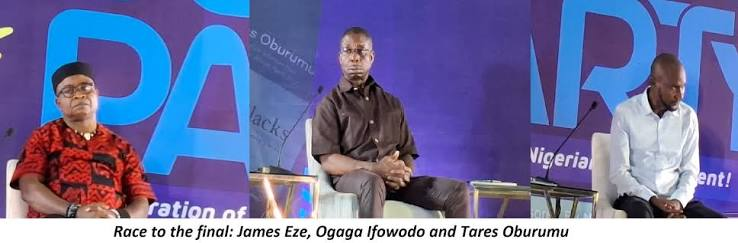
I am still catching up with the younger poets, though I have to say that in the past two poetry cycles of the NLNG prize, I have been pleased to see their very strong showing, some with their very first books. When Romeo Oriogun won, the two runners-up were also younger poets, Saddiq Dzukogi and Su’eddie Vershima Agema. This year, James Eze, and Tares Oburumu whom you published, are on the shortlist with their second and third volumes — Eze was on the longlist in 2018 with his first book. Other than myself, Tanure Ojaide and perhaps Eze and Dzukogi, the longlist of the 2026 NLNG prize consisted mostly of younger poets. I am disappointed not to have all of their books yet except those of Oburumu published by you; James Eze, Rasak Malik Gbolahan, Ismail Bala and Adebayo Agarau with whom I share a publisher. Then there are also Niran Okewole, Servio Gbadamosi and Star Zahra. I am still discovering more and hoping to learn a thing or two from their respective creative temperaments and aesthetics.
You’ve been longlisted twice and shortlisted once for the Nigeria Prize for Literature, and now you’re on the shortlist again. You’ve also said the prize “has drawn deservedly very good attention.” But you’ve also spoken about the literary ecosystem more broadly, the need for infrastructure, for publishing support, for spaces where writers can develop. Beyond prizes, what do you see as the most urgent gaps in Nigeria’s literary landscape?
Actually, I’ve been longlisted thrice and shortlisted twice, which is why I have been saying that I hope the adage will prove true for me that the third time’s the charm! The most urgent need I see is that of returning our schools, especially the secondary schools, to proper nurturing grounds for literature, for reading and writing. To the kind of enabling environment that led to my self-discovery as a poet in the bud. But, really, it ought to start at home. Parents, those who are educated, should always endeavour to read to their children, buy books and not only clothes and toys for them. Poets and writers need an audience and the place to start cultivating writers and readers is the home, then the schools. Publishing is in a sort of boom right now — Bookcraft, Cassava Republic, Masobe, Narrative Landscape, all new and daring, intrepid even, publishers who are somehow managing to thrive without much incentive or support from the government. A deliberate policy of promoting publishing must be developed and implemented by the government. Lastly, considering the huge amount of incentive to write that the NLNG prize has created, no doubt because of the truly handsome sum of one hundred thousand dollars, I have to say that NLNG should be implored to continue awarding the prize, to endow it for perpetuity like the Nobel prize, and that the corporate world should institute a few more high-profile prizes, even if not to the extent of matching NLNG.












Leave a comment