

By Chibuzor All
Nigeria’s rising debt-service costs are putting increasing pressure on public spending, reflecting a wider African fiscal crisis in which interest payments are consuming funds that governments could otherwise devote to healthcare, education and infrastructure.
The Federal Government spent N16tn servicing its debt in 2025, up from N13.02tn in 2024, representing a 22.9 per cent increase, according to an analysis of Debt Management Office data.
The pressure has continued into 2026, with domestic debt-service payments reaching N3.14tn in the first quarter, 20.3 per cent above the amount recorded in the corresponding period of 2025.
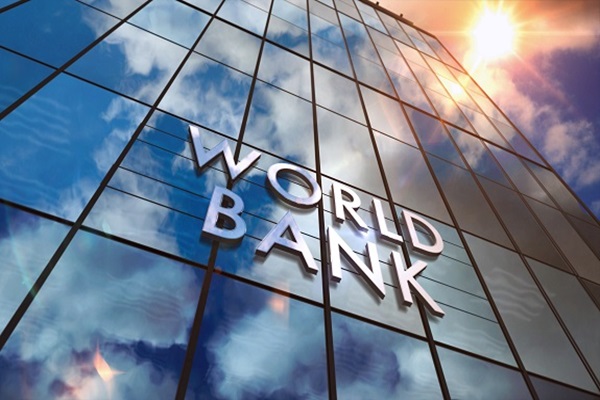
The figures mirror concerns raised by the World Bank in its October 2026 Africa Economic Update, which warned that debt interest is leaving governments across sub-Saharan Africa with less room to finance essential public services and development priorities.
According to the bank, nearly four-fifths of countries in the region spend more on public debt interest than on healthcare, education or both.
“In nearly four-fifths of the countries in the region, interest payments exceed public spending on health and/or education,” the report said.
The warning underscores the challenge facing governments attempting to stabilise public finances while meeting growing demands for social services, infrastructure and poverty reduction.
Nigeria’s additional debt-service costs reached N10.61tn between June 2023 and December 2025, exceeding the N6.47tn spent on strategic infrastructure development during the period. The increase was attributed to exchange-rate depreciation and higher domestic interest rates.
Debt costs limit room for public spending
The World Bank said interest payments across sub-Saharan Africa averaged between 2.9 per cent and 3.2 per cent of gross domestic product between 2023 and 2026, placing sustained pressure on government budgets.
Although fiscal balances are expected to improve, the bank cautioned that lower deficits would not necessarily translate into more funding for public services.
The region’s fiscal deficit is projected to fall to 3.5 per cent of GDP in 2026 from 5.6 per cent in 2020, before averaging 3.1 per cent in 2027 and 2028.
Revenue is expected to increase by 2.6 percentage points of GDP between 2024 and 2026, while total expenditure is projected to rise by 2.3 percentage points.
However, only 0.4 percentage point of the projected expenditure increase is expected to go towards non-interest spending, limiting the scope for governments to expand services and development programmes.
The bank also expects the region’s primary deficit, which excludes interest payments, to narrow to 0.5 per cent of GDP in 2025 from 3.1 per cent in 2020. Fiscal accounts are projected to approach balance by 2028.
The projections suggest that improving headline fiscal indicators may not be enough to ease pressure on citizens if debt costs continue to absorb a substantial share of public revenue.
Higher domestic borrowing adds to pressure
The debt challenge extends beyond the amount governments owe to the cost of servicing their obligations, the World Bank said.
The median government debt-to-GDP ratio in sub-Saharan Africa stood at 57 per cent at the beginning of 2025, nearly double the 29 per cent recorded in 2012. Although the ratio declined from its 2023 peak of 60 per cent, the bank said the regional average conceals significant differences in countries’ debt positions and borrowing structures.
Domestic borrowing has accounted for more than half of public debt in the region since 2021, becoming the dominant source of government financing.
While borrowing locally can reduce exposure to foreign-currency debt, domestic loans often carry higher interest rates and shorter repayment periods than concessional external financing.
These conditions can raise debt-service bills and expose governments to refinancing risks when existing obligations fall due.
For Nigeria, where domestic interest rates and exchange-rate depreciation have contributed to higher debt costs, the pressure creates a difficult balance between meeting repayment obligations and funding economic priorities.
Investment and poverty reduction at risk
The World Bank warned that diverting public funds towards debt servicing could weaken long-term economic performance by reducing investment in productive assets.
Lower public investment can slow capital accumulation, undermine productivity and make poverty-reduction efforts more difficult, particularly where governments already face substantial infrastructure and social development needs.
The bank’s findings highlight the limits of fiscal consolidation when savings from lower deficits are offset by rising interest payments.
For Nigeria and other countries across the region, improving the sustainability of public finances will therefore require attention not only to borrowing levels but also to the cost and structure of debt, alongside stronger revenue generation.
Without greater fiscal room, governments could find it increasingly difficult to balance debt obligations with investment in healthcare, education, infrastructure and other services essential to long-term development.








Leave a comment