


By Chibuzor Alli
Aliko Dangote has insisted that his proposed $16bn refinery in Lamu, Kenya, will proceed despite protests by residents and a court order restricting construction activities over a land dispute.
The President of the Dangote Group made the position known after joining Kenyan President William Ruto for the groundbreaking ceremony of the refinery on Wednesday.
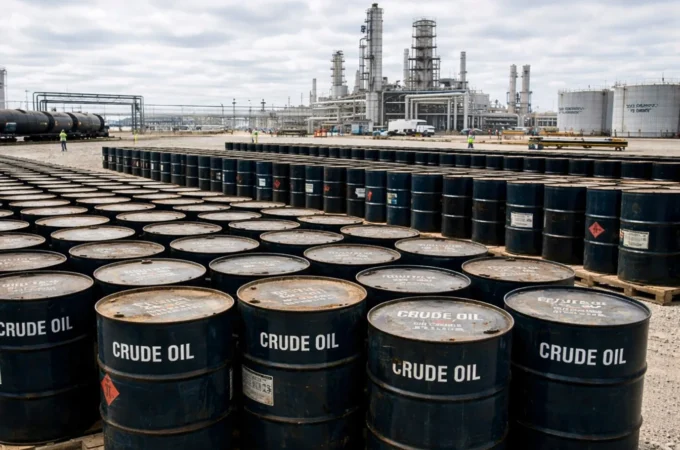
The project, which is expected to have a processing capacity of 700,000 barrels of crude oil per day when completed in 2030, has faced opposition from some residents over compensation and the acquisition of land earmarked for the development.
Speaking to the BBC’s Focus on Africa, Dangote blamed the protests on what he described as the activities of local fuel marketers and international oil industry players.
He also rejected claims that his company had taken more land than was allocated for the project, saying the refinery was being developed on land designated by the Kenyan Government.
“They said some people are demonstrating; demonstrating about what? Have you ever seen people demonstrating against themselves in terms of development?” he asked.
Dangote dismissed the protests as “games played by local marketers and international players”, while maintaining that the refinery would be completed by 2030 as planned.
The billionaire described the Lamu refinery as his largest proposed investment outside Nigeria and said opposition to the project would not derail its development.
The groundbreaking ceremony drew regional attention, with the leaders of Uganda, Ethiopia, Togo and Benin among those in attendance.
Dangote has also offered regional governments a combined 30 per cent stake in the refinery, according to Reuters, as the project is positioned as a major energy investment with potential implications beyond Kenya.
If completed as planned, the refinery would have the capacity to process 700,000 barrels per day, making it the largest refinery in East Africa.
The project is also expected to become Kenya’s biggest infrastructure development since independence, surpassing the $5.1bn Standard Gauge Railway project.
For Dangote, the Lamu development represents an opportunity to replicate the experience of his 700,000-barrel-per-day refinery in Nigeria and demonstrate that large-scale energy projects can be developed elsewhere on the continent.
“Lekki proved that it can be done, Lamu must prove that it can be repeated,” he said.
However, the project continues to face opposition from environmental campaigners and residents of Lamu.
The Save Lamu campaign group has raised concerns about the potential environmental impact of the refinery on surrounding communities.
Walid Ali, co-founder of the group, told the BBC that residents wanted access to the findings of the environmental impact assessment, as well as details of the measures proposed to mitigate the project’s potential effects.
The disagreement has also moved into the courts.
A group of 133 Lamu residents approached the Kenyan High Court seeking to halt construction activities on the disputed land.
Following the legal action, excavation and other construction activities have been restricted pending the next court hearing, scheduled for October 14.
The land dispute and environmental concerns therefore remain key issues surrounding the project, even as Dangote and the Kenyan Government push ahead with the development.
Dangote has maintained that the refinery will deliver significant economic benefits, particularly through employment and opportunities for communities around the project.
He said the development could create about 60,000 jobs at the peak of construction, with local communities expected to benefit from the investment.
The Lamu project is part of Dangote’s broader expansion of his business interests beyond Nigeria, while also reflecting efforts to increase refining capacity within Africa.
For Kenya, the proposed refinery represents a major addition to its energy and industrial infrastructure. But with the court dispute still pending and residents continuing to raise concerns over land compensation and environmental impact, the project’s next phase will depend partly on the outcome of the legal process.









Leave a comment