

By Chibuzor Alli
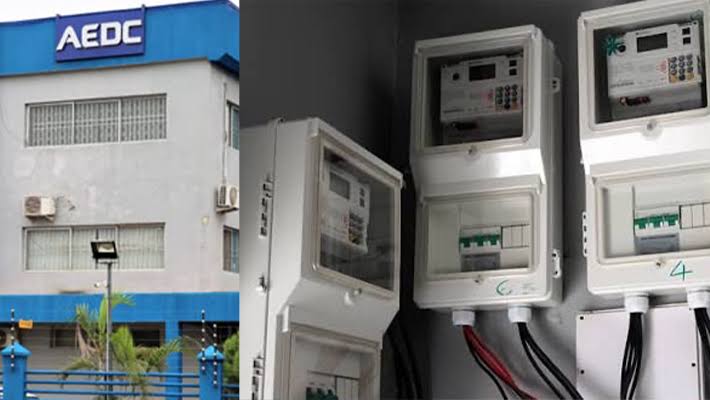
The Abuja Electricity Distribution Company has set its sights on 100 per cent customer metering as it moves to close the gap affecting more than 261,000 customers and reduce reliance on estimated electricity billing.
AEDC, which serves more than 1.2 million customers, said the metering drive forms part of a broader effort to improve customer confidence, strengthen billing transparency and give consumers greater control over their electricity usage.
The company disclosed the target in Abuja on Wednesday during the launch of its new digital platform, MyPower, which allows customers to manage electricity accounts, make payments, lodge complaints and verify AEDC personnel visiting their homes.
Data from the Nigerian Electricity Regulatory Commission showed that AEDC had metered 1,142,283 of its 1,403,657 active registered customers as of June 30, 2026, giving the DisCo a metering rate of 81.38 per cent.
That left 261,374 active customers without meters.
AEDC’s metering performance was above the national average of 61.51 per cent recorded during the same period. NERC said 7,743,839 of the 12,589,486 active registered electricity customers nationwide had been metered as of June 30.
Speaking at the launch, AEDC Managing Director, Chijioke Okwuokenye, said the company intended to eliminate its remaining metering gaps while using technology to improve communication with customers.
“AEDC has the reach of over 1.2 million customers. We want everybody to be metered. We have various channels and various opportunities and options for customers to get metered. But the commitment is that we will drive closure of all metering gaps. We will ensure that we have 100 per cent metering coverage in our network.”
AEDC launches MyPower platform
The company said the MyPower platform was designed to make routine electricity services easier to access without requiring customers to visit AEDC offices.
Customers can use the platform to create accounts, verify their identities, link electricity accounts, confirm meter details, make payments and receive electricity tokens.
Okwuokenye said the platform was developed in response to the need for a better understanding of customer complaints and service expectations.
“This app brings our customers closer than before. This app was developed. It was driven by our continuous desire to satisfy customer needs. The app gives us all these answers to the customer. You cannot fix what you don’t know. And one of the things I’ve always struggled with personally and have been frustrated with is not understanding the customers.
“One of the ways we have decided to address this strategically is to understand the needs of our users. And once we start understanding those things, we will be able to collaboratively craft solutions to those problems.”
He said the platform would also allow AEDC to communicate more effectively with consumers and track complaints through to resolution.
“This app is a very big step into addressing customers’ problems. Another thing is to be able to engage because they don’t understand what the issues are and have an idea of when solutions will come. This app is a very great platform for that engagement, so you will see us improve in our interaction with customers. We would listen more now, and we will strive to meet those customers’ requirements.”
Customers to get real-time power information
AEDC said the digital platform would be expanded to provide customers with more information about their electricity supply and consumption.
Okwuokenye said real-time monitoring of electricity consumption was among the features planned for the platform.
“The next experience we are looking at doing is, you can real-time monitor your power consumption using that. That is coming. And all those other things. So I urge our customers to watch out for their power consumption experience.”
The planned expansion is expected to give customers more visibility into their electricity consumption and potentially help them better understand their energy use.
The platform also includes a staff verification function, which AEDC said was introduced to address security concerns surrounding personnel visiting customers’ homes.
“We recognise the security issues we have, and because of that we have solved that with the staff verification that we have. This is who the person is. You can easily verify the person coming to your house.”
AEDC plans feeder outage tracking
The company’s digital strategy also extends to information about network outages.
AEDC Chief Information Officer, Uche Anyalewechi, said future updates would enable customers to determine whether an outage was linked to their feeder or another part of the network.
“If you have the app, and by the time we’re able to update the web of the app, your power goes out in your house, and you just go to the app, and you see, ‘my feeder is gone,’ or ‘I don’t have power in my house,’” Anyalewechi said.
He said the web version of the platform currently provided additional functions, including access to statements of account, payment history and other customer services, while more features would gradually be incorporated into the mobile application.
AEDC officials also said identity verification and Know Your Customer procedures had been incorporated into the platform to prevent unauthorised access to customers’ accounts.
The company said customers would also have the option of reporting certain issues anonymously where necessary, with assurances that users’ identities would be protected.
AEDC says app is about customer satisfaction
Okwuokenye said the digital platform was primarily intended to improve customer satisfaction rather than reduce operating costs.
“For me, it gives me the ability to quickly resolve customers’ issues, and that will most likely result in increased revenue and reduce customer apathy about paying rent because, for me, it satisfies organisations. The customers have clarity and understand how their bills are calculated and why they are paying what they are paying.
“I think they’ll be less resistant. So the purpose of this app is mainly customer satisfaction. It’s not a cost reduction initiative.”
AEDC Chief Finance Officer, Oluseyi Olanrewaju, said technology had become increasingly important to improving service delivery and strengthening engagement between the electricity distributor and its customers.











Leave a comment