

By Chibuzor Alli
Lagos and Delta accounted for a significant share of the N113.94bn generated by Nigeria’s 36 states from road taxes between 2023 and 2025, with collections rising sharply in 2025 after a major drop the previous year.
Data from the National Bureau of Statistics showed that the states generated N40.14bn in road taxes in 2023, N23.92bn in 2024 and N49.88bn in 2025.
The 2025 figure represented a 108.53 per cent increase over the N23.92bn recorded in 2024, while the 2024 collection itself represented a 40.42 per cent decline from the N40.14bn generated in 2023.
The NBS data, contained in its Internally Generated Revenue at State Level 2025 report, showed wide variations in revenue performance among the states, with Lagos alone accounting for N33.61bn from the two years for which its figures were available.
Lagos’ contribution represented about 29.5 per cent of the total road tax revenue recorded nationally during the three-year period.
The state generated N16.74bn in 2023 and N16.87bn in 2025. No figure was reported for Lagos in 2024, a gap that significantly influenced the national decline recorded that year.
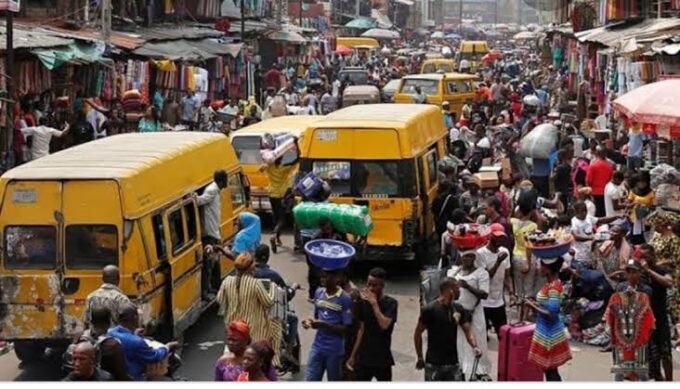
The NBS defines road taxes as “daily levies paid by commercial transporters operating within the states.”
It explained that the IGR figures for the states and the Federal Capital Territory were compiled by the Joint Revenue Board from official records and submissions by the various State Boards of Internal Revenue.
Delta leads outside Lagos
While Lagos dominated the overall figures, Delta emerged as the biggest road tax collector outside the commercial capital.
The state generated N8.64bn over the three-year period, with its collections rising consistently from N2.60bn in 2023 to N2.71bn in 2024 and N3.33bn in 2025.
Ondo followed with N5.99bn over the period, comprising N1.59bn in 2023, N1.73bn in 2024 and N2.67bn in 2025.
Ogun generated N5.49bn, while Edo and Cross River recorded N5.32bn and N5.28bn respectively.
The annual figures further showed how sharply the revenue rankings shifted when Lagos’ 2024 figure was unavailable.
In 2023, Lagos led with N16.74bn, followed by Ebonyi with N2.85bn and Delta with N2.60bn. Ogun generated N1.64bn, Zamfara N1.61bn and Ondo N1.59bn.
Delta topped the 2024 list with N2.71bn, followed by Cross River with N1.77bn, Ondo with N1.73bn, Ogun with N1.72bn and Edo with N1.58bn.
Lagos regained the top position in 2025 after reporting N16.87bn, which represented about 33.8 per cent of the N49.88bn collected nationally that year.
Delta followed with N3.33bn and Ondo with N2.67bn, while Cross River, Edo and Ogun recorded N2.29bn, N2.14bn and N2.12bn respectively.
Bauchi, Nasarawa post 357% growth
The 2025 figures showed that some states recorded dramatic increases in road tax receipts.
Bauchi’s collection jumped from N413.51m in 2024 to N1.89bn in 2025, representing an increase of N1.48bn or 357.32 per cent.
Nasarawa recorded almost the same percentage growth, with revenue rising from N226.10m to N1.03bn, an increase of 357.23 per cent.
Kogi’s road tax collection increased by 124.84 per cent, from N727.84m to N1.64bn.
Ebonyi also more than doubled its collection, moving from N249.35m in 2024 to N533.43m in 2025.
Gombe’s revenue rose from N221.97m to N411.33m, while Ondo increased its collection from N1.73bn to N2.67bn.
Kebbi records 73.5% decline
Not all states experienced growth.
Kebbi recorded the steepest decline in 2025, with road tax revenue falling 73.52 per cent from N247.35m in 2024 to N65.49m.
Katsina’s collection fell by 54.94 per cent, from N106.03m to N47.78m, while Sokoto recorded a 49.05 per cent decline, from N165.04m to N84.09m.
Bayelsa also continued its downward trend, with collections falling from N146.60m in 2023 to N102.18m in 2024 and N70.92m in 2025.
Over the three-year period, Katsina had the lowest cumulative road tax revenue at N183.10m.
Yobe followed with N309.04m and Bayelsa with N319.70m, while Adamawa and Kebbi recorded N363.59m and N364.69m respectively.
In 2025 alone, Katsina generated the least road tax revenue at N47.78m, followed by Kebbi with N65.49m, Bayelsa with N70.92m, Sokoto with N84.09m and Jigawa with N96.84m.
Road tax within N5.15tn IGR
Road taxes represented only one component of the wider revenue collected internally by state governments.
The NBS said other components included PAYE, direct assessment, stamp duties, capital gains tax, withholding taxes, other taxes and local government revenue.
Overall, the 36 states and the FCT generated N5.15tn in IGR in 2025, up 40.93 per cent from N3.65tn in 2024.
Tax revenue accounted for 73.64 per cent of the total IGR generated during the year.
The statistics agency, however, warned that the figures could still change following further reconciliation.
The NBS cautioned that the figures were “subject to reconciliations and updates by the respective sub-national revenue authorities.”
Revenue collection faces new rules
The latest road tax figures come as the Federal Government moves to tighten the way taxes are collected across the country.
The PUNCH reported in March 2026 that the government had prohibited tax authorities from collecting taxes in cash and banned the use of roadblocks for tax enforcement under new regulations aimed at implementing the country’s revised tax laws.
The Executive Secretary of the Joint Revenue Board, Olusegun Adesokan, disclosed the development during the signing of the Presumptive Tax Regulations and Guidelines on the Implementation of the Tax Laws at the Federal Ministry of Finance.
According to Adesokan, the new framework was intended to tackle informal, coercive and fragmented tax collection practices, particularly at the sub-national level.
“It bans all forms of cash collection by tax authorities. It also bans the mounting of roadblocks for the collection of taxes,” he said.
The Joint Revenue Board also announced a partnership with the Nigeria Police Force to tackle illegal tax collection and dismantle roadblocks mounted specifically for revenue collection.
The development places the states’ road tax collections against a changing tax administration landscape, with governments expected to increase revenue while adopting more formal and transparent collection systems.







Leave a comment