

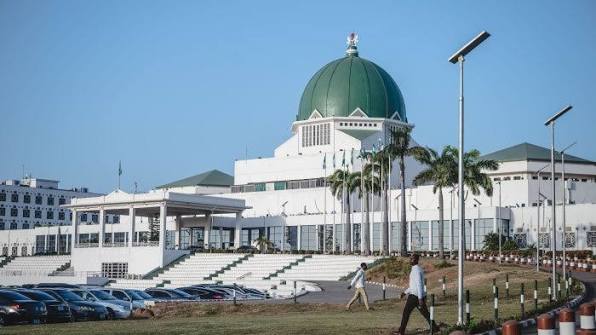
A Nation’s Journey Through Triumph and Tribulation
The Nigeria at 66 good bad ugly assessment demands an honest reckoning with six decades of independence. From the ashes of a civil war to the heights of Africa’s largest economy, from military dictatorship to 27 years of unbroken democracy, Nigeria’s journey has been nothing if not remarkable. Yet the same nation that has produced billionaires and global tech talents also holds the inglorious record of having four of Africa’s ten worst prisons, 139 million people living below the poverty line, and a healthcare system where 82 per cent of citizens go without needed medicine.

This is the paradox of Nigeria at sixty-six. A nation of immense potential perpetually held back by structural failures. A people of extraordinary resilience governed by institutions that too often betray them. This editorial assessment examines the good, the bad, and the ugly of Nigeria’s 66-year journey.
The Good: Giant Strides Amidst Adversity
Economic Transformation: From Agrarian to Digital
At independence in 1960, Nigeria was a predominantly agrarian economy with a per capita income of approximately £40 (about N80 at the time), a manufacturing sector contributing less than 4 per cent of GDP, and less than three in ten school-age Nigerians able to read and write . The mining sector, including the nascent petroleum industry—accounted for less than 1 per cent of GDP .
Sixty-six years later, Nigeria’s GDP stands at approximately $290 billion, with a population exceeding 237 million . The economy has grown by 236 per cent in real terms since 2000 alone . Under the current administration, Nigeria’s Gross Domestic Product grew by 4.23 per cent in the second quarter of 2025, the fastest pace in four years, outpacing the International Monetary Fund’s 3.4 per cent projection .
The Tinubu administration has achieved twelve notable economic milestones, including a record-breaking increase in non-oil revenue, with the 2025 target achieved by August at over N20 trillion . The debt service-to-revenue ratio has been reduced from 97 per cent to below 50 per cent, external reserves have increased to $42.03 billion—the highest since 2019—and Nigeria has recorded a trade surplus for five consecutive quarters . Goods manufactured in Nigeria and exported jumped by 173 per cent, with non-oil exports now representing 48 per cent of total exports, compared to oil exports at 52 per cent .
The digital economy has been particularly transformative. When the National Information Technology Development Agency (NITDA) began operations, fewer than 500,000 Nigerians used computers, and ICT contributed less than 0.5 per cent to GDP . Today, Nigeria boasts over 130 million internet users, with ICT contributing more than 17 per cent to national GDP . NITDA has reviewed IT projects worth over N1.5 trillion across federal Ministries, Departments and Agencies in the past year, resulting in savings exceeding N319 billion .
Anti-Corruption: EFCC, ICPC, and NDLEA
The Economic and Financial Crimes Commission (EFCC) and the Independent Corrupt Practices and Other Related Offences Commission (ICPC) have demonstrated significant capacity in asset recovery. In 2024 alone, the EFCC reclaimed over N248 billion, $105 million, and 753 duplexes, while the ICPC recovered N29.685 billion in cash and $966,900 in assets . The National Drug Law Enforcement Agency (NDLEA) has equally intensified its efforts in seizing assets linked to drug-related crimes, ensuring that illicit proceeds do not fuel further criminal activities .
Digital Governance: NITDA and Identity Management

NITDA has launched a Multistakeholder Coordination Group to deepen collaboration and strengthen Nigeria’s digital governance . The agency is driving policy reforms including the National E-Governance and Digital Economy Bill and the Nigeria Data Protection Act . Nigeria’s digital literacy targets aim for 70 per cent by 2027 and 95 per cent by 2030 through initiatives such as the 3 Million Tech Talent (3MTT) Programme .
The National Identity Management Commission (NIMC) has enrolled over 142 million Nigerians in the National Identity Database, with enrolment rising from 100 million to over 142 million through the Presidential Board-to-Board Enrolment Project . The Ministry of Interior has cleared over 204,000 pending passport applications, introduced contactless passport renewals for Nigerians abroad, and established Nigeria’s first centralised passport personalisation centre in Abuja .
Democracy in Action: EU Recognition

The European Union has lauded Nigeria’s democratic progress, with Ambassador Gautier Mignot describing democracy as “a movement, free conversations leading to decisions, millions of voices demanding to be heard and taken into account” . The EU reaffirmed its commitment to supporting inclusive governance, electoral reforms, and citizen participation through the EU Support to Democratic Governance in Nigeria (EU-SDGN) programme .
The Bad: Structural Failures and Systemic Decay
The Nigeria at 66 good bad ugly reality is most visible in the contrast between economic statistics and human welfare. While GDP figures paint a picture of growth, human development indicators tell a different story.
Prison Congestion: 4 of Africa’s 10 Worst Prisons
Nigeria’s correctional system is in a state of chronic crisis. As of March 2025, Nigeria’s 240 prisons held approximately 77,800 inmates, with two-thirds awaiting trial . Four of Africa’s ten worst prisons are in Nigeria, including Kirikiri Maximum Security Prison in Lagos, designed for 800 inmates but holding more than 2,500 . Port Harcourt Maximum Prison holds 4,000 inmates in space designed for 1,000 .
The UN Subcommittee on Prevention of Torture, after its September 2024 visit, described conditions in most detention facilities as “abysmal” . Nigeria has experienced a pattern of prison jailbreaks, with the Koton Karfe Medium Security Custodial Centre in Kogi State witnessing four jailbreaks in 13 years, with nearly 700 inmates fleeing .
Poor Policing and Human Rights Violations

Amnesty International’s February 2026 investigation into the “Tiger Base” police unit in Imo State found rampant violations including extrajudicial executions, torture, and extortion . Detainees are routinely taken out of cells and shot dead, suspects are tortured to make confessions, and families of suspects who die suddenly are harassed for seeking justice . The unit uses Point of Sale (POS) machines to extract lucrative bribes .
The Resource Centre for Human Rights and Civic Education (CHRICED) has warned that Nigeria is sliding into a dangerous crisis over rising extrajudicial killings, citing the killing of a National Youth Service Corps member in Abuja and the shooting of a civilian in Delta State . During the 2024 #EndBadGovernance protests, at least 24 people were killed by police using excessive force, according to Amnesty International .
Infrastructural Decay: Roads of Horror
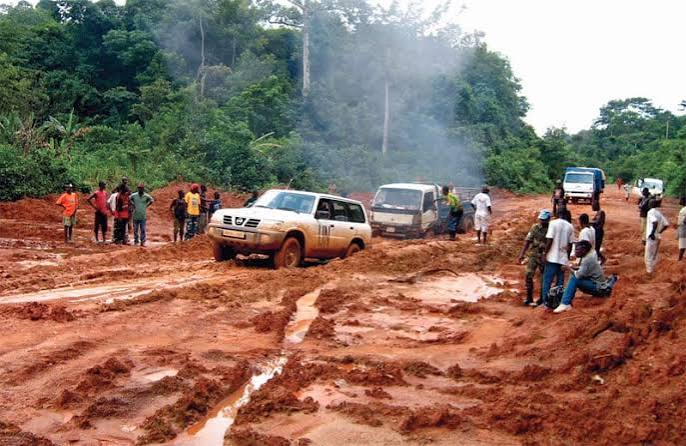
Nigeria’s road network is in a state of advanced deterioration. The Dennis Osadebay Road from Abraka to Ogbeogonogo Market has been described as “nearly impassable,” riddled with gullies and stagnant pools . Across Aniocha North Council, several critical roads have collapsed or been abandoned for years .
The Warri-Benin highway has been in a deplorable state for years, forcing motorists to take alternative routes or risk getting stuck in water-filled, muddy collapsed sections . The Calabar-Itu highway has experienced total gridlock, with a trip that should take less than two hours taking twelve hours .
JAPA: The Exodus of Medical Professionals
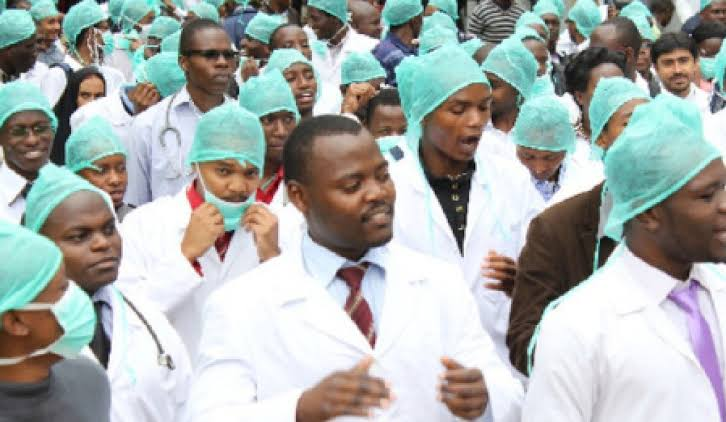
Nigeria is grappling with a worsening health workforce crisis as the mass migration of medical professionals, known as “japa”, continues to strain the healthcare system . Nigeria currently has about four doctors per 10,000 people, far below the World Health Organisation’s recommended minimum of 10 physicians per 10,000 population.
Between 2021 and 2022, about 13,609 Nigerian health workers migrated to the UK alone . A 2023 survey found that 57 per cent of Nigerian doctors had taken concrete steps toward leaving the country . A 2024 study of clinical medical trainees found that 60.8 per cent intended to relocate abroad immediately after training, with poor remuneration (45.9 per cent), insecurity (24.2 per cent), and inadequate equipment (18.9 per cent) cited as leading reasons .
Diaspora Political Exclusion Despite $22 Billion Remittances
Nigeria’s diaspora remitted $22.0 billion in 2025, ranking 11th globally . Yet Nigerians abroad remain excluded from participating in national elections. Stakeholders have repeatedly called on the National Assembly to pass the diaspora voting bill . The Electoral Act (Amendment) Bill 2025, sponsored by Senator Orji Uzor Kalu, seeks to amend the Electoral Act to accommodate electronic and online voting for registered Nigerian citizens residing outside Nigeria . Despite these efforts, the bill has not yet been passed into law.
The Ugly: The Human Cost
Terrorism: 3,610 Killed in Six Months
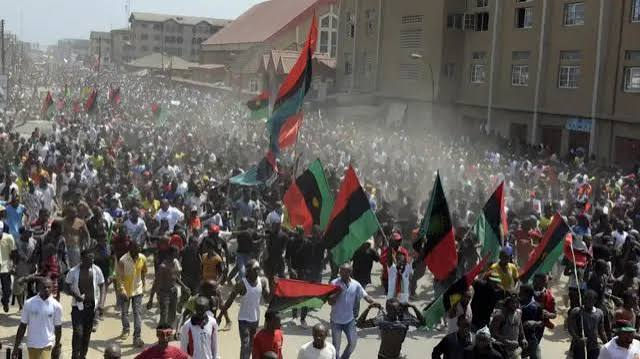
The International Society for Civil Liberties and Rule of Law (Intersociety) has documented that suspected Islamic terrorist groups killed 3,610 people and abducted 3,960 others across Nigeria between January and June 2026 . About 300 churches were destroyed, and 800 abducted Christian women and children were forcibly converted to Islam . The victims included approximately 2,550 Christians and 1,050 Muslims killed, while 2,800 Christians and 1,150 Muslims were abducted .
Healthcare Crisis: 82% Go Without Medicine
Afrobarometer’s September 2026 survey reveals that more than eight in ten Nigerians (82 per cent) report going without medicines or medical treatment at least once during the previous year . Among those who sought care at public health facilities, 83 per cent encountered a lack of medicines or supplies, 83 per cent experienced long wait times, and 82 per cent faced high costs that affected their ability to obtain care . Over the past decade, the share of Nigerians who went without medical care at least once has almost doubled, from 43 per cent in 2015 to 82 per cent in 2024 .
Nigeria’s health sector spending remains below the 15 per cent benchmark set in the Abuja Declaration, hovering between 5 and 6 per cent . About 60 per cent of health financing is out-of-pocket, and health insurance capacity remains under 10 per cent .
Poverty: 139 Million Below the Line

The World Bank’s Country Partnership Framework for Nigeria (2026-2032) states that about 139 million Nigerians currently live below the national poverty line, with poverty concentrated largely in the northern part of the country . More than 86 million Nigerians live without access to electricity, while three to four million young people enter the labour market every year with limited employment opportunities .
Thirty-three per cent of Nigeria’s population is ultra-poor (food insecure by age-weighted caloric intake), 61 per cent is below the poverty line, and 79 per cent is near poor . One in four Nigerian youths is neither employed, in education, nor in training .
Human Development: 164th of 193 Countries
Nigeria ranks approximately 164th out of 193 countries on the Human Development Index, placing it within the low human development category despite being Africa’s largest economy by GDP size . Life expectancy remains between 54 and 55 years, far below the global average of over 73 years . Nigeria has the highest number of out-of-school children in the world, estimated at about 18.3 million, with mean years of schooling at approximately 7.6 years .
Conclusion: The Unfinished Business
The Nigeria at 66 good bad ugly story is ultimately a story of unfinished business. The nation has made remarkable progress in economic transformation, digital governance, and democratic consolidation. The EFCC, ICPC, NDLEA, NITDA, and Ministry of Interior have demonstrated that Nigerian institutions can work when properly funded and led.
Yet the human cost of systemic failure remains staggering. Four of Africa’s ten worst prisons are Nigerian. Police units kill with impunity. Roads crumble. Doctors flee. Terrorists kill thousands. And 139 million Nigerians live in poverty while their compatriots abroad remit $22 billion annually without the right to vote.
Nigeria at sixty-six is a nation that has learned to count its blessings while ignoring its curses. The economic statistics are improving, but the human development indicators are not. The prisons are overcrowded, the hospitals are empty of medicine, and the roads are death traps.
The good is real. The bad is structural. The ugly is human. And until Nigeria confronts all three with equal honesty, the next sixty-six years will look very much like the last.
- EFCC recovery Nigeria
- ICPC corruption Nigeria
- JAPA Nigeria doctors
- NDLEA drug seizure
- Nigeria 2026 review
- Nigeria 66th independence anniversary
- Nigeria at 66 good bad ugly
- Nigeria at sixty-six
- Nigeria diaspora voting
- Nigeria healthcare crisis
- Nigeria independence assessment
- Nigeria police brutality
- Nigeria prison congestion
- Nigeria terrorism statistics
- NITDA digital governance











Leave a comment