

How Lagos APC’s Internal Crisis Threatens the Party’s 2027 Prospects
The Unfinished Obasa Saga
How Lagos APC’s Internal Crisis Threatens the Party’s 2027 Prospects
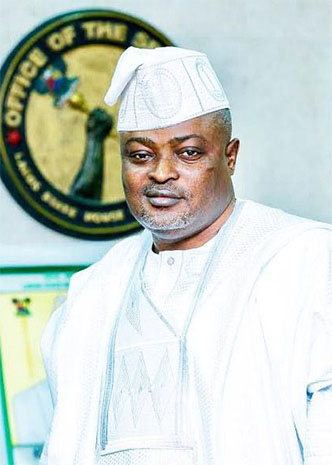
The Obasa Agege political crisis has evolved from a rumoured battle between the Speaker and the Governor into a full-blown electoral confrontation. With President Bola Ahmed Tinubu back in Lagos after a four-week European vacation, the political platoon he left behind is in disarray. Agege, one of his favourite political lovechildren, is now divided. The Speaker’s loyalists have defected to the Allied Peoples Movement (APM). And the question on every political observer’s lips is: can the opposition leverage this crack to push its frontiers against the ruling APC?
The Rise of Obasa’s Agege
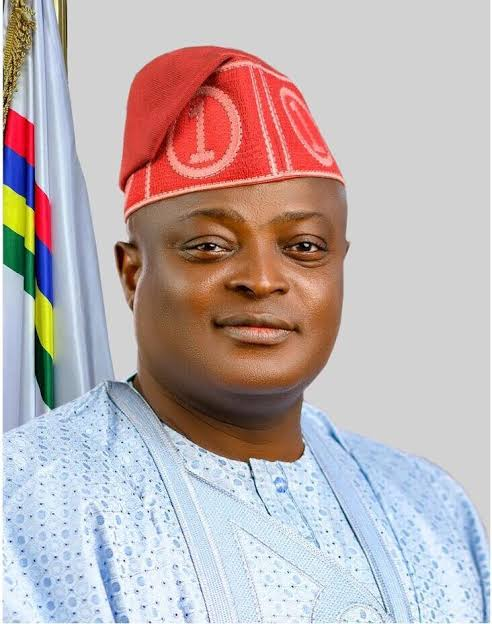
Agege has been Mudashiru Obasa’s unchallenged fortress for nearly two decades. He has determined who becomes the council chairman, the party executive, and the Assembly candidate. The May consensus meeting where he anointed Ganiyu Egunjobi and Azeez Yusuf as his preferred Assembly candidates was classic Obasa politics, consolidate the base before moving up to Abuja.
Agege’s Electoral History: A Tinubu Stronghold
The electoral figures confirm Agege’s status as a Tinubu stronghold. In the 2015 presidential election, Buhari led in Agege’s polling units, winning Ward 11, Unit 006 by 23 to 10, and Unit 007 by 130 to 69 . By 2019, the margin had widened considerably: Buhari polled 36,443 votes in Agege to Atiku’s 16,497 .
The 2023 elections demonstrated the same pattern. In the presidential election, Tinubu polled 29,568 votes in Agege, while Labour Party’s Peter Obi garnered 13,270 and PDP’s Atiku Abubakar managed 4,498 . In the governorship election, Sanwo-Olu won Agege with 35,845 votes against Labour Party’s 8,486 and PDP’s 3,176 .
In the House of Assembly election, Obasa himself polled 17,214 votes to defeat Labour Party’s Raheem Alani (3,933 votes), ADC’s Kafayat Biobaku (62 votes), and PDP’s candidate (1,609 votes) . Even in the 2025 local government elections, APC’s Tunde Azeez won Agege chairmanship with 31,503 votes, while APM and ZLP managed only 86 and 10 votes respectively .
The numbers tell a clear story: Agege has been overwhelmingly APC territory, and Obasa has been the architect of that dominance.
Obasa’s Two-Decade Dominance
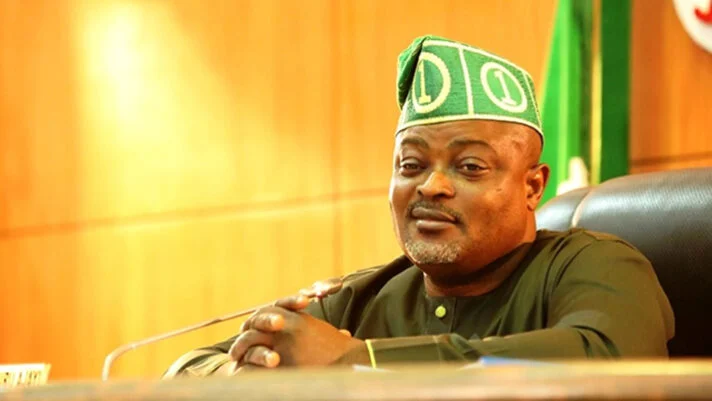
Obasa’s political career began in Agege and has been built on a carefully constructed network of loyalists. His move to the Senate is strategic. After over eight years as Speaker and a brief removal-and-reinstatement saga in early 2025, the federal seat is his exit ramp to national relevance and a possible run for higher office.
But his strength, as is being bandied about in negotiations, rests on one thing: can he deliver Agege?
The Expulsion and the Defection
The Obasa Agege political crisis is now a referendum on whether the Speaker can deliver his stronghold for the APC. The sequence of events is instructive.
The May Consensus Meeting
At a stakeholders meeting in May where Obasa declared his intention to contest the Agege Federal Constituency seat in the House of Representatives, he openly endorsed Egunjobi and Yusuf as his preferred Assembly candidates .
The Primary Controversy
Egunjobi and Yusuf claim they won the primaries at the venues, which were monitored by INEC and DSS officials. Still, the party leadership subsequently announced Gbenga Abiola (Egunjobi’s former vice-chairman) and Sakiru Enimakure as the winners .
The APC Expulsion
Displeased, both politicians left the APC and, on September 18, secured tickets from the Allied Peoples Movement (APM) for the same constituencies. The Lagos APC, in a statement by Chairman Cornelius Ojelabi, expelled them for anti-party activities and disloyalty, invoking Article 9(5)(II) of the APC Constitution as amended in 2022, and dismissed their resignation as a “belated and face-saving attempt to pre-empt consequences” .
The APM Lifeline
The expelled duo counter that they had resigned since July, weeks before the expulsion, and question how a party can expel non-members. But political pundits have argued that if they truly left when they said they did, it would be on record that they had been suspended, and they wouldn’t still be in the same party, discussing and meeting with party members as alleged .
The Implications for Obasa’s Senatorial Ambition
Obasa’s move to the House of Representatives is strategic. After over eight years as Speaker and a brief removal-and-reinstatement saga in early 2025, the federal seat is his exit ramp to national relevance and a possible run for higher office.
Can the APC Sabotage Obasa?
If his two loyalists contest on APM, they will split APC votes in Agege I and II. Even if APC still wins, a narrow victory or a loss would be cited as proof that Obasa may no longer control Agege. It also sends the party a disciplinary message, signalling that no leader, however powerful, can treat membership “as a convenient political garment to be worn during a primary and discarded immediately after an unsuccessful outcome” .
By contesting under APM while Obasa remains in APC and seeks APC’s House of Reps ticket, Obasa will be accused of being anti-party by proxy. If he campaigns for his allies, he faces sanctions. If he abandons them, he will appear disloyal to his own men, and his core supporters will question his capacity to protect them .
The President’s Relationship with Obasa
The deep and close relationship between Obasa and President Tinubu complicates any effort to sabotage the Speaker’s senatorial ambition. Obasa has been a loyal Tinubu ally for two decades. His political career was built on Tinubu’s patronage, and he has repaid that loyalty with unwavering support.
But political relationships are not static. If Obasa’s loyalists win on the APM platform, it would be the first time Obasa wins against the APC machine from outside, a dangerous precedent that would redefine his relationship with the party .
Can the Opposition Leverage Agege?
The Lagos APC internal crisis presents a welcome in-road that the ADC, the PDP, or the APM can explore. A visible crack such as this is an opportunity for the opposition to push its frontiers against the ruling APC.
The ADC Opportunity
The African Democratic Congress has been actively positioning itself as a viable opposition platform. Recent defections at the national level demonstrate that the ADC is gaining traction. In March 2026, 27 members of the House of Representatives defected from their parties, with the ADC gaining eight new lawmakers . By May 2026, 17 ADC lawmakers had defected to the Nigeria Democratic Congress, with one joining the APC .
The ADC’s Lagos chapter could leverage the Agege crisis to present itself as a credible alternative for aggrieved APC members. If Obasa’s loyalists win on the APM platform, the ADC could explore alliances with the APM for future elections.
The PDP and APM Calculations
The PDP, still smarting from its 2023 losses in Lagos, could use the Agege crisis to rebuild its local structures. The APM, meanwhile, has already positioned itself as the beneficiary of the Obasa loyalists’ defection.
But the opposition faces a fundamental challenge: Agege remains overwhelmingly APC territory. The 2025 local government results showed APC winning with 31,503 votes while APM managed only 86 . Even a split APC vote would likely not be enough to hand victory to the opposition.
The Micro-Godfather Precedent
The Obasa Agege political crisis signals a new era of micro-godfatherism that could quietly chip away at the APC’s assumed monolithic leadership.
The defection of Obasa’s loyalists to the APM sends a signal to the entire political landscape: that Obasa is a micro-godfather, who has the political might to negotiate with the APC and may have the same freedom to negotiate with other political parties. This may lead to the emergence of more pronounced micro-godfathers who, taking an example from Obasa and his loyalists, begin to negotiate their strongholds with the APC leadership.
Consider the precedent. In March 2026, 27 members of the House of Representatives defected from their parties, with 14 joining the APC and eight joining the ADC . In May 2026, 17 ADC lawmakers defected to the NDC, with one joining the APC . These defections demonstrate that Nigerian politicians are increasingly willing to switch parties when their interests are not served.
The Obasa saga could accelerate this trend. If micro-godfathers across the country see that Obasa’s loyalists can win elections on another party’s platform, they may be emboldened to negotiate their own terms with the APC leadership.
Conclusion: A Permanent Political Scar
The Obasa Agege political crisis will leave a permanent political scar on the Lagos APC. If the Obasa men win with their APM ticket, it would be a humiliation for the party machinery that expelled them. If they lose, it would signal that Obasa’s influence is waning, a dangerous development for a politician seeking higher office.
Either way, the crisis sends a signal to the entire political landscape. The APC is not as monolithic as it appears. Micro-godfathers can and will negotiate their strongholds. And the opposition, however fragmented, has an opportunity to exploit these cracks.
President Tinubu’s return to Lagos comes at a critical moment. He must decide whether to intervene in the Agege crisis, call Obasa to order, or allow the party machinery to run its course. The President’s political skills, already tested by the Wike-Rainbow Coalition controversy, will be stretched to their limits.
For now, Obasa seem to be campaiging for the APC while his loyalists seem to be pitching their tent with the APM. He continues to assert support for continuity for President Tinubu, support for the election of Deputy Governor Kadiri Hamzat (APC), while keeping his cards closed on the Agege debacle.
The reported late arrival of the President, the Governor and Obasa to the independence parade in Lagos continue to hint that they had a meeting with the President. The turn of events will determine the decisions made given the quiet intervention of the President.
The Obasa saga, as the political cliché goes, is far from finished.
- Agege APC defections
- Agege House of Assembly
- APC micro-godfathers
- APM Lagos
- Azeez Yusuf
- Ganiyu Egunjobi
- Lagos APC crisis
- Lagos APC internal crisis
- Lagos APC primaries 2027
- Lagos politics 2027
- Mudashiru Obasa
- Obasa Agege political crisis
- Obasa House of Representatives
- Obasa Lagos APC crisis
- Obasa senatorial ambition










Leave a comment