

The Political Gambit That Could Define Nigeria’s 2027 Election
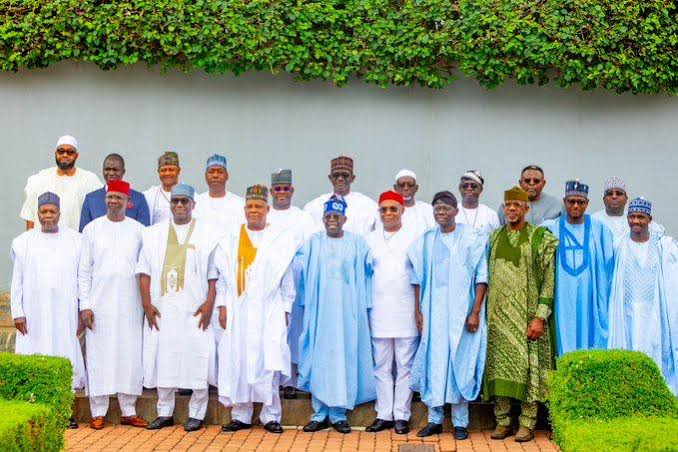
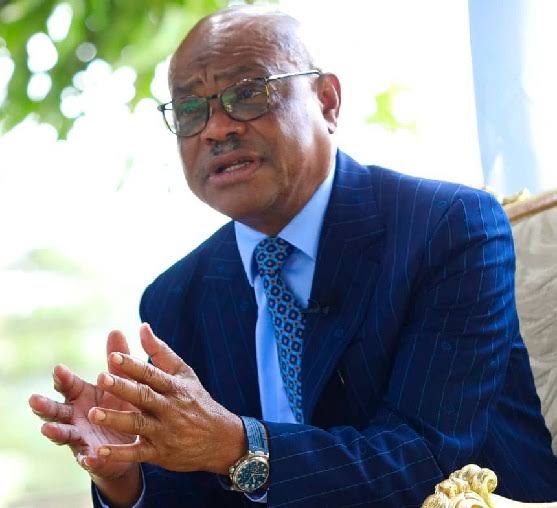
The Tinubu Wike 31 governors confrontation has escalated into a defining moment for the President’s 2027 re-election bid. With less than four months to the presidential election, President Bola Ahmed Tinubu returned from a four-week European vacation to find his political platoon in disarray. On one side stands Nyesom Wike, the FCT Minister who has vowed to resign if Tinubu loses Rivers State and the Federal Capital Territory. On the other stand 31 APC governors who have rejected Wike’s Rainbow Coalition as a threat to the party’s electoral machinery. The President must now decide: pitch his tent with the governors, call Wike to order, or impose order through strategic reconciliation.
Nyesom Wike has never been a politician who hides behind ambiguity. When he takes a political position, he does so loudly, visibly, and with an unmistakable sense of purpose. From the People’s Democratic Party’s G5 governors in 2022–2023 to the Rainbow Coalition now taking shape ahead of the 2027 elections, one thread runs through his politics: the determination to remain relevant, retain political leverage, and operate beyond conventional party boundaries.
The latest confrontation between Wike and governors elected on the platform of the All Progressives Congress (APC) deserves more attention than the headlines it has generated. It is not simply a quarrel over a coalition. It is a contest over political influence, party structures, and, ultimately, who controls the machinery around President Bola Ahmed Tinubu as Nigeria approaches 2027.
Tinubu Returns to a Party in Disarray

President Tinubu returned to Nigeria on Tuesday, September 29, 2026, after a four-week working vacation in the United Kingdom and France . His aircraft landed at the Presidential Wing of the Murtala Muhammed International Airport in Lagos at 6:22 p.m. He was received by Lagos State Governor Babajide Sanwo-Olu, Speaker of the House of Representatives Tajudeen Abbas, Deputy Senate President Jibrin Barau, Chief of Staff Femi Gbajabiamila, and other senior officials .
Asked about concerns regarding his health, Tinubu dismissed them outright: “Ready to kick, ready to walk. There’s nothing wrong. Rumour will always be emanating from politics, but the facts remain: I’m here. Healthy, sound, and ready to go” .
But the President returned to a party in open conflict. The APC Governors’ Forum had recently rejected political alliances that could create parallel structures or undermine APC candidates. The governors said they would support the party’s candidates, while Wike responded that he never approached them for an alliance in the first place. His Rainbow Coalition, he insists, is designed to mobilise support for Tinubu’s re-election and is separate from the APC .
This is a needless headache for President Tinubu with less than four months to the presidential election, but that distinction is important because Wike is making a proposition that challenges how party politics is usually played: a politician can belong to one party, support another party’s presidential candidate, and still participate in other elections through his own party.
The G5 Was the Prototype
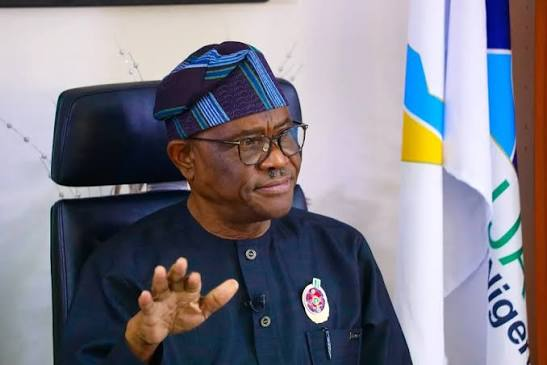
To understand today’s Rainbow Coalition, it is useful to return to 2022. Wike was one of five PDP governors who formed the G5, or Integrity Group, following the PDP presidential primary won by former vice president Atiku Abubakar. The governors demanded, among other things, the resignation of PDP national chairman Iyorchia Ayu, arguing that the party’s presidential candidate and national chairman should not come from the same region. They subsequently refused to support Atiku’s presidential campaign.
The G5 was an extraordinary political experiment because its members remained PDP governors while refusing to support the PDP’s presidential candidate. Wike eventually became closely associated with Tinubu’s presidential campaign in Rivers State. Other members of the G5 made different choices, demonstrating that the group was less a permanent political party than an instrument of political leverage.
The important lesson from the G5 was that party membership did not necessarily determine presidential loyalty. However, the Rainbow Coalition appears to be an expanded version of that political philosophy. The difference is that Wike is no longer merely leading a group of disgruntled governors within the PDP; he is attempting to construct a broader, cross-party network around a presidential candidate who happens to be the incumbent.
Wike’s Resignation Gamble
On September 29, 2026, Wike escalated the confrontation dramatically. Speaking to members of the Apo Traders Association in Abuja, the FCT Minister declared that he would resign from office if President Tinubu loses either the Federal Capital Territory or Rivers State in the 2027 presidential election .
“I’ll tell you one thing about this place. We are doing rainbow coalition. Even people in the PDP, we are supporting Tinubu, right?” Wike said. “You see, FCT is where I work. Rivers State is my state, right? And if I cannot deliver where I work, then I am not worthy to be here” .
He set a specific timeline: “The presidential election is on January 16, 2027. By January 17, 2027, I will announce my resignation as FCT Minister should the President lose in Rivers State and the FCT” .
Wike also challenged other political appointees to accept similar responsibility for delivering electoral results in their respective areas. “I want other people to take these kinds of challenges. I have taken Rivers State and FCT; let everybody take. You take this one; tell the president, if I don’t deliver this, remove me from here; I’ve said so” .
The declaration was a direct challenge to the APC Governors’ Forum, which had opposed his Rainbow Coalition. Wike urged Tinubu’s supporters to prove their capacity by the APC’s performance in the January 16 presidential poll .
The Governors’ Dilemma
The Tinubu Wike 31 governors collision is fundamentally about control of the APC’s electoral machinery. The APC governors’ concern is not necessarily that Wike supports Tinubu; it is that Wike wants to mobilise support for Tinubu outside the formal APC structure while retaining the freedom to support candidates who may be running against APC candidates. That is where the political collision begins .
The APC Governors’ Forum, chaired by Imo State Governor Hope Uzodimma, stated its position clearly: “The APC Governors Forum unanimously resolved that its members will not participate in, support or endorse any alliance or political arrangement capable of undermining the re-election of Mr President, weakening the APC or adversely affecting any candidate of the party at all levels” .
Uzodimma, who also serves as Secretary of the Tinubu Campaign Council, said APC governors would not support or endorse candidates who are not members of the party in the 2027 elections. “The governors’ campaign commitment is exclusively to all APC candidates. All levels of the party campaign architecture will align with the expectations of Mr President and the strategic objectives of the party” .
For the governors, an election is not divisible so neatly. The same governors expected to deliver votes for Tinubu must also deliver APC senators, members of the House of Representatives, state legislators, and, in many cases, successors to themselves. A coalition that mobilises voters for Tinubu while supporting opposition candidates at other levels could therefore weaken the APC’s own political machinery.
Consider the practical implications. If APC Senators and members of the House of Representatives are not returned to the National Assembly in sufficient numbers, will the President, whom Wike claims to support singularly and unconditionally, enjoy a smooth ride in passing his budgets, his appropriation bills, his tax and fiscal reform legislation, or in securing confirmation for his nominees?
Ditto for the governors: if the majority of the thirty-six states are not led by governors who share the President’s party affiliation and, by extension, his policy commitments, will Mr President find it easy to drive nationwide implementation of federal programmes that require state-level cooperation, from infrastructure financing to security architecture to the rollout of social intervention schemes?
Governance in a federation such as ours is a joint enterprise between the centre and the federating units, and that joint enterprise is, for better or worse, organised along party lines.
The Rivers State Precedent
The Wike-Fubara saga offers an instructive case study. The Minister of the Federal Capital Territory has said the political crisis in Rivers State denied Governor Siminalayi Fubara the opportunity to seek a second term, blaming what he described as poor advice from political associates and external interests .
Wike recounted inheriting an administration with limited resources, saying he had to borrow ceremonial vehicles from a former Ondo State governor, Olusegun Mimiko. He said he expected Fubara to build on the foundation he left behind rather than abandon it.
“Somebody had laid a foundation. Look, this is where I stopped. If you continue this way, our dream is to be able to compete with Lagos. What is wrong with that?” he asked .
Wike alleged that individuals who had opposed Fubara’s emergence as governor later became his close allies and encouraged him to confront his political benefactors. He revealed that an impeachment threat forced Fubara to withdraw from the 2027 governorship race as part of a peace arrangement .
“In the first place, he ought not to have collected the form, because the agreement was reached that the impeachment should be dropped, while he should also not talk about a second tenure,” Wike said .
The Fubara saga demonstrates what happens when a political godson defies his benefactor. Wike’s allies ensured Fubara was denied a second term. The lesson for the APC governors is clear: crossing Wike has consequences.
The Analysts’ Verdict
Political analysts have weighed in on the President’s options. A Kano-based political affairs commentator, Comrade Kabiru Sani Mai Kwanuka, argued that Wike has made a contribution to Tinubu’s political fortunes that should not be dismissed .
“Politically, Wike has made a contribution that no APC governor has made. He singlehandedly helped weaken the PDP to the point where it has lost virtually all of its governors,” Mai Kwanuka said. “Wike should be given priority over some of the APC governors because there are governors who are not even certain of winning elections in their own states, let alone being able to secure a large number of votes for the president” .
However, another Kano political scientist, Dr Kabiru Said Sufi, believes Tinubu may be reluctant to openly take sides. “Tinubu might want to play safe and decide not to align with either of the two camps. He may decide to maintain relationships with both the governors’ camp and Wike’s camp” .
Sufi noted that some senior APC members may not have been entirely comfortable with Wike’s continued membership of the PDP while serving as a senior minister in an APC-led federal government. “Initially, they were happy that Wike had created divisions within the ranks of the PDP, while he still maintained that he remained within the PDP. But it seems that some of them were not comfortable with the fact that he had not moved to the APC” .
Conclusion: The President’s Choice
The Tinubu Wike 31 governors question will be answered not by rhetoric but by the President’s strategic choices in the coming weeks. The APC governors have a legitimate concern: Wike’s Rainbow Coalition, whatever its stated purpose, creates a parallel political structure that could undermine the party’s electoral machinery. But Wike has a legitimate counterpoint: Nigerian voters have demonstrated they can vote differently for different offices, and the coalition is designed to mobilise support for Tinubu, not to destroy the APC.
What is clear is that the coming months will test whether Tinubu can manage the competing ambitions of his allies without alienating either Wike or the governors. The President’s political skills, already tested by the Rivers State crisis, will be stretched to their limits.
The question is not whether Tinubu will choose Wike over 31 governors. The question is whether he can afford to choose either.
- APC Governors Forum
- APC governors reject Wike coalition
- Hope Uzodimma
- Nyesom Wike FCT minister
- Rainbow Coalition 2027
- Rivers State politics 2027
- Siminalayi Fubara
- Tinubu 2027 re-election
- Tinubu choose Wike or governors
- Tinubu returns from vacation
- Tinubu Wike 31 governors
- Wike Rainbow Coalition crisis
- Wike resignation threat
- Wike versus APC governors










Leave a comment