

In-depth analysis of the Wike-Fubara political rift. How Fubara’s APC defection failed, Wike’s structural stronghold, and what this means for Tinubu’s 2027 landslide in Rivers State.
By: Political Analysis Desk
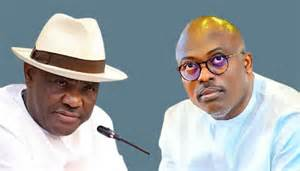
In the annals of Nigerian political warfare, the student rarely defeats the master. But when the student also attempts to join the master’s new party, the outcome is almost preordained.
Governor Siminalayi Fubara of Rivers State has learned this lesson the hard way. His audacious defection to the All Progressives Congress (APC) in late 2025 was meant to be a masterstroke—a move that would neutralize his estranged godfather, FCT Minister Nyesom Wike, by appealing to a higher power: President Bola Tinubu.
Instead, it has turned into a political funeral.
As the APC’s governorship primary approaches on May 21, 2026, Fubara finds himself not as the anointed candidate of a grateful ruling party, but as a man whose loyalists have been systematically disqualified, whose structure has crumbled, and whose political future now hangs by a thread . Wike, meanwhile, has demonstrated why he remains the undisputed “Landlord” of Rivers politics—using the APC machinery to sweep every major ticket and positioning himself as Tinubu’s most indispensable ally in the South-South.
This analysis chronicles the battle, dissects Fubara’s fatal miscalculation, and extrapolates the implications for Rivers State in 2027.
The Unraveling: From Godfather to Mortal Enemy
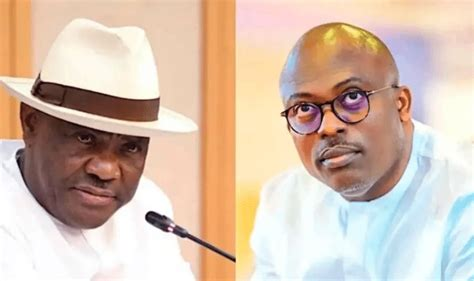
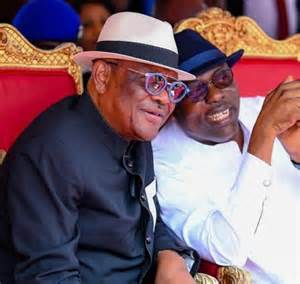
The Wike-Fubara relationship has all the tragic contours of a Shakespearean betrayal.
In 2023, Wike handpicked Fubara, then a little-known accountant, to succeed him as governor. But within months, the relationship soured. The classic Nigerian political dilemma unfolded: the godfather wanted control; the godson wanted autonomy .
By late 2024, Rivers State was in open political warfare. Lawmakers loyal to Wike, led by Speaker Martin Amaewhule—moved to impeach Fubara. The crisis escalated to the point where President Tinubu declared a state of emergency in March 2025, suspending Fubara and appointing a sole administrator for six months .
When emergency rule was lifted in June 2025 following a presidential peace pact, Fubara emerged with his job intact but his power severely diminished . The terms of the agreement, brokered by Tinubu, reportedly required Fubara to concede control of the state’s political structure to Wike’s allies.
Fubara, according to sources, reneged on those terms . Wike, speaking on Channels TV in May 2026, confirmed the breach: “The governor said ‘I am ready for peace, I’m no longer interested in this, I will not do this.’ The Assembly went and withdrew the impeachment before a president of a country. Now, having withdrawn the impeachment, you are now too smart on what you agreed before the president.”
That breach set the stage for the final act.
Fubara’s Gamble: Defecting to the APC
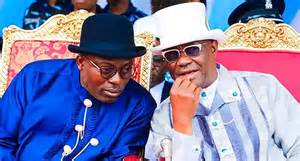
By December 2025, Fubara had calculated that his only path to survival, and a second term, lay in abandoning the fractured PDP and seeking refuge in the APC.
The strategy appeared brilliant on paper. President Tinubu, eager to expand his footprint in the South-South, would embrace a defecting governor. The APC national leadership, through National Secretary Ajibola Basiru, publicly endorsed Fubara’s second term in December 2025, describing his alignment with the ruling party as “a boost to both the governor and the APC” .
Basiru went further, declaring at a state function: “I congratulate our governor. The only way you can compensate the governor is to continue to vote for our party, the APC, in all elections” .
For a few weeks, Fubara’s camp celebrated. He had, it seemed, outmaneuvered Wike by going over his head to the President himself. Some analysts even speculated that Tinubu would rein in Wike to preserve the strategic advantage of having a sitting governor in the APC.
But Fubara made two fatal miscalculations.
Miscalculation One: He underestimated Wike’s structural control.
Wike did not just control the PDP in Rivers; after his own defection to the APC, he had spent months infiltrating and capturing the APC’s local machinery. By the time Fubara arrived, Wike’s loyalists already occupied key party positions at the ward and local government levels.
Miscalculation Two: He overestimated Tinubu’s willingness to abandon Wike.
Wike is not merely a minister. He is the political enforcer who delivered the South-South for Tinubu in 2023 and who has since become the President’s battering ram against the PDP nationally. As one source put it: Wike has shown the President that he is a “valuable player” by ensuring the PDP remains in ruins .
The Structural Stronghold: How Wike Used the APC Machine
The proof of Wike’s dominance came not in rhetoric but in raw primary election results.
Throughout May 2026, the APC conducted its primaries for the House of Representatives and Senate across Rivers State. The outcomes were devastating for Fubara.
Wike’s Loyalists Sweep Reps Tickets
Speaker Martin Amaewhule, the Wike loyalist who led the impeachment push against Fubara, won the Obio/Akpor Federal Constituency ticket unopposed with 17,968 votes .
In all, Wike’s allies swept the 13 federal constituencies:
| Constituency | APC Candidate | Affiliation |
|---|---|---|
| Obio/Akpor I | Martin Amaewhule | Wike loyalist |
| Port Harcourt I | Blessing Amadi | Wike loyalist |
| Port Harcourt II | Igwe Precious | Wike loyalist |
| Bonny/Degema | Cyril Hart | Wike loyalist |
| Khana/Gokana | Dum Dekor | Wike loyalist |
| Okrika/Ogu-Bolo | Linda Stewart | Wike loyalist |
| Eleme/Tai/Oyigbo | Felix Nwaeke | Wike loyalist |
| Akuku-Toru/Asari-Toru | Isobo Jack | Wike loyalist |
Fubara’s Allies Disqualified
More telling than who won was who was prevented from even competing.
The APC screening committee disqualified at least four aspirants widely seen as Fubara loyalists :
- Air Commodore John Azubuike Opara (Rtd) – seeking Port Harcourt seat
- Hon. Anderson Allison Igbiki – Okrika/Ogu-Bolo constituency
- Hon. Awaji-Inombek D. Abiante – Andoni/Opobo-Nkoro constituency
- Hon. Boma Goodhead – Asari-Toru/Akuku-Toru constituency (serving member)
The party’s National Publicity Secretary, Felix Morka, cited “failure to meet screening criteria,” but party insiders were more candid. One source told Vanguard: “The screening process is being used to settle political scores ahead of 2027. It is no longer about competence or popularity” .
The disqualifications extended to the Rivers State House of Assembly, where approximately 65 aspirants reportedly loyal to Fubara were barred from contesting . Some aggrieved members have begun defecting from the APC entirely, with one youth leader, Legborsi Yamaabana, announcing his exit and describing the process as “fundamentally flawed and skewed in favor of Wike’s loyalists” .
Wike’s Coalition Strategy
Wike has been explicit about his political architecture. During his May 2026 media chat, he revealed the existence of a “rainbow coalition” involving his loyalists in both the PDP and the APC .
“We have loyalists in PDP, we have loyalists in APC. I have never hidden the fact that everywhere you say rainbow coalition. We have put ourselves together and it is a political strategy because we have somebody we will fight,” Wike said, making clear that the “somebody” is Fubara .
He added definitively: “We and Fubara are not working” .
The APM Local Government Gambit
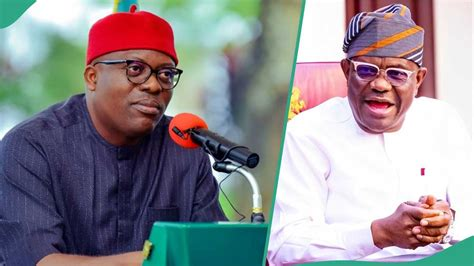
While much attention has focused on the APC primaries, Wike’s structural control was demonstrated even earlier through the local government elections conducted by the Allied Peoples Movement (APM).
Reports indicate that Wike’s machine effectively used the APM as a vehicle to capture local government structures across Rivers State. Unlike the APC, which was still absorbing defectors, the APM gave Wike a clean slate to install loyalists at the grassroots level—the very foundation upon which all elections are built.
By the time Fubara joined the APC, Wike had already locked down the local government apparatus through the APM. This is why, when the APC screening committees sat, they operated on Wike’s terms: the ward chairmen, local government executives, and delegates were predominantly his people.
This structural reality is what made Fubara’s defeat inevitable. Politics, in Nigeria, is not won on Twitter or in television studios. It is won at the ward level, where party agents count votes. And at that level, Wike has no equal in Rivers.
Chapter Five: Wike’s National Value – The PDP in Ruins
To understand why President Tinubu has not restrained Wike, one must look beyond Rivers.
Wike has positioned himself as the architect of the PDP’s ongoing disintegration. Since joining the APC-led government as FCT minister (without leaving the PDP) , he has aggressively poached PDP stalwarts, funded legal battles against the party’s structures, and publicly humiliated its leadership .
The faction of the PDP aligned with Governor Seyi Makinde of Oyo State has been the most vocal in resisting Wike’s influence. In May 2026, the Makinde-backed interim national leadership of the PDP issued a blistering statement describing Wike’s recent media appearance as “an unsolicited overdosage of political rascality, moral emptiness, and crass opportunism” and “the last kicks of a dying horse” .
But the very vehemence of the attack reveals Wike’s effectiveness. The PDP is fighting for survival, and Wike is the primary cause of its distress.
For President Tinubu, this is invaluable. A weakened PDP means fewer resources to oppose his re-election. A fragmented opposition means he can focus on building his own coalition rather than defending against a united front.
Wike has delivered that fragmentation. In return, Tinubu has given him a free hand in Rivers, at least until the 2027 general election calculation demands otherwise.
Chapter Six: Where Does Fubara Stand Now?
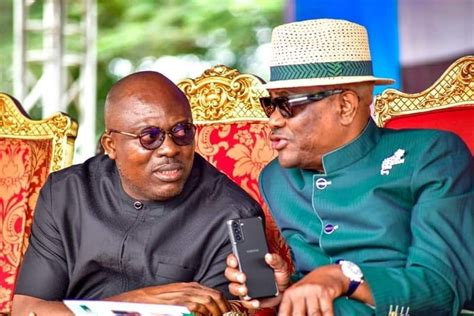
As of mid-May 2026, Fubara’s position is precarious.
He has been cleared to contest the APC governorship primary, with the screening committee allowing him to “take a bow” as a sitting governor . On paper, he remains a candidate.
But the structural deck is stacked against him. The same party machinery that disqualified his legislative allies will determine the outcome of the governorship primary. And that machinery is controlled by Wike.
Wike has publicly stated that he has “not endorsed anyone” for the governorship, claiming that the “joint coalition” of his PDP and APC loyalists will meet to decide . But this is semantic gymnastics. Wike’s coalition has a single leader, and that leader is Wike.
Privately, sources indicate that Wike is considering multiple options: architect Tonye Cole, Alabo Dax George Kelly, or even House Minority Leader Kingsley Chinda, who was also cleared to contest the primary .
But the most revealing signal came from Wike’s April 2026 “thank you tour” of Rivers State, during which he conspicuously avoided visiting Fubara’s local government area—a deliberate snub that spoke louder than any interview .
The consensus among political analysts in Port Harcourt is that Fubara will either be defeated in the primary or pressured to step aside in favor of a Wike anointed candidate. Either outcome would mark the end of Fubara’s political relevance.

Implications for 2027: Tinubu’s Landslide in Rivers
The defeat of Fubara is not merely a local story. It has profound implications for the 2027 presidential election.
Rivers as a Strategic Prize
Rivers State is the fulcrum of South-South politics. It is the largest oil producer in Nigeria, contributing a significant percentage of the federation account. It is also the most populous state in the region, with the highest number of registered voters.
Whoever controls Rivers controls the narrative of the South-South. And the South-South, with its nine states, has been a battleground region in every election since 1999.
The Path to a Landslide
With Wike fully in control of the APC structure in Rivers—and with the PDP in disarray—President Tinubu is positioned for a landslide victory in the state in 2027.
Consider the math:
- In 2023, Tinubu won Rivers with 314,000 votes against Atiku Abubakar’s 275,000 and Peter Obi’s 174,000, a narrow victory in a three-way race.
- In 2027, with Fubara (the state’s sitting governor) theoretically on the APC ticket, and with the PDP likely fielding a weakened candidate, Tinubu could double his margin.
Some analysts project that Tinubu could win with a margin that would not only secure the state but also send a powerful signal across the South-South and South-East that the APC is the region’s new political home.
The Fubara Factor
Even if Fubara is defeated in the primary, he remains a sitting governor until May 2027. He could theoretically sabotage the APC’s efforts out of spite. But without a legislative majority (the Assembly is controlled by Wike’s allies) and without local government structures (controlled by Wike’s APM machine), Fubara’s capacity for sabotage is limited.
More likely, Fubara will be offered a face-saving exit, perhaps an ambassadorial posting or a federal agency chairmanship, in exchange for peaceful cooperation. The alternative is political annihilation.
Wike’s Post-2027 Calculus
For Wike, the victory in Rivers is a means to a larger end. Having delivered Rivers to Tinubu in a landslide, he will be positioned for a significant role in a second-term cabinet, depending on the internal dynamics of the APC’s ticket selection.
Wike has made no secret of his national ambitions. The defeat of his former godson is merely the opening salvo. He may be staking his loyalty to Tinubu towards a presidential ambition after Tinubu’s expected term.
The Broader Lesson: Structural Politics Still Reigns
The Wike-Fubara saga offers a sobering lesson for Nigerian politicians: in the end, structure defeats strategy.
Fubara’s defection was a strategic move; bold, unexpected, and potentially game-changing. But it failed because he attempted it without first building the grassroots infrastructure necessary to survive Wike’s counterattack.
Wike, for all his bluster, is a master of structural politics. He understands that control of ward chairmen, local government executives, and screening committees is more valuable than any endorsement from a national leader. He built his machine over decades, not months. And that machine has now devoured his former protégé.
For President Tinubu, the lesson is equally clear: Wike is an asset worth protecting—at least until 2027. After that, the calculation may change. But for now, the “Landlord” of Rivers remains the most powerful political figure in the South-South.
And Siminalayi Fubara? He is learning that in Nigerian politics, there is no forgiveness for the student who forgets who made him.







Leave a comment