

By: Political Analysis Desk
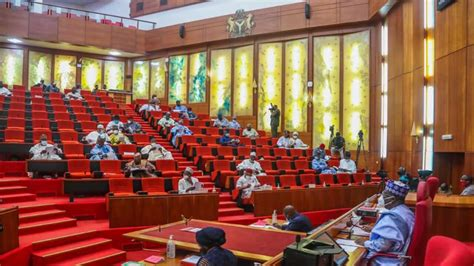
There is an old saying in Nigerian politics: the primary election is always bloodier than the general election. The All Progressives Congress (APC) senatorial primaries held on Monday, May 18, 2026, proved that adage with brutal finality.
When the dust settled across the 109 senatorial districts, the ruling party had produced a political map drenched in upset. Serving Senate President Godswill Akpabio and his deputy Jibrin Barau sailed through. But several ranking senators, men who have spent a decade mastering legislative arithmetic, were unceremoniously shown the exit.
Among the most shocking casualties: Senator Ned Nwoko (Delta North), Senator Ovie Omo-Agege (Delta Central), Senator Neda Imasuen (Edo South), Senator Jibrin Isah (Echocho) (Kogi East), and Senator Ipalibo Banigo (Rivers West), who was disqualified outright.
This analysis examines three critical questions: Why did these ranking lawmakers lose? What role did the governors and President Bola Tinubu play? And what does the purge of legislative experience mean for the quality of Nigeria’s next Senate?
The Context: A Lawmaker’s Lament
To understand this bloodletting, one must rewind to a tense evening on Channels Television just weeks before the primaries. A serving APC lawmaker, speaking on condition of anonymity, voiced a complaint that many colleagues shared but few dared to utter publicly.
“We are unable to carry out meaningful development work in our constituencies because the executive at the state level has choked our funds and taken over our projects,” the lawmaker told the station.
The complaint was not merely about ego. It was about survival. In Nigeria’s clientelist political system, an incumbent lawmaker’s re-election depends on visible “constituency projects, “boreholes, roads, school renovations. When state governors control local government allocations and redirect federal projects to their preferred candidates, the sitting lawmaker becomes a lame duck.
That same lawmaker revealed that a delegation had met with President Tinubu to complain about governors “deliberately frustrating” federal lawmakers. The President reportedly listened but gave no immediate assurances.
The primaries proved the lawmakers’ fears were well-founded.
The Fallen Titans: Ranking Senators Who Lost Their Tickets
Senator Ned Nwoko (Delta North) – The Most Humiliating Defeat
Perhaps no defeat was as breathtaking as that of Senator Ned Nwoko, the billionaire lawmaker. Contesting the APC primary for Delta North, Nwoko was obliterated by former Governor Ifeanyi Okowa.
The final tally? Okowa polled 4,462 votes. Nwoko got 3 votes.
Just three votes for a man who spent millions on political infrastructure. Local party sources in Delta North told Daily Trust that Nwoko’s loss was not merely about popularity but about a fundamental miscalculation: he had underestimated the structure of the former governor, who retained control of party ward chairmen. Moreover, Nwoko’s “stop-and-start” campaign, oscillating between the APC and overtures to the PDP, alienated grassroots loyalists who value consistency over cash.
Senator Ovie Omo-Agege (Delta Central): The Anti-Defection Irony
The former Deputy President of the Senate, Senator Ovie Omo-Agege, suffered a stunning defeat to incumbent Senator Ede Dafinone. Dafinone polled 116,252 votes against Omo-Agege’s 3,643 votes.
The irony is thick: Omo-Agege was one of the architects of the stringent anti-defection provisions in the Electoral Act 2026. The law, amended in March 2026, bars politicians from switching parties after membership registers are submitted to INEC. The goal was to trap opposition defectors. Instead, it trapped a ranking APC leader who found himself locked into a party structure that had turned against him.
Political analysts in Delta note that Omo-Agege had fallen out with Governor Sheriff Oborevwori (PDP), but his real problem was within the APC: the Dafinone family has deeper roots in Delta Central’s Urhobo political elite. Without the freedom to defect to a rival platform, Omo-Agege had nowhere to run.
Senator Neda Imasuen (Edo South): The Governor’s Hammer
In Edo South, Senator Neda Imasuen lost to Omoregie Ogbeide-Ihama, a former House of Representatives member widely regarded as Governor Monday Okpebholo’s preferred candidate. The margin was not immediately disclosed, but party insiders described it as a “landslide for the governor’s machine.”
Imasuen’s crime? He had refused to be a rubber-stamp senator for the state executive. Over the past two years, he consistently voted against executive-backed bills, earning the governor’s wrath.
Senator Jibrin Isah (Echocho): Kogi East’s Power Shift
In Kogi East, Senator Jibrin Isah (Echocho) lost to Dr. Erico Ameh. Echocho, a ranking senator known for his quiet legislative craft, was outmaneuvered by a coalition of younger party members who argued that “stagnation” had set in.
Senator Ipalibo Banigo (Rivers West), Disqualified
Senator Ipalibo Banigo, one of only four women in the 10th Senate, was disqualified by the APC screening committee. Her offense? Allegedly supporting Governor Siminalayi Fubara during the political crisis between the governor and FCT Minister Nyesom Wike.
In a tearful address to supporters, she said: “We have only four women in the 10th Senate… I believe that Mr. President is gender sensitive.” But sources close to Wike confirmed that the FCT Minister personally ensured Banigo’s name was struck off the list.
Why Did They Lose? The Politics Beneath the Numbers
1. The Governor’s Gambit
The most consistent factor in the defeat of ranking senators was the intervention of state governors. In Edo, Gombe, Delta, and Imo, governors deployed their control over party structures to ensure their preferred candidates won.
In Gombe Central, the battle between Governor Inuwa Yahaya and former governor Danjuma Goje was legendary. Goje, seeking a fifth term, rejected the party’s consensus arrangement. Yahaya insisted on a “power shift” after 16 years. The governor’s machine won.
2. The Anti-Defection Law Backfire
The Electoral Act 2026 was designed to prevent last-minute defections. But as The Guardian reported, the law’s architects became its first major casualties. Omo-Agege’s case is the most emblematic: a man who helped build the prison found himself locked inside it.
3. Local Grievances and Absentee Representation
Ned Nwoko’s three votes signal a total collapse of his political structure. Constituents complained of “absentee representation”, a senator more visible on social media than in the villages of Delta.
4. Zoning and Rotation Politics
In many districts, the APC adopted rigid zoning formulas. Where zoning cut against an incumbent, as in parts of Ekiti and Ogun, the incumbent lost.
Did President Tinubu Interfere?

This is the $64 million question. President Bola Ahmed Tinubu maintained a public posture of non-interference. But multiple sources confirmed that his political machinery, through FCT Minister Nyesom Wike, Chief of Staff Femi Gbajabiamila, and various presidential liaisons, did tilt the scales in key districts.
Evidence of interference:
- Rivers West: Banigo’s disqualification was widely attributed to Wike’s influence.
- Lagos State: Desmond Elliot cried out that his security aides were withdrawn. He directly implicated Gbajabiamila, at the state assembly level.
- Edo South: The governor acted with “presidential clearance” as Tinubu seeks to consolidate control over Edo APC.
Where Tinubu did NOT interfere: In Borno, Kano, Akwa Ibom, and Ekiti, the President allowed local structures to determine outcomes.
The verdict: Selective interference, not wholesale imposition.
What the Loss of Ranking Senators Means for Legislative Depth
The Loss of Institutional Memory
When Omo-Agege, Nwoko, Imasuen, and Echocho leave—and Banigo is disqualified—the Senate loses approximately 40 years of combined legislative experience.
The Rise of the “Governor-Senator”
At least four sitting governors won Senate tickets: Hope Uzodimma, Dapo Abiodun, Inuwa Yahaya, and Abdulrahman Abdulrazaq. Former governors bring executive experience but are accustomed to being chief executives, not legislators.
The Weakening of the Senate vs. The Executive
The primary bloodletting has strengthened the hand of the executive branch. This will likely produce a more compliant Senate in the 11th National Assembly.
The Gender Gap Worsens
With Banigo’s disqualification, the number of women in the Senate may drop from four to perhaps two or three.
The Winners
| Senator | District | Notes |
|---|---|---|
| Godswill Akpabio | Akwa Ibom North-West | Unopposed |
| Jibrin Barau | Kano North | Consensus |
| Opeyemi Bamidele | Ekiti Central | Consensus |
| Orji Uzor Kalu | Abia North | Direct win |
| Ali Ndume | Borno South | Unopposed |
| Ahmad Lawan | Yobe North | Consensus |
These winners either controlled their local party structures absolutely or had the backing of a governor.
Looking Ahead: The 2027 Senate
The Senate that convenes in 2027 will be different. It will be younger, less experienced, and more deferential to the executive. The old lions are gone. Whether that produces a more efficient legislature,or simply a rubber-stamp chamber, will be the defining question of the 11th Senate.
READ ALSO: Ogun East: How Abiodun-Daniel Rivalry Shapes 2027








Leave a comment