

How a Plenary Motion Foreclosed Competition and Exposed the 10th Senate’s Crisis of Independence
By: Political Analysis Desk
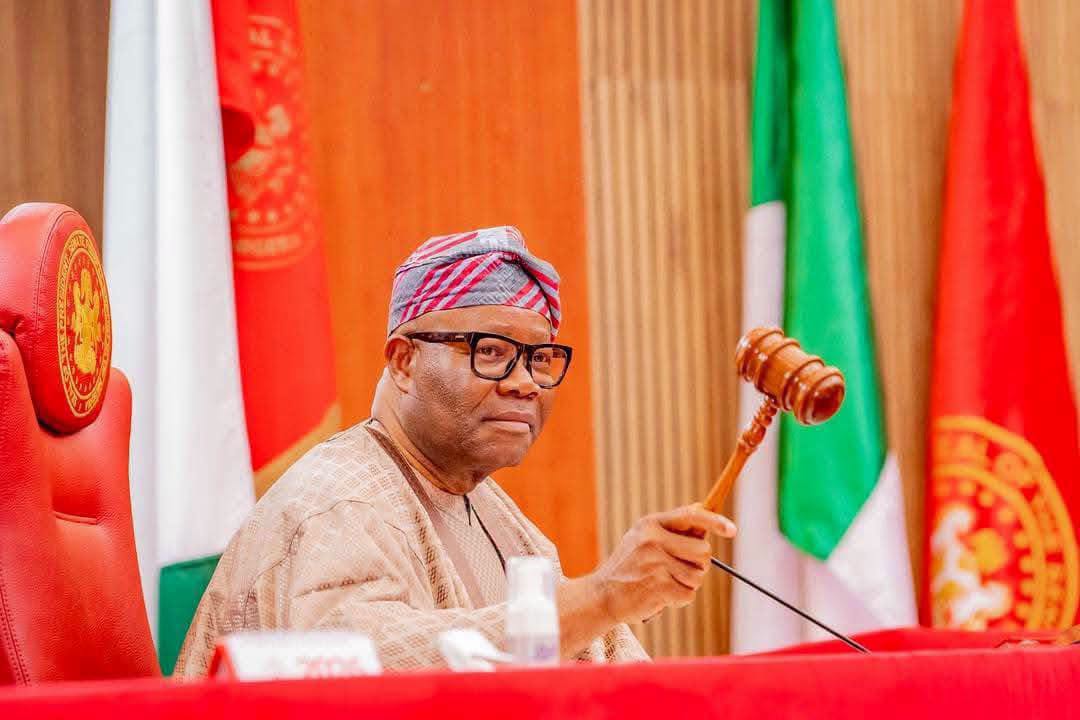
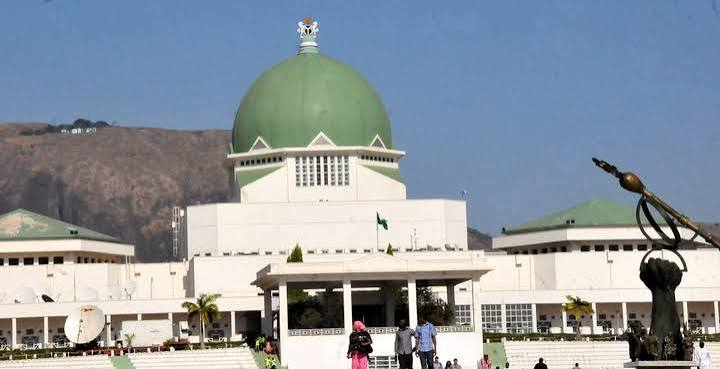
Senate President Godswill Akpabio has done what Nigerian legislative leaders often do when facing political headwinds: he has converted a personal ambition into a collective declaration. The no vacancy motion passed during plenary in October 2026 was not a constitutional requirement. It was a political manoeuvre designed to foreclose competition before it could begin, and it reveals as much about the Senate’s relationship with the executive as it does about Akpabio’s survival instincts. The Akpabio second term Senate manoeuvre was not a constitutional requirement; it was a political device designed to foreclose competition before it could begin.
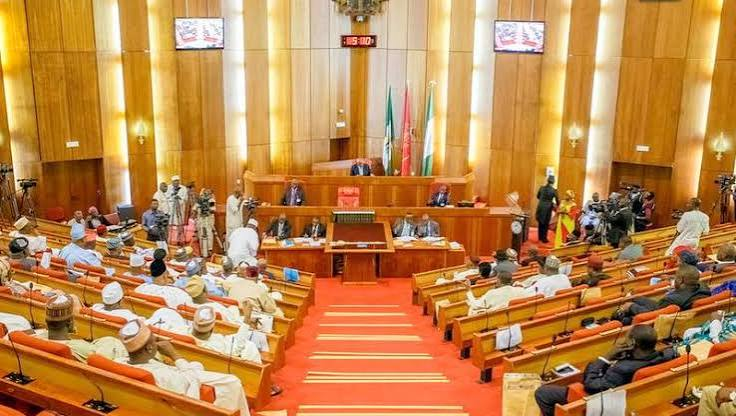
The motion was moved by Senate Chief Whip Tahir Monguno and seconded by Senator Cyril Fasuyi. Monguno declared: Insha Allah, by the grace of God, the majority of us are going to make it back to the Senate, and this seat is hereby declared: there is no vacancy . Fasuyi was more explicit: I hereby support the motion ably moved by Senator Monguno that the seat of the Senate President in the 11th Assembly is not open to any contest. It is already occupied by Senator Godswill Obot Akpabio . When Akpabio put the declaration to a voice vote, the ayes were audible. No dissent was recorded. I think that settles it, he said .
But it does not settle anything. The 11th Senate does not yet exist. The senators who will elect its presiding officers have not been elected. The declaration is a statement of intent by current lawmakers, not a binding constitutional act. It is political theatre dressed as parliamentary procedure.
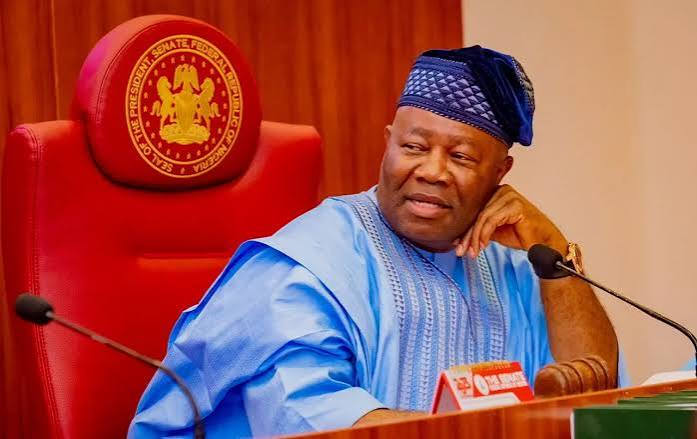
Akpabio Second Term Senate: The No Vacancy Motion
The procedural mechanics of the motion deserve scrutiny because they reveal how carefully the ground was prepared. Monguno, as Chief Whip, is responsible for party discipline on the floor. His decision to move the motion rather than leave it to a backbencher signalled that the leadership had already decided the outcome. Fasuyi’s second was equally deliberate, naming Akpabio directly rather than referring vaguely to the office.
The timing was equally deliberate. The motion came days after Akpabio had faced sustained criticism over his remarks during the debate on the Suicide Prevention Bill, when he suggested that young people contemplate suicide because they believe seven virgins await them in the afterlife. Rather than address the substance of the criticism, Akpabio reframed it as a political conspiracy: The presidency is gone, the vice presidency is gone, and now the only one left is the Senate presidency. So everybody wants to contest that position, everybody wants to mobilise .
By presenting himself as the victim of a coordinated campaign, Akpabio created the justification for the no vacancy declaration. The logic was circular but effective: because his opponents were supposedly plotting against him, his allies needed to declare the position closed. The Senate’s silence on the constitutional impropriety of this manoeuvre was the silence of a chamber that had already surrendered its independence.
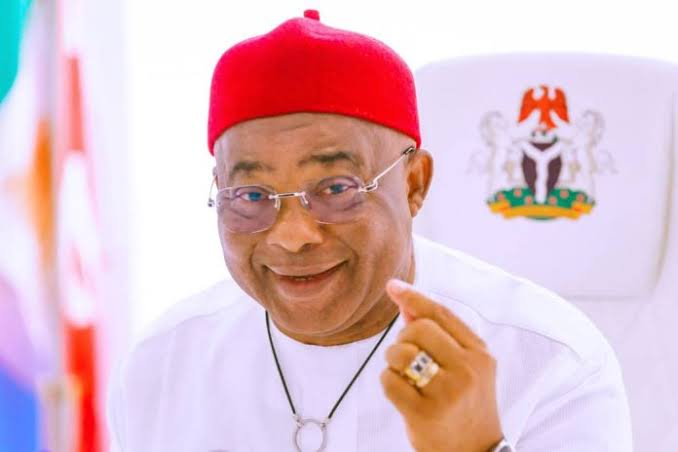
The Uzodimma Factor and the Tinubu Card
The Akpabio second term Senate bid acquired urgency only after Governor Hope Uzodimma of Imo State signalled his own ambition to occupy the presiding officer’s chair. Uzodimma, who is contesting the Imo West senatorial seat in 2027, would enter the Senate in June 2027 while his second term as governor runs until January 2028. Premium Times reported that he had perfected plans to resign as governor if he wins the senatorial election and switch to the Senate .
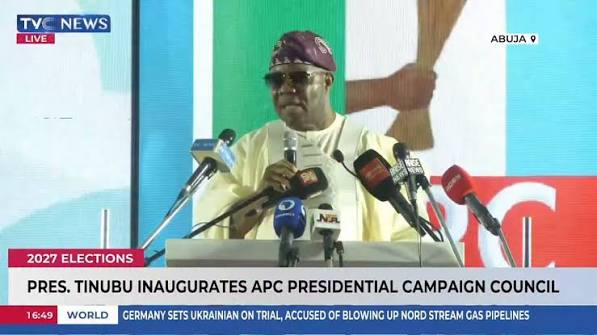
Akpabio’s response was two-pronged. First, he publicly appealed to President Bola Tinubu to support his re-election as Senate President. Second, he issued a veiled warning to Uzodimma, without naming him. At the inauguration of the APC Presidential Campaign Council, Akpabio told Tinubu: Mr President, you already know that we are with you. Please, take the advice of Governor Soludo seriously. He said if the cloth is not torn, why try to amend it? If you try to amend it, you are going to tear the cloth . He then added: If the National Assembly is so much with you, why not encourage them to come back and support you in their second term .
Turning to the governors, Akpabio delivered a warning that was unmistakably directed at Uzodimma: And for my brothers who are governors, I want you to know: you must not abandon your people. I did eight years as a governor. The constitution says you should do eight years. There is no need for you to start eyeing another position that is not available . He concluded with a statement that revealed the confidence of a man who believes he has the president’s ear: I have been in this business for over 25 years, and I always win .
Uzodimma’s response was carefully calibrated. He did not directly engage Akpabio’s warning. Instead, he told the gathering that the president’s re-election bid was inseparable from the electoral fortunes of other APC candidates, including himself: Mr President, you will be on the ballot on 16 January 2027. But if we are honest with ourselves, so will we. I will be on the ballot as a senatorial candidate . The subtext was clear: Uzodimma intends to be in the Senate in 2027, and from that position, he can contest the Senate presidency.
The Akpabio second term Senate strategy depends on Tinubu’s willingness to intervene on his behalf. Whether the president will do so remains uncertain. Tinubu has historically preferred to allow contested positions to play out rather than impose candidates, and he may calculate that a Senate presidency contest between Akpabio and Uzodimma serves his interests by keeping both men dependent on his favour.
The Public Record: Criticism and Contradiction
Akpabio’s tenure has been marked by controversies that complicate his claim to continuity. He has been accused of turning the Senate into a rubber stamp for the executive, with critics pointing to the swift approval of ministerial nominees and the minimal scrutiny of presidential requests. Former Senate President Bukola Saraki and civil society groups have criticised the leadership for failing to independently assess executive proposals.
The Electoral Act amendment of February 2026 drew particular ire. The Senate approved provisions allowing both manual and electronic transmission of results, creating a loophole where manual sheets could prevail if electronic transmission failed. Critics, including former Education Minister Oby Ezekwesili, accused the leadership of weakening electoral transparency ahead of the 2027 polls.
Akpabio’s remarks on suicide during the debate on the Suicide Prevention Bill in October 2026 sparked outrage. He suggested young people contemplate suicide because they believe seven virgins await them in the afterlife, a comment widely condemned as insensitive and disparaging of Islam . Akpabio defended himself, stating his comments were taken out of context and noting his 25-year history of supporting Muslim pilgrimages. He claimed he had sponsored about 5,800 Muslims on pilgrimage to the Holy Land and more than 10,000 Christians to Rome and Jerusalem during his tenure as governor .
The Senate’s suspension of Senator Natasha Akpoti-Uduaghan for six months in March 2025, following her sexual harassment allegations against Akpabio, was condemned by rights advocates as gendered punishment. Former Senator Ishaku Elisha Abbo accused Akpabio of running the Senate like a personal empire, while Senator Adams Oshiomhole acknowledged growing grumbling among senators over his management style.
These controversies matter because they undermine the central claim of Akpabio’s second term bid: that he deserves continuity because he has served the institution well. A Senate President who has been accused of subservience to the executive, who has presided over an amendment that weakens electoral transparency, and whose management style has generated open resentment among colleagues cannot credibly present himself as the guardian of legislative independence.
The Legislative Record: Numbers Versus Impact
Akpabio’s defenders point to legislative productivity as justification for continuity. But the figures are contested. In June 2026, Leadership reported conflicting numbers from Senate leadership itself: Akpabio stated that 96 out of 844 bills introduced had been passed, while Senate Leader Opeyemi Bamidele disclosed that 108 out of 983 bills had been passed . The discrepancy is significant, and it undermines the credibility of the Senate’s self-reported scorecard.
Nigeria Integrity Watch, using the National Assembly’s legislative tracker, recorded 106 bills passed as of April 23, 2026 . The group acknowledged the Senate’s interventions in electoral reform, fiscal governance, security, education, and institutional oversight. But it also cautioned that the passage of legislation does not automatically translate into improvements in the lives of citizens. The effectiveness of laws would ultimately depend on their implementation, funding, administrative capacity, and the ability of institutions to enforce them .
Akpabio’s spokesman, Eseme Eyiboh, has claimed that the 10th Senate passed more than 90 bills with 58 receiving presidential assent, a record he described as unmatched since 1999. At a comparable stage, he argued, the 8th Senate had passed only 32 bills, and the 9th roughly 58 . These comparative figures are striking, but they measure volume, not quality. A Senate that passes 106 bills while serving as an executive annex cannot claim to be productive in any meaningful democratic sense. The question is not how many laws were passed, but whether those laws have improved the lives of Nigerians. On that measure, the verdict is far less flattering.
The obsession with bill counts also obscures the Senate’s failure to exercise its oversight functions. A legislature that passes many laws but fails to investigate the executive, scrutinise appointments, and hold ministers accountable is not doing its job. The 10th Senate has been notably reluctant to confront the executive on issues ranging from the security crisis to the state of the economy. Its silence on these matters is more telling than its bill count.
The Arewa Think Tank and the Politics of Endorsement
The Arewa Think Tank’s endorsement of Akpabio’s second term bid is instructive. Convener Muhammad Alhaji Yakubu commended the senators who backed Akpabio, describing their support as a vote of confidence in his leadership and a boost for legislative stability . He urged the House of Representatives to emulate the Senate by backing Speaker Tajudeen Abbas for a second term, insisting there is no vacancy in either presiding office .
This is the language of continuity, not accountability. Stability in this context means the absence of contest. It means the preservation of a legislative leadership that has been accused of subservience to the executive. The Arewa Think Tank’s intervention is not an independent assessment of Akpabio’s performance; it is a political endorsement dressed as civic commentary. Yakubu acknowledged that the final decision on who would preside over the Senate in the 11th National Assembly would be made after the 2027 general elections, when the new lawmakers assemble to elect their principal officers . But the endorsement was designed to shape that decision before the voters have spoken.
The politics of endorsement is a familiar feature of Nigerian public life. Civil society organisations, think tanks, and professional bodies frequently issue statements that are presented as objective assessments but are in fact political interventions. The Arewa Think Tank’s endorsement of Akpabio fits this pattern. It is not a neutral analysis of his record; it is a contribution to a political contest, disguised as civic concern for stability.
The Crisis of Legislative Independence
The no vacancy doctrine is the logical endpoint of a Senate that has abandoned any pretence of independence. If the Senate President’s position is not open to contest before the election that will determine the Senate’s composition, then the principle that each Senate elects its own presiding officers has been replaced by a principle of executive-sanctioned continuity.
Akpabio’s appeal to Tinubu is not merely a request for support. It is an admission that the Senate President’s fate rests not with his colleagues but with the president. This is the fundamental problem. A Senate President who owes his position to the executive cannot hold that executive accountable. He cannot investigate the president’s decisions, scrutinise his nominees, or reject his legislative proposals without risking the support that sustains him.
The Akpabio second term Senate project is therefore not just about one man’s ambition. It is about the kind of legislature Nigeria will have in the 11th Assembly. If the no vacancy doctrine succeeds, the Senate will enter the next political cycle having pre-emptively surrendered its independence. If it fails, there may be a genuine contest that restores some element of accountability.
The 10th Senate’s record, whether measured at 96, 106, or 113 bills passed, is not a record of legislative achievement. It is a record of institutional capitulation. The no vacancy declaration is the clearest evidence yet that the Senate has ceased to function as a co-equal branch of government.
Conclusion: The Question Voters Should Ask
The 2027 elections will determine the composition of the 11th Senate. But the no vacancy declaration reveals that the real contest has already been foreclosed. If Akpabio succeeds in his bid, it will be because he has convinced Tinubu, not because he has convinced the Nigerian people.
The Akpabio second term Senate project will be judged not by the volume of bills passed but by whether the chamber recovered the independence it surrendered. Voters should ask their senators a simple question: if you believe the Senate presidency is not open to contest, what else have you decided not to contest? The answer, on the evidence of the 10th Senate, is the executive’s power, the president’s decisions, and the people’s interests.
Until the Senate demonstrates that it can act independently of the executive, the no vacancy declaration will remain a symbol of institutional failure rather than legislative stability. The question Nigerians should ask is not whether Akpabio deserves a second term. It is whether any Senate President who owes his position to the executive can serve the people who elected the senators. The answer, on the evidence of the 10th Senate, is no.
- 10th Senate bills passed
- 11th Senate leadership
- Akpabio no vacancy motion
- Akpabio second term Senate
- Akpabio Tinubu endorsement
- Akpabio Uzodimma Senate race
- Akpoti-Uduaghan suspension
- Arewa Think Tank
- Electoral Act amendment 2026
- Godswill Akpabio profile
- Nigeria Integrity Watch
- Nigerian Senate 2027
- Senate independence Nigeria
- Senate legislative record
- Senate presidency 2027








Leave a comment