

Nine days after launch, Lagos Life is no longer just a viral browser game. Its maker, Vatar, has closed a $500,000 pre-seed round at a $10 million valuation, according to Condia.
Flutterwave CEO Olugbenga Agboola invested through his fund, Resilience17, and Mono’s Nathan Nwachuku and Abdulhamid Hassan, Oo Nwoye and Terra Industries also took part. The round reportedly closed in a day.
The tempting headline is that Nigerian games have finally arrived. That reading is too generous to the moment and too narrow about what was actually bought. This analysis looks at what the cheque is really paying for, and what it signals to the wider ecosystem.
What investors actually bought
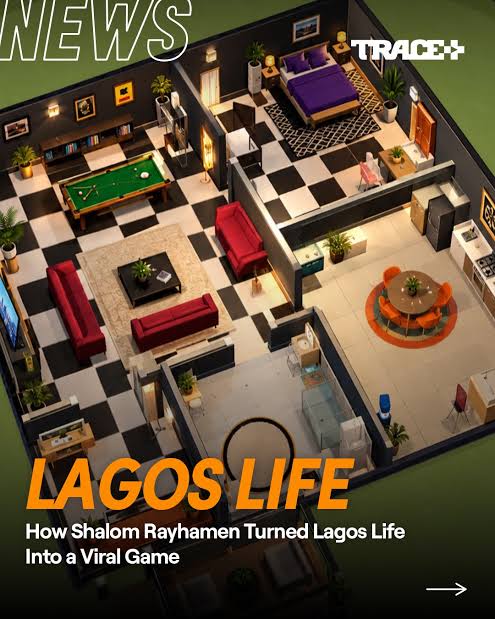
Lagos Life is a persistent multiplayer life simulator played in a browser, with no download. Its public dashboard, as reported by Weetracker, showed more than two million players and over 145,000 concurrent users within five days of launch. Developer Shalom Mathew has said the game earned about $46,900 in its first four days. That is a self-reported figure and should be treated as one.
Notice where that revenue comes from. Condia reports that businesses can buy virtual billboards and ad placements inside the game, and that musicians are using it to promote releases. Vatar is not selling a game so much as renting out a simulated Lagos with an audience already inside it. Investors are underwriting distribution and ad inventory, not a gameplay catalogue.
Why the earlier danfo games never got here
Nigerian developers have been building Lagos-themed games for almost two decades. Bayo Puddicombe built the first danfo game in 2007, and his studio ChopUp later claimed more than 700,000 players for the Danfo series. Gamsole’s Gidi Run, launched with MTN, reached about 100,000 paying subscribers. Maliyo Games turned to international licensing, including a Disney partnership on Iwájú: Rising Chef.
These were not failures of imagination. They were failures of channel. Native apps meant fighting for visibility in crowded app stores and asking data-conscious users to spend megabytes on an install. Nigerian players have also rarely paid for in-app purchases, so studios chased telco billing or foreign licensors.
The browser removes the install barrier, and brand-funded in-game media sidesteps the payment problem. That, more than the idea of a Lagos game, is the shift Vatar’s backers believe Lagos Life is doing differently.

What the cheque signals about the ecosystem
The investor list matters as much as the amount. These are operators from fintech and deeptech, not specialist gaming funds, and they moved quickly. That fits a funding market that has become selective: Nigerian startups raised $184.7 million across 51 deals in the first half of 2026, against $178.3 million across 63 deals a year earlier, and Q1 funding fell 28% year on year. Fewer deals, more concentrated cheques.
In that climate, a $500,000 round closing in a day says founders with liquidity see consumer attention as an asset worth backing early, even without institutional gaming capital behind it. It also suggests Nigeria’s startup money is looking beyond fintech for its next category.
However, angel enthusiasm is not an industry. A programme promoted around Lagos Games Week 2026 offers selected studios $50,000 to $200,000 in non-dilutive funding, aimed at original IP, which is a different bet from a culture-led platform. One fast round does not close that gap.
The infrastructure questions behind the valuation
A $10 million valuation on a product barely over a week old is a bet on a trajectory, not yet a business. Four things sit underneath it.
Retention is unknown.
Even sympathetic coverage notes that a million players is not a million regulars, and novelty-driven traffic decays fast. Advertisers pay for audiences that return, not for visits.
Running costs are real.
Weetracker notes that serving a free game to tens of thousands of concurrent users is expensive, and the game suffered an outage on October 2. For brands buying placements, uptime is part of the product.
Economy integrity is a brand-safety issue. Reports describe an exploit that let players generate huge sums of virtual money. In a game that sells billboards, a broken in-game economy and a trusted audience cannot coexist for long.
Defensibility is thin.
Condia reports Mathew built the original in under 12 hours, and Lagos Life itself borrowed its spark from Lagos Run. Speed of build cuts both ways: rivals can clone a Lagos-themed sim as fast as she made one. The moat has to come from community, data and brand relationships, not code.
What to Keep your eyes on for Lagos Life
Three indicators will show whether this is a company or a moment. First, 30- and 60-day retention, which Vatar has not published. Second, whether it grows beyond Lagos. Abuja and Port Harcourt have been added, and players have joined from Ghana, South Africa, the UK, the US and Togo, but regional demand for a Nigerian life simulator is untested. Third, whether revenue diversifies beyond advertising into premium features without alienating a young, price-sensitive audience.
The deeper takeaway for the ecosystem is not that games are fundable. It is that cultural specificity, delivered through a zero-install channel, can attract capital faster than most infrastructure plays.
Whether that capital builds durable infrastructure, from hosting and payments to measurement for in-game media, or simply funds the next viral wave will decide what this round ends up signalling.
Sources:
Condia (Vatar funding; Shalom Mathew profile);
Weetracker (viral simulator games);
Technext (Lagos Run and earlier Danfo games);
BusinessDay via Technext archive;
Nairametrics (H1 and Q1 2026 funding);
Lagos Games Week 2026 programme posts.











Leave a comment