

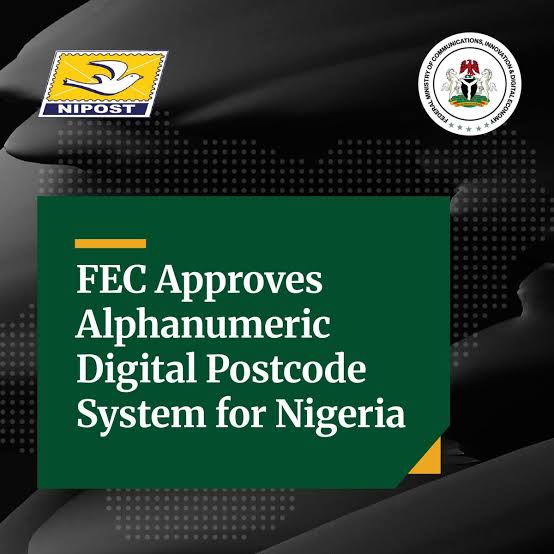
On October 1, 2026, Communications Minister Dr. Bosun Tijani announced the launch of the National Digital Alphanumeric Postcode System. Built by the Nigerian Postal Service (NIPOST) and available at postcode.gov.ng, it gives every addressable building an 11-character code tied to its geographic location. The six-digit codes in use since 1986 generally identified broad areas. The new one points to a building.
The practical case is easy to make. Across much of Nigeria, missing street names and house numbers limited the old postcode’s usefulness, and addresses still often travel as directions and landmarks. NIPOST estimates that poor addressing costs between N50 billion and N80 billion a year in missed and failed deliveries. A machine-readable address that a courier, a dispatch app or an ambulance can act on is, in principle, real infrastructure.
More than a postal upgrade

The digital postcode launch pitch is about deliveries and e-commerce, but the build-up points somewhere wider. The June workshop where the October date was disclosed was themed around national security and public safety, with the National Security Adviser’s office represented. NIPOST has since partnered with the National Identity Management Commission (NIMC), which says postcode retrieval is already integrated into the NIN platform. NIMC’s director-general put the logic plainly: the NIN confirms who you are, and the postcode confirms where you live.Each half is useful alone.
Together they are something else: a verified link between a person and a building, available across government systems. That can speed up identity checks, service delivery and emergency response. It also concentrates sensitive information in a way Nigeria has little experience governing.
Reassurances about the digital postcode are not rules

Officials have addressed the concern. They say the postcode belongs to the building, not its occupant, and NIPOST Postmaster General, Tola Odeyemi, has said access to postcode-related information will be tiered and protected under Nigeria’s data protection framework.
Those are statements of intent. The public details don’t say who sits in each tier, what an organisation must demonstrate before integrating, whether access is logged, or what a resident can do if their building’s data is misused. Organisations can already register interest in integrating the postcode into their platforms, but the conditions aren’t public. For a system whose value comes from being widely queried, these details decide whether it protects people or exposes them.
Not the first attempt at a digital postcode
Nigeria has been here before. The idea dates back to around 2006. NIPOST launched an address verification system in 2018, worked with the telecoms regulator on address accuracy for SIM registration in 2020, and signed a mapping agreement with the National Population Commission in 2022.
One report says a comparable system was promised for 2023 and never moved forward.What is different now is Federal Executive Council approval in March, a live portal and visible ministerial backing. What isn’t yet different is evidence of sustained use.
Adoption is the test
Odeyemi has said herself that implementation, not technology, will decide the outcome. Three things can be checked over the coming months.First, coverage. The government targeted more than 90 percent of buildings at launch and full nationwide reach by the end of 2026.
Second, integration. For now, private firms are at the expression-of-interest stage. Couriers, fintechs and marketplaces haven’t publicly committed to building on the postcode.Third, the gaps. The portal has a process for requesting a postcode for a building that hasn’t been captured. How fast it works will matter most in informal settlements and rural areas, where addressing problems are worst. One pre-launch test found the street names on the map accurate, which is unusual for Nigerian digital maps. Whether that holds outside the major cities is the open question.
The measure that matters
“Every Nigerian deserves to be found,” Tijani wrote at the launch. Being findable is a benefit when you have some say over who finds you.The postcode will be judged less on its coverage figures than on what gets published next: who can look up a building, what they can see, how that access is recorded, and whether residents can see and challenge what is held about them. Until those rules are public, the system is infrastructure without its terms of use.












Leave a comment