

By Political Analysis Desk
The Firebrand and the Strategist: Why Amaechi Is Atiku’s Most Valuable and Most Vulnerable Weapon
Rotimi Amaechi’s Combustible Campaign for Atiku Abubakar in Nigeria’s 2027 Presidential Election
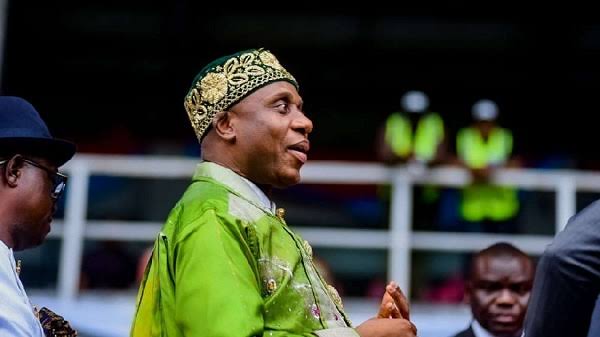
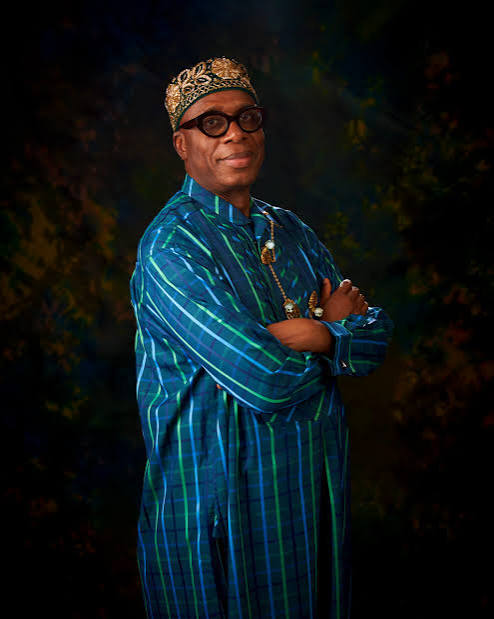
Rotimi Amaechi was not Atiku Abubakar’s first choice for running mate. He was not even the choice of the party’s South-East caucus, which argued that the region had been shut out of the presidency and vice-presidency since 1999. But the former Rivers State governor brings something no other southern politician on the ADC ticket could offer: a combustible, unscripted energy that has already forced the ruling All Progressives Congress onto the defensive, even as it threatens to consume his own campaign.
The Amaechi Atiku vice president arrangement was not the product of sentiment; it was the product of cold electoral arithmetic. The rationale for Amaechi’s selection, as explained by ADC chieftain Kenneth Okonkwo, was strategic: with Peter Obi’s withdrawal from the ADC presidential contest weakening the South-East’s claim to the slot, Atiku chose the nearest person closest to the South-East to demonstrate he harboured no bias against the Igbo. But the deeper logic is electoral geography. Amaechi comes with what APC chieftain Sogbeye Eli called a South-South neutral credential. There is no South-South candidate in the 2027 race to command a division of votes for the ADC ticket, and Amaechi’s political influence across the South-South and wider Southern Nigeria is precisely what Atiku, a northern Muslim, needs to balance a ticket that must appeal to southern Christians still wary of the Tinubu-Shettima Muslim-Muslim arrangement.
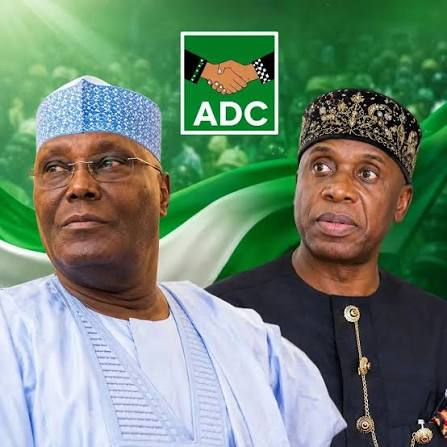
Amaechi Atiku Vice President: The Strategic Logic
What the strategy documents do not capture is the sheer physical energy Amaechi has brought to the campaign. While Atiku concentrates on the North, Amaechi has been the ADC’s roaming ambassador to the South and, increasingly, to the North as well.
At the ADC National Women League Conference in Abuja, he did not speak like a conventional vice-presidential candidate. He told the women to go home and campaign, warned that if APC wins the 2027 elections, we are retired from politics, and delivered a striking demographic argument: Every week, 10 Nigerians move into poverty. If they tell you how many Nigerians have died, you will be shocked. By the time I left government in APC, I am giving you figures now: 10 and 12 million out-of-school children. Today there are 20 million out-of-school children. That means every day Tinubu is taking 20 million Nigerians, 80 per cent from the North, into poverty.
This is not the language of a cautious running mate. It is the language of a man who has decided that the only path to victory is to make the campaign a referendum on hardship, and to make himself the face of that argument in every region where Atiku cannot go.
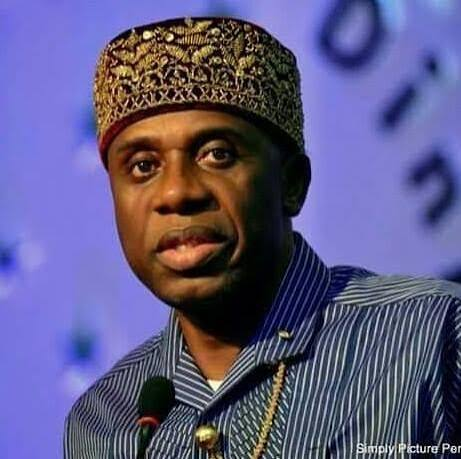
The Relentless Campaigner
As the Amaechi Atiku vice president ticket moves through the South, the former Rivers governor has become the face of the opposition’s argument against hardship. He has gone to markets, knelt before party men whose fathers were attacked, and spoken in the register of a man who believes the country is on the wrong track.
But Amaechi’s greatest strength, his willingness to say what others will not, is also his greatest liability. In Edo State, he told a town hall that only thieves can vote for Tinubu and that if Edo people vote for President Tinubu, that means Edo people are mad. The APC machinery did not need to distort the statement. It simply replayed it.
The Gaffe Machine
FCT Minister Nyesom Wike, who has his own history with Amaechi, seized on the remarks to call for INEC sanctions: This is supposedly a vice-presidential candidate of a political party seeking to take over power and preside over the affairs of this country. Not just an ordinary politician, a vice-presidential candidate, telling voters and telling Nigerians that only thieves and mad people will vote for President Tinubu. Wike warned that if Amaechi continued, it will be difficult for him to campaign in Rivers. We will make it difficult for him.
The response was blinding in its efficiency. Within days, the narrative had shifted from Amaechi’s substantive critique of port construction and production subsidies to a debate about whether he had insulted Edo voters. The extended context, his argument that the Tinubu administration was building a seaport in Ogun State not because of economic logic but because of the money he will make out of the construction, was buried under the headline of his inflammatory phrasing.
The Mother’s Death and the Limits of Empathy
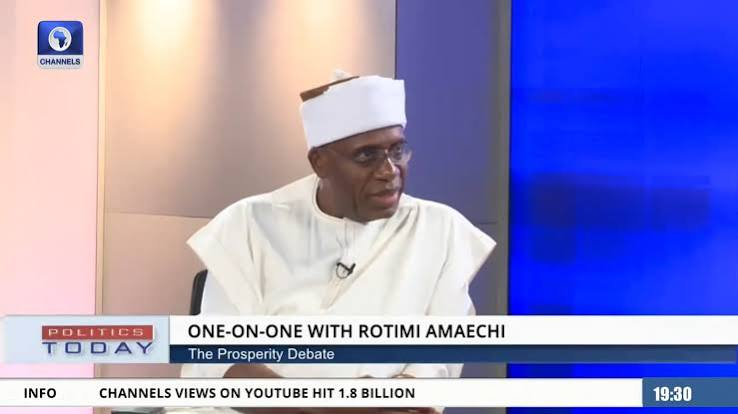
The most revealing moment came on Channels Television’s Politics Today, when Seun Okinbaloye asked Amaechi whether Tinubu’s policies had killed his mother. Amaechi’s response, Of course, before Tinubu, my mother was healthy, was an attempt to personalise the national tragedy of a collapsing healthcare system. It was also a strategic error of the first order.
The question was a trap, and Amaechi walked into it. By making his mother’s death a political weapon against Tinubu, he invited the obvious counter: that a former governor and minister, a man of substantial means, could have afforded the best healthcare available anywhere in the world. The APC’s response exploited this contradiction mercilessly. The story became not about the millions of Nigerians who die without access to basic medicine, but about whether Rotimi Amaechi had failed in his personal duty to his mother.
The lesson for Amaechi is not that he should stop talking about hardship. It is that he must choose his anecdotes with surgical precision. A story about a market woman in Onitsha who cannot afford her hypertension medication would have been unassailable. A story about his own mother, filtered through his own wealth and privilege, was a gift to the opposition.
The Wike Problem
No analysis of Amaechi’s vulnerabilities can ignore his estrangement from Nyesom Wike, his successor and now his most vocal adversary. Wike has questioned the rationale behind Atiku’s choice, describing Amaechi as a political liability with no electoral value in Rivers State or the wider South-South. He has cited Amaechi’s alleged failure to deliver votes in successive election cycles, as Buhari’s campaign director-general in 2015 and 2019, and as a supporter of Atiku in 2023, as evidence that his political influence has been overstated.
Wike’s motives are transparently personal, but his critique lands because it touches a genuine anxiety within the ADC: if Amaechi cannot even deliver his home state, what value does he add to the ticket? The answer, of course, is that Wike controls Rivers State’s political machinery, and his hostility may say more about his own ambitions than about Amaechi’s electoral worth. But in politics, perception is reality, and Wike has succeeded in planting the question.
The Path Forward
Amaechi’s value to Atiku is not in doubt. He is the only figure on the ADC ticket who can generate the kind of visceral, unscripted energy that cuts through Nigeria’s crowded political noise. He speaks to market men and women in a register that Atiku, for all his experience, cannot replicate. He has shown a willingness to go into hostile territory, Edo, Rivers, the North, and make the case directly to voters.
But he must learn from the backlashes. The APC has demonstrated that it will not engage with his arguments; it will seize on his phrasing. Every inflammatory remark becomes a week of negative coverage. Every personal anecdote becomes a liability. Amaechi needs to understand that the APC’s response to his provocations is not a rebuttal but a trap, and that the only way to win is to deny them the ammunition.
The production subsidy proposal he outlined in Edo, where the government sells crude to domestic refiners at a discount and the savings are passed to consumers, is a substantive policy idea that deserves national debate. But it was eclipsed by the mad people comment. The port construction critique in Ogun State is a legitimate question about infrastructure priorities. But it was buried under the insult.
Fire Controlled or Fire Consumed
The Amaechi Atiku vice president project will be judged not by the energy of its firebrand, but by whether that energy can be disciplined into a winning message.
Amaechi is Atiku’s firebrand, and firebrands are essential in campaigns that seek to dislodge incumbents. But fire, uncontrolled, burns the hand that holds it. The next few months will determine whether Rotimi Amaechi becomes the weapon that helps Atiku breach the APC’s defences, or the gaffe that convinces Nigerians the opposition is not ready to govern.
- ADC presidential campaign 2027
- Amaechi APC backlash
- Amaechi Atiku 2027 ticket
- Amaechi Atiku vice president
- Amaechi campaign gaffes APC
- Amaechi mother Tinubu comment
- Amaechi production subsidy proposal
- Amaechi Rivers State politics
- Amaechi running mate Atiku
- Atiku Abubakar 2027 campaign
- Nigeria 2027 election
- Nyesom Wike Amaechi feud
- Rotimi Amaechi ADC vice presidential candidate
- Rotimi Amaechi Edo town hall
- Rotimi Amaechi profile









Leave a comment