

Our Political Analysis Desk
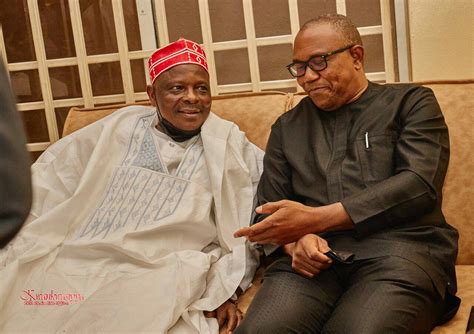
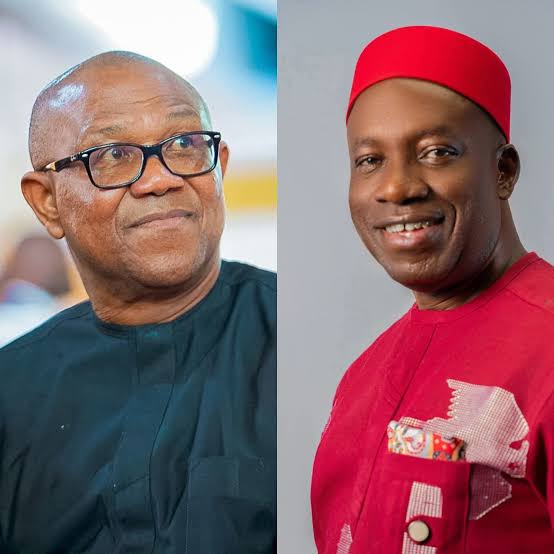
In a seismic shift that has redrawn the fragile map of Nigeria’s opposition, former Governors Peter Obi and Rabiu Musa Kwankwaso have formally joined the Nigeria Democratic Congress (NDC). The move, executed with dramatic flair at the Abuja residence of former Bayelsa Governor Seriake Dickson, signals the collapse of the African Democratic Congress (ADC) project and sets the stage for a high-stakes.
With the coalition opposition force tittering into near collapse due to distrust, internal wranglings and legal fisticuffs, the race against President Bola Tinubu’s ruling All Progressives Congress in 2027 may be a walk in the park. But here is the devastating truth that no opposition supporter wants to hear, the robust coalition that millions of Nigerians had been eagerly awaiting, one that would serve as a virile, formidable opposition to the ruling All Progressives Congress, has been utterly dashed before it ever had a chance to breathe. It is replaced instead by the cold reality of political fragmentation and self-preservation as these two political heavyweights, who should have bolstered the ADC into a powerhouse, have abandoned that sinking ship for the uncertain shores of the NDC.
But here is the devastating truth that no opposition supporter wants to hear, the robust coalition that millions of Nigerians had been eagerly awaiting, one that would serve as a virile, formidable opposition to the ruling All Progressives Congress, has been utterly dashed before it ever had a chance to breathe.
Videos circulating on Sunday captured the iconic moment, Kwankwaso, in his signature red-and-white cap, receiving his membership card first, followed by Obi in an all-black kaftan, as supporters chanted “O-K is okay” outside Dickson’s Abuja residence. This is not mere defection; it is a hostile takeover of the opposition space, propelled by the Supreme Court’s decision to throw the ADC’s leadership into a legal labyrinth, remitting the case to the High Court while the Independent National Electoral Commission’s May 10 deadline for membership registers loomed like a guillotine.
As Obi’s spokesman, Dr. Tanko Yunusa, lamented, time is simply not on their side, forcing them into the NDC as a clean, litigation-free structure. And with that move, Seriake Dickson, the NDC’s national leader, has just become a formidable kingmaker in the opposition, positioning his party as the de facto mega platform for anyone seeking an alternative to Tinubu.
However, the NDC still needs more hands to make it as formidable as the ADC. It still needs more political minds with high stakes to bolster whatever political assets and public respect that O and K brings to the fore. It also needs to stretch itself robustly across the 36 states across the federation, not by mere paperwork but by immersive groundwork in the grassroots. There would be no excuse that the NDC is a young party, it would be expected to take leaps and to evangelize the values of its party, while also emphasizing a seamless collaboration between the South and the North without rousing disaffection.
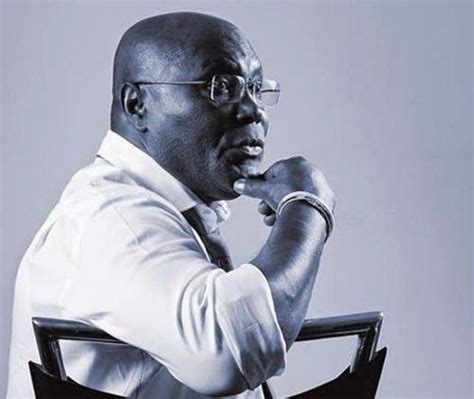
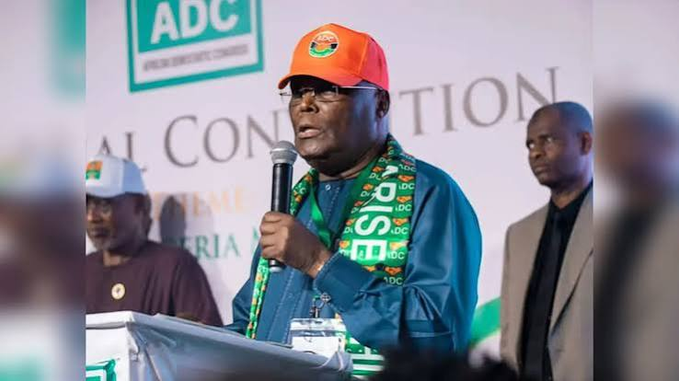
While Obi and Kwankwaso clasp hands in what appears to be unity, the third leg of the opposition tripod,former Vice President Atiku Abubakar, is conspicuously adrift. As the Obidient and Kwankwasiyya movements march en masse to the NDC, Atiku remains trapped in the crisis-ridden ADC, still “considering options” that grow fewer by the day. This is the critical weakness that cannot be glossed over, the opposition is not united, it is merely consolidating two blocs while leaving the Northeast powerhouse in legal purgatory, and without Atiku’s structure and financial depth, the Obi-Kwankwaso NDC ticket risks being a Northern and South-Eastern alliance without the critical mass of the North-East. The ADC, already gutted by raging internal wranglings, deep suspicion among factions, and a labyrinth of court cases that have left its leadership in limbo, now finds its political leverage diminishing by the day, incapable of serving as the credible alternative its founders envisioned.
There would be no excuse that the NDC is a young party, it would be expected to take leaps and to evangelize the values of its party, while also emphasizing a seamless collaboration between the South and the North without rousing disaffection.
Certainly, one can predict with certainty that new defections will cascade from other political actors across the opposition spectrum if their personal aspirations for tickets, positions, or influence are not met in the coming weeks, as every man and woman in Nigerian politics knows that the ship of opposition is still searching for a captain. Will Former Governor Rotimi Ameachi sidestep his presidential ambition for former Vice President and longstanding Presidential Candidate, Atiku Abubakar? Will Chief Ibe Kachikwu, Pat Utomi, and Professor Chris Imomolen be brought into a reconciliation that resolves the anger and anxiety within the party or will they be dismissed as political lightweights, while claiming to steer a ship of founded on distrust and misalignment? These are questions that the ADC must ask as a party?
This is the critical weakness that cannot be glossed over, the opposition is not united, it is merely consolidating two blocs while leaving the Northeast powerhouse in legal purgatory, and without Atiku’s structure and financial depth, the Obi-Kwankwaso NDC ticket risks being a Northern and South-Eastern alliance without the critical mass of the North-East.
While the ADC started to rouse a glimmer of hope among Nigeria’s peoples, it has refused to borrow a leaf out of the books of the APC. To form a mega opposition front, it must consult all players, resolve all animosities, and share roles. It must create strategic opposition fronts, bury hatchets for a common cause, and rouse loyalties among majority of Nigerians across all ethnic nationalities.
The ADC must share power in a consultative way, in the same vein that the APC negotiated power amongst themselves in 2013 leading to the emergence of now late President Muhammadu Buhari and now former Vice President Yemi Osinbajo. The energy of internal rancour which leads to internal implosion should have been divested to arsenals of strategic opposition against the ruling class across all spectrum of national life. While, the ADC coalition may have been created with good intention, to become a viable alternative to the ruling APC, it has failed to put his house in order to produce results.
Returning to O and K, two distinct strategic signals emerged from the NDC meeting that every Nigerian should note. First, Obi’s plea on litigation: immediately after joining, he turned to NDC members and begged, “Please let there be no litigation… We are not lawyers.” This is a man haunted by the ghost of the Labour Party’s internal wars, knowing full well that powermongers may begin to draw their fangs within the new party leading to another spate of unbearable litigation. He is also unaware of the stifling confrontations that led him to leave the Peoples Democratic Party.
Unfortunately, there is also a living and breathing rumour that the ruling APC’s first line of attack on opposition party will be to sponsor factions to drag the new NDC to court. By asking the judiciary to “end cases in the party,” Obi is pleading for a political ceasefire from the bench, a rare and desperate move that reveals just how vulnerable this new coalition truly is. It also hints that the judiciary, despite being attuned to its duties, have continued to delightfully entertain these legal troubles that led to political uncertainty thereby bolstering the confidence of the ruling party. It must restore sanity in these political parties with a sense of urgency in order to restore confidence in elections.
Secondly, Galadima’s warning on propaganda, NNPP chieftain Buba Galadima warned supporters to brace for “coordinated attacks… columnists and social media influencers,” revealing the opposition’s greatest fear, not just the ballot box, but the weaponisation of the entire media ecosystem to delegitimize the new coalition before it even walks to the starting line. Surely, the media has been called to perform surgery on itself without blemish. The engagement with the media and political parties have always been hand in gloves for many years, however, good relations still exist, despite suspicions and underhand challenges. What the NDC needs to do is to make itself available to engage the media robustly to ensure that narratives about the party is consciously curated. It must guard against misinformation about the party and refute same with ample rebuttals. It cannot afford to gag the media with commentary of suspicion when it should be cultivating relations with the media. While other political parties are amplifying their voices through the media, it must do the same to gain traction among the educated and displaced middle class.
While Nigerian’s are focused on Obi and Kwankwaso, Bauchi State Governor Bala Mohammed has officially dumped the PDP for the Allied Peoples Movement (APM) to pursue a Senate seat. This is a canary in the coal mine. Unfortunately, the PDP, Nigeria’s former ruling party is hemorrhaging uncontrollably. On one hand, Governor Seyi Makinde’s faction is holding a parallel NEC meeting, on the other, former Governors Nyesom Wike and Ayodele Fayose blatantly supporting President Tinubu while yet remaining in the party. The opposition party is not just divided; it is inching to clinical suicide from within. In fact, if Obi and Kwankwaso had remained in ADC, the PDP would have given way to ADC in the pysche of the Nigerian populace. A house that is divided against itself cannot stand, talkless of win the Presidential election.
Therefore, many Nigerians believe that the 2027 election will likely be a straight fight between President Tinubu’s APC and the Obi-Kwankwaso NDC coalition, with the PDP reduced to a regional curiosity at best. However, it would be too sentimental to discard the political influence of Atiku in the ADC. If Atiku can galvanise support and stop the distrust, the legal backlashes and the desperation for power within the ADC, it would stand no chance in the forthcoming Presidential elections.
Now, let us speak plainly about the two men at the center of this realignment. Kwankwaso, despite now leading a fragmented Kwankwasiyya movement following the high-profile defection of Kano State Governor Abba Kabir Yusuf to the APC, still stands a genuine chance to galvanise support from millions of disgruntled Nigerians across the North who feel marginalized by the current administration’s economic policies. His political structure in the North-West remains formidable, and his name alone commands loyalty that transcends party platforms.
Similarly, Peter Obi remains the undisputed poster boy for the South-East, a former Anambra governor who commanded unprecedented youth and diaspora support in 2023. He continues to resonate with millions despite the presence of powerful pro-Tinubu forces within his own region, figures like Anambra State Governor, Chukwuma Soludo, described as a leader of progressives aligned with the President, and the City Boy Movement, a youth advocacy group backed by Seyi Tinubu and influencers like Obi Cubana and Cubana Chief Priest. The group actively promotes the administration’s Renewed Hope agenda while intending to dilute Obi’s monopoly on youth energy and presence in the South-East geopolitical zone. Yet Obi’s appeal remains potent. The migrant and enterprising nature of the South-East people also gives Obi a national spread, coupled with spite votes from former loyalists of the APC, who may renege due to the gnawing hardship under the APC government.
Whether the APC is involved in the chess game of dismantling opposition is left to fictional political novelty because any opposition truly interested in wrestling power from the ruling party must be prepared to unite like the APC did in 2013.
While many consider Obi as the face of the frustrated middle class, many of his former allies in the Labour Party, the PDP, and now the ADC continue to whisper distrust in his engagement with other people outside his geopolitical zone. Obi needs to continue to prove to many political savvy Nigerians that he is not only going to rely on ‘spite votes’ but on robust votes across the geopolitical zones, on the basis of good relations with political influencers, the people and the media.
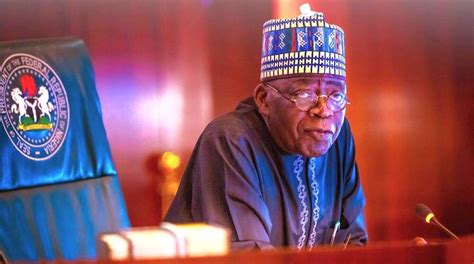
However, politics is not fair in its analysis. Any analyst who suggests this is a fair fight is either delusional or deliberately misleading the public, because President Tinubu is leaving absolutely no stone unturned in his determination to secure not just victory but a resounding, landslide mandate that silences all challengers. The numbers tell the story of a methodical, almost surgical dismantling of opposition structures. The APC has welcomed no fewer than five opposition governors into its fold, including Sheriff Oborevwori of Delta, Umo Eno of Akwa Ibom, Peter Mbah of Enugu, Siminalayi Fubara of Rivers, and Agbu Kefas of Taraba. In the National Assembly, the ruling party now commands an astonishing 78 out of 109 senators, leaving the entire opposition with just 31 seats. It has bolstered its House of Representatives majority to approximately 280 members out of 360 after waves of defections that saw over 50 opposition lawmakers from the PDP, Labour Party, NNPP, and others cross the carpet to the ruling party.
Alarmingly, these are not minor shifts; they are a political tsunami that has reshaped the entire legislative landscape in Tinubu’s favour. These political shifts cannot be ignored. These are men and women with networks across wards, political movements and states. These political actors also realise that by moving allegiance to the APC from their respective political affiliations, they have staked their political future with President Tinubu. This means that his loss may lead to their political castration. The stakes are high, so the political machinery is on overdrive.
The 2027 election is no longer a speculation; it is a war of legal tactics, tribal math, social media ferocity, and raw political arithmetic.
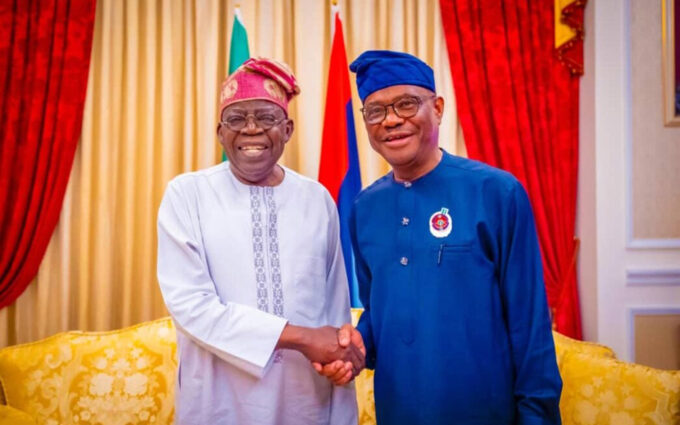
Beyond the formal defections, Tinubu has masterfully cultivated a parallel network of influence among politicians who remain nominally in their original parties but operate as de facto APC allies, and no two figures illustrate this better than FCT Minister, Wike, and Fayose. Both remain in the PDP on paper, but both have openly declared their support for Tinubu’s re-election, with Fayose recently asserting that the President will never sacrifice Wike for any other political interest. Within the Labour Party and the All Progressives Grand Alliance, similar alignments have emerged, with key figures working quietly to undercut their own parties’ opposition credentials in favour of the President’s campaign. This is politics as a chess game, and Tinubu has proven himself a master while the opposition still struggles to decide which pieces belong to which board.
This is the most audacious political gambit since the merger that created the APC in 2013, but the warning signs are blinding. Certain comments cannot be ignored, Senator Uba Sani of the APC has already dismissed the entire opposition trend as mere social media noise, betting instead on Tinubu’s “ballot power” and grassroots machinery. The Salihu Lukman warning also echoes, Lukman warned Kwankwaso against “early defection,” arguing that jumping from the NNPP to ADC to NDC within two years reeks of electoral ‘jaga-jaga’ rather than expressing coherent political ideology. For Nigerians watching closely, the NDC just became the giant of the opposition on paper, but a giant with three different hearts, comprising Obi’s technocratic and tech savvy Obidient followers, Kwankwaso’s radical Kwankwasiyya foot soldiers, and Dickson’s southern establishment. All these can easily collapse under its own weight at the first sign of internal crisis. They must protect their battlements against incendiary attacks orchestrated by powermongers.
Unfortunately, what Nigerians at home and in the diaspora are witnessing is therefore not a competitive democratic contest but a methodical, nearly clinical dismantling of any meaningful opposition, orchestrated by power hungry politicians who have placed their interests above the general interest of the generality of Nigerians. Whether the APC is involved in the chess game of dismantling opposition is left to fictional political novelty because any opposition truly interested in wrestling power from the ruling party must be prepared to unite like the APC did in 2013. However, the combination of defections, litigation, co-optation, and the strategic deployment of soft power via influencers and state governors still keep the APC in the books of valid suspicion.
The stakes are high, so the political machinery is on overdrive.
The battle lines are drawn for 2027, but against the backdrop of an APC that has swallowed whole chunks of the opposition and neutralized the rest, the Obi-Kwankwaso move to the NDC feels less like a game-changing realignment and more like the last gasp of a resistance already outflanked, outspent, and outmaneuvered long before the first ballot is cast.
The only question that remains is whether the “O-K” alliance can stay in one piece long enough to face the INEC ballot, or whether the next wave of defections will come from within their own ranks as political jobber’s long arm reaches ever deeper into their new home. The 2027 election is no longer a speculation; it is a war of legal tactics, tribal math, social media ferocity, and raw political arithmetic. On every single metric except online enthusiasm, the incumbent is winning before the race has officially begun.






Leave a comment