

Our Political Analysis Desk
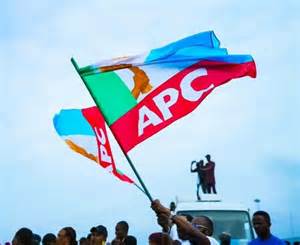
The political theatre of Oyo State has been replaced by a high-stakes gladiatorial contest as two formidable contenders, Adebayo Adelabu, the immediate past Minister of Power, and Senator Sharafadeen Alli, lock horns for the All Progressives Congress governorship ticket ahead of the 2027 election.
This is not merely a primary race; it is a war for the soul of Oyo APC, a battle royale that will determine who carries the party’s flag into what promises to be the most consequential gubernatorial election in the state’s recent history .
Both men are political heavyweights with pedigrees that command respect and fear in equal measure. On one side stands Adelabu, grandson of the legendary Chief Adegoke Adelabu, the “Penkelemesi” himself, whose political dynasty in Ibadan politics stretches back generations. A former Deputy Governor of the Central Bank of Nigeria, Adelabu has made two previous runs at the governorship.
in 2019, he contested on the APC platform and lost to Seyi Makinde of the PDP in a race that many analysts described as a shock upset given Adelabu’s strong credentials and the APC’s hold on federal power at the time.
Undeterred, he returned in 2023 as the Accord Party candidate but again fell short. Now, after serving as Minister of Power under President Bola Tinubu, he has resigned from the federal cabinet to launch his third governorship campaign to the Agodi Government House .
Adelabu’s tenure as Power Minister has been both a blessing and a debacle. On one hand, he defends his record vigorously, pointing to increased generation capacity and reforms in the sector. On the other, critics have pointed to persistent grid collapses, tariff controversies, and what some describe as unfulfilled promises.
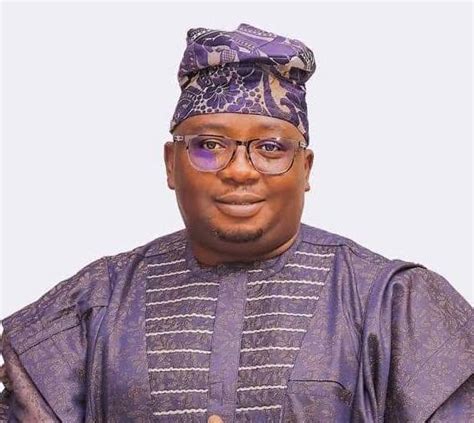
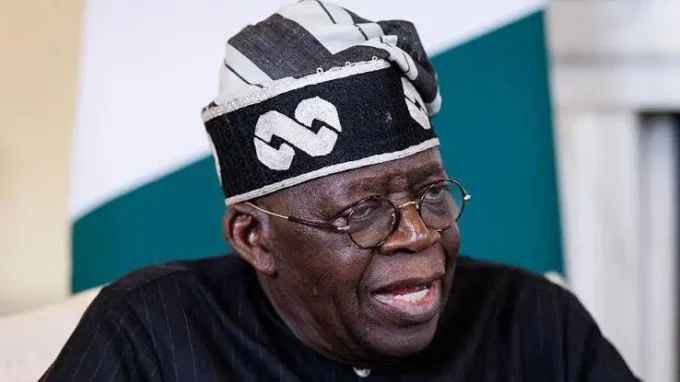
Nevertheless, Adelabu enters this race with the confidence of a man who believes he has paid his dues and that the presidency owes him. In fact, he has publicly declared that President Tinubu personally encouraged his ambition, stating in Yoruba at an APC Ibadan South-East meeting: “He told me, ‘Bayo, it is time. We have been on this ambition for a very long time. As much as I want you to be around me, I won’t hinder your ambition'” .
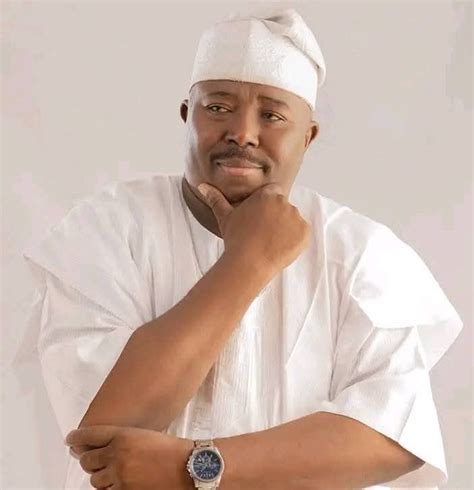
On the other side of this divide is Senator Sharafadeen Alli, the incumbent representing Oyo South in the National Assembly and a man whose political journey is marked by strategic patience and resilience. Alli served as Secretary to the State Government under Governor Abiola Ajimobi and later became the governorship candidate of the Zenith Labour Party in 2019.
However, in a dramatic twist that reshaped Oyo politics, Alli stepped down for Seyi Makinde of the PDP, joining a coalition that included former Governor Rashidi Ladoja (Now the current Olubadan) and others, effectively handing victory to Makinde and ending Ajimobi’s hope of installing a successor.
This decision created a lasting enmity between Alli and the Makinde camp, with Alli later accusing the governor of relegating ZLP members who had supported him to obscurity. After Makinde’s victory, Alli found himself on the outside looking in, absent from the governor’s newly inaugurated advisory council, a clear signal of the frosty relationship between the two men.
Alli eventually found his way back to the APC, won his senatorial ticket, successfully defended his election at the tribunal (where he defeated Joseph Tegbe), and has since established himself as a vocal and visible presence in the National Assembly. He has championed gender inclusion, equitable access to quality services, and has even sponsored initiatives such as a tour for 5,000 schoolgirls in a bid to showcase his commitment to education and youth development.
His recent coronation as Ekaarun Balogun of Ibadanland, a prestigious traditional title, adds another layer of gravitas to his profile, though some political observers have interpreted the timing and circumstances of that coronation as possible legal maneuvering by state actors to complicate his governorship eligibility.
Curiously, the Ibadan dynamic is perhaps the most explosive element of this contest. Oyo State, with its 33 local governments divided into five geopolitical zones—Ibadan (11 local governments), Oke-Ogun (10), Ogbomoso (5), Oyo (4), and Ibarapa (3), has been governed almost exclusively by Ibadan indigenes since 1999 . From Lam Adesina to Rashidi Ladoja, Abiola Ajimobi to Seyi Makinde, all have hailed from Ibadan.
The sole exception was Governor Adebayo Alao-Akala from Ogbomoso, who served from 2007 to 2011. This dominance has sparked a powerful agitation from other zones, with a coalition under the aegis of Oyo G22 Renewed openly demanding a rotational governorship arrangement for 2027, insisting that “the Ibadan zone had dominated the governorship position for about 26 years, leaving the remaining zones marginalised” .
Herein lies a crucial distinction between the two APC aspirants. Adelabu is unapologetically Ibadan. His family name alone carries weight in the ancient city, and he commands significant support within the city’s political and traditional establishments. Alli is also from Ibadan, specifically from the Oke Aremo area, meaning both men share the same geopolitical origin . This is politically significant because it connotes that, regardless of who wins the APC ticket, the party will be fielding an Ibadan candidate against whatever candidate Makinde himself, an Ibadan man, presents.
For the zones crying out for power shift, the APC offers no alternative, potentially driving those votes toward the PDP if Makinde chooses a non-Ibadan successor, or toward apathy if both major parties present Ibadan candidates.
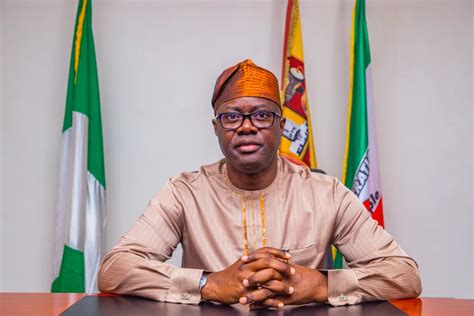
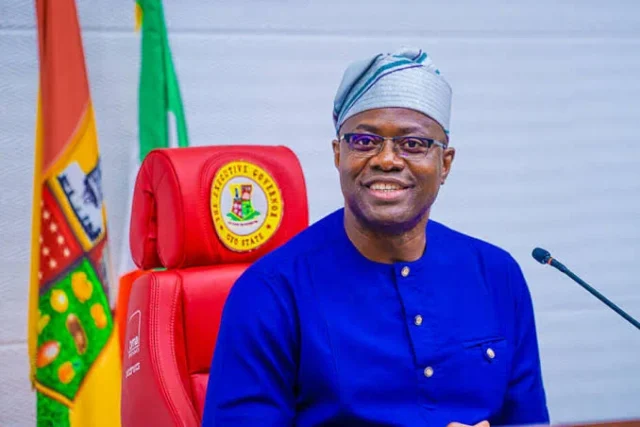
The Makinde factor looms large over this entire analysis. The Oyo State governor is serving his second and final term, with his tenure ending on May 29, 2027. He has made no secret of his ambition to contest for the presidency, and he has been actively courting alliances with other opposition figures, including Rabiu Kwankwaso (who has now moved to the National Democratic Congress) , and the ADC coalition, while remaining publicly committed to the PDP despite its internal fractures.
Makinde’s relationship with the presidency is complex, while he and FCT Minister Nyesom Wike both supported Tinubu in 2023 as members of the infamous G-5, Makinde has since declared he will not support Tinubu in 2027, exposing a widening rift between the two former allies .
For Makinde, the governorship succession is personal. He desperately wants to prove that his political structure can outlast him, that the coalition that brought him to power in 2019 and secured his re-election in 2023 was not merely a vehicle for his own ambition but a durable political machine. If his handpicked successor wins in 2027, Makinde goes to the presidential ticket as a kingmaker with a locked-down home base.
If the APC captures Oyo State, a state that has alternated between PDP and APC governors since 1999, Makinde’s political capital diminishes significantly, and his claim to lead any national opposition coalition or opposition political party weakens. Therefore, the governor is not merely observing this APC primary from a distance; he is watching with the intensity of a man whose next career move depends on the outcome.
Who is Makinde likely to anoint? The governor has kept his cards remarkably close to his chest. He has publicly stated that “the people of Oyo State will determine his successor, judging from such an aspirant’s competence, popularity and acceptability” . He has also reportedly expressed a preference for a successor under 50 years old, indicating a desire for generational transition.
Among the names circulating are: Segun Ogunwuyi, his Chief of Staff from Ogbomoso; Bayo Lawal, his deputy governor from Oke-Ogun; and Adebo Ogundoyin, the Speaker of the Oyo State House of Assembly from Ibarapa. Notably, all three are from non-Ibadan zones, a clear signal that Makinde may be leaning toward answering the zoning agitation by presenting a candidate from Oke-Ogun, Ogbomoso, or Ibarapa, thereby consolidating votes from zones that feel marginalized by Ibadan’s long dominance.
Here is where the Tegbe factor comes into sharp focus. Engineer Joseph Tegbe, a respected technocrat and former gubernatorial candidate, was appointed Minister of Power by President Tinubu in a major cabinet reshuffle that saw Adelabu exit the portfolio. Tegbe had previously been a formidable force within Oyo politics, with deep connections to the business and professional communities. His elevation to the federal cabinet removes him from the immediate governorship equation,at least for now. For Adelabu, Tegbe’s departure from the Oyo political battlefield is a blessing; it removes one potential rival from the APC space.
However, for Makinde and the PDP, Tegbe’s new role as Minister of Power is a mixed bag. On one hand, it removes a potential PDP defector from the local contest. On the other hand, it gives President Tinubu a powerful tool to influence power sector decisions in Oyo State, potentially rewarding or punishing local government areas based on their political allegiance. A sitting minister aligned with the presidency can deploy federal resources in ways that significantly boost the APC’s campaign machinery, creating an uneven playing field.
The consensus controversy currently roiling the Oyo APC adds another layer of drama. On April 30, 2026, key party leaders including former senator Ayo Adeseun, Southwest Development Commission director Fatai Ibikunle, former Oyo APC chairman Akin Oke, and former SSG Akin Olajide met in Ibadan’s Samonda area to endorse Senator Alli as the consensus candidate, claiming that President Tinubu had personally given his backing to the senator . Adeseun stated that extensive consultations with the president had taken place and that “Mr. President remains the leader of our party, and his opinion on who flies the party’s flag must be given due consideration” .
Adelabu’s camp erupted. The former minister immediately rejected the endorsement, calling it lies and insisting that he had personally met with Tinubu, who not only approved his ambition but explicitly stated that if a consensus was not possible, the party would go through direct primaries. Speaking in Yoruba at an APC meeting, Adelabu declared: “Anybody saying he had a meeting with the president and that he endorsed someone is telling lies. They are telling lies. The president has not called anybody to endorse any candidate in Oyo”.
The direct contradiction between the two camps regarding Tinubu’s position is not merely a matter of rhetoric; it is a fundamental challenge to the party’s unity. If the presidency truly backs Alli, Adelabu’s continued insistence on contesting the primary could fracture the APC beyond repair. If the presidency backs Adelabu, or remains truly neutral, then the Alli endorsement collapses, and the party faces a bruising primary battle.
What makes Alli potentially a more formidable threat to Makinde than Adelabu is precisely their history. Alli was once Makinde’s ally, at least operationally, when he stepped down for him in 2019. He knows the governor’s political playbook from the inside.
Moreover, Alli has spent his years in the Senate building relationships across party lines, and his enmity with Makinde is personal and deep. He has repeatedly accused the governor of betraying the coalition that brought him to power, and he has positioned himself as the conscience of the opposition in Oyo State. A candidate driven by personal grievance can be more motivated than one driven by ambition alone.
Adelabu, by contrast, has already lost to Makinde twice. While his third attempt may benefit from his tenure as a federal minister and his access to President Tinubu, some party members quietly question whether he carries the baggage of previous defeats, a narrative that Makinde’s campaign would exploit ruthlessly.
The Alli endorsement has also sparked resistance from the Adelabu-Folarin bloc. Senator Teslim Folarin, the 2023 APC governorship candidate, and Adelabu have reportedly formed a united front to maintain control of the party’s internal machinery. In this camp, Alli’s entry is viewed with deep suspicion, particularly given the support he received for his 2023 senatorial bid, which some felt came at the expense of other party interests. The faction insists that the flagbearer must emerge through a fair, direct contest, not through what they describe as backroom deals orchestrated from Abuja.
For Nigerians watching this drama unfold, several critical questions remain unanswered. Will President Tinubu intervene directly to settle the dispute, and if so, whom will he choose? The president has a delicate balancing act: Adelabu served him loyally as minister and has family connections to the powerful Adelabu political dynasty, but Alli has demonstrated grassroots appeal and senatorial experience. Backing the wrong candidate could cost the APC the state. Will the party hold a direct primary or force a consensus? The APC’s national leadership has a track record of preferring consensus to avoid the bloodletting of open primaries, but forcing a candidate down the throats of a faction could trigger defections that hand victory to Makinde.
Crucially, can the APC unite behind whoever emerges? The party has been fragmented in Oyo State since the Ajimobi era, with factional battles between the Unity Forum, SENACO, and other groups preventing it from presenting a coherent challenge to Makinde. If this primary battle deepens those fractures, the APC may enter 2027 as a house divided against itself, and as history has repeatedly shown, such a house cannot stand against an incumbent governor’s formidable political machinery.
As the primary race intensifies and the May deadlines approach, one thing is certain: the battle between Adelabu and Alli will be as gruelling as the general election itself. For Makinde, watching from the PDP side, the chaos within the APC may be his greatest comfort. For President Tinubu, the stakes could not be higher, losing Oyo State, a major Southwest prize, would be a significant political embarrassment.
For the people of Oyo State, the choice increasingly appears to be not between parties but between two Ibadan titans, each armed with federal connections, each bearing political scars, and each utterly convinced that 2027 is their year. The only question remaining is whose ambition will survive the primary battlefield, and whether the APC can emerge from this clash intact enough to wage war against the Makinde machine.




Leave a comment