

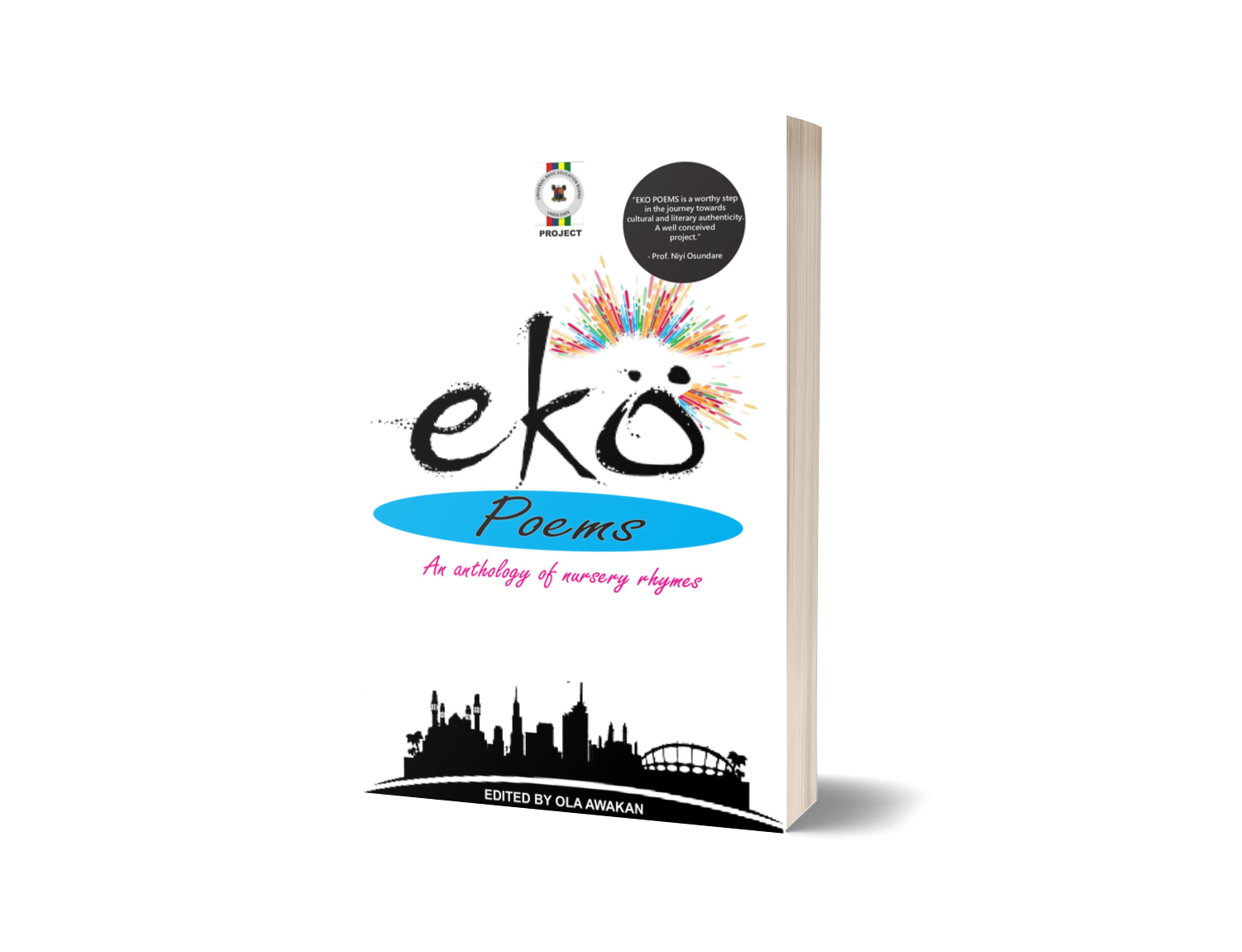
Patriotism and National Integration in Ola Awakan(ed)’s Eko Poems
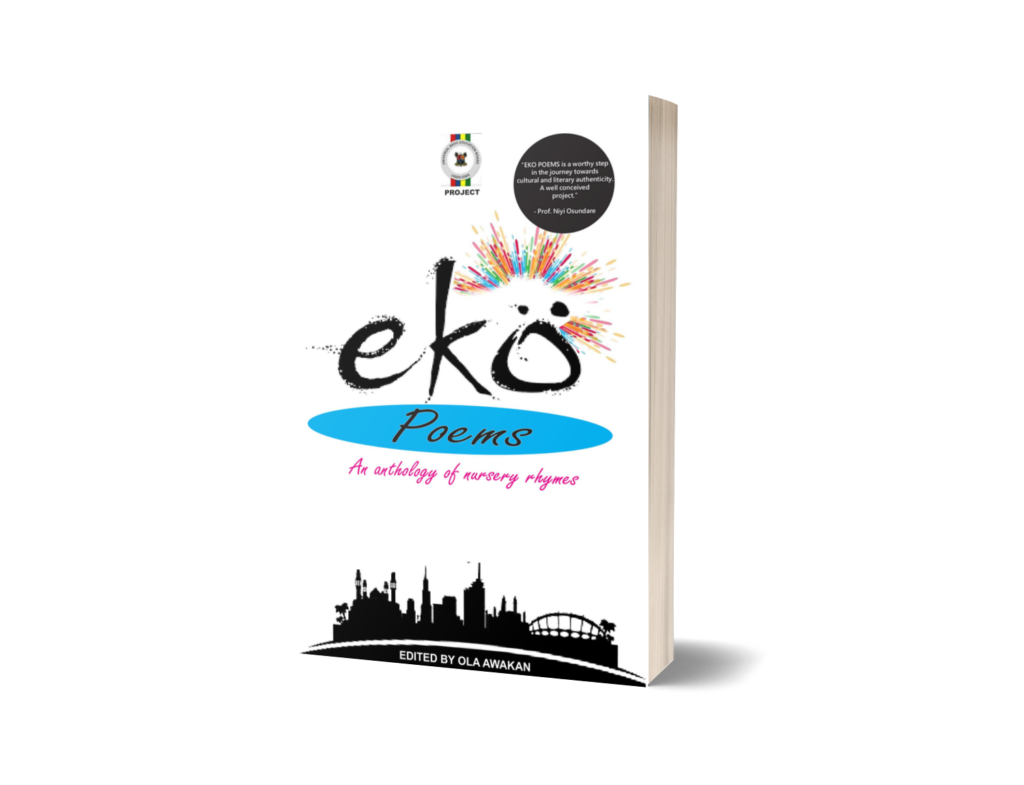
We cannot dispute contemporary society with the pessimistic views that fly about in the people’s lived and shared experiences. More specifically, man conceives of his environment to the degree that he experiences it – directly or vicariously. This latter idea is associated with the individual’s growth as an oriented fellow whether by culture or tradition and other modes of socialisation. This could be the school, family, neighborhood and the likes. It is exactly this given that prevails in Ola Awakan(ed)’s Eko Poems. It is a fluent written mediation on Lagos, situated in a juvenile conception of what it holds as a matter of social integration.
Eko Poems is an anthology of poems by pupils from different primary schools within some part of Lagos. The subject matter is the beauty of Lagos and the future the writers imagine themselves participating in in spite of the duplicity and complications that characterise the city. On the one hand, it brims with some substance of social response. That is, the contributors are infinitely intrigued by the representations of their state as a talking point of socio-economic buzz. On the other hand, they are deeply captivated by the possibility of their participation in the future of such an exciting land of their birth and/or childhood. It is this splendour of innocence cum the dream of tomorrow that the children have translated into these glorious songs of innocence.
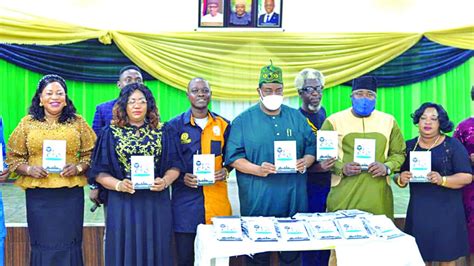
To pursue a frontline evaluation of Eko Poems is to come to terms with the saying that poetry is man meaning to man. The poems are a meeting point of the child’s thinkability: the contributors seem to have one unified view of the land so poetically. In essence, the diction in which that poems come appears its truest and purest form of poeticity. The poems are able to swiftly transport the adult reader back to their childhood to connect with the world from which these children are singing with so much depth and consciousness. When one therefore categorises the poems, by virtue of the outlook these young writers display, one realises that the present and the future are no separate aspects of anxiety. The writers are fascinated by the present as they are optimistic about the future. The poems are in themselves echoes of some reality unsung because certain conditions of citizenship thwart the narrative.
In that vein, the purity of innocence advances the spirit of optimism far above the principalities of socio-political impurities. It would seem that contemporary poetic tradition until now has not entirely achieved this freshness of inspiration – a picture of society at large undiluted by the methods and culture of anxiety about the future. It can be concluded that it takes this class of artistic model and, of course, initiative, to re-imagine the fundamental provisions of a modernist society. By that token, the promises of aids to existence peaked in job provisions and an affordable better life have been reduced to sheer survival tact, skills and existential finesse. Thus, Lagos, the fabric from which the individual poets have cut their pieces of disposition, is recaptured – in fact, reclaimed – in the context of an ambitious transition into a modern society. This explains the substance of the image depicted: even though the young poets have not flourished a brilliance of literariness technically through the use of imagery, the ingenuity of depicting an unequivocal image of Lagos is indisputable.
Again, Eko Poems is a revolutionary view about the working wonders of childhood impressions, the details and substance of social vision as well as the feasible imaginations of the future. Emphatically, as a matter of individual perception and national integration. This is so because Lagos in its social importance holds a national, geographic, and global signification for economic footing which in turn determines the adaptive system of work and successfulness. To that end, the young poets ruminate on what Lagos holds in its present form and for their own future. The clarity of that conception, the depth of its conviction, and the width of its plausibility remain the message of the poet. Eko Poems is the much needed spell of possibility and the relief from built up tension of politically induced distortion – and abortion – of dreams.
The style is also effective. It is an excellent portrait of originality; an experience of the purest form of poetic inspiration. This presupposes that the extent to which these young poets interrogate and interact with ‘nature’ provides a landscape of authentic art. Not therefore that the language use is in itself jejune; but that ecstasy of childhood primes the diction for that natural flow akin to a meandering river. This in essence makes for the in-depth vividness that has been unboxed as the cherished value of a motherland. Still, it captures the terrains, geography, and the cultural ebullience Lagos stands for.
The conclusion here is that Lagos has been captured in a fresh, novel, and unrivaled picturesque only possible with such an optimistic mood and celebratory tone employed by the pupil-poets of Eko Poems. And by extension, the style and techniques prove to be suited to the entirety of artistic disposition to the subject matter as it concerns the poet who is an observer of societal beauty and possibility right in the midst of chaos. It is this irony that serves as the refurbishing of perceptions in matters of urbanisation as it comes to the border of poetry.
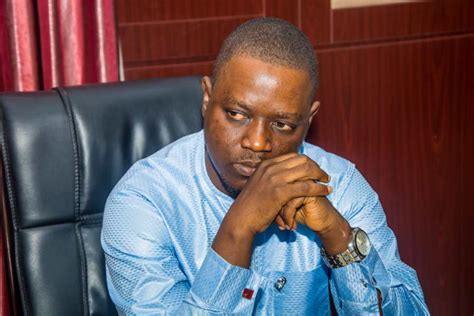
Ola Awakan is a Nigerian broadcast journalist, dramatist, poet, and the current Director-General of the Nigerian Tourism Development Authority (NTDA).
Awakan studied Mass Communication at Olabisi Onabanjo University (OOU), Ago-Iwoye, Ogun State, where he was actively involved in driving the school’s arts and tourism scene during his formative years . He attended Wowo Nursery and Primary School, Olodi-Apapa, Lagos, his alma mata.
Awakan describes himself as a “Journa-Thespian”, a term he coined to reflect his multifaceted career spanning journalism, drama, and poetry. He is an award-winning broadcast journalist who worked with TVC News and TV Continental, winning the 2022 NMMA TV Producer of the Year award .
He is also a celebrated dramatist, he has written notable plays including Echoes of the Drums, Blood and the Smile, and Tafawa Balewa: The Golden Voice of Africa. He also produced the opera Abibatu Mogaji by Prof. Ahmed Yerima at the Presidential Villa. Echoes of the Drums, a drum-drama written in 2005 and published in 2024, has been performed by the National Troupe of Nigeria and students of Lagos State University .
In September 2025, President Bola Ahmed Tinubu appointed Awakan as Director-General of the Nigerian Tourism Development Authority (formerly NTDC) for an initial four-year term. His appointment has been widely praised by cultural figures, including the Ooni of Ife, who described it as evidence of the administration’s recognition of youthful brilliance and cultural passion.
Awakan is the founder of the Starlight Talents Foundation. In 2022 and 2024, he donated school uniforms, tables, and educational materials to his alma mata, Wowo Nursery and Primary School in Ajegunle, Lagos, encouraging pupils that their location does not determine their success. He is married to Omolola Ola Awakan









Leave a comment