

By Hassan Oredeji (Revised & Updated from 2014)
Perhaps for the first time since independence, Nigeria is witnessing a creative uprising in its backyards—a bursting forth of arts, literature, and spoken word events that transcends the usual cycles of political seasons. This renaissance, initially observed in 2014 as a reaction to poor governance and the stifling noise of pop music, has since matured. Nowhere is this more evident than in Lagos, which has become a true cultural superhub. Yet, a decade on, the conversation can no longer be solely about one city. The growth of arts and culture across Nigeria now includes new platforms, diplomatic collaborations, a notable migration of curatorial talent, and the quiet but persistent work of poets in unlikely corners.
Lagos: The Unruly Epicentre
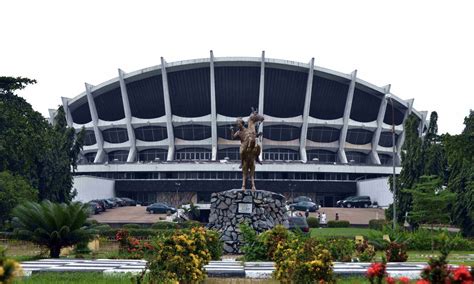
Lagos continues to lead the renaissance, not merely because of government support (which remains inconsistent) but due to a critical mass of the middle class—well-travelled, bookish, and jazz-inclined—who insist on creating new cultures while honouring old ones. The city has witnessed the emergence of robust new platforms: book clubs have become formidable enclaves. Beyond the pioneering efforts of Taruwa (now over a decade old), we now see clubs like The Accra Book Club (Lagos chapter), The Rovingheights Book Club, and The Purple Hibiscus Book Club turning into spaces for deep engagement and community building. Theatre hubs such as Terra Kulture, The Muson Centre, and the National Theatre (post-renovation) have been revitalised by diplomatic collaborations with the Alliance Française, Goethe-Institut, and the British Council, which have moved from occasional sponsors to year-long partners.
Crucially, the city has benefited from a quiet but significant departure of curators, gallerists, and arts administrators from other states—from Ibadan, Jos, and Port Harcourt—who have relocated to Lagos seeking infrastructure and audience. This brain drain has supercharged Lagos’s output but has often left their home cities bereft.
And yet, the problem of the “scramble for the crowd” remains. On a typical Saturday, there are still four to five events scheduled simultaneously, competing for the same 0.1 percent of the population. The cliques, the selective gatekeeping of ideas and resources, and the utter indiscipline of timing continue to stifle the sector. The Lagos arts community too often remains a circle of intellectuals, pseudo-intellectuals, and gatekeepers more concerned with self-establishment than with expanding the tribe. The silent gatekeeping of expertise has made creativity feel stale, and many voices remain gagged.

Beyond the Centre: Pockets of Poetic Resistance
We must recognise the often-invisible pockets of arts activity organised by poets across Nigeria. In cities without galleries or bookstores, poets have become the primary curators. From open mics in Abuja’s Jabi Lake Mall to spoken word sessions in a hotel lounge in Ilorin, these poetry collectives—The Word House, Poetry in the Parlour, Sage & Walls—are the guerrilla infantry of this renaissance. They operate on personal pockets, and the number of projects that have gone comatose is uncountable. Yet they persist.
Spotlight on Ekiti, Abuja, Ibadan, and Osun

- Ibadan: The city remains a paradox. With the University of Ibadan (a historic hotbed), Rovingheights Bookstore (now a national brand), and the Institute of African Studies, one would expect a cultural explosion. Yet beyond UI events, the Odunlade Arts Centre, and a few book clubs, Ibadan is still not realising its potential. To push the arts back to its rightful renaissance, the city needs ample collaboration—between the university, the state government, and private curators. Although the Ibadan Book and Arts Festival is alive and buoyant, there is more to be done.
- Ekiti and Abuja: Abuja has seen the emergence of the Abuja Literary and Arts Festival, while Ekiti hosts pockets of grassroots festivals. Impressive is the engagement of the Niyi Osundare Festival of Arts and also the contributions of Senator Babafemi Ojudu in galvanising deep lterary and cultural engagements in the state. However, insecurity has muffled the exploration of deep engagements in North-Eastern states, even as Northern voices begin to explore cultural power at a time when government patronage has tilted toward the hegemony of the “Lagos boys.”
- Osun: The state relies heavily on the student community. The Ife Arts Festival and the OAU International Cultural Festival (full names: Ife Arts and Cultural Festival and Great Ife Cultural Festival) remain quiet cocoons that have not gained traction or respect outside the gown. The general Ife populace remains unaware. These silo projects need buoyant support to break out of the university bubble.

Ogun State: The Silence After the Exit
Ogun State is largely silent around culture activities. The once-celebrated Ake Festival has long moved away from Ogun State to Lagos. The only semblances of rich cultural convergence today are the Ojude Oba Festival in Ijebu Ode and the Egba cultural gathering organised by Layi Labode for the Egba people—known as Egbaliganza. Beyond these, we find only reading events by Richard Mammah in Arepo, and a few obscure but notable efforts in Abeokuta: one is SilverBird Film Festival (Abeokuta edition) , a small film-focused gathering, and another is Poetry Evenings at Olumo Rock, which attracts a niche audience. Ogun’s cultural engine is sputtering. Perhaps, the Ogun State Government has its hands full with infrastructural challenges that it has largely abandoned arts and culture investment. It need to strategize and fund culture projects in the state instead of allowing its states to serve as a mere incubator for projects that are later staged in Lagos.
The South-East and South-South: Enugu, Aba, Port Harcourt
In the South, Enugu leads the frontier, but Aba is not lagging behind. Two enclaves in Enugu—Dainz Bookstore and The Enugu Literary Society —are serving as vibrant hubs for engagement. The University of Nigeria, Nsukka (UNN) remains a hotbed of intellectual and artistic activity. There is also the Aba Book Club that is quietly emerging as a frontier book and arts festival in the Nigeria’s South East.
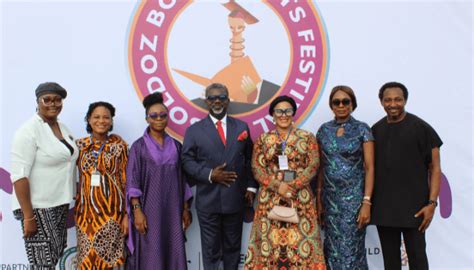
Meanwhile, Port Harcourt continues its strong tradition with the Garden City Literary Festival, and the Boldoz Book and Arts Festival cannot be ignored. Boldoz has consistently curated readings, workshops, and book chats, drawing a dedicated youth audience in a city often overlooked by national spotlight.
Northern Rising: Festivals as Cultural Power
Kudos to emergent northern festivals. At a time when the government seems tilted toward the hegemony of Lagos-based creatives, Northern voices have begun to explore cultural power. Notable pockets include:
- Sokoto Arts Festival (SOKAFEST) – celebrating Hausa poetry, children’s literature, and visual arts.
- Servage Festival (Benue) – a music, poetry, literary and spoken word convergence.
- Abuja Literary and Arts Festival (ABUJA LIT) – growing steadily.
However, insecurity across the North-East has muffled deeper engagements, preventing states like Borno and Yobe from hosting sustained events. - With RovingHeights Bookstore in Kaduna, the intellectual powerhouse of Northern Nigeria, and the presence of the Kaduna Book and Arts Festival, run by the Ake Book Festival clique, Kaduna is a buoyant enclave of rising intellectual voices.
The Haphazard Calendar and Funding Crisis
The challenges remain structural. There is no singular calendar for all literary and arts festivals in Nigeria. Nigerians and diasporans are made to pick and choose in a competitive but niche sector without a centralised database. The festivals remain haphazard.
Worse, funding is anaemic. Apart from a few that have access to grants and corporate support from banks (GTB, Access, Sterling, EcoBank, and sometimes MTN), many arts projects are funded from personal pockets. Consequently, the number of festivals and projects that have gone comatose is uncountable. More damning is the mindset that art should be free. There is a need for behavioural change—where art is not merely for art’s sake but for the sustainability of the artist and their creative pursuits. Systems need to be emplaced beyond government intervention, though government must also intervene. All over the world, governments—from the British Arts Council, to Canada Council for the Arts, to Senegal’s Ministry of Culture—support artistic activities as heritage projects. In Nigeria, those vehicles are largely inexistent, leaving the support to diplomatic bodies alone.
A Way Forward: Mentorship, Business, and Collaboration
We need thorough engagements and lectures on the sustainability of the arts. There should be mentorship classes that would buoy curatorial engagements, moving practitioners from being mere artists to business managers. Furthermore, art events should move from creating regular shows to building intellectual infrastructure: libraries, creative writing workshops, and art residencies. The Lagos Book and Arts Festival (LABAF) remains a model of expert coordination, but other festivals must learn from it.
Conclusion: Lagos as centrepoint is good, but it is problematic not to have a spread of engagements across the country, each with its flavour. The sky is big enough for everyone—and it can be bigger when we fly together. Consistency and reorganisation will save this renaissance. Otherwise, we risk watching another creative uprising dissolve into the same old scramble for crumbs.
Hassan Oredeji is a retired arts photographer



Leave a comment