

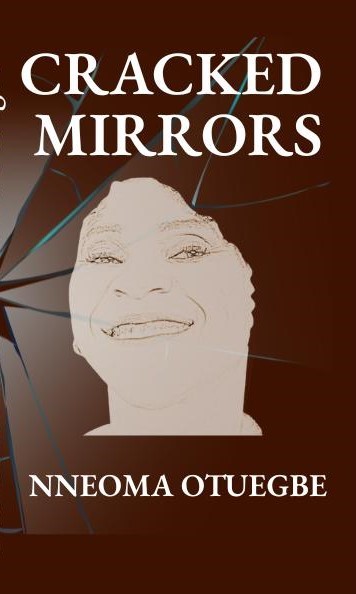
Nneoma Otuegbe’s Cracked Mirrors as a Metaphor of the Absurd
It is a given compass of purgation to associate grief with the experiencer’s commitment to fascinations of love. But even within that ambit, grief identifies itself with several layers of memory. That is, it is an aftertaste of certain elements of the haunting subconscious. Time and again, literary expositions have explored many a human sense of conscientiousness as a component of loss. Be it the immediate emotional vulnerability, or the broader scope of identity crisis, the human faculty of loss is not bound by any traditional abstraction. This is a foregrounding of Nneoma Otuegbe’s Cracked Mirrors, an anthology of compelling poems on the nature of grief, nostalgia; and a meditation on purpose and meaning.
Cracked Mirrors explores life in a significant measure of the Absurd. It touches on meaning, existence, grief, identity, homesickness, and the agonising feeling of detachment. All these palpable domains of vulnerability provide the ground on which the author questions the meaning of dreams, the pursuit of ambition, and the extent of satisfaction with the human lot. The first and the last poems pass for a sound envelope rendition in which the pieces that come in-between contextualise. Throughout the reading process, the reader can maintain a certain and definite course of artistic experience; but the themes – manifold in their discussion – are individual responses. They span several concerns of personal recollections.
Foremost among the defining elements of Cracked Mirrors is its experiential trajectory. It takes the reader through the seams, layers, and manifestations of loss. Grief only comes to mind at the level of human vulnerability. One could almost suppose that the intricate exposition on grief in the poems tends to the environmental consequences of modernism. This scope is tenable, at least by the marriage of feelings, ideology, and culture – as the changing moods suggest. Practically, the deaths that occur in the poems happen to persons of no particular age; the agencies cut across age, inputs, time, etc. where suddenness is the only acceptable margin. By that token, Otuegbe revisits the continuing discussion on the dislocation of man from the meditative fleshpots of romantic existence. This causes tragic scenes by which one is too affected to rationalise.
Consequent on this, Cracked Mirrors indirectly reflects on change and transition. The world has adjusted its paradigms and axes have swiftly shifted to an algorithm of nothingness or the insatiable. To that end, grief, by the undertone of a deep seated concern, is first an afterthought of disconnection from purpose. A search for meaning. A feeling of impoverished purpose. Self-sabotage. Contemptuous resort to paved pathways. The only concrete evidence of this infinite predicament is the immediacy of human grief. Therefore, perhaps the most crucial element of reflection in this anthology is not death but the multiple events that are occasioned by the devastating changes that define modern and contemporary life. In many of these occurrences, the author sees their loved ones going down the anal of separation under different climates of the inevitable, and unavoidable situations of tragedy.
Again, the changed times impose a necessity of physical exploration. The poems may have been set to meditation on death, but a few of them also address the critical question of migration. Not of course, in this context, in the sense of that undignified melding of tactless dream and an escapist impulse; it is the longing associated with Black consciousness. There is no disputing the fact that migrants feel lost in matters of ingenious network of origin and its attendant dictates of nativity. In this regard, the systemic modes of our civilisation may contrast and create a contracted vein of wishes, ambition, dreams. This is another point where the grief motif takes a different approach. Loss is loss, undoubtedly; but it means different things to different people and at different times. Still, the poems achieve for themselves this pathos of real life ramifications so that characters true to the issues raised derive sensory responses from a group of related addresses.
On this note, the themes underscored are down to earth approaches to the subject matter. Among the themes are love, friendship, migration, identity crisis, governmental failure, nostalgia, ambition, devastation, and grief – which is the predominant discourse. The list is inexhaustible. The deduction also boils down to the reader’s association process. This follows that the poems are suited to manifold spectacles of human conflicts. Matters of personal displeasure. Issues of individual meditation. Griefs in different colours. There are also instances of unending questions about the nature of life. And this is another preponderant subject. There is hardly a theme that does not share an index with the theory of the Absurd.
In terms of style, Cracked Mirrors is distinguished. The brevity of the poems affords them the luxury of wit. They are as effective as they are penetrating. They orchestrate how the reader perceives the messages and at the same time create a reception that is not easily dispensable. Although the diction is accessible, it is not to say the poems lose their depth to some straightforward appeal to the imagination. That is, simple as they seem, the voice is such that it penetrates even to the subconscious, which is the seat of recollected ideas. It is possible to relieve the moments. Nneoma Otuegbe’s Cracked Mirrors freshly yokes poetic language into the New modes and methods of its artistic experience generally. The metaphors, similes, and irony are an oceanic imprint of literary genius.
Finally, Cracked Mirrors is a sound contemporary anthology – by far in form and content; language and style. It is a penetrative voice in the conclave of emerging issues on the ideological inclination of contemporary modern African poetry to socio-cultural and personal struggles and depressions. It is highly individualistic and self-sufficient as a unified subject matter on the organic matter of fate. Distinct in its approach, it is an unprecedented chapter in African narratives entirely, which begins to focus on the individual as the utmost agency and catalyst of the adaptations that define the harsh and terrific changes in what to make of our vulnerable existence.








Leave a comment