

The Mgbeke Tapes: How Akpabio’s Indiscretion Became a Political Liability
By Political Analysis Desk
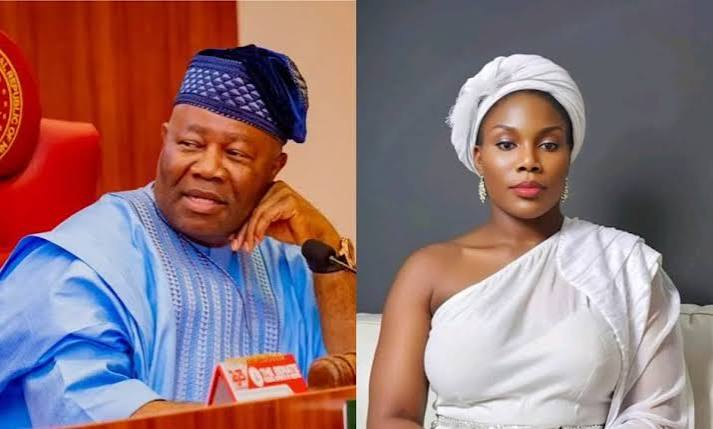
The Senate President has a problem, and it is not Natasha Akpoti-Uduaghan. It is Sandra Duru.
When a nine-minute audio recording surfaced last week purporting to capture Godswill Akpabio in conversation with the American-based activist known as Professor Mgbeke, the immediate focus was on what he allegedly said. But the more consequential question is what the existence of the tape reveals about the man who holds the third-highest office in the land.
The recording is only a preview. Duru has promised more. And in that promise lies a political vulnerability that could reshape Akpabio’s standing within the political class as the 2027 election cycle approaches.
What the Tape Says
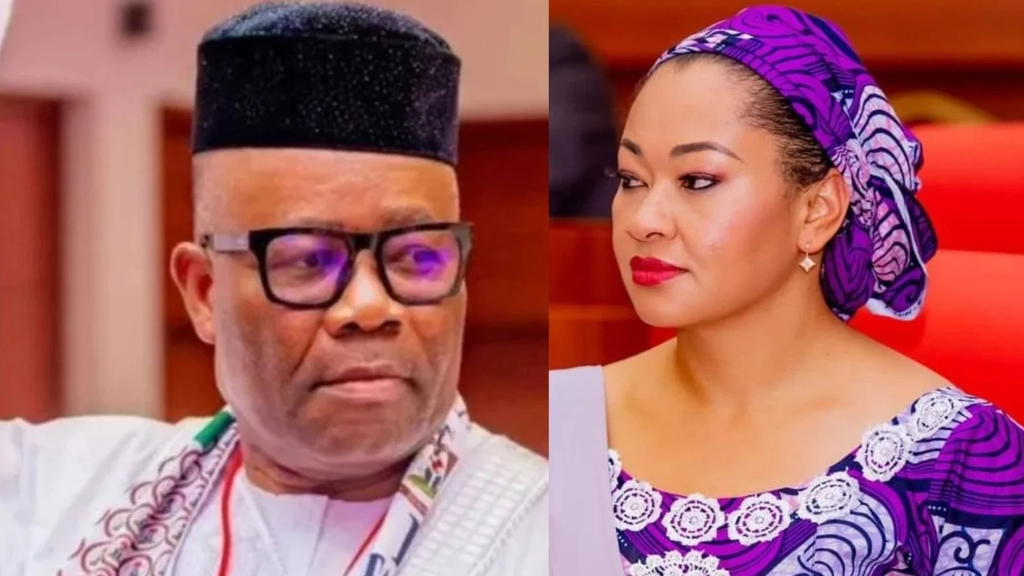
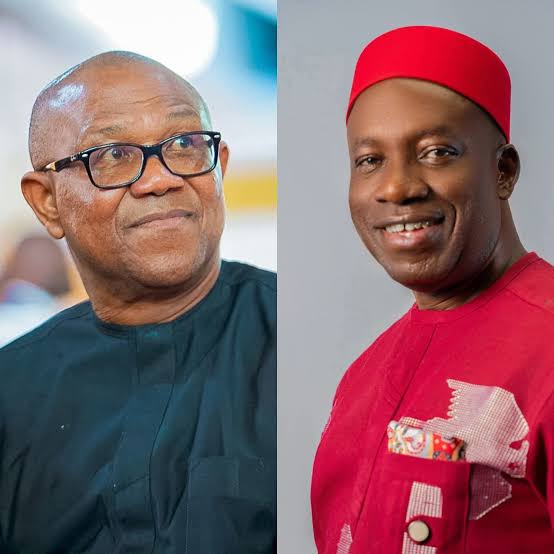
The audio, released on social media on September 18, contains a male voice Duru identifies as Akpabio’s. In it, the speaker discusses former Delta State Governor Ifeanyi Okowa’s defection to the All Progressives Congress, alleging that Okowa joined not out of conviction but out of fear of corruption cases . “Okowa came because of fears of his corruption cases; it’s not because of his sincerity,” the voice says . The speaker also claims Okowa was kept in the dark about the party’s new leadership, boasting that the decision was between him and the President .
Duru frames the recording as evidence that Akpabio engaged her to campaign against Senator Natasha Akpoti-Uduaghan—a dramatic reversal from her 2025 claim that Akpoti-Uduaghan had offered her N200 million to fabricate allegations against Akpabio . Neither Akpabio nor Akpoti-Uduaghan has commented on the latest audio. The Senate President’s media aide, Eseme Eyiboh, did not respond to calls and messages. Akpoti-Uduaghan’s camp said simply, “We have no comment on this issue” .
The authenticity of the recording has not been independently verified. But for Akpabio’s colleagues, that is almost beside the point.
The Trust Problem
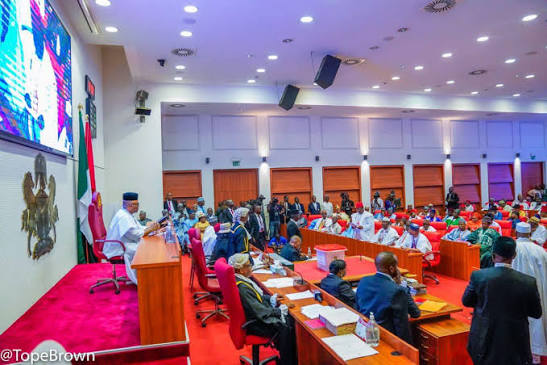
Here is the question that every senator, governor, minister, and party leader who has ever had a private conversation with Akpabio is now asking: Am I on the next tape?
The political class runs on confidentiality. Deals are discussed, compromises are explored, and sensitive information is exchanged in private. A Senate President cannot function if his colleagues fear that their conversations will end up on social media. Trust is not ornamental to the office; it is part of the machinery that makes it work .
The tapes—and the promise of more—have introduced a new variable into that machinery. As one analysis put it, the sentence “There is more” may be more consequential than anything in the first recording. Everyone who has entrusted Akpabio with something private now has reason to wonder: Did he discuss me too?
This is not about whether Akpabio broke any law. It is about whether he can be trusted with information. And in a political environment where alliances are fragile and ambitions are boundless, the perception of indiscretion can be as damaging as the reality.
The Mgbeke Tapes: The Activist Who Knew Too Much
The strangest dimension of this saga is the relationship it reveals between Akpabio and Duru. This was not a casual acquaintance. The conversation captured in the recording suggests a familiarity, a comfort, a willingness to speak freely about political figures and party dynamics. The voice attributed to Akpabio discusses Okowa’s political future, the party’s internal decisions, and his own role in shaping them. This is not the language of a man talking to a stranger. It is the language of a man talking to someone he trusts.
That trust has now been weaponised. Duru, who once positioned herself as Akpabio’s defender, has become the custodian of recordings potentially more damaging to him than anything his political adversaries could have manufactured . The irony is almost literary: the woman who accused Natasha of plotting against Akpabio now alleges that Akpabio was the one plotting against Natasha.
Public affairs analyst Teddy Onyejuwe captured the absurdity of the situation when he said Akpabio and Duru should fight their own battle. “If there was an agreement, let those who allegedly made it explain. If there was a conspiracy, let the evidence establish it. But Natasha should not be their ammunition,” he said .
He is right. But the damage has already been done. The tape has exposed a side of Akpabio that his colleagues will not soon forget.
What the Political Class Will Do With the Akpabio Mgbeke Tapes
Akpabio enjoys a significant advantage: he is reportedly in the President’s good books. Tinubu has shown no inclination to distance himself from the Senate President, and there is no indication that the presidency views the leaked audio as a threat to its legislative agenda.
But the President’s goodwill does not automatically translate into the trust and respect of Akpabio’s peers. The Senate is not a monolith. It is a collection of ambitious politicians, many of whom have their own relationships with the President, their own power bases, and their own calculations about 2027. For them, the tapes are a data point. They will ask themselves: Is Akpabio a liability? Will associating with him expose me to risk? Should I begin to distance myself?
These questions do not require an answer today. But they will linger. And in politics, lingering questions have a way of becoming answers.
The Activism-Patronage Fault Line in the Akpabio Mgbeke Tapes
The Akpabio-Duru saga also illuminates something broader about Nigerian politics: the thin line between activism and patronage. Duru was not a neutral observer. She was embedded in the political ecosystem, close enough to the Senate President to receive his calls and discuss sensitive matters. Her transition from defender to accuser is not a story of principle triumphing over power. It is a story of a relationship that curdled—and the consequences that followed.
This is a familiar pattern. Activists who enter the orbit of power often find themselves compromised, their independence traded for access. When the relationship sours, the recordings surface. The public is invited to choose sides, but the real story is the intimacy that existed before the rupture. The conversations between Akpabio and Duru reveal a political class that operates through personal networks, informal arrangements, and mutual dependence—not through the formal institutions that are supposed to govern public life.
The Road Ahead for Akpabio After the Mgbeke Tapes
Akpabio has survived political storms before. He withdrew his defamation suits against Akpoti-Uduaghan in January 2026, framing the decision as an act of faith and leadership . He has the President’s ear. He controls the Senate’s agenda. He is, by any measure, one of the most powerful men in Nigeria.
But power is not the same as trust. And the Mgbeke tapes have raised questions about Akpabio’s discretion that will not disappear when the next news cycle arrives. The Senate President’s challenge is not to silence Sandra Duru. It is to convince his colleagues, and the political class more broadly, that he can be trusted with their secrets.
That is a harder task than any legislative battle. And it is one that no amount of presidential goodwill can solve for him.









Leave a comment