

Courts Are Now the Real Battleground for 2027.
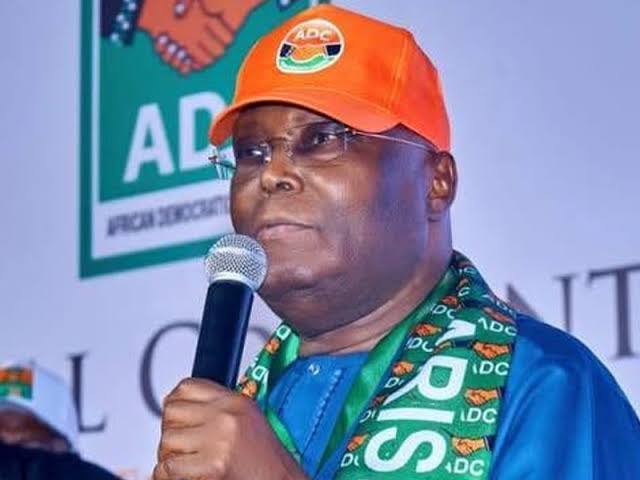
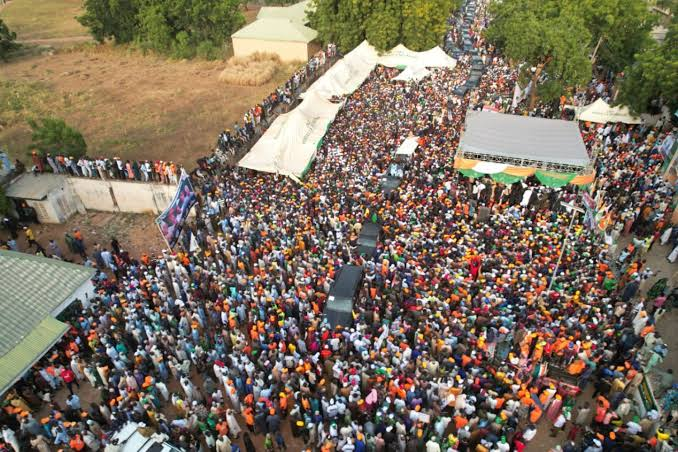
The 2027 election is being shaped less by campaign rallies than by courtrooms. On 5 November 2026, Justice Peter Lifu of the Federal High Court in Abuja nullified the David Mark-led National Working Committee of the African Democratic Congress and, with it, the process that produced Atiku Abubakar as the party’s presidential candidate. The ruling came barely twenty-four hours after Atiku launched his campaign in Sokoto before a large crowd. The ADC has vowed to appeal. Atiku has dismissed the judgment as an attempt to derail a national movement. The campaign continues. But the political damage is already done, and the questions it raises about judicial autonomy and electoral predictability will outlast this particular case.
The ADC Ruling and Its Immediate Fallout
The suit was filed by Nafiu Bala Gombe, a former ADC Deputy National Chairman (North-East), who argued that following the resignation of former National Chairman Ralph Nwosu, he was constitutionally entitled to assume leadership. Justice Lifu held that the emergence of the Mark-led caretaker committee violated the ADC constitution, the Electoral Act and the 1999 Constitution. The court ordered INEC not to recognise or act on decisions taken at the party’s 99th National Executive Committee meeting of 27 July 2025. Gombe’s counsel, Luka Haruna, stated after the judgment that the ADC now has no candidates from the presidential level to the House of Representatives for the 2027 election.
Atiku’s legal team has pointed to an earlier ruling by Justice Musa Liman in Suit No. FHC/ABJ/CS/1637/2025, which they say upheld the Mark-led leadership. The ADC argues that a court of coordinate jurisdiction cannot sit on appeal over another court of equal jurisdiction. This is a legally serious point, and the Court of Appeal will have to resolve it. But the political consequence is immediate: thousands of ADC candidates at state and federal levels now face uncertainty about whether their names will appear on the ballot, and Atiku’s campaign must fight a legal battle while simultaneously fighting a political one.
The Pattern: NDC Then, ADC Now
This is not an isolated event. The Nigeria Democratic Congress, which brings together Peter Obi and Rabiu Kwankwaso, faced its own legal challenges in the months before the election. The party survived, but the episode consumed time, resources and public attention that could have been directed at campaigning. Now the ADC faces the same dynamic. The sequence matters. As the APM’s National Publicity Secretary, Abubakar Yusuf, alleged, there appears to be a “gradual process, targeting opposition parties one after another, from the ADC to the NDC and then others.”
Whether this is a coordinated strategy or a coincidence of litigation is a question Nigerians cannot answer with certainty. What they can observe is the pattern. The two most significant opposition platforms to emerge ahead of 2027 have both been dragged into court proceedings within months of the election. Atiku has explicitly accused the APC of attempting to weaken the opposition, citing the timing of the judgment relative to his Sokoto rally. The APC has not directly responded to that allegation, but Aviation Minister Festus Keyamo defended the judgment, blaming the Mark-led camp for the crisis and insisting that the dispute was a consequence of its own actions. Keyamo’s defence is legally coherent: if a party’s internal processes are flawed, the courts are the proper forum for remedy. But legal coherence and political perception are different things.
The Historical Precedent Nigerians Remember
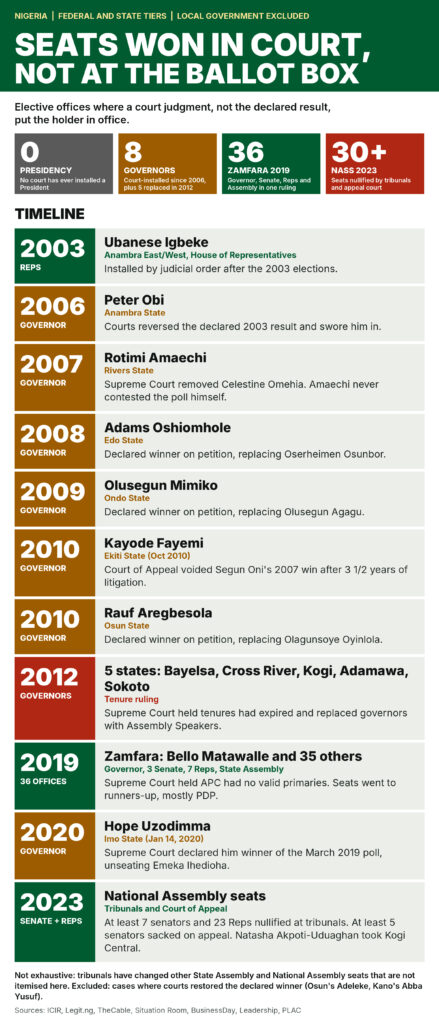
Nigerians who know their history do not approach judicial interventions in elections with innocence. The courts played a role in the sequence of events that denied Obafemi Awolowo the presidency in the First Republic, when legal and constitutional manoeuvres were deployed against his party. The annulment of the 12 June 1993 election, won by MKO Abiola, remains the defining trauma of Nigerian democracy, and while that was a military act rather than a judicial one, the subsequent legal proceedings that prolonged the crisis left a lasting suspicion that the judiciary can be used to deny popular mandates. The controversial court rulings that upheld Shehu Shagari’s victory in 1979, despite widespread public belief that Awolowo or Nnamdi Azikiwe had been denied, reinforced the perception that technicalities and legality can prevail over public will.
These precedents do not mean that every court ruling against an opposition figure is politically motivated. They mean that Nigerians have learned to read judicial outcomes through the lens of historical experience, and that lens is not trusting.
The Judicial Autonomy Question
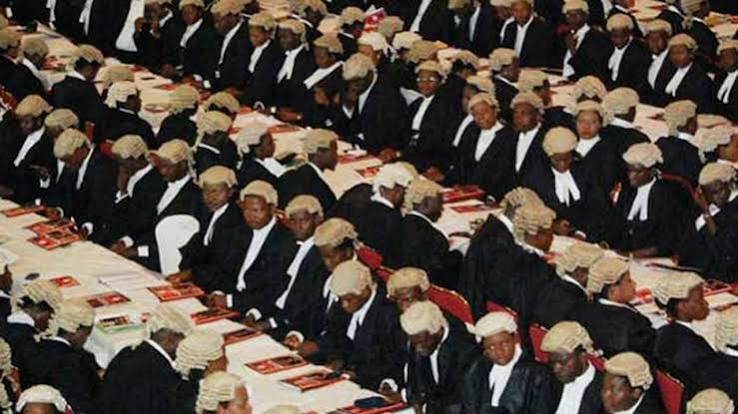
The deeper structural issue is the absence of genuine judicial autonomy. The Constitution subsumes the judiciary under the executive in ways that are visible to anyone who examines the machinery. Judicial appointments, including those of the Chief Justice of Nigeria, are made on the recommendation of the National Judicial Council, but the President appoints and the Senate confirms. The salaries and allowances of judges are charged to the Consolidated Revenue Fund, which provides a degree of protection, but the funding of the courts more broadly is subject to executive budgetary control. The conferment of the Senior Advocate of Nigeria title, which carries prestige and professional advantage, is overseen by the Legal Practitioners’ Privileges Committee, a body whose composition and processes have been criticised for political influence.
These are not abstract concerns. They shape the incentive structures within which judges operate. A judiciary that depends on the executive for its funding, its appointments and its professional honours is not structurally independent, however personally upright individual judges may be. Until these structures are reformed, every high-profile ruling against an opposition figure will be greeted with suspicion, and every ruling in favour of one will be greeted with accusations of compromise. The institution loses authority in both directions.
The Adebutu Case and the Ballot Uncertainty
The problem is not confined to the presidential level. In Ogun State, Ladi Adebutu is campaigning for governor without a definitive assurance that he will be on the ballot. The emergence of a governorship candidate in circumstances that do not reflect a robust internal competition continues to generate animosity, and the uncertainty about Adebutu’s status means that voters in Ogun cannot know with confidence who their options are. This is disenfranchisement by procedural ambiguity. The law must be clear on who is on the ballot, and when that clarity is absent, the perception of connivance with rival parties and personalities becomes unavoidable.
What This Means for Nigerians at Home and in the Diaspora
For the voter in Abeokuta or Sokoto, the court rulings mean that the choices presented on the ballot may be determined by judges rather than by parties or electorates. The ADC’s candidates, if the ruling stands, will not appear. The voters who intended to support them will have their preferences removed from the ballot. For the diaspora, the uncertainty is equally corrosive. Nigerians abroad who follow the election closely will see a process in which the courts, not the campaign, are setting the terms of competition. The credibility of the 2027 election in the eyes of international observers and diaspora communities will depend in part on whether the appellate courts resolve these disputes quickly and transparently, and on whether the pattern of litigation against opposition parties continues.
Peter Obi’s intervention was measured but pointed. He acknowledged the judiciary’s authority to determine disputes, but argued that “three months before a general election, it is in the public interest to have certainty.” He warned that uncertainty over candidates and parties close to an election could undermine the electoral process. This is not an attack on the courts. It is a statement of democratic common sense. Elections require a settled field of contestants. When the field is unsettled by litigation until the eve of the vote, the election itself becomes a legal proceeding with a voting component attached.
The Solution
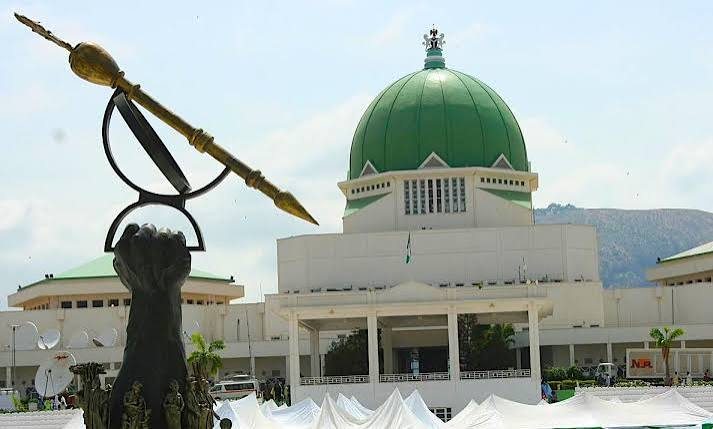
First, the National Assembly should amend the Electoral Act to establish a strict timeline for pre-election litigation. All intra-party disputes and candidate nomination challenges should be filed and resolved within a defined window, closing no later than ninety days before the election. Any challenge filed after that window should be dismissed as time-barred, with limited exceptions for fraud discovered later. The electoral process must continue while internal disputes are resolved, not be suspended by them.
Second, the appellate courts must prioritise election-related appeals and deliver judgments expeditiously. The ADC has a right to appeal, and the Court of Appeal has a duty to hear the matter quickly. A ruling that arrives after the election is of limited value to the voters whose choices it affects.
Third, the structural foundations of judicial independence must be addressed. The funding of the judiciary should be placed on a first-charge basis with automatic disbursement, removing the executive’s ability to use budgetary allocation as leverage. The appointment process for senior judicial officers should include a transparent public hearing component. The SAN conferment process should be reformed to reduce political influence. These are long-term reforms, but they are the only way to restore public confidence in the institution’s neutrality.
The courts have the power to protect rights and resolve disputes. They do not have the power to choose presidents. When it begins to appear that they do, the democracy is in trouble, and Nigerians will be right to say so.









Leave a comment