

By Political Analysis Desk
ADC Deregistration and Nigeria’s Democratic Test
The controversy surrounding the ADC deregistration ruling has rapidly evolved into one of the most significant political and legal debates ahead of Nigeria’s 2027 general elections.
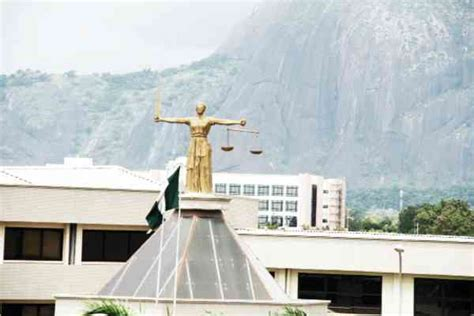
On a Monday in June 2026, Justice Peter Lifu of the Federal High Court in Abuja ordered the deregistration of five political parties: the African Democratic Congress, Accord Party, Action Alliance, Action Peoples Party, and Zenith Labour Party.
The court directed the Independent National Electoral Commission to remove the parties from its register, effectively barring them from participating in the next general election.
Although the judgment rests on constitutional provisions relating to electoral performance, its wider implications have triggered alarm among opposition politicians, legal observers, and democracy advocates.
For many critics, the case is no longer merely about party registration.
It has become a referendum on the health of Nigeria’s democracy and the role of the judiciary in shaping the country’s political future.

ADC Deregistration: The Judgment That Shook the Opposition
Justice Lifu delivered the ruling in a suit filed by the Incorporated Trustees of the National Forum of Former Legislators.
The plaintiff argued that the affected parties failed to satisfy constitutional requirements concerning electoral spread and performance.
Specifically, the parties allegedly failed to secure at least 25 per cent of votes in the last general election, a threshold the court considered essential for retaining political party status.
After dismissing preliminary objections filed by the defendants, the court ordered INEC to proceed with their deregistration.
The timing of the decision immediately attracted attention.
The ADC had recently emerged as a rallying point for opposition forces after announcing former Vice-President Atiku Abubakar as its presidential candidate and former Rivers State Governor Rotimi Amaechi as a key figure in its 2027 political calculations.
That development transformed the judgment from a routine legal matter into a major national controversy.
ADC Deregistration: Opposition Leaders Cry Foul
Atiku Raises Questions About Due Process
Atiku Abubakar reacted swiftly and forcefully.
Through his spokesman, Phrank Shaibu, the former vice-president described the judgment as a dangerous escalation of authoritarian tendencies and a direct attack on democratic principles.
His camp pointed to what it considers a serious procedural defect.
According to Atiku, the Court of Appeal, Abuja Division, had on May 22, 2026 granted an application staying further proceedings in the case pending the determination of an appeal.
The opposition leader argued that any judgment delivered despite that order raises troubling questions about respect for judicial hierarchy and adherence to the rule of law.
Atiku also accused the administration of President Bola Tinubu of focusing more on weakening political opponents than solving Nigeria’s pressing challenges, including insecurity, inflation, unemployment, and rising poverty.
In his view, the ruling fits into a broader pattern of political exclusion ahead of 2027.

Adebayo Warns Against One-Man Rule
Former Social Democratic Party presidential candidate, Prince Adewole Adebayo, also condemned the judgment.
He described it as unconstitutional, undemocratic, and harmful to Nigeria’s multi-party system.
Adebayo argued that Nigeria’s ethnic, religious, and cultural diversity requires a broad political space where citizens can pursue different political visions.
He therefore called for constitutional reforms that would remove INEC’s power to register and deregister political parties.
In separate remarks earlier in 2026, he accused President Tinubu of seeking excessive political control.
According to Adebayo, the greater danger facing Nigeria is not simply one-party dominance but the emergence of one-man rule.

Ugochinyere Rejects the Court’s Findings
House of Representatives member and APP National Leader, Ikeagwuonu Ugochinyere, also rejected the ruling.
He argued that evidence presented before the court showed that some of the affected parties recorded electoral victories during the 2023 elections.
According to him, ADC won House of Representatives seats in Kogi State, APP secured a local government chairmanship position in Jigawa State, while Accord Party won representation in the Imo State House of Assembly.
He questioned why those facts failed to alter the outcome of the case.
A Troubling History of Judicial Intervention
The latest controversy has revived memories of earlier judicial decisions that profoundly shaped Nigeria’s political trajectory.
The Shadow of June 12
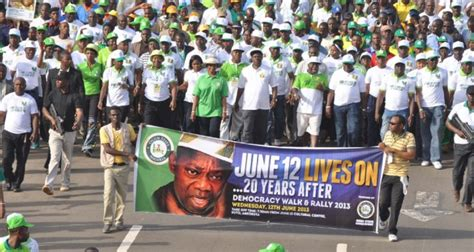
For many Nigerians, concerns about judicial intervention in politics date back to the annulment of the June 12, 1993 presidential election.
Chief Afe Babalola (SAN), who represented MKO Abiola, has repeatedly recalled the legal battles that followed.
He criticised the controversial ruling by Justice Bassey Ikpeme of the Federal High Court, Abuja, which attempted to halt the election shortly before voting commenced.
Babalola later described the episode as one of the judiciary’s darkest moments and warned that its consequences would reverberate for generations.
More than three decades later, many observers believe those concerns remain relevant.
The Akpabio Tribunal Controversy
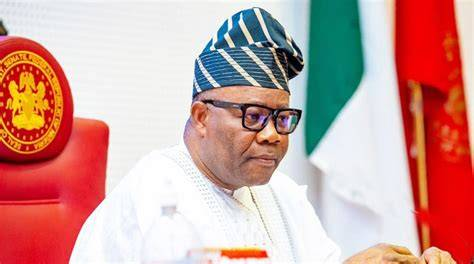
The 2019 Akwa Ibom North-West senatorial election also produced one of Nigeria’s most controversial tribunal decisions.
While the majority judgment upheld Chris Ekpenyong’s victory, Justice Sheriff Hafizu delivered a strongly worded dissenting opinion that declared Godswill Akpabio the rightful winner.
The disagreement sparked intense public debate and raised questions about consistency within the judicial process.
Although Akpabio eventually lost that legal battle, the controversy remains a notable example of sharply divided judicial interpretations.

The Lawan-Machina Precedent
Perhaps no recent case illustrates public concerns about technical justice better than the dispute between Bashir Machina and Ahmed Lawan.
Machina won the APC senatorial primary for Yobe North after Lawan chose to pursue the party’s presidential ticket.
After losing the presidential contest, Lawan sought to reclaim the senatorial ticket.
Both the Federal High Court and the Court of Appeal ruled in favour of Machina. However, the Supreme Court later overturned those decisions in a split 3-2 judgment.
The majority focused on procedural questions relating to how Machina initiated the suit. Critics argued that the court prioritised technicalities over the substance of the dispute.
ActionAid later criticised the decision, insisting that Lawan never participated in the primary election that produced Machina.
Plateau, Kano and Growing Public Doubts
The 2023 election cycle generated further controversy.
In Plateau State, appellate court decisions removed several elected PDP officials and initially sacked Governor Caleb Mutfwang. The rulings centred on disputes over party structures and nomination procedures.
Kano also witnessed intense litigation after election tribunals nullified Governor Abba Kabir Yusuf’s victory and deducted more than 165,000 votes from his tally.
Although each case involved distinct legal issues, together they reinforced public debate about the increasing influence of courts on electoral outcomes.
Are Opposition Parties Being Weakened?
The central political question remains unavoidable.
Are these developments merely the application of constitutional provisions, or do they reflect a broader effort to weaken opposition platforms before 2027?
Opposition leaders believe the answer is clear.
Atiku has described the deregistration ruling as part of an emerging pattern of institutional actions targeting alternative political voices.
Adebayo has warned that Nigeria risks concentrating excessive power in the hands of a single political actor.
Supporters of the government reject those allegations and maintain that the judiciary remains independent. They argue that constitutional requirements must apply equally to all political parties.
Nevertheless, public suspicion persists.
The combination of legal disputes, controversial judgments, and growing political tensions has deepened concerns about the future of competitive democracy in Nigeria.
What the Judgment Means for 2027
The consequences of the ADC deregistration case could extend far beyond the affected parties.
First, the removal of five parties narrows the range of choices available to voters.
Second, it potentially weakens opposition efforts to build a broad coalition capable of challenging the ruling APC.
Third, it may encourage further legal challenges against smaller political parties.
Most importantly, the controversy surrounding the reported Court of Appeal stay order raises questions about due process and judicial consistency.
Those questions will likely dominate political discourse as the 2027 election approaches.
A Defining Test for Nigeria
The ADC deregistration ruling represents far more than a dispute over electoral thresholds. It has become a defining test of Nigeria’s democratic institutions.
Supporters view the judgment as a lawful application of constitutional provisions. Critics see it as a dangerous development that could restrict political competition and weaken opposition participation.
Whatever the final outcome on appeal, the case has already achieved one thing.
It has forced Nigerians to confront difficult questions about democracy, judicial independence, political pluralism, and the future of the electoral process.
As the nation moves closer to 2027, those questions will only become more important.
The answers may ultimately determine not just the fate of five political parties, but the credibility of Nigeria’s democratic project itself.











Leave a comment