

APC 2027 Election Challenges
Our Political Analysis Desk
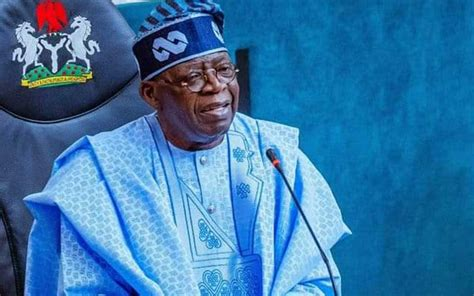
The APC 2027 Election Challenges are becoming increasingly difficult to ignore despite the advantages that come with controlling the Federal Government.
At first glance, the All Progressives Congress appears firmly positioned for another electoral victory. The party controls the presidency, commands significant political structures nationwide, and has President Bola Tinubu preparing for a re-election campaign.
As Tinubu approaches his third year in office on June 12, 2026, his administration can point to notable achievements. Fuel subsidy removal, exchange rate reforms, stronger foreign reserves, increased investor confidence, and economic growth have all become central pillars of the government’s record.
Foreign reserves reached $45.4 billion by December 2025. The Nigerian stock market gained 48.12 per cent, while foreign direct investment rose sharply from $90 million to $720 million between the second and third quarters of 2025.
Yet beneath those encouraging figures lies a growing political problem. Internal divisions, economic hardship, insecurity, and mounting dissatisfaction now threaten the APC’s path to 2027.

APC NA Primaries Expose Deep Divisions
The first major warning sign emerged during the APC National Assembly primaries in May 2026.
More than 70 serving federal lawmakers failed to secure return tickets for the 2027 elections. Several prominent senators lost out, including Ned Nwoko, Gbenga Daniel, Osita Izunaso, Saliu Mustapha, and Titus Zam.
While competitive primaries remain a normal part of democracy, the aftermath exposed serious tensions within the ruling party.
Many defeated lawmakers reportedly expressed dissatisfaction with the process. Meanwhile, the advocacy group Transparency and Intelligence Watch warned against attempts to reverse primary outcomes through political appointments.
The group argued that imposing rejected candidates could undermine internal democracy and damage the party’s electoral prospects.
At the centre of the controversy lies a familiar struggle. Governors largely control party structures at the state level, while the presidency seeks to protect loyal lawmakers who supported the administration’s agenda.
Consequently, conflicting interests now threaten party cohesion ahead of a critical election cycle.

Iyabo Obasanjo’s Exit Sends a Powerful Signal
The departure of Professor Iyabo Obasanjo represents another significant setback.
The former senator and daughter of former President Olusegun Obasanjo formally resigned from the APC in June 2026 after pursuing the Ogun State governorship ticket.
In her resignation letter, she accused party leaders in Ogun State of exclusion, disrespect, and unfair treatment.
According to her account, party leaders announced Senator Solomon Olamilekan Adeola as the consensus candidate without consulting her despite her active participation in the process.
She further alleged that some of her supporters faced hostility during the candidate announcement event.
Although she publicly congratulated Adeola and pledged support, she later complained that party leaders ignored her completely.
Her resignation carries symbolic importance.
First, the Obasanjo name still commands considerable influence in South-West politics.
Second, her exit reinforces concerns about candidate imposition and internal democracy.
Third, her experience mirrors complaints raised by party members in several states.
More importantly, she was not a serial defector. She joined the APC specifically to contest under its platform and accepted the consensus decision before ultimately leaving due to what she described as persistent disrespect.
Her departure strengthens the perception that the APC is struggling to manage internal relationships effectively.

Northern Discontent Raises Fresh Concerns
The defeat of several influential lawmakers has generated concern across northern states.
Each displaced senator represents an established political network. These structures often include local leaders, grassroots mobilisers, and long-time party supporters.
When such figures lose influence, resentment often follows.
Political observers have noted growing dissatisfaction in states such as Kwara, Benue, Plateau, and parts of the North-West.
The APC relies heavily on northern votes. Therefore, any reduction in enthusiasm among party loyalists could prove costly.
Although party leaders continue to call for reconciliation, persuading disappointed politicians and their supporters to remain committed may prove difficult.
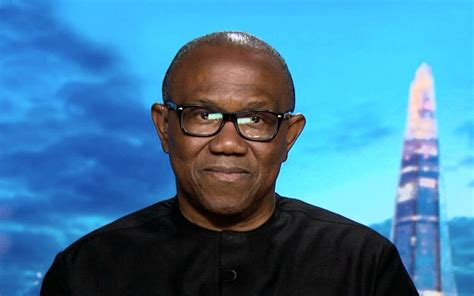
Peter Obi Remains a Major Electoral Threat
Another significant challenge comes from Peter Obi and his loyal support base.
The former Labour Party presidential candidate has now moved to the African Democratic Congress and is seeking the party’s presidential ticket for 2027.
His influence remains strongest in the South-East. However, his appeal extends beyond the region.
During the 2023 election, Obi dominated much of the South-East. He also recorded victories in Delta, Edo, and even Lagos State.
APC Deputy National Chairman (South), Ben Nwoye, openly acknowledged the challenge. He described the South-East as the birthplace of the Obidient Movement and admitted the party faces a difficult battle there.
The APC must therefore contend with a highly motivated opposition force that continues to attract young voters and grassroots supporters.

The Wike Question Continues to Divide Opinion
Few political figures generate stronger reactions than Federal Capital Territory Minister Nyesom Wike.
Supporters credit him with playing a decisive role in Tinubu’s 2023 victory, particularly in Rivers State.
Critics, however, view him as a controversial figure whose growing influence within the APC creates discomfort among long-standing members.
Meanwhile, his defeat of his successor, Governor Sim Fubara has left scars and distrust within the party.
Hon. Stephen Ajiya recently defended Wike and warned party members against attacks on the former Rivers governor.
Nevertheless, concerns remain.
Some APC loyalists believe Wike’s influence strengthens the party electorally. Others fear his political style alienates core supporters.
As a result, the party continues to wrestle with an issue that has no easy solution.
Economic Progress Faces Public Resistance
The Tinubu administration has delivered several economic reforms.
Fuel subsidy removal ended a costly fiscal burden. Exchange rate unification addressed long-standing distortions in the foreign exchange market.
GDP expanded by 3.89 per cent during the first quarter of 2026. Credit rating agencies have also responded positively to Nigeria’s economic direction.
However, many Nigerians have yet to experience those gains directly.
Transport costs remain high. Food prices continue to strain household budgets. Currency depreciation has increased the cost of many imported products.
According to a PricewaterhouseCoopers projection, 141 million Nigerians may live below the poverty line by the end of 2026.
The report also estimated that 33.1 million people could face food insecurity due to economic pressures and insecurity in agricultural regions.
Consequently, many voters judge the economy by daily realities rather than macroeconomic indicators.

Insecurity Remains a Major Political Risk
Security challenges continue to threaten public confidence.
Despite repeated assurances from government officials, kidnappings and violent attacks remain widespread.
One of the most troubling examples involves the abduction of 47 schoolchildren in Oyo State.
Authorities have acknowledged the complexity of rescue operations. Yet public frustration continues to grow as families wait for positive news.
Many Nigerians believe the government has not moved quickly enough to address the crisis.
Whether fair or not, such perceptions often shape electoral outcomes.
Therefore, security remains one of the administration’s most significant vulnerabilities.

Grassroots Resistance Emerges Within Campaign Structures
The APC has also encountered resistance from its own supporters.
In Gombe State, party members protested the appointment of a recent defector as State Director of the City Boy Movement.
Long-serving members argued that the decision rewarded newcomers while ignoring loyal party workers.
Their criticism reflects a broader concern across the APC.
Many members feel the party increasingly favours political convenience over loyalty.
If similar disputes spread nationwide, grassroots mobilisation could become more difficult during the campaign season.
APC 2027 Election Challenges Ahead
The APC’s challenges heading into 2027 extend far beyond a single issue.
Internal disputes, defeated incumbents, regional grievances, economic hardship, insecurity, grassroots dissatisfaction, Peter Obi’s continued influence, controversies surrounding Nyesom Wike, and the resignation of Iyabo Obasanjo all contribute to a growing sense of uncertainty.
To its credit, the Tinubu administration has recorded measurable economic achievements. Foreign reserves have improved, investment inflows have increased, and major reforms have reshaped Nigeria’s economic landscape.
However, elections are rarely decided by statistics alone.
Voters often focus on security, living standards, food prices, and personal experiences.
The APC still benefits from incumbency and remains a formidable political force. Yet the accumulation of unresolved problems presents a serious test.
Unless the party addresses these concerns quickly and decisively, the APC 2027 Election Challenges could become the defining story of Nigeria’s next presidential contest.












Leave a comment