

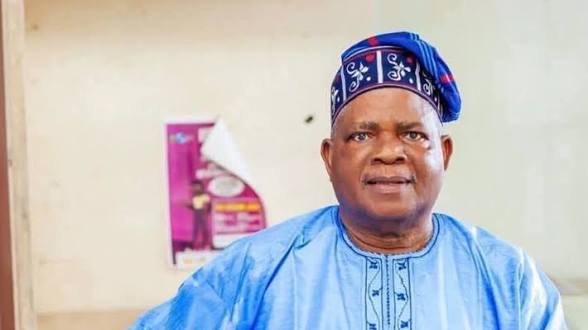
To be able to properly crystalize my thoughts on the passing of Dr. Kola Oyewo, or “Uncle Kay” as my colleagues in the Department of Dramatic Arts, Obafemi Awolowo University used to call him. he Why I had to go and re-read this piece by Jide Taiwo titled “Before We Forget Olu Jacobs”. Because in many ways, what Taiwo says about Olu Jacobs, particularly where he talks about him being an “icon that belongs to the people as much as to his family, who become public memory and social texture… part of how society imagines authority, wisdom and paternal permanence” can also be used to describe Kola Oyewo, perhaps more so in his own case, considering the path he had to take.
I never had the opportunity to interact with Dr. Oyewo, personally but as a student in the Department of English (we had to do Dramatic Arts courses until our third year), one of my memories of him was listening to him commenting on our class DRA 101, end of the session practical stage play, saying that we all did well and he enjoyed the performances. Looking back, he was obviously just flattering us, because in reality, “amateurish” would have been a compliment to those performances. (in our defense we were first year students with little playwrighting or acting experience). Nonetheless having an actual “actor” that we saw on film, praise our efforts made us feel a little better about ourselves and the efforts we put in.
Nowadays, the Yoruba language has become a “popular commodity” thanks to the internet, (and interestingly enough, largely due to the influence of Yoruba Nollywood). At every nook and cranny of the internet now, you would find a Yoruba content creator, scholar or intellectual, eager to showcase their Yorubaness and how proud they are of their origins. But it was not always so. Sometime this year, someone came on the social media platform X to say that they were surprised to hear actress Wunmi Toriola,(who holds a Bachelor’s Degree in Linguistics from the University of Ilorin by the way) speaking fluent English because “she speaks ‘conc’ Yoruba so much that she doesn’t sound like she is literate in English”. If such a perception still persists in a these days when the likes of Femi Adebayo and Kunle Afolayan are getting millions of naira from Netflix to shoot Yoruba Language epic movies, one can imagine what it was like in the 1990s and 2000s. those early years, Yoruba Nollywood was regarded, rightly or wrongly, as the domain of hobbyists and idlers, “unlettered” people who either could not afford to go to school and get proper jobs like serious people, or simply refused to, and have therefore ended up in a fun job but one with poor renumeration, little to no long term prospects, and no retirement plan, because of their lack of options.
There were the Yoruba Nollywood elite like Tunde Kelani, whose movies were regarded as a “lighthouse in a sea of mediocrity,” a breath of fresh air in an industry that was regarded as “local” and lacked the quality to be taken seriously, and indeed like the likes of Akinwunmi Isola, Adebayo Faleti, Larinde Akinleye, Laide Adewale and Peter Fatomilola, and Oyewo himself, we’re regular Kelani stars. Indeed, Oyewo’s two greatest roles are in Kelani’s movies Mako in Koseegbe (1995) and Lapite in Saworoide (1999). But not being a man never one to stay in his ivory tower, Kola Oyewo was a ubiquitous figure in all types of Yoruba films from the 1990s to the 2010s until he had to retire for health reasons. For those of us who grew up in that period, he came to represent the symbol of gravitas, of authority and wisdom. Indeed, his character of Lápitẹ́ in Tunde Kelani’s Saworoide, for which he is most famous, shaped by how perfectly he played it, has transcended the movie screen and has become a pop-culture in its own right.
In 1994, at nearly 50, he went back to school to get a B.A. Degree in Theatre Arts, and it was followed by a Masters Degree, and a PhD in due course, for any other person, it would have been the end of their mainstream acting career, not Kola Oyewo, who continued featuring in movies without missing a beat. “Uncle Kay” was exemplifying the interface between the “town and gown”, the academics of theatre and the film industry while his intellectual colleagues were still debating it inside academic seminars and writing it inside papers. At the time Yoruba Nollywood needed that credibility boost, he provided it. When the world finally began to take notice of Yoruba Nollywood, he was what they would probably see, a shining beacon of academic achievement and intellectual rigour in an industry of hobbyists.
And the transfer of credibility was not one sided either. In carrying his PhD into the mainstream film industry, he visibly demonstrated that the academic theory of theatre and drama need not be at variance with the practice of it, that the theatre academia need not let its ivory tower become its prison. For him, the point of academia is to train cultural practitioners to run the industry, instead of leaving it to hobbyists to run who lacked the training and skill for it.
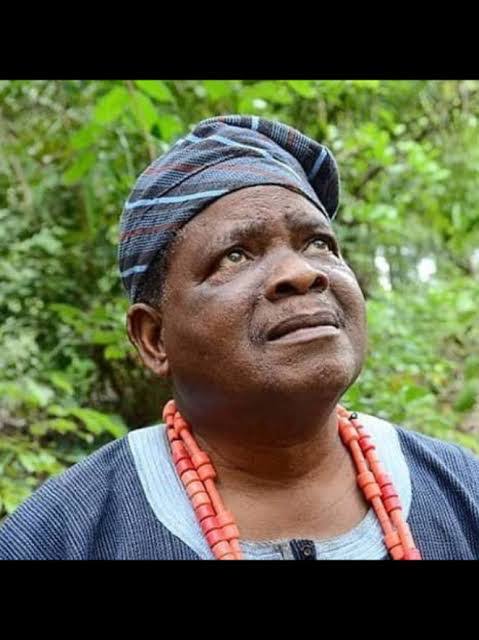
There is a tendency to stereotype Kola Oyewo, due to his patrician, stern appearance and the weighty dignity of his “Dr.” title as perhaps the humourless patriarch, or the no-nonsense king, or the stern uncle. But I recall a scene in Saworoide, in which one of his Chiefs (played by the late Laide Adewale) tries to convince him to go talk to a mob of agitating youths outside the palace
Chief: “Kabiyesi, Baa ba je Elubo, bi Elubo laa ri, Eni ti o si mu obo o se bi obo”
Lapite: Wo ma wule dara re laamu, Emi o je elubo, N si le se bi Obo, Eyin E f’obo ‘le, Idi odan ni yara obo, ewon si ni ileke idi e…”
I choose not to translate that exchange because the witty, dry humour that would make Yoruba speakers hold their sides laughing would be lost in translation. Another golden “Kola Oyewoism” is in the same movie where he uses a string of onomatopoeic adjectives to describe his first wife Asabi, as a fat pig, who wouldn’t befit his image as a queen, he delivers the line totally deadpan, but it is still perhaps one of the funniest lines in the film. If there is a character I would like to remember him by, it is as Lapite, who in the book is a devious, non-nonsense, corrupt dictator, yet Oyewo gives him life in a manner that leaves no doubt as to who he is, at the same time making him relatable and funny without being ridiculous.
They say “A library burns down when an old man dies.”, fewer people can embody the saying in a way Kola Oyewo has. So, rest well Dr. Kola Oyewo, a cultural icon of Yoruba culture, a pathfinder, a seeker and imparter of knowledge, a true ambassador of the theatre, a true colossus of the statge, the screen and the lecture halls. Kato ri Eerin, o di igbo, Ka to ri Efon o di Odan.











Leave a comment