

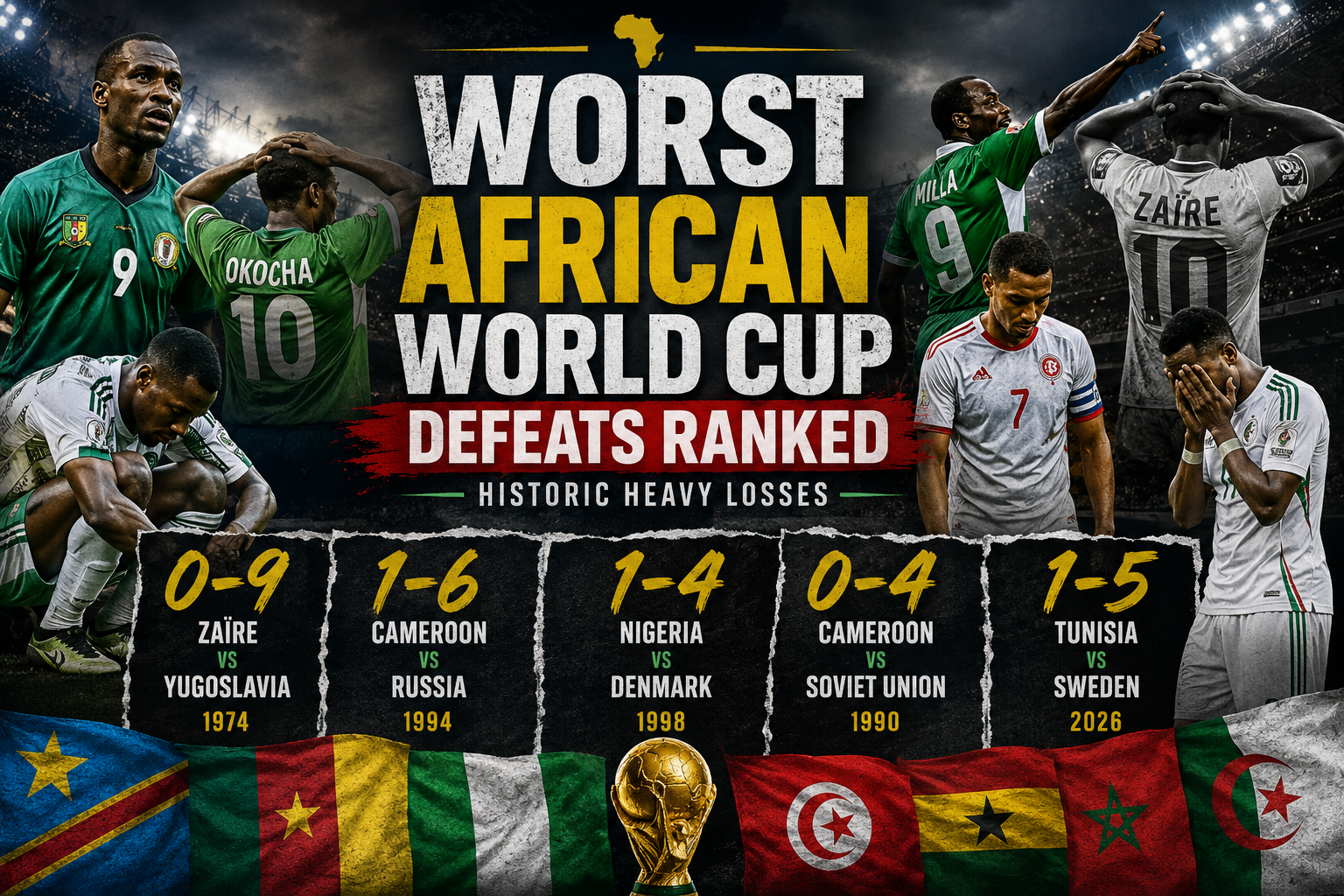
Tunisia vs Sweden Reopens Old Wounds
Tunisia’s 5-1 defeat to Sweden stands among the most recent entries in discussions about worst African World Cup defeats. The match exposed defensive lapses and poor game control, especially in the second half where Sweden dominated possession and transitions.
Despite flashes of promise, the North Africans struggled to maintain structure. This result has placed renewed pressure on the team as they continue their Group F campaign.

Africa’s Long History of Heavy World Cup Losses
African teams have experienced both breakthrough performances and difficult setbacks. From the early years of World Cup participation to modern tournaments, scorelines have often reflected the gap in preparation and experience.
Zaire 9-0 Yugoslavia (1974)
One of the most painful results remains Zaire’s 9-0 defeat to Yugoslavia. The match remains the heaviest loss in African World Cup history and is often cited as the starting point of discussions on structural football challenges on the continent.
Russia 6-1 Cameroon (1994)
Cameroon’s loss to Russia included a historic five-goal performance by Oleg Salenko. Despite Roger Milla’s late strike, the Indomitable Lions were overwhelmed throughout.
The Cameroon national football team have since rebuilt their reputation, but this match remains a reference point in discussions about defensive instability.
Nigeria’s Painful Knockout Memory
One of the most remembered entries involving the Nigeria national football team came in 1998, when Denmark defeated the Super Eagles 4-1 in the Round of 16.
Nigeria had entered the match with high expectations after a strong group-stage performance. However, defensive errors and poor tactical balance led to a swift collapse. This match remains one of the defining moments in Nigeria’s World Cup history.
Recent Heavy Defeats and Tactical Gaps
Modern African teams have improved tactically, but heavy defeats still occur under pressure situations. Cameroon’s 4-0 loss to Croatia in 2014 and Ghana’s 3-0 defeat to Brazil in 2006 highlight recurring challenges against elite opposition.
These matches often reveal:
- Defensive positioning issues
- Lack of midfield control
- Ineffective game management under pressure
Why These Defeats Still Matter
Despite being painful, these results have shaped African football development. Many federations improved coaching standards, youth development, and tactical preparation after such setbacks.
Importantly, these losses have not stopped African teams from progressing. Morocco’s 2022 run to the semi-finals proved that growth is possible with structure and consistency.
The latest wave of discussion around worst African World Cup defeats shows how deeply these moments remain embedded in football memory. While scorelines like Tunisia’s loss to Sweden are difficult to absorb, they also serve as reminders of the tactical and structural evolution still needed.
African football continues to grow, and each setback has historically contributed to stronger future performances on the global stage.












Leave a comment