

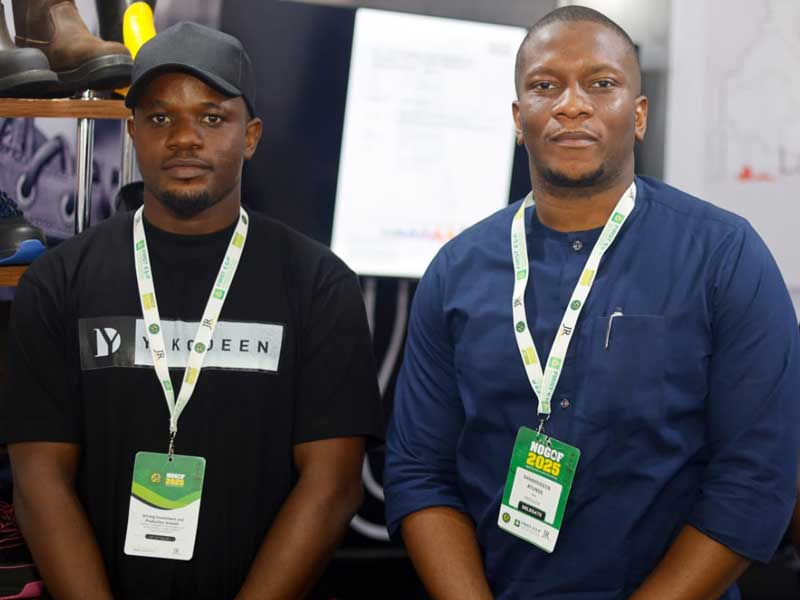
An extraordinary career change has turned a Nigerian computer scientist into a pioneer of heavy industrial manufacturing. The inspiring reality that a tech graduate pivots to build footwear manufacturing giant began when Yinka Atunde faced an unexpected professional delay. After completing his degree at Babcock University, a year-long suspension of his national youth service program disrupted his traditional career plans. Instead of moving to America for an advanced technology degree, he chose to study specialized shoemaking. Today, his enterprise, Yikodeen, operates successfully as the largest safety boot producer in the entire sub-region.
Furthermore, this unique transition required years of hands-on learning within international and local manufacturing hubs. The ambitious founder traveled to Italy to master fine craftsmanship before visiting automated scale factories throughout China. Upon returning home, he made the unconventional decision to work directly on the floor of an active Nigerian shoe factory. This grassroots experience helped him understand internal production gaps and recognize a massive market void. He discovered that almost all industrial protective boots used by local firms came entirely from foreign importers.

Consequently, the determined innovator built a functioning production center by restoring abandoned local industrial machinery. Because new equipment was incredibly expensive, he traveled across fifteen states to buy rusty apparatus from defunct warehouses. Local engineers helped revive these historical devices to kickstart daily operations. However, the young business initially faced massive skepticism from large corporations accustomed to foreign supply chains. Buyers doubted that a domestic brand could meet strict global durability standards.
Fortunately, relentless quality testing and support from the Nigerian Content Development and Monitoring Board altered his commercial trajectory. The firm eventually secured a breakthrough contract to supply 10,000 specialized pairs to the police. Following that milestone, more than 50 major organizations, including Dangote Group and the Nigerian Army, embraced the brand. This rapid growth explains why a tech graduate pivots to build footwear manufacturing giant into a highly lucrative commercial operation.
To fund this rising demand, the company secured a substantial $1.5 million investment from Aruwa Capital Management. This cash injection powered a state-of-the-art facility in Ejigbo, Lagos, which outputs over 5,000 pairs daily. The automated factory employs 500 citizens, and notably, over 61 percent of these workers are local women. While industrial boots remain the core product, the creator plans to expand into a broader safety apparel ecosystem. Ultimately, he advises that local manufacturing demands extreme patience, but the long-term economic impact remains undeniable.












Leave a comment