

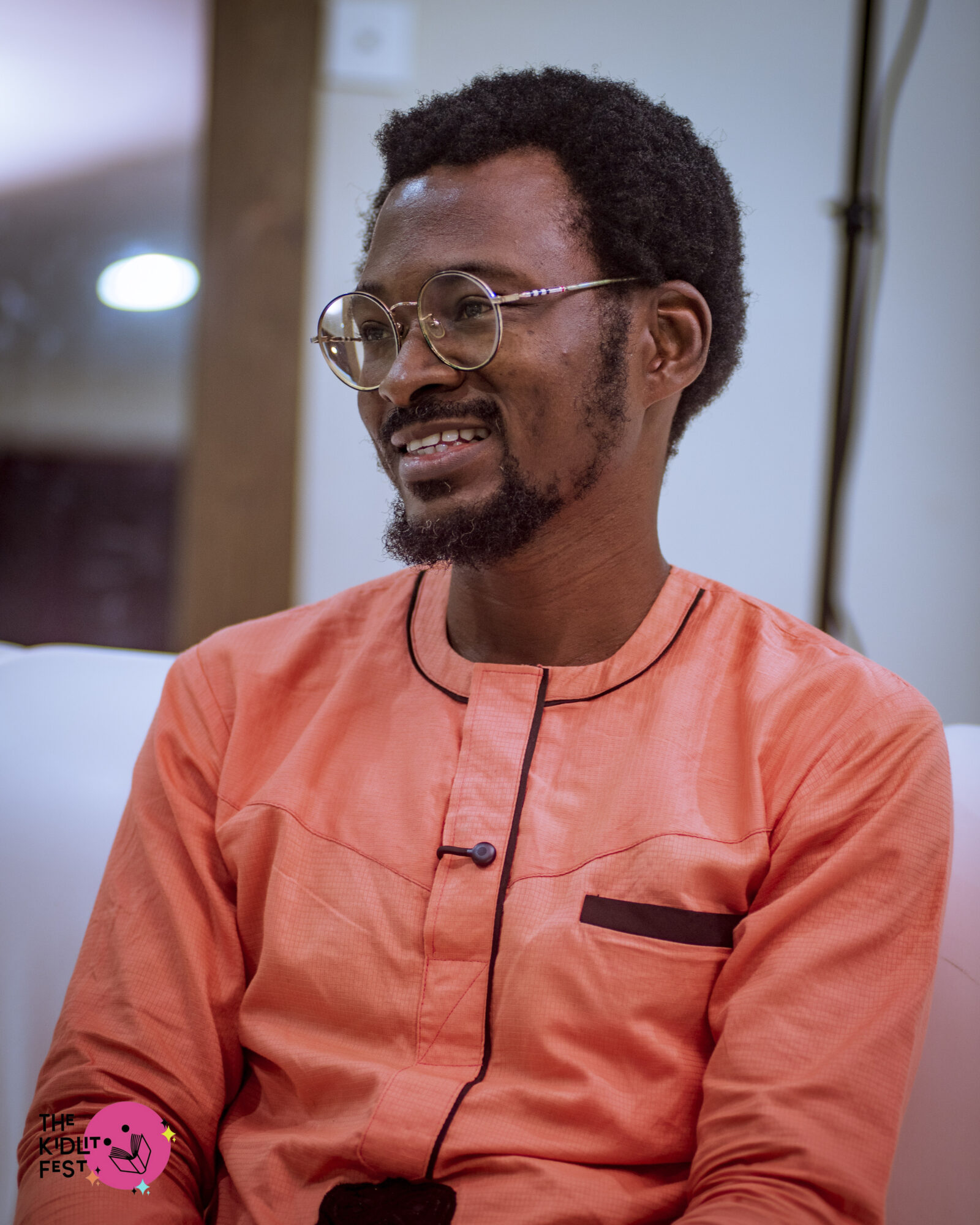
Poet and author Ayo Oyeku, whose works explore poetry, spirituality and African culture, says Wole Soyinka’s Poems of Black Africa inspired his love for animistic poetry. In an interview with CHIBUZOR ALLI, he speaks on his latest collection, Corpus- Animistic Verses, Yoruba cosmology and the social-environmental issues explored in his work.
The title Corpus: Animistic Verses suggests a body of work deeply engaged with spirituality and the natural world. What inspired this exploration of animism?
Sometime in 1998, I fell in love with animistic verses after reading Poems of Black Africa edited by Wole Soyinka. A section in the anthology was dedicated to animistic verses. The idea that inanimate objects can be given agency thrilled me. In the years that followed, I started fusing animism into my poems, and as the years progressed, I improved, and now easily fuse it into any form of poetry I write.
How do you balance the spiritual and the material in “Animistic Verses?
I hold onto the powerful quote: as it is above, so it below. This gives me a clear window into what can be seen and what exists; even if unseen. It’s not surprising to note that animism is fused into our cultures, beliefs, myths, superstitions and religion. So, for me, it’s not about finding balance but acceptance of animism in both the spiritual and material.
You were born in Ibadan, a city with a rich literary history. How has that heritage influenced your work?
Ibadan is everything a writer desires. The air is clean, the trees are green, the roads are wide and the people are natural with their habitat. Asides this, Ibadan is home to most of the African literary legends and publishing houses. I pretty much breathe in their words and times, when I take early morning walks. The city speaks to my ears.
How much did your engagement with Yoruba cosmology and belief systems affect the poetry collection?
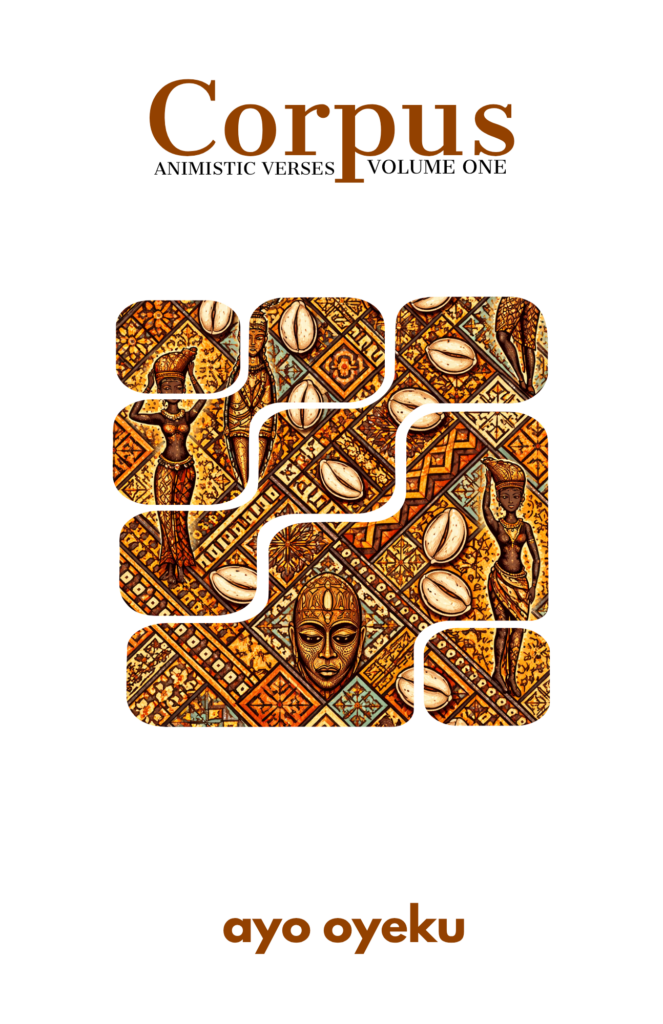
The Yoruba cosmology and religion is older than the popular religions we have today; making it a tough nut to crack. Ifa religion is tied to 256 odus; each a book on its own, making it a dense material. In this collection, I chose to observe the 16 principal odus, whilst leaning on the works of Professor Wande Abimbola, Professor Toyin Falola, Chief Araba Ifayemi Elebuibon, and many others. I broke lots of sweat on this project. Animistic Verses will be in five volumes, CORPUS is the first. May this collection stir what needs stirring, and leave the readers a little closer to their own remembering.
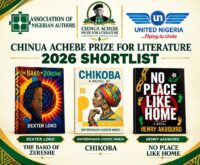
The judges described the longlisted works as drawing “extensively on folklore, oral traditions, and contemporary realities.” How does your work fuse these elements?
CORPUS is broken into four important sections. The first section introduces you to the sixteen principal odus (Ifa Corpus). The second section is a poetic tale that was drawn and reimagined from one of the corpuses. It is in this section that the reader experiences folklore and oral traditions. In the third and fourth section, I delve into contemporary realities, using different forms of poetry, whilst addressing issues that concern the human experience, both within and without.
The longlist features both veterans and emerging voices. Where do you see yourself in this literary landscape?
I was thrown into the ocean of words and verses at an early age. I started writing at 13, and had early success at 17. Over the decades, I have honed my craft across different genres, published over twelve books, and achieved much success. So beyond literary competitions, I see myself as a fine contributor to the African narrative. That’s all that matters to me.
The Advisory Board noted that the longlisted works explore “resilience in the face of violence and oppression.” How does Corpus: Animistic Verses engage with resilience?
If the battle is not won in the mind, it cannot be won physically. We are all challenged by the vicissitudes of life. It’s a herculean task and we are fighting it the best way we can. The third section of my poetry collection does a thorough job in peeling scabs off old wounds and showing the reader how to fight from within. After all; what we are seeking is also seeking us.
What role does spirituality play in contemporary Nigerian society, and how does your poetry address this?
Nigeria is a deeply religious and praying country. We look for answers to our problems through spirituality. It cuts across every facet of our lives, including governance. We work hard, we pray harder, and cling to hope eternally. So, CORPUS is simply a beautiful reflection of us as a society. The collection does not judge but educates and enlightens.
How can animistic poetry speak to modern environmental and social challenges?
In this collection, I wrote a number of poems that addressed modern environmental and social challenges. One of them is, Water Get Enemy. This is a poem that addresses environmental pollution and climatic challenges. Another is Japa; a poem that addresses brain drain. I pulled CORPUS from a list of over 200 animistic verses; with the intent to enlighten, inspire and transform us into completely competent beings. Our leaders are a true reflection of our society. We need to stop hiding behind a finger.









Leave a comment