

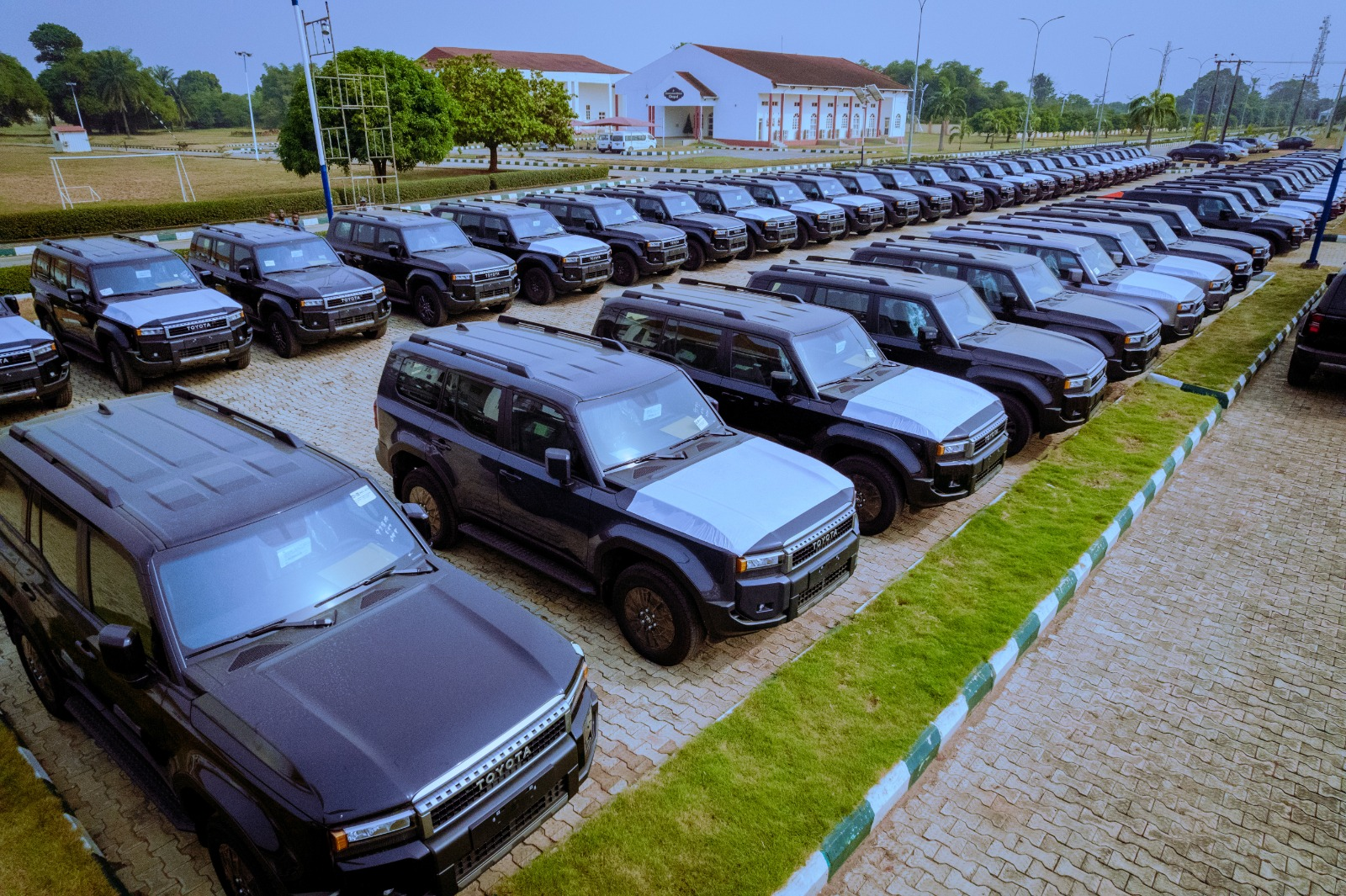
The FG Budgets has allocated ₦962.83 billion for empowerment projects and Sport Utility Vehicles (SUVs) in the 2026 Appropriation Act. The spending has attracted criticism from transparency advocates. They argue that the allocations raise questions about accountability and fiscal priorities.
According to civic technology organisation Tracka, the allocation includes ₦947.70 billion for 2,579 empowerment projects. Another ₦15.13 billion will fund the purchase of 39 SUVs. Combined, the spending reaches ₦962.83 billion.
Tracka said the allocation is larger than the combined budgets of seven federal ministries. These include Industry, Trade and Investment, Housing, Women Affairs, Justice, Livestock Development, Aviation and Petroleum Resources.
The organisation also questioned the transparency of the projects. It found that only 70 of the 2,579 empowerment projects have clearly identified locations. Consequently, citizens may struggle to monitor implementation. Oversight agencies could also face challenges.
Tracka warned that projects without locations weaken accountability. It said taxpayers deserve to know where public funds go. The group also stressed that every project should have clear beneficiaries and measurable outcomes.
Its review showed that 184 agencies will implement the projects. Some of those agencies do not normally handle empowerment programmes. For example, the Federal Cooperative College in Oji River received 393 projects worth ₦127.1 billion. Meanwhile, the National Agricultural Development Fund received six projects valued at ₦89.5 billion.
The largest allocation is ₦89.09 billion. It will fund the Renewed Hope Fertiliser Support Programme. The National Agricultural Development Fund will manage the initiative.
Other major allocations also stand out. The Federal Cooperative College, Oji River, will receive ₦14 billion for empowerment equipment and utility vehicles. The Ministry of Youth Development also gets ₦14 billion for youth empowerment. In addition, the Ministry of Humanitarian Affairs and Poverty Alleviation receives ₦14 billion for youth empowerment and medical outreach.
Tracka acknowledged that empowerment programmes can improve lives. However, it warned that poor planning often reduces their impact. The organisation said badly managed programmes can become tools for political patronage instead of public service.
The concerns come as Nigeria plans to borrow heavily. Tracka noted that the 2026 budget depends largely on deficit financing. Therefore, it urged the government to direct borrowed funds toward projects with measurable results.
Budget figures also show that the FG Budgets increased its borrowing plan. The target rose to ₦29.2 trillion after the budget expanded. Total expenditure now stands at ₦68.32 trillion. Expected revenue is ₦36.87 trillion. As a result, the projected deficit is ₦31.46 trillion.
Economists have also questioned the spending pattern. Professor Sheriffdeen Tella of Olabisi Onabanjo University urged the government to prioritise locally made goods. He said that approach would support local industries. It would also create more jobs. Furthermore, it would keep more money within the Nigerian economy.
Another economist, Adewale Abimbola, also expressed concern. He argued that spending almost ₦1 trillion on empowerment projects and SUVs sends the wrong message. He believes the government should invest more in infrastructure and human capital. According to him, those sectors offer stronger long-term returns.
The FG 2026 budget empowerment projects have sparked wider debate about public spending. Analysts believe greater transparency will improve public confidence. They also want stronger oversight and better project monitoring. In addition, they say fiscal discipline remains essential as Nigeria continues to rely on borrowing.




Leave a comment