

A new Anthropic threat report shows a pro-government operator prepping fake grassroots content for Kenya’s 2027 election more than a year out. For Nigeria, headed into its own next election cycle, the lesson isn’t the tool, it’s the timeline.
Most election-interference stories follow a familiar rhythm: a network of fake accounts gets flagged weeks, maybe days, before a vote, journalists scramble to trace it, platforms issue a takedown notice, and the post-mortems begin after ballots are counted. It’s reactive by design, because that’s usually when the activity becomes visible.
Anthropic’s latest “Detecting and countering misuse of AI” report, published September 10, 2026, disrupts that rhythm, literally. Buried in the influence-operations section is a case that matters less for what it did than for when it did it: a pro-government operator in Kenya was caught preparing fake grassroots social media posts aimed at Kenya’s 2027 general election, well over a year before voters go to the polls.
A separate, unrelated operation used Claude to mass-produce batches of exactly 50 tweets at a time, boosting Kenya’s Energy Cabinet Secretary and undermining the opposition coalition, explicitly instructed to avoid looking coordinated. Anthropic scored that one’s real-world impact as low. But the early-prep case is the one worth paying attention to, because it’s not a story about a campaign that worked. It’s a story about a campaign that started building its infrastructure before anyone was watching.

Why the timeline is the story
Election-influence operations used to be constrained by cost: renting attention, writing convincing copy at scale, and coordinating a network all took time, money, and people. That constraint is what gave election monitors, fact-checkers, and platforms their reactive window, interference had to compress into the final stretch because sustaining a synthetic operation for over a year was expensive and risky.AI tooling removes a good chunk of that constraint. Anthropic’s report describes the broader pattern across its influence-operations cases as one where actors use AI to “plan their campaign, choose their targets, and write the material”, tasks that used to require a small team now collapse into one operator working occasionally.
If the cost of “starting” an operation drops, there’s no reason to wait until the final weeks. You can build early, test messaging quietly, refine your synthetic accounts’ behavior over a long runway, and have the infrastructure ready well before the news cycle turns to the election.
That’s the shift Nigerian election observers should register now not just “AI-generated disinformation exists,” which is old news, but “the prep window for it has moved from weeks to years.”
The Lesson for Nigeria, ahead of 2027
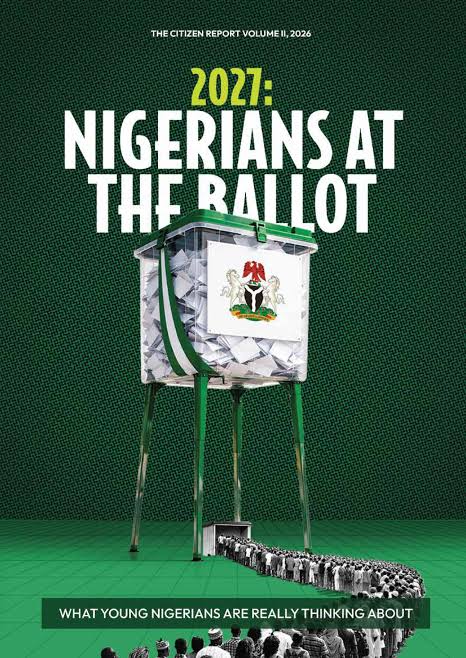
Nigeria’s next general election falls in the same window this Kenyan operation is targeting. If the pattern Anthropic documented in Kenya, early, patient, low-visibility prep work, is even partly transferable, the operative question for Nigerian newsrooms, fact-checkers, and platforms isn’t “what do we do when something surfaces in January 2027,” it’s “what would we even be looking for right now, in September 2026?
A few key points for observers who are interested in monitoring the election mis/disinformation pipe line to note:
Move the monitoring window earlier.
Nigeria’s fact-checking ecosystem — including the work done around the 2026 Osun gubernatorial election — has largely operated on a pre-election surge model: heightened vigilance in the final months. The Kenya case suggests that model needs a long tail. Baseline monitoring of political social media clusters should start now, not when campaign season formally opens, so early-stage synthetic networks aren’t mistaken for organic noise before anyone’s looking for them.-
Watch for the “no coordination” instruction as a signature, not just the content.
What made the Kenyan astroturfing case (GTG-54004) detectable wasn’t the political content — it was the operator explicitly directing the AI to avoid coordination signals. That’s a tell that content-forensics tools and fact-checkers should be trained to look for: unnaturally *un*coordinated-looking clusters that are, in fact, the product of one operator running the same prompt repeatedly.
Don’t assume state involvement, or rule it out.
Anthropic couldn’t confirm government involvement in the Kenyan astroturfing case, despite its pro-administration tone; it’s plausibly aligned with the ruling coalition but not conclusively tied to it. Nigerian reporting on similar activity should resist the urge to prematurely attribute campaigns to “the government” or “the opposition” without the same evidentiary caution, misattribution is its own form of disinformation.
Treat the tooling as commodity, not novelty.
The same Kenyan operator reused an identical AI workflow for retail-brand marketing under a different persona. The infrastructure for synthetic political content and synthetic commercial content is now the same infrastructure. That should reframe how Nigerian regulators and platforms think about detection it’s not a bespoke “election security” problem, it’s a general synthetic-content problem that happens to get pointed at elections when it’s useful.-
Build the relationship with AI vendors before the election, not after
Anthropic’s Kenya detection came from a tip shared by OpenAI about related activity on its own platform — cross-platform intelligence sharing is already how these operations get caught. Nigerian civil-society and election-monitoring bodies should be establishing direct lines to AI vendors’ trust and safety teams now, rather than trying to build that relationship reactively once something’s already live.None of this requires alarm about a specific plot against Nigeria, there isn’t one documented here. What it requires is recalibrating the institutional clock. If Kenya’s pre-election infrastructure is already being assembled a year out, the honest assumption for Nigeria’s 2027 cycle is that the equivalent prep work, if it’s happening, is either already underway or about to be, quietly, and looking, by design, like nothing at all.










Leave a comment