
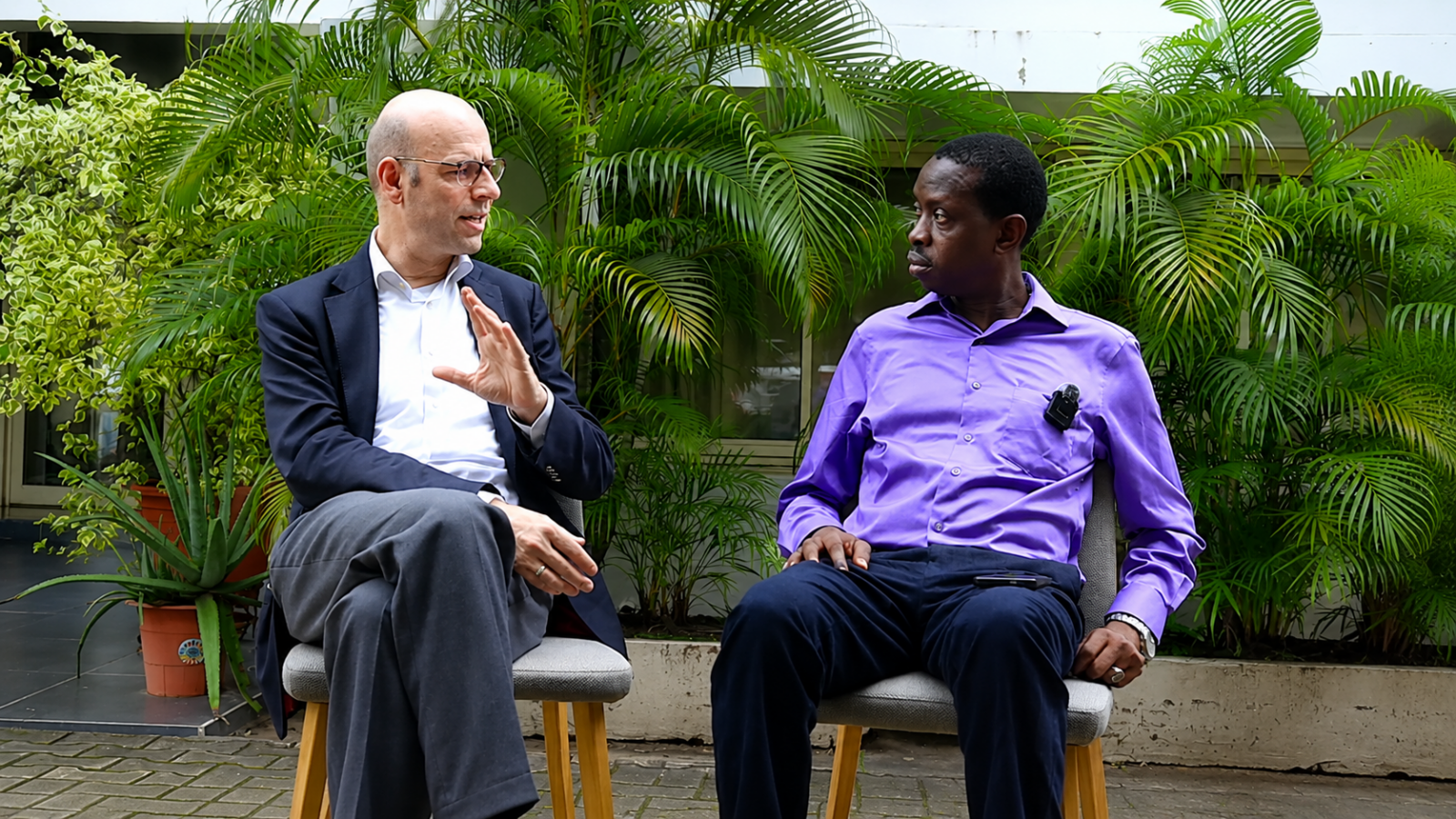
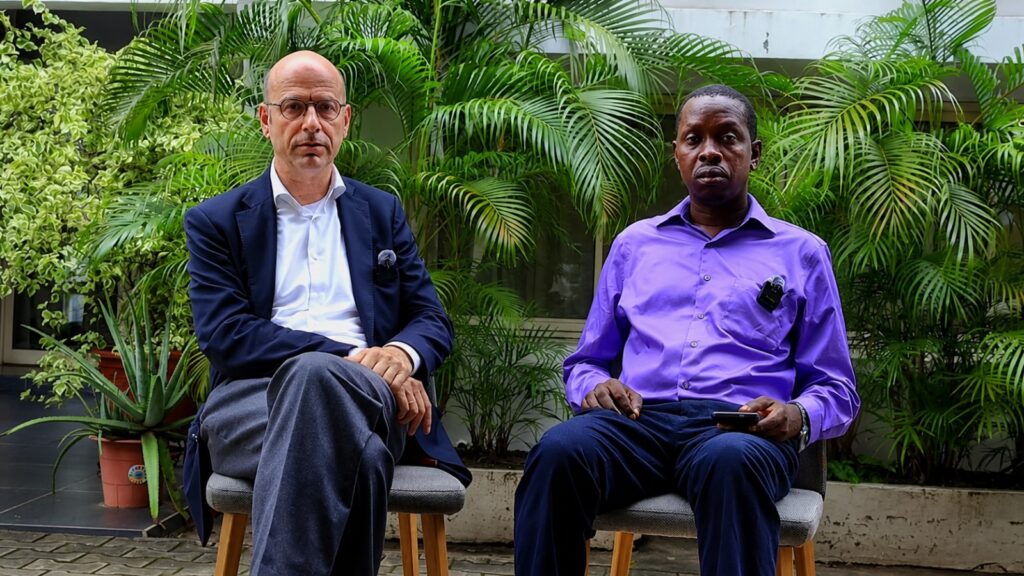
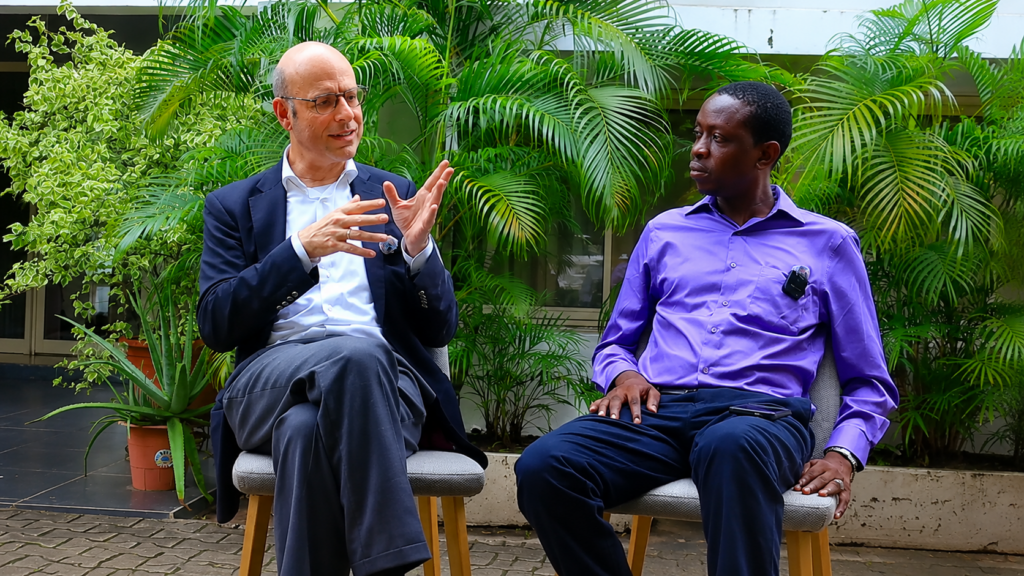
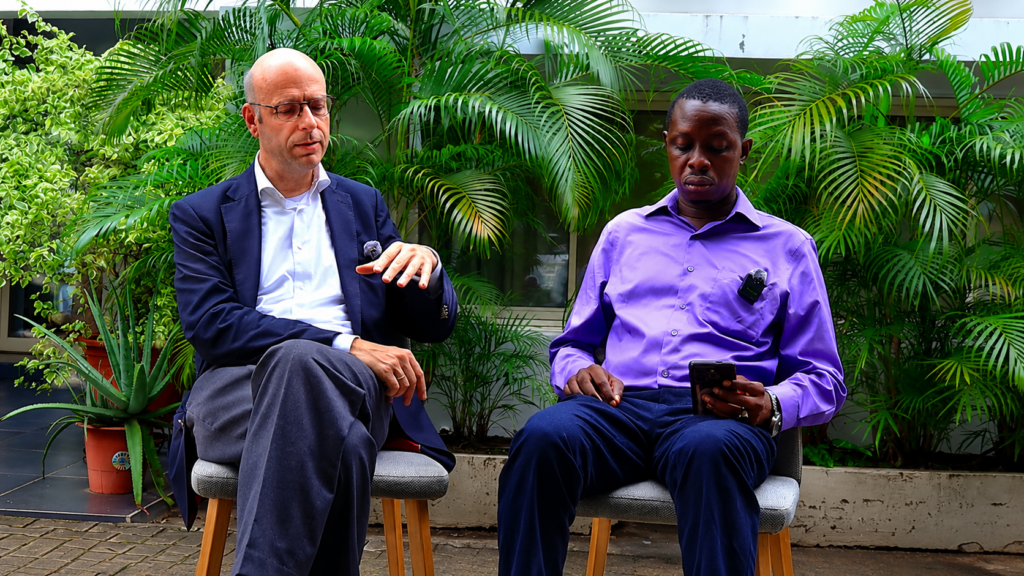
For 14 years, the Netherlands Consul General, Michel Deelen, has been one of Nigeria’s most steadfast diplomatic allies, through military coups in the Sahel, economic turbulence, floods, and the quiet revolution of Nigerian youth. As he prepares to leave Lagos for Malaysia, Deelen sits down with Femi Morgan, Editor-in-Chief of Brave Nigerians, for an unfiltered, deeply personal conversation that moves far beyond diplomatic pleasantries.
Watch/Listen to the Full Interview
Brave Nigerians Podcast ON YOUTUBE (VIDEO)
Brave Nigerians Podcast ON SPOTIFY (AUDIO)
Interview Transcript
FM: Good morning. My name is Femi Morgan. I’m the Editor-in-Chief of Brave Nigerians, a platform focused on showcasing the best of Nigeria and its interactions with the rest of the world. Beside me is the Consul General of the Kingdom of the Netherlands. We have been friends with the Kingdom for a while and are proud to have him as a friend. So, Consul General, can the public meet you?
MD: Thank you very much. Yes, my name is Michel Deelen. I’m the Consul General of the Netherlands here based in Lagos.
14 Years in Nigeria: A Diplomat’s Journey
FM: Let’s start with your stay in Nigeria. How has it been, 14 years now?
MD: Yes. I’ve come to the end of my tenure here. Cumulatively, I’ve indeed spent 14 years in this beautiful country. I came as a junior diplomat in 1999 to Lagos. We subsequently moved the embassy to Abuja. I was transferred to other countries, did many other things, and 11 years later, I came back to Lagos in 2014. I spent five wonderful years here, was transferred to South Sudan for a short assignment, and to my own surprise but also pleasure, I was posted back to Lagos for what turned out to be another five years. If I hadn’t enjoyed my work, the people, and the surroundings, I wouldn’t have stayed that long. It’s been a very good time.
Defining Moments: The Benin Bronzes Repatriation
FM: What would you say is your defining moment working in the Nigerian space? The Netherlands does a lot with creatives, entrepreneurs, investors, and governments.
MD: There are many defining moments, which is a good thing. Every day or week brings a new challenge in a positive way – meeting new people, discussing new things. One highlight of my stay was last year when we returned 119 Benin Bronzes to Nigeria from the Netherlands. That was long overdue, and it took time to get all the museums aligned. They arrived in Lagos; five now reside in the National Museum here and the rest in Benin City. This repatriation felt like justice after all these years. Although the museum in the Netherlands bought them at auction and Dutch soldiers were not involved in the looting, we knew they rightfully belonged to Nigeria. If you possess something that belongs to somebody else, you should give it back. That’s exactly what we did.
On Leadership: The Dutch Cooperative Approach
FM: A very important question is about leadership. Serving as a leader here and interacting with leaders across the world, what is the most defining leadership lesson you have garnered while working in Nigeria?
MD: Leadership means giving the right example and guiding people. Different people need different guidance – some on an intellectual level, others in more detail. I’m Dutch, and our form of leadership is more cooperative; we sit around the table, discuss the way forward, and in the end, one person says, ‘Thank you, this is the way we go.’ But it’s always a team effort, and I’m fortunate to have a wonderful team here specialising in agriculture, renewable energy, infrastructure, water, and healthcare. As a leader, you rely on their expertise and your own experience. Furthermore, leadership works well when people challenge you. If you only have people who say yes, you might go astray. Thank God, I’m challenged every single day, and that’s a good thing. Education is crucial in the combination of leadership and economic development.
Opportunities for Nigerians: Youth Empowerment and Job Creation
FM: Let’s talk about the opportunities available to Nigerians. What contributions does the Kingdom of the Netherlands bring to the table for hardworking and resilient Nigerians looking for opportunities?
MD: Nigeria has a population of over 200 million, and while not everyone is perfect, there are so many brilliant young Nigerians eager to make the best of things for themselves and their country. I’ve had the privilege of meeting many of them.
We focus on the youth through programs like Orange Corners, a business incubator that helps young people with business ideas professionalize, write business plans, and approach investors. We’ve been doing this since 2019 with the Fate Foundation in Lagos and now in Oyo State. I’m always impressed by what comes out of it. We also have the Challenge Fund for Youth Employment, supporting Nigerian companies that create jobs for young people in fields like agriculture, tailoring, marketing, and AI. In agriculture, we have the HortiNigeria program to professionalise the growing of tomatoes, cucumbers, and peppers, mostly in Kano, Kaduna, Oyo, and Ogun states, building capacity for young farmers.
Trade Relations: Oil, Cocoa, and the Dutch-Nigerian Balance
FM: When the average Nigerian thinks of the Netherlands, they think of fish, sea, advancements in water, ships, and imports. What is the Netherlands doing in that area?
MD: In trade statistics, the number one has been oil and refined products going to the Port of Rotterdam, with refined products coming back to Nigeria. With the Dangote Refinery, we see a change in that pattern, which is very good. We visited the refinery a few weeks ago, and I was extremely impressed – it will be a game-changer for the region and the continent.
Number two on the trade list is cocoa. Due to a spike in prices, Nigeria exported about €700 million worth of cocoa to the Netherlands last year. You might not automatically think of the Netherlands with cocoa, but the region north of Amsterdam is an international cocoa hub where it’s further processed. Then the next is fish, which goes both ways. Nigerian shrimp export is also sizable. If you add it all up, the balance is highly in favour of Nigeria. We buy a lot of Nigerian products – oil, cocoa, shrimps – and Nigeria buys less from us, which I think is fine. As long as we forge these linkages, trade and investment will follow.
Agriculture Partnerships: Potatoes, Greenhouses, and Knowledge Transfer
FM: You’ve talked about agriculture. I remember the AgriFood Nigeria mission in March 2026. Beyond visibility, what concrete investments or partnerships have emerged from this mission?
MD: Things take time, but we’ve seen almost immediate results. Years ago, we looked at improving the potato sector in Plateau State, a huge potato-growing area. The problem was their stock wasn’t renewed, causing depletion. During the trade mission, a big part of the delegation was from the Dutch potato sector. They visited Plateau State, and the governor had visited the Netherlands last year. Containers of trial potatoes arrived in Plateau State, and as we speak, farmers are harvesting them. We will continue to see how we can spread good quality potatoes.
Another example is greenhouses. In the Netherlands, they keep plants warm in winter, but in Nigeria, we don’t need that. Every country has specific climates; copy-paste models don’t work. We need to see what works here – net houses or tunnels to keep insects out or protect from heavy rain. We’re setting up a knowledge center on horticulture in the southwest with universities and companies to train people on what is most productive and efficient without being overly expensive.
Coastal Protection and Flood Management
FM: Lagos has had interesting flood times. The Dutch government had a coastal facility study with the Lagos State Government. How have the recommendations been adopted?
MD: Many things have happened, but obviously not enough. Two days ago, this area was flooded because the island is mostly sand-filled. If you do sand filling, you need a good drainage system to ensure water ends up at the lowest point. Drainage channels must be clean and accessible so water can flow quickly. We had very heavy rain over the last month, and some systems can’t cope with that much rain. There’s always room for improvement.
We’re looking at coastal protection against erosion, as villages are disappearing into the water. We’ve done a pre-feasibility study for coastal protection along the Lagos coast, finished last year and handed over to Lagos State. It also needs to go to the Federal Government. These things take time, but we have good hope it will take place. We’re doing similar things in Benin, Togo, and Ivory Coast, and we’re working with the World Bank on West African coastal protection. The Dutch government is willing to fund part of this through our ‘DRIVE’ program, mobilizing different sources of finance. On the inland side, drainage requires effort from the government, citizens, and international partners.
Renewable Energy: Solar, Waste-to-Energy, and Green Investments
FM: The Netherlands has experimented with waste management. How is the consulate facilitating Dutch investments in off-grid solar, water-to-energy, and green hydrogen in Nigeria?
MD: On off-grid solar, we installed solar panels on our roofs over a year and a half ago to set an example. We’re bringing in Dutch companies to work with Nigerian companies to install solar home systems and off-grid solutions. The price depends on the global market; panels are made in China and assembled here. We’re working with the Rural Electrification Agency (REA) to provide villages with solutions for productive use.
On waste-to-energy, we’re working with Lagos State on incinerating waste that cannot be recycled. There are plans to build a plant near a landfill to generate electricity. Our role is brokerage, bringing together Lagos State, a Dutch company with the technology, and financing. Financing is always an issue, but we’ve been told progress has been made. The Dutch government created Invest International, which set up an office in Lagos over two years ago to provide loans, equity, or guarantees for Dutch or Nigerian companies doing business together.
Non-Oil Exports: Ginger, Shea Butter, and the Services Opportunity
FM: Beyond oil, what steps are being taken to help Nigerians meet EU standards for non-oil exports?
MD: We have a program called CBI, a Dutch government entity working with the Nigerian Export Promotion Council and the private sector. We picked a few sectors to help: ginger, shea butter, and cashew nuts. Ginger had a serious blight disease that collapsed production. We’re assisting in setting that back up. The fields with the disease can’t be used for now, so farmers need new areas. Nigerian ginger is of extremely good quality and sought after internationally, but volumes are lacking.
We’re looking at how to assist ginger farmers in starting again and reaching international markets. Nigerian non-oil exports are increasing, including diaspora trade catering to Nigerians abroad. In services, there are huge opportunities – Nigerian computer programmers and AI experts working for European companies. That’s export of services, a huge market.
Young Innovators: Nigerian Talent in Dutch Tech Hubs
FM: Can you give us two or three references of young people who have improved their skills in Dutch technology hubs?
MD: We have two good cases in the medical sector. Young Nigerians developed portable diagnostic kits for malaria, TB, and other diseases, usable in smaller clinics. They studied in the Netherlands and are now marketing their products in Nigeria. Another is a young entrepreneur who developed a scale that, when connected to an app and your fingertips, gives health advice. It’s now being distributed in Nigerian pharmacies. These are examples of Nigerians who used Dutch technology to create products solving problems here.
A Love for Nigerian Arts and Culture
FM: You seem to be in love with Nigerian arts. What’s the fascination?
MD: It might be a personal thing. The Nigerian art sector is so expressive; you see where it’s coming from and why it’s heading in a certain direction. Life in Nigeria isn’t always easy. I’m aware of the poverty and the daily struggle, which makes people fight for their rights and existence. This creates an art scene of eager people with a message. Because people have a story to tell, it makes it interesting for me to learn from it.
I have huge respect for people who can do things I cannot – painters, musicians, dancers, filmmakers – they have mastered their arts. In Nigeria, everything is highly intense, and the stories are intense. Fela Kuti had a story to tell, and it’s still valid today.
Education: The Foundation for Development and Security
FM: I remember seeing you go to the slums in Bariga to witness performances. I’m impressed by your love for Nigeria. Let’s talk about education and skills. Would you say the Netherlands has helped reduce the deficit?
MD: Education is ever so crucial for development. I’ve traveled around Nigeria and seen schools with roofs blown off. It’s not just about putting on a new roof; it’s about the quality of teachers. The government has a responsibility to train teachers well. In my view, the quality of a teacher is more important than the quality of the roof. To move further as a country and professionalise agriculture and industry, you need literate, curious people who ask questions. If there’s a problem with education, there will be a problem with economic growth. Insecurity can be partly related to education – if people don’t see a better future, they take the wrong exit.
Boko Haram literally means “Western education is bad.” If we want to fight them, we should invest in education. What the Netherlands can do is more in vocational training and agriculture. We’ve trained over 10,000 farmers, but that cannot compensate for a good primary and secondary education system.
Culture Clashes: From Pepper Soup to Saying ‘No’
FM: Tell us a personal story of culture clashes from when you first came to Nigeria and now, married to a Nigerian filmmaker.
MD: Let me start with food. In the Netherlands, spicy food isn’t automatically on the menu. Traditional Dutch food is quite plain. I had to get used to the level of spice and pepper in Nigerian food. It took a long time, but now I can eat pepper soup without falling off my chair. Another difference is learning how to say ‘no’. In the Netherlands, people are direct, but in Lagos, if you don’t know how to say no, you’ll have nothing left. You have to be much more assertive.
Another thing is the eagerness of young people here. In Europe, the system provides benefits, which reduces the necessity to be very eager. In Nigeria, if you’re not resilient, you’re nowhere. I advocate for student exchanges so Dutch students can see that ‘go-getter’ mentality.
FM: Have you been given a Nigerian name?
MD: A long time ago, a very good friend gave me the name Omotunde.
Diaspora Investments and Business Ties
FM: How has the consulate helped Nigerians in the diaspora duplicate their businesses in Nigeria?
MD: We have to work a lot more on that. Nigerian investments in the Netherlands are limited. I wish to see more of that because it truly forges ties between countries. It’s high on the list of things to focus on in the next five years. Apart from some examples in the healthcare sector, it’s small. Nigeria has its own multinationals and wealthy people who invest abroad. We’re promoting the Netherlands as a country to invest in.
Geopolitical Issues: Ukraine, the Sahel, and International Law
FM: Where does the Netherlands stand in the Iran-Israel, Ukraine-Russia, and US political issues?
MD: The Netherlands promotes international law and human rights. I studied international law. On Ukraine, we condemn the invasion of a sovereign nation and are supportive. On the Middle East, I wouldn’t have anything to add. Regarding the Gulf and the Strait of Hormuz, nobody benefits from disrupted trade; it affects supply for India and China.
FM: What is the Netherlands’ position on the Sahel?
MD: The Netherlands is a small country. We approach these issues in an EU context, and we continue to engage with Mali, Burkina Faso, and Niger, where we have embassies – we cannot simply forget about them.
Visas and Legal Migration Pathways
FM: Let’s talk about visas. Nigerians are very interested in migration. What are the non-violent migration steps through the Netherlands?
MD: We have about 10,000 Nigerians living in the Netherlands and doing well. The illegal routes are horrible – through the desert and by boat – and life-threatening. Please do it the official way. We do not issue tourist visas for less than 90 days. The only ones we issue are the ones for more than 90 days for students and knowledge workers who have a contract with a Dutch company. The company applies in the Netherlands, and we issue the visa here.
Media, Disinformation, and Journalistic Freedom
FM: The Netherlands has invested in anti-disinformation projects and media workshops. Can you talk about that?
MD: I’m not an expert, as these are funded from Abuja or headquarters. We have trained Nigerian journalists on identifying fake news. We’ve supported the Wole Soyinka Centre for Investigative Journalism. Journalistic freedom is extremely important, and it’s crucial that journalists dare to ask questions.
UN Security Council Reform and Final Thoughts
FM: You are moving to a senior role in Malaysia. How clear is the Netherlands about reforming the UN Security Council?
MD: The Security Council is a reflection of the post-WWII situation. The world has moved on, and reforms are necessary and urgent.
FM: What should we expect from the new Consul General?
MD: Being Consul General in Lagos is a very important position, ranked quite high. Relations need to intensify. My successor will arrive in September and will continue to grow things.
FM: Thank you for your time. You have been a blessing to the Nigerian community.
Nigeria has also been a blessing to me. It’s mutual. I will miss the Nigerian people and the pepper, but not the power cuts and bumps in the roads. Thank you.
Connect with Brave Nigerians
- Facebook: Brave Nigerians
- Instagram: Brave Nigerians
- Twitter/X: @BraveNigerians1
- Linkedin: BraveNigerians
“Nigeria has also been a blessing to me. I will miss the Nigerian people and the pepper, but not the power cuts and bumps in the roads.” – Michel Deelen
This interview is a production of Brave Nigerians, a flagship platform of Fairchild and Brave. Photography and Video/Audio Production credits to Uche Uwadinachi (Flames Media production).
READ ALSO: Jeremiah Musa: I Hawked on Lagos Streets,Before Success




Leave a comment