

A Protest Led by Potential President
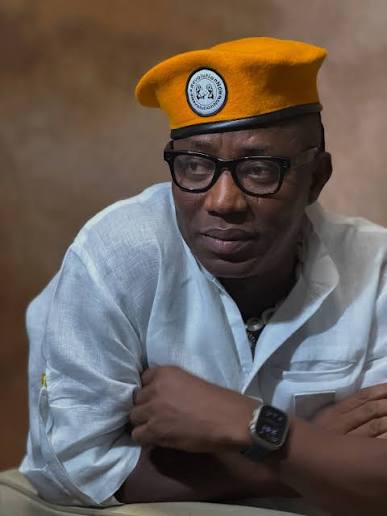
The African Action Congress (AAC) presidential candidate, Omoyele Sowore, on Tuesday led a protest to the Nigeria Police Force headquarters in Abuja, demanding the arrest and prosecution of those responsible for the October 30 attack on him and his team in Ado-Ekiti, Ekiti State . The protesters, wearing orange berets and chanting revolution-themed songs, called for the removal of the Ekiti State Commissioner of Police, Falade Michael, accusing him of complicity in the attack and of mishandling the investigation . They also demanded accountability for any security operatives found to have participated in the violence or interfered with evidence .
The Allegations
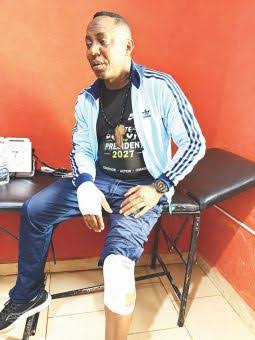
Sowore alleges that he and his team were attacked by armed men shortly after he attended an interview at MIDAS FM 90.5 in Ado-Ekiti on Friday, October 30, 2026. He claims the attackers were supported by individuals linked to the Ekiti State Government and operatives of the State Security Service (SSS/DSS). In subsequent statements, Sowore escalated his allegations: he released a video purportedly showing the attackers wielding cutlasses and sticks, and called for an independent investigation to identify them. He alleged that CCTV recordings from Tawakalitu Restaurant,where the incident occurred, had been erased after police and DSS operatives took possession of the equipment and returned it without footage. He further alleged that a mobile phone stolen from a member of his team during the attack had been traced to the Ekiti State Governor’s Lodge, and accused Governor Biodun Oyebanji of personally instructing the Rapid Response Squad commander to hand over recovered devices to him.
The Ekiti Government’s Position
The Ekiti State Government has denied involvement in the attack. The Ekiti State Police Command initially described the incident as an “altercation” between Sowore’s group and some individuals at the restaurant, stating that officers responded to a distress call, rescued those involved, and took them to the Police Cottage Hospital where Sowore was treated for a minor injury and discharged. The police later announced the arrest of 11 suspects at their hideouts in the Atikankan area of Ado-Ekiti, recovering items including walkie-talkies, mobile phones, ATM cards, and international passports. The command also stated that Sowore had not notified security operatives of his arrival and movements in the state, which would have enabled police to arrange protection. These competing narratives, Sowore’s claim of a coordinated, government-linked assassination attempt versus the police’s account of a spontaneous altercation, remain unresolved, with the police promising investigation while declining to address the most explosive allegations about erased CCTV footage and devices traced to the Government House.
What This Signals for the Voting Public in 2027
For the average Nigerian voter, the Sowore controversy is a test case for the credibility of the 2027 electoral process. The incident occurred barely weeks into the campaign season, and the alleged involvement of state-linked actors in attacking an opposition presidential candidate sends a chilling message: that the machinery of state may be deployed not to protect political competition but to suppress it. The Oyo State chapter of the AAC has already called on opposition parties to consider boycotting the 2027 elections if the government and security agencies cannot guarantee the safety of political actors and voters.
This is not a fringe position. When a presidential candidate cannot campaign in a state without fearing for his physical safety, the question of whether the election will be free and fair extends beyond ballot-box logistics to the fundamental question of whether opposition participation is even permitted. A coalition of 50 civil society organisations has warned that the attack on Sowore would have a “chilling effect” on Nigerians’ exercise of human rights and discourage public criticism of authorities, while the Osun Masterminds group cautioned that Nigeria cannot guarantee credible elections in 2027 if political violence prevents candidates from campaigning. For voters, the signal is clear: if the campaign environment is already this hostile, the integrity of the vote itself is in question.
What This Signals to Other Presidential Candidates and Parties
The Sowore incident has already begun to reshape opposition politics. Atiku Abubakar, the ADC presidential candidate, condemned the attack and linked it to the attack on his own party’s governorship candidate in Sokoto, accusing the ruling APC of intimidating opposition figures ahead of 2027 . This framing—that the attacks are not isolated incidents but part of a pattern—is significant. It suggests that opposition candidates are beginning to see their collective vulnerability as a shared political problem, even if they have not yet coalesced into a united front.
Political commentator Isaac Fayose articulated this explicitly, urging Sowore to join forces with other opposition parties and concentrate on the “real enemy” rather than attacking Peter Obi, arguing that the APC is “destroying our democracy” and that opposition figures must “come together to fight them” . The signal to other candidates is twofold: first, that no opposition figure is safe from state-linked intimidation, and second, that the electoral environment may force a strategic choice between competing separately under hostile conditions or uniting to demand minimum democratic guarantees before the election. Femi Falana, a senior advocate and prominent human rights lawyer, has demanded that the Ekiti police arrest and arraign the “well known” thugs who attacked Sowore, suggesting that the legal and civil society infrastructure for accountability exists but requires political will to activate .
The Solution
The path forward requires action at three levels. First, the police must conduct a transparent investigation that addresses the specific evidentiary allegations Sowore has raised: the identity and sponsors of the attackers shown in the video, the circumstances under which CCTV footage was allegedly erased, and the chain of custody for devices traced to the Government House. The Inspector-General of Police should constitute an independent investigative panel that includes civil society observers, given the Ekiti command’s credibility deficit. Second, opposition parties and civil society must establish a joint election-security monitoring mechanism that documents and publicises incidents of political violence in real time, creating a public record that cannot be buried by administrative denials. The coalition of 50 CSOs that has already condemned the attack should formalise this into a standing monitoring infrastructure . Third, the National Assembly should revisit the Electoral Act’s provisions on political violence and consider establishing an independent electoral offences commission with prosecutorial powers, so that accountability does not depend on the same police force that opposition figures accuse of complicity. Without these measures, the 2027 election risks becoming a contest conducted under duress, and the voting public will have little reason to believe their choices matter.








Leave a comment