

Is NDC a Formidable Party?
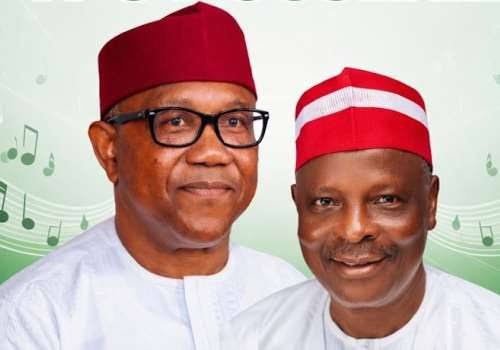
The Nigeria Democratic Congress (NDC) has emerged as perhaps the most consequential opposition platform ahead of the 2027 general elections, bringing together Peter Obi’s Obidient Movement and Rabiu Kwankwaso’s Kwankwasiyya structure in what many Nigerians regard as a genuinely alternative political vehicle. Yet the alliance is already showing dangerous fractures. The latest flashpoint—a public dispute between the UK Coordinator of the OK Movement, Adebayo Brown, and the Coordinator of the Obidient Movement, Dr Moses Paul—lays bare a deeper structural problem that could doom the project before ballots are cast.
The Allegations and Counter-Allegations
Brown accused Paul and the Director-General of the NDC Campaign, Ibrahim Abdulkarim, of prioritising political disputes over their core responsibilities with only 76 days to the elections. Specifically, Brown challenged Paul’s claims that Obi and Kwankwaso had dissociated themselves from the OK Movement, arguing that the Obidient coordinator could not unilaterally speak for the two candidates. The NDC Campaign Council dismissed the statement as a distraction, while Paul’s media aide insisted his principal was focused on mobilising support for Obi and was not a member of the OK Movement.
This dispute is not an isolated incident. It traces back to September 2026, when the OK Movement unveiled a 59-member Presidential Campaign Council without the NDC’s approval. Obi publicly rejected the structure, insisting that support groups must not assume the role of the party . The OK Movement’s Director-General, John Ughulu, fired back, declaring the movement an “independent political organisation” that would not surrender its structures to the NDC . NDC National Leader Seriake Dickson described the OK Movement’s campaign council as “nonsensical,” while state chairmen across the country insisted the party was supreme.
What This Signals for the Voting Public
For the average Nigerian voter, the NDC’s internal crisis sends a troubling message: that the opposition may be repeating the fragmentation that undermined its 2023 chances. The alliance between the South-East and the North—historically significant given Nigeria’s political fault lines—promised a formidable challenge to the ruling APC. But voters are watching a public spat over titles and structures rather than a coherent campaign. If the NDC cannot manage its support groups, how can it manage Nigeria? That question will linger in the minds of undecided voters, particularly in the South-East, where Obi’s support base expects discipline, and in the North-West, where Kwankwaso’s machinery must deliver.
What This Signals to Other Candidates and Parties
For Atiku Abubakar’s ADC and other opposition contenders, the NDC’s disarray is an opportunity. A fractured NDC makes it easier for rival opposition candidates to argue that only a different coalition can defeat the APC. Julius Abure, the immediate-past Labour Party chairman, has already declared he will not support Obi in 2027, predicting that Obi has “squandered” his 2023 goodwill . The APC, meanwhile, will exploit every headline about NDC infighting to reinforce its narrative that the opposition is unprepared to govern.
More significantly, the dispute reveals a fundamental confusion within the NDC about whether it is a party with support groups or a coalition of movements that happen to have a party. Until that question is resolved, other parties will treat the NDC as a fragile arrangement rather than a credible threat.
The Solution
The NDC’s survival requires three urgent measures. First, Obi and Kwankwaso must jointly and publicly clarify the chain of command: the NDC is the party, and all movements—OK, Obidient, Kwankwasiyya—are support structures operating under its authority. This must come from both candidates, not through proxies.
Second, the party must establish a formal liaison framework that gives support groups defined roles in mobilisation and fundraising while reserving campaign council formation exclusively for the NDC. Third, communications must be coordinated so that Obi and Kwankwaso receive equal visibility across all platforms. The South-East must sell Kwankwaso, and the North-West must sell Obi; any imbalance will breed grumbling and sabotage. With 76 days to the election, the NDC cannot afford to let internal wrangling delight its opponents. The alliance’s promise, a genuine South-East/North coalition, is too significant to be lost to preventable organisational confusion.









Leave a comment