

Former Osun State Governor Olagunsoye Oyinlola has done Nigeria a service by stating plainly what many discuss only in whispers. In an interview on Channels Television’s Politics Today, he argued that President Bola Tinubu and former Vice President Atiku Abubakar are too old to contest the 2027 presidency and should step aside for younger Nigerians . Oyinlola recalled that as governor, he had declared that anyone above 50 should not aspire to govern a state. His intervention is timely and defensible. But it also exposes an uncomfortable truth: the young candidates on the 2027 ballot are not yet demonstrating the qualities that would justify the handover Oyinlola advocates.
The Makinde Challenge and Sowore’s Response
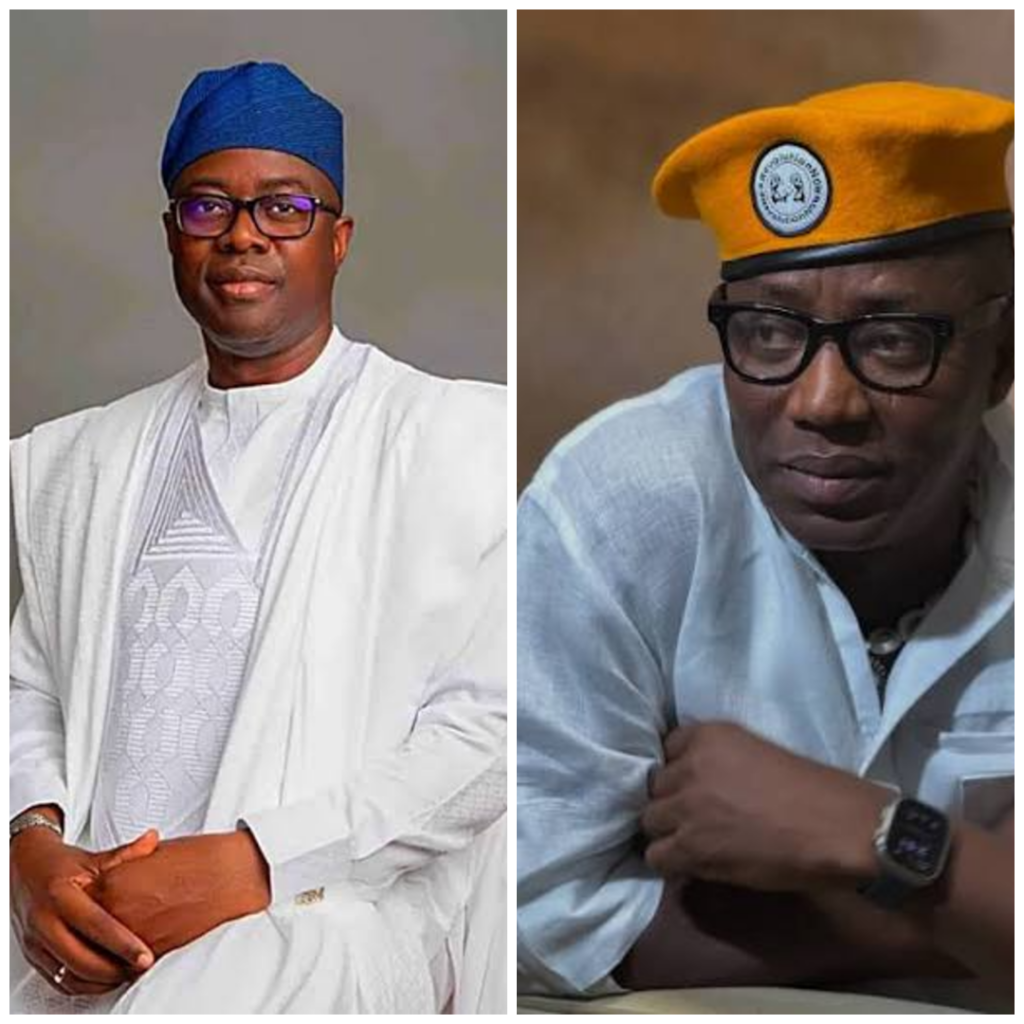
The generational argument took an unexpected turn in October 2026 when Oyo State Governor Seyi Makinde, now seeking the presidency under the Allied Peoples Movement, challenged rival candidates to demonstrate physical fitness. At a campaign event in Akure, Makinde jumped off a stage and declared that while he would not make age an issue, he would make energy an issue. Omoyele Sowore, the African Action Congress presidential candidate, responded with a video of himself performing box jumps and a social media post challenging Makinde to a physical contest, promising to “expose every weak signal”.
The exchange was entertaining, but it revealed a poverty of political imagination. Makinde is right that the presidency demands stamina. Oyinlola is right that Tinubu and Atiku are old. But neither jumping nor gym videos constitute a vision for Nigeria. The rigour of office requires physical capacity, but it also requires intellect, empathy, resourcefulness and the capacity for dazzling political manoeuvring that can change the fortunes of the common man without displacing the elite. On these measures, the young candidates have yet to make their case.
Profiling the Young Candidates
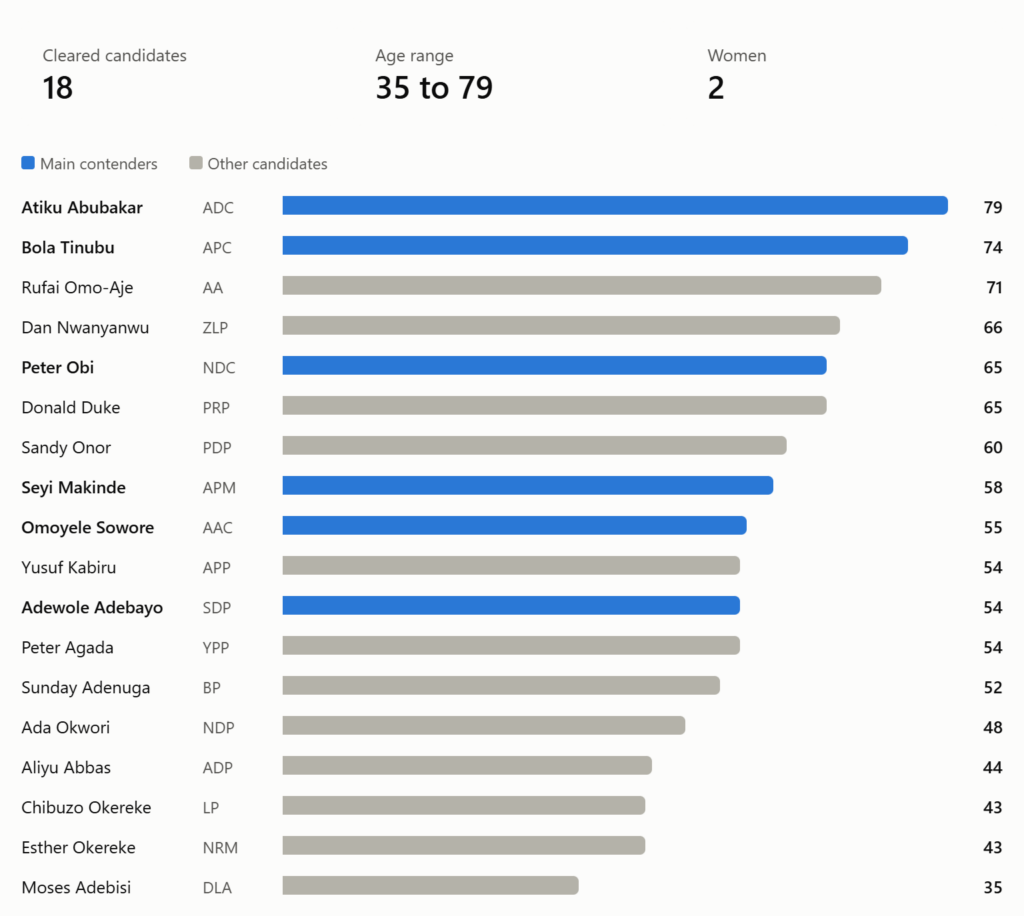
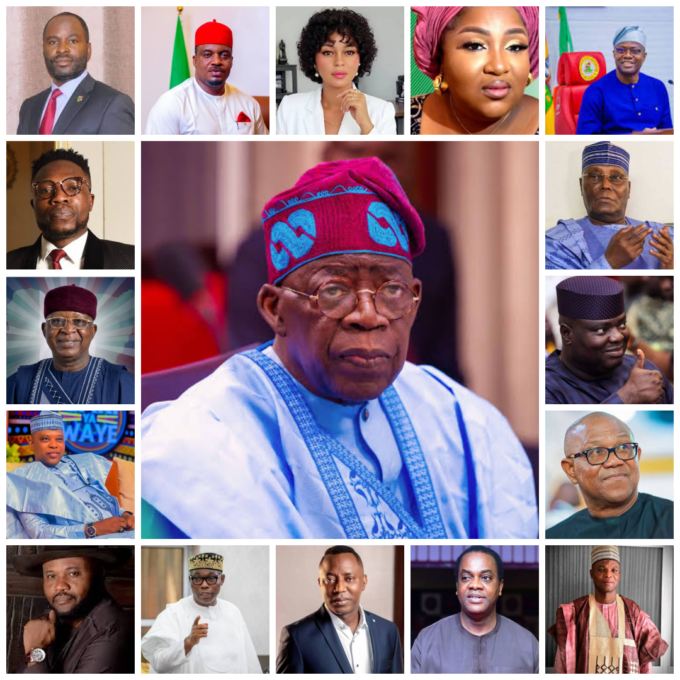
Only four of the 18 presidential candidates cleared by the Independent National Electoral Commission fall between the ages of 35 and 45. The youngest is Moses Adebisi of the Democratic Leadership Alliance, aged 35. Adebisi returned from the United States, studied China’s 1978 economic reforms in Beijing and Shanghai, and built a party that was the only one registered by INEC between 2022 and 2026. His campaign strategy is described as a “submarine approach,” keeping a low profile while building structures.
Yet Adebisi’s public outings have been less than reassuring. In an Arise TV interview, he declared himself “the only person that has the capacity to defeat the Bola Ahmed Tinubu-led APC government” and promised to become Nigeria’s youngest president. The confidence is admirable. The substance behind it, however, remains thin. Beyond asserting his capacity, Adebisi has not articulated a governing programme that would convince older Nigerians to entrust him with the presidency, nor has he shown the organisational muscle to compete nationally.
The other young candidates are even less visible. Their names appear on the ballot, but their campaigns haven’t generated the traction needed to force a serious conversation about generational change. They lead small parties with limited structures, minimal fundraising capacity, and little name recognition. They are on the ballot, but they are not in the conversation.
The Women Candidates
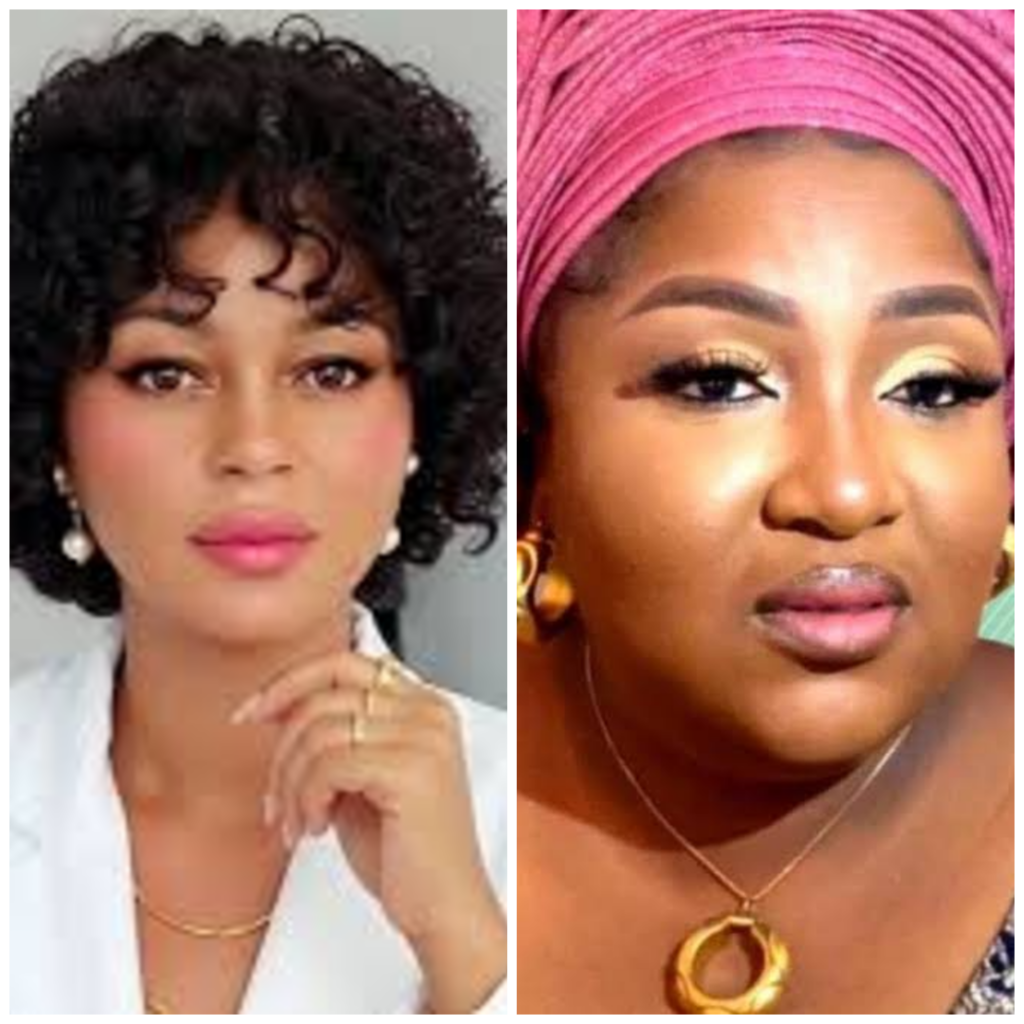
Two women are on the presidential ballot: Ada Okwori of the National Democratic Party and Esther Nkem Okereke of the National Rescue Movement. Okwori, 48, founded her party after a court compelled INEC to register it, and she has proposed a minimum of 40 per cent women in executive and candidate lists and 15 per cent of the national budget for education. Okereke has unveiled an “ESTHER Agenda” focused on electricity, education, security, digital government, healthcare and job creation, and her party has signed a sexual exploitation and abuse policy in collaboration with the Nigerian Women Trust Fund.
Their policy thinking is more developed than that of some of their male counterparts. But their campaign streak has been weak. Neither has built the kind of national visibility that would translate into electoral traction. Okwori’s grassroots identity through her Ward2Ward initiative is a foundation, but it has not been converted into a nationwide movement. Okereke’s message that women can rule Nigeria is important, but it has not yet been matched by the organisational grit that winning requires.
Why the Grit Is Missing
The young candidates who have shown promise, Sowore, Makinde and Adebayo Adewole, are not deploying the expected grit because they are caught between two modes of politics. Sowore operates as an activist, comfortable with protest and provocation, but less comfortable with the painstaking coalition-building that winning power demands. His fitness challenge to Makinde was clever theatre, but it did not advance a single policy argument. Makinde has the advantage of incumbency as governor, but his fitness stunt substituted physical display for the kind of political manoeuvring that builds cross-regional alliances. He is from the South West, the same zone as Tinubu, and his candidacy must overcome the perception that he is splitting the regional vote rather than building a national one. Adebayo is most vocal about policies, but seems to have neither the grit of activism of Sowore nor the showmanship of Makinde.
The deeper problem is that politics goes beyond youth. Youth provides energy, but leadership requires the ability to make alliances, to consult widely, to earn the respect of peers and elders alike, and to craft policies that can win power without displacing the elite so abruptly that they sabotage the transition. The young candidates have not demonstrated these skills. They have energy, but they have not shown that they can convert it into the kind of political capital that wins elections and governs effectively.
No Money, No Power
Unfortunately, the financial asymmetry is the elephant in the room. Many of the young presidential candidates simply do not command the war chest available to Tinubu, Atiku or even Makinde, whose governorship provides him with an incumbency platform, donor access and media reach that no first-time candidate can match. This is not a moral failing; it is a structural barrier. The consequence is limited visibility, and limited visibility in a presidential race is political death. Media organisations bear a social responsibility here, but visibility cannot be served à la carte, as a charitable gesture to youth. It must be earned through a clear strategy and a credible campaign budget. Young candidates should embrace crowdfunding, particularly from the diaspora and homeland supporters who are inspired by a compelling vision, and pair it with transparent financial disclosure from the outset. Nigerians are more willing to trust a candidate who shows them the money and shows them where it goes. Without that discipline, the generational argument will remain a talking point rather than a campaign.
Not-Too-Young to Inherit Power
The Not Too Young to Run agenda has, in practice, lulled into sleep. The 2018 constitutional amendment lowered the presidential eligibility age to 35, yet the results since then have been modest at best and regressive at worst. In 2019, youth candidates under 35 won 13 of 360 House of Representatives seats, or 3.7 per cent, up from three seats, or 0.8 per cent, before the Act. By 2023, youth representation in the House had risen only marginally to 3.92 per cent, or 14 seats, while state assemblies recorded 9.2 per cent. Worse, youth candidacy itself declined from 34 per cent in 2019 to 28.6 per cent in 2023. For young women, the picture is bleaker: only two women under 30 won seats across the 36 state assemblies in 2023. The promise of generational handover from the older candidates has been equally hollow. Atiku Abubakar has said he would step aside for a younger, more vibrant candidate, but he remains the ADC’s flagbearer and has set no timeline or mechanism for withdrawal. Tinubu’s camp, meanwhile, speaks of youth inclusion through appointments and fellowship programmes rather than any commitment to hand over the presidential ticket.
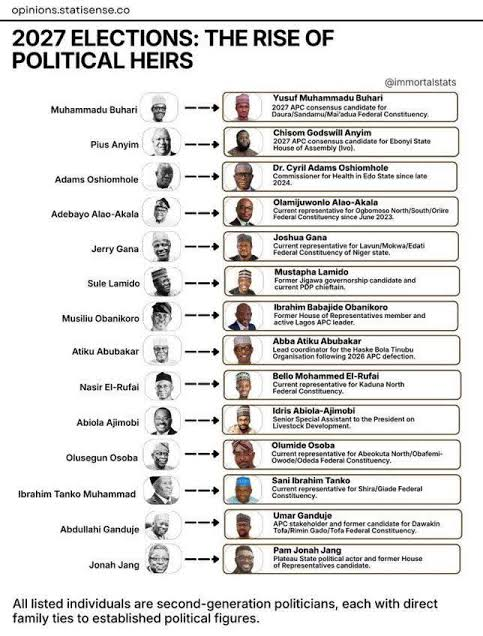
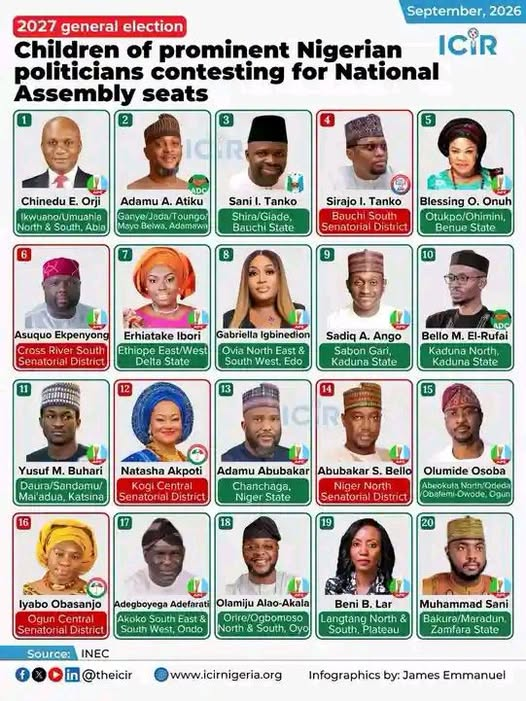
What has emerged instead is inheritance masquerading as grooming. A substantial number of the young people in elective positions are sons, daughters and relatives of politicians. Bello El-Rufai, son of the former Kaduna governor, won a House of Representatives seat in 2023. Erhiatake Ibori-Suenu, daughter of former Delta governor James Ibori, entered the House after her father facilitated her earlier election to the state assembly. Marilyn Okowa-Daramola, daughter of former Delta governor Ifeanyi Okowa, won a state assembly seat. Olamijuwonlo Akala, son of former Oyo governor Alao Akala, and Olumide Osoba, son of former Ogun governor Segun Osoba, are among the same cohort. This is not a pipeline for talented outsiders. It is a mechanism for political families to transfer power across generations while the language of youth empowerment provides cover. Leadership grooming platforms do exist. The Lateef Jakande Leadership Academy in Lagos graduates 30 fellows a year from over 16,000 applicants, and the APC’s Rising Progressive Leaders Fellowship drew over 1,700 applications for its first cohort . These are serious efforts. But their tangible political results remain stalled. They function more as marketplaces to soothe a large number of young Nigerians clamouring for space in the political arena than as engines that place young people in elective office. Until the structural barriers of party gatekeeping, godfatherism and political inheritance are addressed, Not Too Young to Run will remain what it has become: a constitutional gesture, not a generational shift.
Justifying Oyinlola, With a Snag
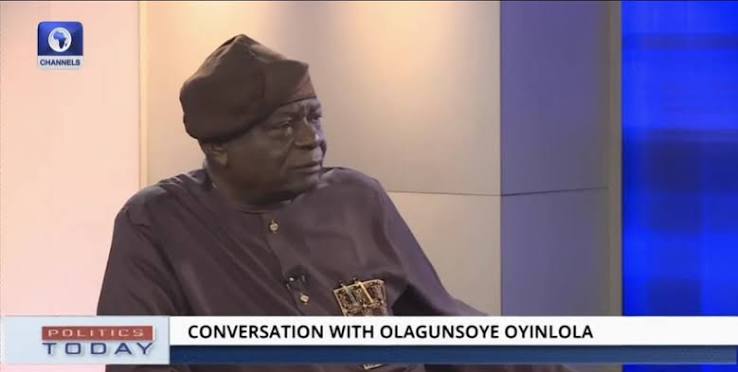
Oyinlola’s argument has a compelling logic. Long-term policies created by current leaders will outlive them, but those leaders may not be alive to bear the burden. The Buhari administration sold future crude and printed over N30 trillion, and Nigerians are still paying that debt under Tinubu, as Plateau Governor Caleb Mutfwang has acknowledged. A younger president with a longer time horizon might be more inclined to consider the consequences of policies that will ripple for decades.
But this justification contains its own snag. Young leadership would not automatically translate to results. A young president without the right values, without intellect, empathy, and resourcefulness, could be just as destructive as an old one, only faster. The generational argument is necessary but not sufficient. Young people must earn the respect of their peers and elders by demonstrating a vision for Nigeria that is credible, inclusive and achievable. They must show that they can consult, build coalitions and manoeuvre politically without losing sight of the common good.
The Solution
The young candidates on the 2027 ballot should use the campaign, however limited their prospects, to demonstrate the qualities Oyinlola’s argument requires. First, they should publish detailed policy blueprints, not just slogans, and submit themselves to public scrutiny through debates and town halls. Second, they should build alliances across regional and generational lines, proving that they can consult and compromise. Third, they should support one another’s visibility, creating a bloc that can negotiate for influence in the next political cycle rather than dispersing their energies across marginal campaigns.
Oyinlola is right that Tinubu and Atiku should step aside. But the young Nigerians who would replace them must prove that they are ready. Energy is a start. Vision, intellect, and the capacity to win and wield power are the rest.







Leave a comment