

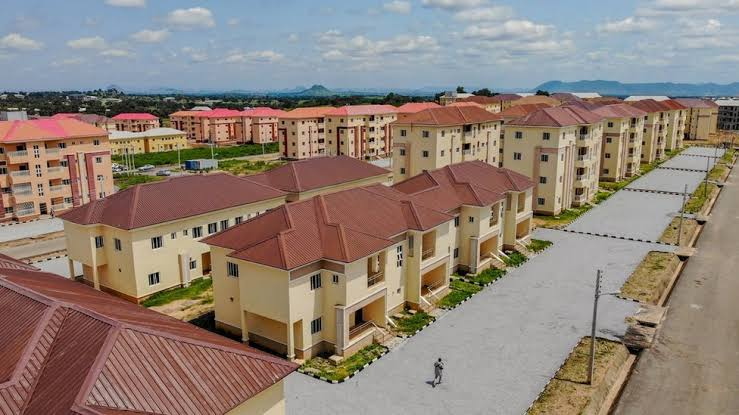
Rising rents in Nigeria are putting increasing pressure on households as housing costs continue to outpace salary growth. Many tenants now spend a larger share of their earnings on accommodation, leaving less money for food, healthcare, education and transportation.
A report by The Guardian highlights how tenants in Lagos and other major cities struggle with rising rental prices. Meanwhile, landlords cite higher construction and maintenance expenses as reasons for increasing rents.
As a result, more residents are moving to distant communities in search of cheaper accommodation. However, higher transportation costs often reduce the savings they expect from relocating.
Rising Rents in Nigeria Outpace Salary Growth
Rental prices have climbed sharply across major Nigerian cities. Market reports in 2026 indicate annual rent increases of 15 to 75 per cent across residential property segments. Housing shortages, urban migration, inflation and speculative pricing have contributed to the trend.
Construction costs have also increased significantly. A bag of cement that cost between N2,500 and N3,000 in 2020 now sells for N12,000 to N15,000 in 2026.
Meanwhile, housing supply has failed to keep pace with demand. Lagos’ housing deficit has grown from 2.95 million to 3.4 million units.
In Ejigbo, Lagos, some landlords have reportedly asked tenants to renovate properties before renting them out at higher prices. Houses that previously attracted annual rents of N500,000 to N700,000 now command between N2.5 million and N5 million. These amounts exclude agency fees, agreement charges and caution deposits.
Similarly, rents in Mushin have increased. Properties that previously cost between N300,000 and N2.5 million now attract rents ranging from N1 million to N3.7 million. A self-contained apartment costs approximately N1 million annually.
In Surulere, tenants pay about N5 million yearly for a two-bedroom flat. By comparison, similar accommodation in Abule Egba costs between N1.5 million and N2.5 million.
These increases have forced many households to reconsider their housing choices. Some tenants are downsizing, sharing accommodation or moving farther away from their workplaces.
Housing Costs Consume Household Incomes
Research by GTI Investment Group highlights the widening gap between rental prices and earnings in Lagos.
Its report, Beyond Rent: Mapping Lagos’ Housing-Led Capital Expansion, found that rents in some parts of the state increased by 80 to 120 per cent over two years. However, wages grew by only seven to nine per cent.
The research examined more than 3,200 rental listings across 15 zones. It also placed Lagos’ property price-to-income ratio at 19.2 times.
According to the report, a two-bedroom apartment could consume approximately 29 per cent of the monthly income of someone earning N1 million. For a worker earning N500,000, that figure rises to 58 per cent. Someone earning N300,000 could spend as much as 97 per cent of their income on rent.
In some households, housing expenses already account for 60 to 70 per cent of total earnings.
Generally, experts consider housing affordable when households spend no more than about 30 per cent of their income on accommodation. Yet rising rents have pushed many Nigerian families far beyond that benchmark.
The wider cost-of-living crisis makes the situation worse. According to the National Bureau of Statistics, headline inflation fell from 15.39 per cent in August 2026 to 14.63 per cent in September. However, food inflation reached 19.59 per cent year-on-year.
Consequently, slower inflation has not brought widespread price reductions. Households must still contend with expensive food, transportation, electricity and other necessities.
Cheaper Accommodation Comes With Higher Transport Costs
As rents increase, more workers are moving to communities outside major employment centres. In Lagos, Ikorodu, Ibeju-Lekki and Badagry attract residents seeking more affordable accommodation.
Others are relocating to Ayobo, Ipaja and Berger. Abuja residents face similar pressures as they search for housing within their budgets.
However, cheaper accommodation does not always translate into lower living expenses. Workers who move farther from their offices must account for daily transportation costs.
A commuter travelling from the outskirts to central Lagos could spend N2,000 or more on a daily return journey. Over 22 working days, transportation expenses could reach N44,000 to N55,000 monthly, excluding additional connecting fares.
For example, someone who saves N700,000 annually on rent might spend an extra N35,000 to N50,000 monthly on transportation. That amounts to N420,000 to N600,000 yearly.
Consequently, the expected annual housing savings could fall to between N100,000 and N280,000. Longer commutes also reduce time for work, rest and family responsibilities.
The Lagos State Government estimates that residents lose an average of four hours daily to traffic congestion. The resulting economic losses reach an estimated N4 trillion annually.
These challenges leave many residents trapped between expensive accommodation near their workplaces and costly journeys from distant communities.
Experts Call for Housing Reforms and Affordable Development
Landlords and developers argue that rising property costs reflect the growing expense of providing and maintaining housing.
Construction materials, labour, energy, transportation and borrowing have all become more expensive. Developers must also pay for land acquisition, title documentation, planning approvals and development charges.
Furthermore, they often fund essential infrastructure, including roads, drainage systems, water supply and electricity. These expenses eventually affect property prices and rents.
The Federal Government has introduced several housing interventions through the Renewed Hope Housing Programme, the Federal Mortgage Bank of Nigeria and other financing initiatives.
One major intervention is the MOFI Real Estate Investment Fund. By late August 2026, the fund had deployed N140 billion through 21 financial institutions. The initiative had created 2,018 mortgages across 27 states.
Nevertheless, the housing shortage remains substantial. The Federal Government’s National Housing Data Technical Committee estimated Nigeria’s housing deficit at 15 million units in 2025.
Experts say the country must address land access, infrastructure, financing, regulatory approvals and transportation alongside housing construction.
Deji Akinpelu, co-founder of Rethinking Cities, told The Guardian that some landlords, particularly those living abroad, benchmark their returns in dollars. They then increase naira rents as the currency depreciates.
He argued that housing has increasingly become an investment asset rather than a service linked to local incomes.
Akinpelu also warned that public infrastructure investments can increase nearby private land values. Meanwhile, evictions can eliminate some of the cheapest available housing, while investors hold empty buildings as stores of value.
He further noted that rising transport costs undermine the benefits of relocating. According to him, a journey from Ajah to Ikeja can take three hours each way.
Akinpelu criticised Lagos State’s land policies and charges. He said the 2026 Blue Book increased land valuations by 300 to 525 per cent, raising fees linked to those valuations.
He contrasted one-bedroom units on state land, supported by subsidised infrastructure and costing N8 million to N9 million, with comparable public-private partnership units priced at approximately N22 million.
He also argued that existing housing finance programmes focus on homeownership rather than rental affordability.
“These are ownership schemes in a city where fewer than one in three residents own their homes, so they cannot address rising rents,” he said.
Akinpelu called for serviced public land, waived fees for affordable housing projects, faster approvals and better access to pension funds for developers. He also advocated tenancy reforms and a social rental sector.
Similarly, Osita Okoli, former First Vice President of the Nigerian Institution of Estate Surveyors and Valuers (NIESV), linked rising rents to inflation, stagnant wages and housing shortages.
He cited the lingering effects of fuel subsidy removal since 2023, alongside relatively stagnant wages across most states.
Okoli also called for technology-driven land administration and a review of the Land Use Act of 1978. He argued that the current system, which vests land control in state governors, creates opportunities for exploitation and obstructs housing development.
Adeolu Adejimi, chairman of the Ogun State branch of NIESV, described the situation as a serious affordability crisis. He noted that wages had increased by only about seven to nine per cent, while rents in some neighbourhoods had nearly doubled.
Adejimi attributed the crisis to rapid urbanisation, inadequate housing supply and rising construction costs. He said Nigeria needed approximately 15 million additional homes but built only about 70,000 units annually.
He also criticised high development charges, lengthy approval processes and inadequate infrastructure. According to him, even low-cost housing remains beyond the reach of many minimum-wage earners.
Adejimi recommended faster land digitisation, targeted subsidies for essential building materials, better integration of housing with mass transit and rent-to-own schemes.
Rising rents in Nigeria continue to widen the gap between household incomes and housing costs. As tenants relocate to cheaper communities, transportation expenses often reduce their savings and increase daily stress.
Although government housing programmes offer some support, experts say broader reforms remain necessary. Improved land administration, affordable housing incentives, better infrastructure and accessible rental options could help address the crisis.
Ultimately, Nigeria must make housing more affordable without ignoring the rising costs faced by landlords and developers. Otherwise, more households will struggle to secure accommodation while meeting their other essential needs.









Leave a comment