

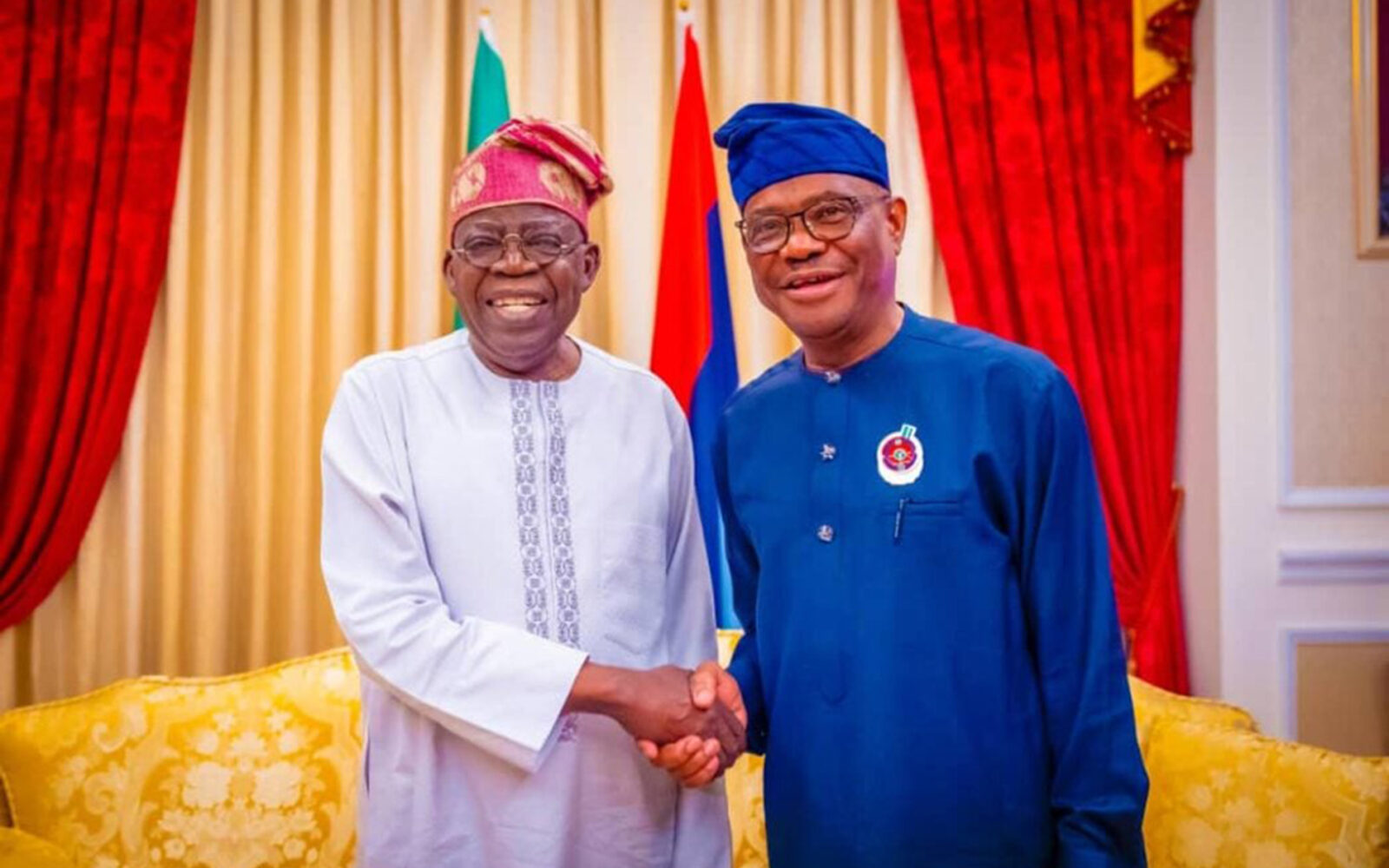
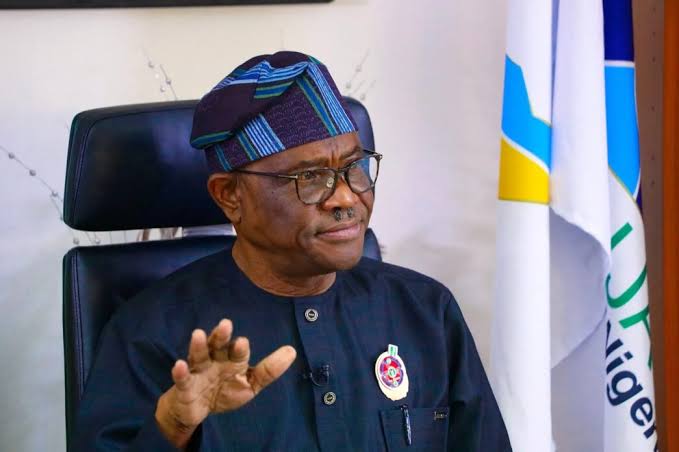
Nyesom Wike has never been a man to mince words. But in recent weeks, the Minister of the Federal Capital Territory has escalated his political manoeuvring to a level that has forced even his allies within the ruling All Progressives Congress to sit up and take notice. At the heart of the controversy is the “Rainbow Coalition”—a cross-party political formation that Wike insists is designed solely to mobilise support for President Bola Tinubu’s re-election in 2027, but which critics fear could become a vehicle for personal political ambition that undermines the very party it claims to serve.
The coalition, which Wike says comprises the All Progressives Congress, the Peoples Democratic Party, the Labour Party, and the Action Alliance, has provoked a sharp rebuke from the APC Governors’ Forum. After a closed-door meeting in Abuja, the governors, under the leadership of Imo State Governor Hope Uzodimma, accused Wike of breeding confusion that could affect Tinubu’s electoral fortunes . Their concern was not without foundation.
The Rainbow Coalition: What Wike Actually Said
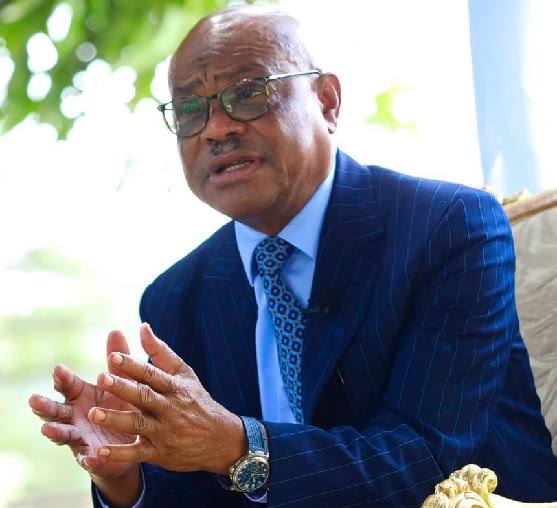
Wike’s position, articulated through his Senior Special Assistant on Public Communications and Social Media, Lere Olayinka, is deceptively simple: he supports Tinubu’s re-election, but he never promised that the PDP would refrain from fielding candidates in governorship, National Assembly, and State House of Assembly elections . “What I said and stand for is that I will mobilise support for the reelection of the President. I never promised anyone that PDP will not field candidates to contest governorship, National Assembly and States House of Assembly elections,” Wike stated .
He argued that the outcome of the 2023 elections demonstrated that voters could support different political parties at different levels without being confused. Citing Imo State, where the APC won two senatorial seats despite Tinubu securing less than 15 per cent of the presidential vote, Wike asked: “Was it rainbow coalition? Were the voters confused?” . He extended the argument to Ebonyi, Abia, and Enugu States, where the APC won National Assembly elections despite Tinubu’s poor showing in the presidential contest .
The Rainbow Coalition, Wike insists, “has nothing to do with the APC. Rather, it is our own way of mobilising support across political parties for Mr President, who has done well to deserve a second term” .
The APC Governors’ Pushback
The APC governors were not persuaded. In their resolution, they made clear that they would not participate in, support, or endorse political alliances or arrangements capable of undermining Tinubu’s re-election, weakening the APC, or adversely affecting the party’s candidates at any level . They pledged to take charge of Tinubu’s 2027 campaign structures across their respective states and align the party’s campaign machinery with the President’s re-election bid.
The governors’ position reflects a genuine anxiety. If Wike’s Rainbow Coalition allows PDP, Labour Party, and Action Alliance candidates to contest elections in the same states where APC candidates are running, it could split the pro-Tinubu vote or create confusion among voters. The governors, who control the APC machinery in their states, see Wike’s project as an encroachment on their turf.
Wike’s response was characteristically defiant. He told the governors to “go and face” their state elections, declaring that his political commitment for 2027 is to Tinubu and not to APC candidates contesting governorship, National Assembly, or State House of Assembly seats . “I won’t be the one to help people win elections in their states. Politics is local. Those having problems in their states should resolve them instead of using the President’s reelection to whip up sentiment,” he said .
In a subsequent interview with Arise News, Wike dismissed the APC governors as “politically lazy” and insisted he never approached them for any alliance. “There is no day I went to the Governors’ Forum to align with any rainbow coalition — there is no such day,” he said . He also revealed that President Tinubu is fully aware of his political activities: “There is nothing that I do that I don’t tell Mr. President” .
The Rivers State Dimension: Fubara’s Withdrawal and the Battle for 2027
The Rainbow Coalition cannot be understood outside the context of Rivers State politics, where Wike’s influence remains formidable despite his relocation to Abuja. The political landscape in Rivers has been transformed by Governor Siminalayi Fubara’s dramatic withdrawal from the 2027 governorship race—a decision that has left his supporters “stunned, bitter and politically stranded” .
Fubara’s withdrawal, which followed a prolonged and bitter confrontation with Wike, has reopened the political space in Rivers State. The Guardian reported that stakeholders dissatisfied with the outcome of the Fubara-Wike conflict are encouraging supporters and governorship candidates of various opposition platforms to unite behind a common front—a movement described by one source as “Rivers People versus Wike” .
The opposition coalition being discussed includes Gabriel Pidomson of the African Democratic Congress, an ally of former Minister of Transportation Chibuike Amaechi; Dumo Lulu-Briggs of the National Democratic Congress, reportedly backed by Peter Obi; and Farah Dagogo of the Atiku Abubakar faction . The objective is to avoid splitting votes among multiple opposition candidates and instead present a united front against whichever candidate emerges from Wike’s camp.
Meanwhile, the Rainbow Coalition in Rivers State has yet to settle on a governorship candidate. Wike has publicly stated that the coalition, not he alone, will determine its preferred candidate. “In the Rainbow Coalition, we have not chosen who will be the governor of Rivers State. We have candidates who have emerged under the coalition, but the only decision we have taken is that we are going to support President Bola Tinubu,” he said .
The emergence of Kingsley Chinda, an Ikwerre politician, as the APC governorship candidate in Rivers State has deepened concerns over zoning and ethnic balancing. Stakeholders from the riverine and Ogoni blocs have lamented growing political exclusion, arguing that the upland axis has dominated power for about 24 years . Wike’s coalition will need to navigate these sensitivities carefully if it hopes to maintain unity.
The 2023 Playbook: Wike’s G5 Strategy Revisited
Wike’s confidence in the Rainbow Coalition stems from his experience with the G5 governors’ group in 2023. That alliance of five PDP governors—Wike, Seyi Makinde of Oyo, Samuel Ortom of Benue, Ifeanyi Ugwuanyi of Enugu, and Okezie Ikpeazu of Abia—refused to support Atiku Abubakar’s presidential bid, instead working to ensure Tinubu’s victory in their respective states .
Wike has been candid about this strategy. “If Tinubu has problem in the North, Atiku will have in the South. This was the G5 governors’ strategy in 2023,” he said . He revealed that the G5 deliberately directed support to Peter Obi in states like Benue, Cross River, and Oyo to defeat Atiku .
The Rainbow Coalition is designed to replicate this model on a larger scale: a cross-party formation that mobilises support for Tinubu at the presidential level while allowing its members to pursue their own political interests in state and legislative contests. Wike believes this approach can deliver Tinubu a second term without requiring the APC to win every state.
The Peter Obi Factor: Wike’s Dismissal and Its Risks
Wike has not been shy about dismissing the threat posed by Peter Obi and other opposition candidates. His spokesperson, Lere Olayinka, argued that some presidential candidates are not contesting to win but merely to “register their presence.” He cited Obi’s NDC as lacking the grassroots spread necessary to compete, noting that the party has governorship candidates in only 13 states and did not field candidates in recent Ekiti and Osun elections .
Wike himself has said Obi “is not popular” despite the chants at public events. “To Obi, he is very popular each time people shout Obi-Obi. After the NBA Conference, where they shouted his name, I’m sure he went home satisfied. But in the real sense, he is not popular,” Wike said .
This dismissal may prove to be a strategic miscalculation. The Benue blockade incident and the formation of the Obi-Kwankwaso alliance suggest that the opposition is consolidating in ways that could challenge the APC’s dominance. Wike’s confidence in the Rainbow Coalition’s ability to deliver Tinubu a victory assumes that the opposition will remain fragmented—an assumption that may not hold.
The PDP’s Parallel Track
Adding to the complexity is the PDP’s insistence that Wike’s support for Tinubu is a “personal” decision that does not bind the party. The PDP’s National Publicity Secretary, Honourable Jungudo Haruna Mohammed, stated that Wike’s discussion with the party’s presidential candidate, Senator Sandy Onor, was a “friendly engagement” that did not alter the party’s plan to contest the 2027 election .
Wike, who is the national leader of the Mohammed-led National Working Committee, is backing Tinubu while the PDP he ostensibly leads fields its own presidential candidate. This contradiction has created a bizarre political dynamic in which the PDP’s national leader is actively working against his party’s presidential candidate.
The Stakes for Tinubu
For President Tinubu, the Wike situation presents both opportunity and risk. On one hand, Wike’s Rainbow Coalition could mobilise support across party lines in states where the APC is weak, potentially expanding Tinubu’s electoral map. On the other hand, the coalition’s cross-party nature creates confusion about what it means to support Tinubu, and its potential to undermine APC candidates in state elections could weaken the party’s overall position.
The APC governors’ opposition to the Rainbow Coalition reflects a legitimate concern: if the coalition allows PDP and Labour Party candidates to contest against APC candidates while simultaneously claiming to support Tinubu, the result could be electoral chaos. Voters may not distinguish between the presidential and state contests as easily as Wike assumes.
President Tinubu is reportedly set to intervene in the face-off between Wike and the APC governors, with a senior presidential aide disclosing that the intervention is likely to take place abroad before the end of the week . The source stated: “The President is the leader of the party and the father of the nation. The interesting aspect is that the governors and the minister are all working in the interest of the President and the Federal Republic of Nigeria” .
Conclusion: A Firewall or a Fault Line?
Wike’s Rainbow Coalition represents an audacious political experiment. It seeks to replicate the G5 model at a national scale, creating a cross-party vehicle for Tinubu’s re-election that transcends traditional party boundaries. If successful, it could deliver Tinubu a second term while allowing Wike and his allies to maintain their political relevance in their respective states.
But the coalition also exposes deep fault lines within the pro-Tinubu camp. The APC governors see it as a threat to their control of the party machinery. The PDP sees it as a betrayal of the party’s presidential candidate. And the opposition sees it as evidence that the ruling party is afraid of a united front.
The Rainbow Coalition’s fate will depend on whether Wike can manage these tensions without alienating the APC governors whose cooperation he needs, and whether the opposition can capitalise on the confusion he has created. For now, Wike remains defiant, telling the governors to focus on their own states and warning that he will not be used to win elections for others.
The political landscape ahead of 2027 is more complex than either Wike or his critics acknowledge. The Rainbow Coalition may prove to be a firewall that protects Tinubu’s re-election, or it may become a fault line that splits the ruling party’s support base. The answer will emerge in the months ahead—and Wike, as always, will be at the centre of the storm.





Leave a comment