

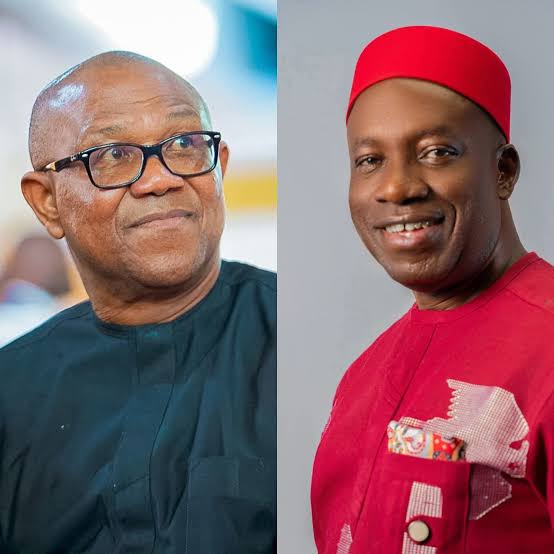
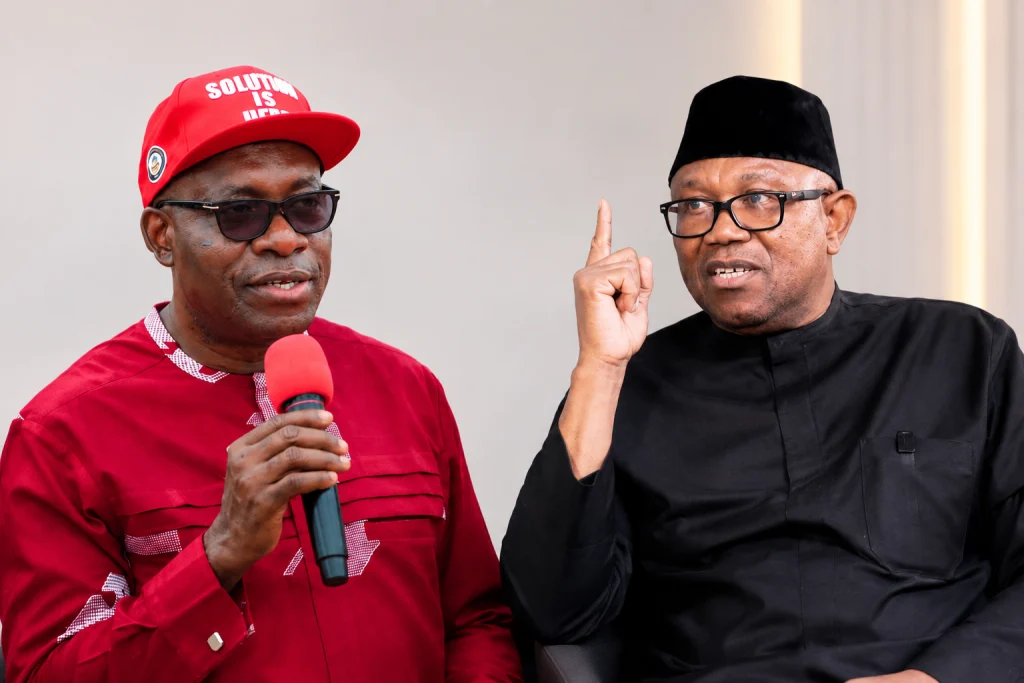
The Peter Obi Anambra debt controversy has escalated from a simmering rivalry into a full-blown war of documents, accusations, and counter-accusations. This battle now threatens to shape the narrative of the 2027 presidential contest.
At the centre of the storm is a simple question with profound implications. Did Obi leave Anambra State indebted when he handed over power in 2014? Or did he leave it with savings and a clean slate?
The answer matters not just for Obi’s legacy. It matters for his credibility as a presidential candidate. Obi has built his entire political brand on fiscal prudence, transparency, and competence. That brand has resonated with millions of Nigerians, particularly the youth. They see in him an alternative to the political establishment.
If that brand is successfully tarnished, the 2027 opposition coalition may lose its most potent weapon. The coalition is already fragile. It faces formidable structural disadvantages. The Peter Obi Anambra debt controversy could be the weapon that ends it.
The Origins of the Peter Obi Anambra Debt Controversy
The current controversy did not emerge from nowhere. The Obi-Soludo relationship has been strained for years. It stems from a mix of political rivalry, ideological differences, and personal animosity. These tensions predate Soludo’s assumption of office in 2022.
During the 2023 presidential campaign, Soludo wrote a widely circulated article. In it, he questioned Obi’s viability as a candidate. He argued that the Labour Party standard-bearer could not win the presidency. He also said the South-East’s political investment in him was misplaced. The article infuriated Obi’s supporters. They saw it as a betrayal from a fellow Anambra son. Soludo later attempted to clarify his position. But the damage was done.
When Soludo assumed office, he inherited an administration led by Willie Obiano. Obiano was Obi’s successor. The relationship between Obi and Obiano had also been fraught. Obi frequently criticised Obiano’s governance style and fiscal management. Soludo, who had his own differences with Obiano, found himself in an awkward position. He had to navigate between two predecessors with competing narratives about the state’s finances.
The current escalation began earlier this month. Anambra’s Commissioner for Finance, Izuchukwu Okafor, claimed during a podcast interview that the Soludo administration was still repaying loans incurred by Obi and other past governors. The claim was not new. Similar allegations had been made before. But it came at a politically charged moment. Obi was actively campaigning for the 2027 presidential election on a platform of fiscal discipline.
Obi’s Response: A Challenge and a Wager

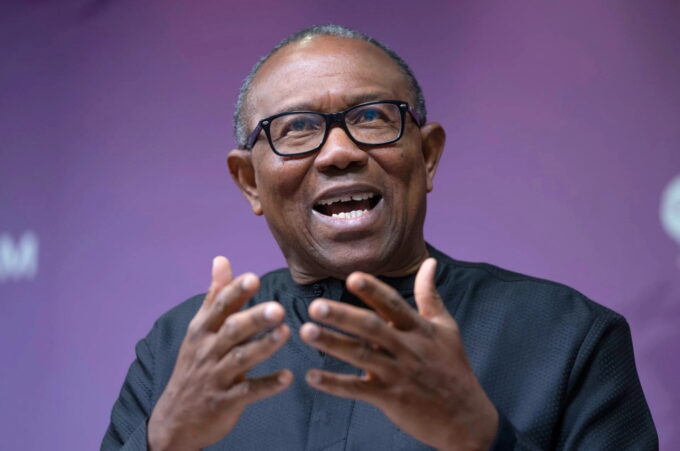
Obi’s response was swift and characteristically direct. In an interview in Washington, DC, and subsequently in a Facebook post, he insisted that he left Anambra without owing any salary, pension, gratuity, or contractor debt. He provided specific details. He said he left over N75 billion in savings in the state’s First Bank account. He also said he left more than N2.13 billion in an ecological fund account. That fund was earmarked for the Oko/Umuchiana erosion crisis.
Then he made a dramatic wager. That wager transformed the controversy from a routine political dispute into a high-stakes confrontation. Obi declared: “If anybody can establish anything to the contrary, I will stop campaigning.”
It was a bold, almost reckless move. By staking his presidential ambition on the accuracy of his claims, Obi had raised the stakes to the highest possible level. He had also, perhaps inadvertently, handed his opponents a weapon. If they could prove him wrong, they could effectively end his campaign without a single vote being cast.
The Anambra Government’s Counter-Offensive
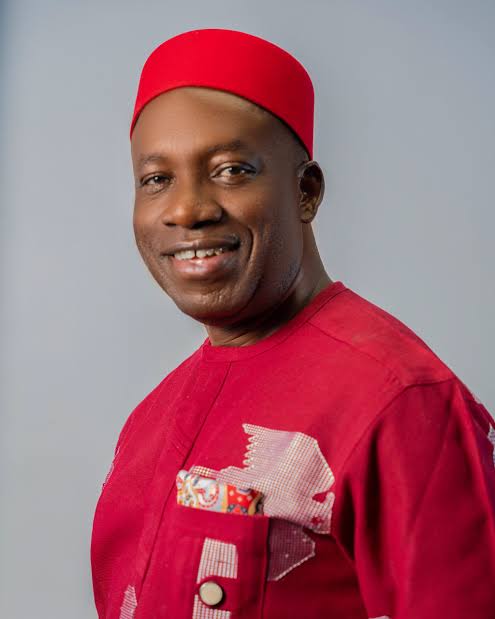
The Soludo administration responded with a detailed dossier. Commissioner for Information and Value Reorientation, Law Mefor, released a statement. It was titled “Gov Peter Obi and Record of Public Debt in Anambra: Facts Beyond Propaganda and Lies.” The statement purported to show that Obi’s administration had incurred substantial debts.
According to the government’s figures, eight external loans remained outstanding. These loans were obtained during or inherited into Obi’s administration. They had a combined balance of $92.35 million. That is equivalent to N127.37 billion as of June 30, 2026. The loans covered projects including malaria control, FADAMA development, healthcare, education, community development, erosion control, and value-chain development.
The government further claimed that the Soludo administration had cleared approximately N22 billion in gratuity arrears. These were owed to retired state and local government employees and teachers. The government also said salary arrears owed to workers of the defunct Anambra State Water Corporation remained unresolved throughout Obi’s tenure.
Mefor also disputed Obi’s claim about the ecological fund. He stated that the First Bank account referenced by Obi was actually an Internally Generated Revenue Consolidated Revenue Account. It was not an ecological fund account. Records showed no such amount had ever been in the account.
The government’s statement was carefully calibrated. It did not claim that Obi was personally corrupt. Rather, it said his administration had left obligations that subsequent governments were still servicing. It also acknowledged that borrowing for bankable projects was not inherently wrong. This positioned the issue as one of accounting and transparency, not malfeasance.
The Federal Government’s Intervention
What transformed the controversy from a state-level dispute into a national political battle was the intervention of the Federal Government. Bayo Onanuga, Special Adviser to President Bola Tinubu on Information and Strategy, issued a public challenge to Obi on X. He asked whether Obi would honour his pledge to withdraw from the presidential race. This was after the Anambra State Government had “confronted him with facts and figures.”
Onanuga’s intervention was significant for several reasons. First, it showed that the Presidency was willing to engage directly in a controversy involving a political opponent. This was a departure from the traditional posture of ignoring opposition attacks. Second, it framed the issue as a test of Obi’s integrity. If he refused to withdraw, he would be admitting that his claim was false or that his pledge was empty. Third, it aligned the Presidency with Soludo. This effectively confirmed that the Anambra governor was acting in concert with the federal establishment.
The Minister of Aviation and Aerospace Development, Festus Keyamo, reinforced this position. He argued that it was hypocritical for Nigerians to scrutinise President Tinubu’s record as Lagos governor from 27 years ago. Yet they objected to scrutiny of Obi’s Anambra record from 19 years ago. “It is okay to continue to scrutinise the records of President Bola Ahmed Tinubu as Governor of Lagos State 27 years ago,” Keyamo said. “But it is abomination to scrutinise Peter Obi’s record as Governor 19 years ago!”
The argument is superficially compelling. But it overlooks a crucial distinction. Tinubu’s record has been scrutinised continuously for decades. This includes official inquiries and media investigations. Obi’s record, by contrast, had largely escaped sustained examination until now. More importantly, the intervention of federal officials in a dispute involving a state government and a former governor raises questions. It suggests the politicisation of state institutions.
The Credentials Controversy: A Parallel Battle
As the debt controversy raged, a parallel battle over Obi’s academic credentials emerged. Abayomi Arabambi, a chieftain of the Labour Party, filed three separate lawsuits at the Federal High Court in Abuja. The suits sought to compel WAEC, the University of Nigeria, Nsukka, and the National Youth Service Corps to release official records. These records related to certificates allegedly issued to Obi.
The suits were filed pursuant to the Freedom of Information Act. They seek certified true copies of Obi’s WAEC certificate, UNN degree records, and NYSC certificate. Arabambi insists he is not asking the court to determine whether the certificates are genuine or forged. Rather, he seeks “disclosure of the respondents’ official records from which the status and particulars of the certificate may be ascertained.”
The timing of the lawsuits is telling. They were filed in early September, just as the debt controversy was gathering momentum. While the credentials issue is technically separate from the debt question, the two controversies are politically intertwined. Both are designed to undermine Obi’s credibility. Both suggest that the man who presents himself as a model of transparency and competence may have something to hide.
Obi has responded to the credentials challenge by publicly calling on the institutions he attended to release his academic records. His supporters have praised this as a demonstration of confidence. The contrast with President Tinubu, who has been accused of resisting the release of his own academic records, is one that Obi’s camp has been quick to highlight.
The Political Calculations
The Peter Obi Anambra debt controversy must be understood within the broader context of the 2027 presidential contest. Obi is not merely a former governor defending his legacy. He is the leading opposition candidate. He is the standard-bearer of a coalition that includes the NDC, the Obidient Movement, and potentially Rabiu Kwankwaso’s Kwankwasiyya Movement.
His candidacy rests on three pillars. The first is his record as Anambra governor. The second is his reputation for fiscal discipline. The third is his message of competence over corruption. If any of these pillars is weakened, the entire structure of his campaign is at risk.
Soludo’s motivations are equally complex. As governor, he has a legitimate interest in understanding the state’s financial obligations. But he is also a political actor with his own ambitions. By attacking Obi, he positions himself as a loyal ally of the Tinubu administration. This could position him for a future role in a re-elected APC government. He also neutralises a potential rival in Anambra politics. If Obi’s national ambitions fail, he may return to state politics, where he would be a formidable opponent.
The Federal Government’s intervention suggests that the Presidency sees Obi as a genuine threat. It is willing to use state institutions to neutralise him. This is a dangerous game. If the attacks on Obi are perceived as persecution rather than accountability, they could backfire. They could galvanise his supporters and reinforce his narrative of a persecuted outsider fighting a corrupt establishment.
The Verdict of the Public
The court of public opinion is already deliberating. On social media, Obi’s supporters have rallied behind him. They praise his willingness to stake his campaign on his record. They challenge Soludo to produce bank statements and transaction records.
One Facebook user, Afam Achebe, wrote: “Your repeated attacks on Peter Obi are becoming difficult to understand. He did not hand over to you, and he is not contesting Anambra governorship with you. Yet, each time you come at him, you give him another opportunity to defend his record with clean facts.”
Another user, identified as Kaa, challenged Soludo directly: “Mr Governor, seeing how eagerly you have worked to tarnish Peter Obi’s name and turn Nigerians against him, this is your opportunity to kick him off the ballot. He has refuted your claim. He has provided the bank, the account details and the amount he says was left there. Simply obtain the relevant account statement and present it to Nigerians.”
This dynamic has become a defining feature of the controversy. Obi provides specific details. His opponents respond with general claims. Obi has named the bank, provided the account number, and specified the amount. His opponents have released loan records. But they have not produced evidence directly contradicting his claim about the savings account.
The Implications for 2027
The outcome of the Peter Obi Anambra debt controversy will have significant implications for the 2027 presidential contest.
If Obi is able to substantiate his claims and demonstrate that the attacks are politically motivated, he will emerge stronger. His credibility will be reinforced. His narrative of persecution will be validated. The controversy could become a rallying point for his supporters. It would reinforce the narrative of a man fighting against a corrupt establishment.
If, on the other hand, the Anambra government produces evidence that Obi left debts he denied, or that his claims about savings are false, his campaign will suffer a potentially fatal blow. His central selling point—fiscal discipline and transparency—would be undermined. His opponents would have a powerful new weapon.
The credentials lawsuits add another layer of uncertainty. If the courts compel the institutions to release records that contradict Obi’s claims, the damage would be severe. If the records confirm his claims, the lawsuits will be exposed as political harassment.
Conclusion: A Defining Moment
The Obi-Soludo feud is more than a personal rivalry. It is a proxy battle for the soul of the 2027 election. At stake is the question of whether a candidate can run on a platform of competence and integrity and survive the scrutiny that comes with it.
Obi has staked his campaign on his record. Now he must defend it against a coordinated assault. The assault comes from the state government, the federal government, and political opponents. They see him as the biggest threat to their hold on power. The coming weeks will determine whether his gamble pays off. They will also determine whether it becomes the defining miscalculation of his political career.
For Nigerians, the controversy offers a rare opportunity. They can examine the records of a leading presidential candidate with a level of detail that is seldom available. Whether they accept Obi’s version of events or Soludo’s, they will be making their judgment not on rhetoric and promises, but on documents and figures. In a political culture often defined by personality and sentiment, that is a welcome development—even if the motives behind the scrutiny are not entirely pure.








Leave a comment