

By Political Analysis Desk
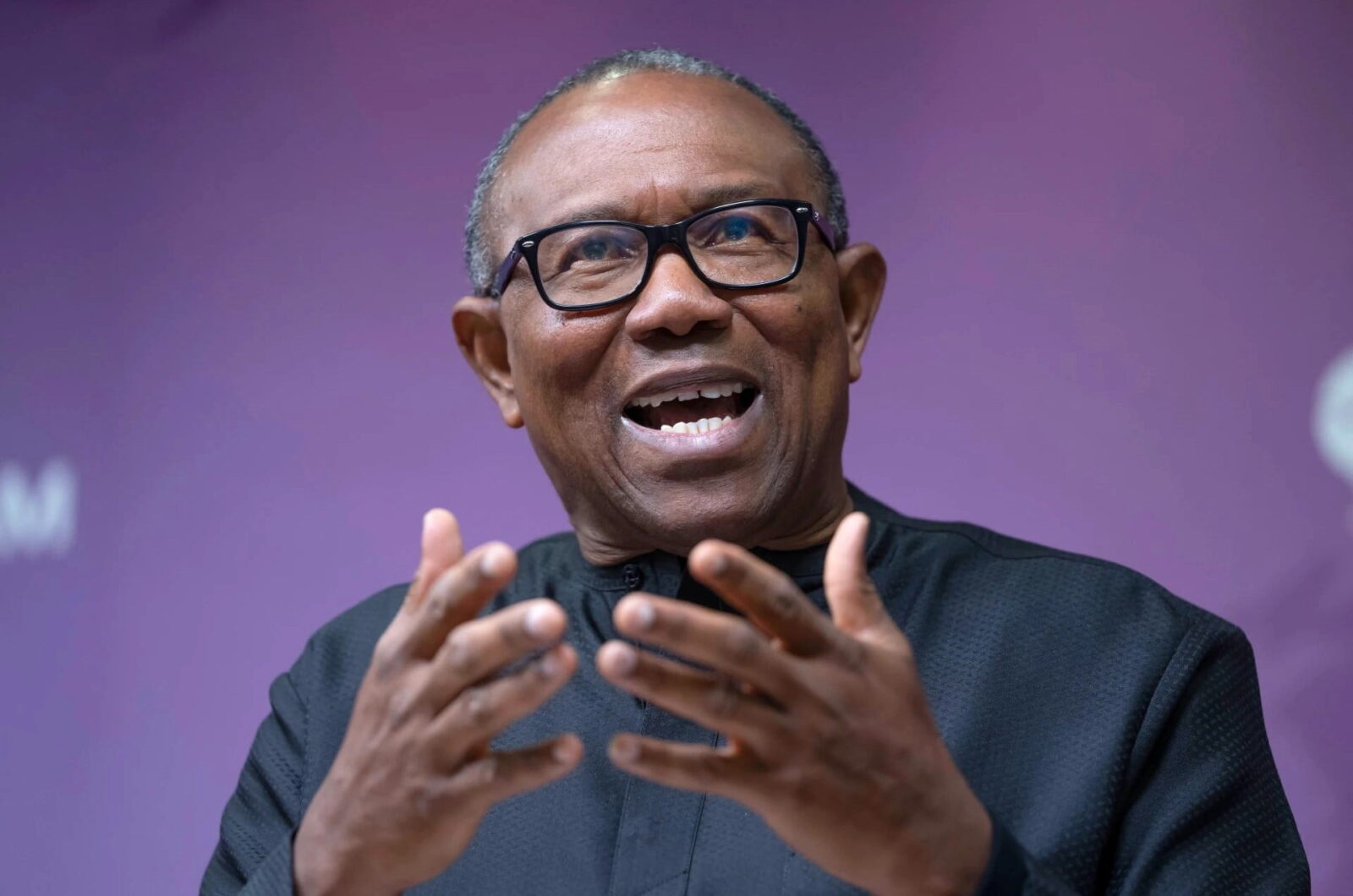
The blockade of Peter Obi’s convoy in Benue State has escalated into a full-blown political controversy, with new revelations and accusations emerging daily. What began as a disrupted humanitarian visit to a community devastated by mass killings has become a litmus test for Nigeria’s democratic health—and a potential turning point in the 2027 presidential contest.
The facts, as they now stand, are increasingly difficult for the Benue State Government to dismiss. Obi was travelling to Yelwata in Guma Local Government Area—where over 270 residents were reportedly killed in June 2025—when his convoy was stopped by youths at Gyado along the Gboko Road.
Crucially, documentation has emerged showing that the Benue State Commissioner of Police was formally notified before the visit. A letter dated September 7, 2026, signed by the NDC Chairman in Benue State, Ohini Ojegbe, was acknowledged by the police the same day. Superintendent of Police Daniel Tarwa confirmed to Premium Times that the police received the letter and provided security cover for Obi. This directly contradicts the state government’s claim that no security arrangements had been made.
The Benue State Police Command has arrested approximately 46 suspects over the incident, a development that raises questions about whether the blockade was a spontaneous action by aggrieved youths or a coordinated effort.
Ortom’s Explosive Allegation: A Governor Implicated
The most significant development has been the direct accusation by former Benue State Governor Samuel Ortom, who has publicly alleged that Governor Hyacinth Alia was personally involved in blocking Obi’s convoy. Speaking on Channels Television’s Politics Today, Ortom was unequivocal: “Alia himself, the governor of Benue State, is involved in this matter, he cannot deny that. I am not supporting Peter Obi, but it is wrong. Allow democracy, which is anchored on the rule of law, to prevail, not to stop other people so that you take advantage of what is happening.”
Ortom emphasised that this was not the first time the Alia administration had obstructed Obi, noting that the governor had previously stopped Obi from visiting internally displaced persons in April 2025, citing security and protocol concerns. The pattern, Ortom suggests, is unmistakable—and deeply troubling.
The Benue State Government has denied any involvement. Chief Press Secretary Kula Tersoo stated: “We wish to emphatically deny that the government of Rev. Fr. Hyacinth Alia has an idea of what Mr. Obi is talking about.” Yet the government’s position is undermined by its shifting narrative—first denying knowledge of the visit, then claiming that protocol was breached, even as police documentation confirms they were duly informed.
The Signal to Opposition and the Electorate
The blockade of a humanitarian visit to a community that has suffered one of the worst massacres in recent Nigerian history carries profound symbolism. It suggests that certain political forces are willing to weaponise even grief and suffering for electoral advantage.
The incident has drawn widespread condemnation from across the political spectrum. Governor Seyi Makinde of Oyo State condemned the disruption, characterising it as evidence that the APC is “marketing an unpopular candidate.” The NDC’s Sowore faulted the attack, while Ortom’s intervention—coming from a fellow Benue politician—adds weight to the allegation of state complicity.
For opposition parties, the Benue blockade serves as a stark warning: the ruling party will use all means at its disposal—including intimidation, regulatory harassment, and violence—to maintain power. For the electorate, it raises fundamental questions about whether the 2027 election can be free and fair.
States Where Obi Won and the Ruling Party’s Counter-Strategy
The lessons of 2023 have clearly been studied by the ruling party. Obi won 12 states including the Federal Capital Territory, sweeping the South-East and making significant inroads in the South-South and North-Central. His 6,101,533 votes nationally represented a remarkable performance for a first-time presidential candidate.
Benue State was a cornerstone of that coalition. Obi’s 308,372 votes in the state—narrowly edged out by the APC’s 310,468—demonstrated that even in a state controlled by the ruling party, the opposition could mount a serious challenge. If Obi can consolidate and expand his support in Benue and other North-Central states, the APC’s path to victory in 2027 becomes considerably more complicated.
The APC’s counter-strategy appears to have multiple components. First, there is the attempt to deny Obi a viable political platform. Obi himself has alleged that forces within the Federal Government are working to prevent him from appearing on the ballot in 2027: “If you know what they are doing to ensure that I’m not on the ballot in 2027, you will be surprised. Nigerian government is doing everything to ensure that I do not contest in this election.”
Second, there is the use of intimidation and territorial control. The Benue blockade is the latest in a series of incidents targeting opposition figures. The pattern is unmistakable—and dangerous.
The Obi-Kwankwaso Alliance: A Formidable Threat
The emergence of the Obi-Kwankwaso alliance represents perhaps the most significant development in opposition politics since 2023. Kwankwaso has confirmed that a joint ticket is the most likely option for 2027: “I believe so, and taking into the party, I think that is their mindset.”
The strategic rationale is compelling. Kwankwaso has explained that northern leaders deliberately chose Obi as their preferred partner: “I met with our leadership in the North to look for someone who is capable, and at the end of the day, we realised that Peter Obi was at the forefront of it. That’s why we all accepted to work together.”
The Kwankwaso National Network has been explicit about its ambitions. Dr. Ukpai Iro Ukpai, the group’s South East zonal coordinator, described the alliance as “the greatest nightmare of the ruling party” and declared: “This is a strategic move to liberate our democracy from the claws of the incompetent ruling All Progressives Congress and to unite the previously seriously fragmented opposition.” The group has set a target of mobilising at least five million votes from the South East alone.
The strategic implications are profound. In 2023, Obi and Kwankwaso competed against each other, splitting the opposition vote in key northern states. A united front would consolidate that vote, potentially making the coalition competitive in states that the APC currently takes for granted.
Obi’s Policy Positions: The Right Statements
Obi has been making the right statements in the media, articulating policy positions that speak to the concerns of ordinary Nigerians while maintaining his reputation for fiscal prudence and good governance.
On fuel prices, Obi has promised to moderate pump prices if elected, pledging to remove corruption from the subsidy system to ensure that petrol prices come down. “We’ll moderate fuel prices all over Nigeria. We will remove corruption from the subsidy. When I remove it, petrol and everything else will go down.” He has dismissed claims that the removal of fuel subsidy worsened poverty in the North, arguing that “there are other factors” responsible.
On the naira, in a notable policy endorsement, Obi has backed President Tinubu’s naira float policy and vowed to retain it if elected. “Yes, there is one, it’s floating the naira. I’m not going to defend it, but I’m going to put productivity to make it more valuable to the people.” This position—endorsing a policy of the incumbent while criticising its implementation—positions Obi as a pragmatist rather than an ideologue.
On northern development, Obi has made a direct appeal to northern voters, positioning agriculture as the North’s greatest asset and promising investment: “The North has an asset that no other area can say they have, and that asset is agriculture. We will invest in it, we will give subsidy in it, we will ensure that we take all those poor people, almajiris back to education.” He has declared that “the greatest beneficiaries of my presidency will be the North.”
On electoral integrity, Obi has committed to ensuring that votes are properly counted and transmitted, with a dual transmission system that would see results sent both to INEC’s designated portal and to the party’s situation room. “We must make sure that at every polling unit, the votes are counted, the votes are recorded properly, the votes are transmitted properly.” His “ready to die” comment, which generated significant controversy, was clarified as symbolic—a statement of commitment to protecting Nigerian votes.
Implications for the Tinubu Re-election Bid
The Benue incident and the broader pattern of intimidation raise serious questions about the state of Nigerian democracy and the fairness of the 2027 electoral contest.
For President Tinubu, the strategic calculation is delicate. On one hand, the suppression of opposition activity may yield short-term electoral benefits. On the other hand, it risks delegitimising his re-election bid, both domestically and internationally.
The APC’s public statements suggest that the party is preparing for a tough contest. However, the line between fighting through the system and subverting it is thin—and the Benue blockade suggests that the APC may have crossed it.
Conclusion: A Defining Moment
The blockade of Peter Obi’s convoy in Benue State is more than an isolated incident; it is a signal. It signals to opposition parties that the ruling party will use all means at its disposal to maintain power. It signals to the electorate that the 2027 election may be neither free nor fair. And it signals to the international community that Nigeria’s democratic trajectory remains precarious.
But it also signals something else: that the ruling party sees Peter Obi as a genuine threat. The APC’s own admissions, the formation of the Obi-Kwankwaso alliance, and the escalating attempts to suppress opposition activity all point to a recognition that the political landscape has shifted since 2023.
For Peter Obi and the coalition he is building, the challenge is to transform the outrage generated by incidents like the Benue blockade into sustained political mobilisation. The Obidient Movement demonstrated in 2023 that it could overcome structural disadvantages and win states that no one expected. The question for 2027 is whether it can do so again—and whether the ruling party’s attempts to prevent it will ultimately strengthen or weaken its cause.
The stakes could not be higher. The Benue blockade is a warning shot. Whether it is heeded or ignored may determine the future of Nigerian democracy.






Leave a comment