

Taiwo Michael Oloyede

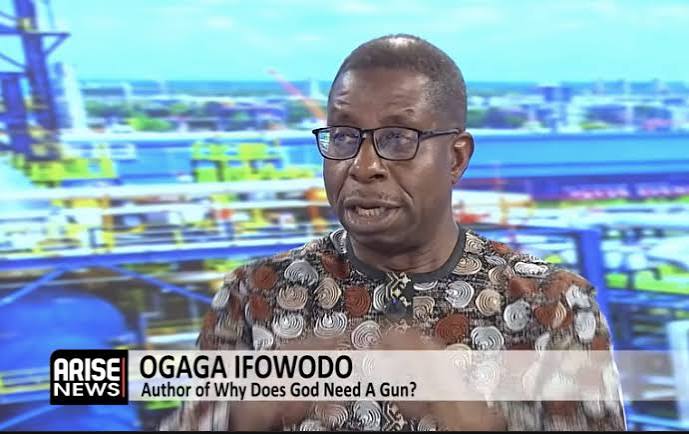
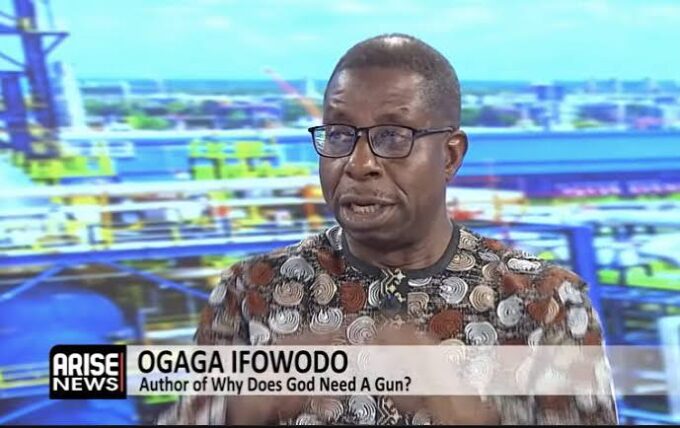
Dramatic monologue has always required its author to disappear. Browning built the form on that vanishing act: the Duke of Ferrara indicts himself in “My Last Duchess” precisely because Browning never steps in to correct him. The poet’s absence is the whole mechanism. Ogaga Ifowodo inherits that discipline and complicates it past anything Browning had to answer for, because his speaker is not invented. She is Leah Sharibu, taken from a dormitory in Dapchi, Yobe State, in February 2018 at fourteen, and still held. Writing thirty-two poems in her voice is not a technical exercise in persona. It is a wager that restraint can stand in for a permission the poet cannot actually obtain.
The wager pays because Ifowodo builds his speaker’s interiority entirely out of her surroundings. This is closer to the documentary poetics of Charles Reznikoff or Muriel Rukeyser’s The Book of the Dead than to conventional lyric confession: feeling arrives lodged in circumstance, left to espouse itself.
“No, They Can’t Steal Away with All of Us!” opens on a title that sounds like defiance overheard mid-abduction, then spends its body testing that defiance against evidence. The town the trucks pass through is “dead asleep,” every house “silent like a tomb,” and the poem’s central question, “what has stopped every ear, muzzled every mouth?”, stays open by design. A lesser poet resolves this into triumph or despair. Ifowodo leaves the question exposed, which costs him a satisfying close and buys something harder to fabricate: a captive discovering, inside the poem’s own nine lines, that her courage may be outrunning the facts. The apocalyptic register of the closing tercet, “mighty wings,” “flaming swords” barring the trucks like Pharaoh’s chariots, belongs to Exodus, and its presence here is the speaker’s inheritance rather than the poet’s flourish: this is what a devout adolescent’s imagination reaches for under exactly this pressure. Carolyn Forché, editing Against Forgetting, argued that poetry of witness resists the lyric’s usual privacy because the speaker’s ordeal stays bound to a public catastrophe; Ifowodo’s borrowed scripture makes that argument audible, a private prayer built from communal text.
“I Am too Young to Know More Suffering” compresses the same discipline into ten lines and a single load-bearing phrase: “as gunmen brought their God to us.” The line does the theological work of a chapter in eight words, splitting one God into two, the one she has always prayed to and the one invoked to justify holding her, and trusting a fourteen-year-old speaker to draw that line herself. This is Objectivist method by other means. Zukofsky asked whether a poem had earned its sincerity by giving feeling an object to inhabit rather than a name to be called; here the object is doctrinal, a God split by allegiance rather than a feeling relocated into a body, but the test still applies, and the poem meets it without strain. The final line abandons the poem’s established register entirely, dropping into italic, hymn-adjacent cadence: “Father, free us from this forest of fear?” Scripture typically closes on certainty. Ifowodo lets this line hang on a question mark instead, prayer that stops short of the assurance prayer usually claims, and that choice carries the poem’s real argument where paraphrase would only have flattened it.
“Dying to See His Face” takes the sequence’s largest formal risk and earns it fully. The title works a genuine pun, mortal longing collapsed against literal death, and Ifowodo drives that doubleness directly into an indictment of religious iconography: everything built across centuries to render God visible, “carved in the crucifix,” “neatly brushed on canvas,” “haloed and hued,” ends by making him “stranger / to the heathen and the harlot” who most need him near. Coming from a girl held hostage specifically for refusing to renounce this faith, the accusation carries a specificity an essayist’s version of the same claim could never match: this is a sharper thing than doubt about God, a charge that the apparatus surrounding belief has made belief itself harder to reach than the men holding guns in its name. The closing image discards every icon just catalogued in favor of unmediated contact: “us sitting skin to skin.” Twelve lines of ekphrastic inventory are answered by two words of pure touch, and the reversal lands because the poem has spent its whole length earning the weight those two words carry.
“I’ve Transferred All of My Fears to Him,” poem VII, on page 30 of the same sequence, is where the collection’s method becomes most exact.”I’ve yielded all the loathing in my heart / to the scalding rock in his chest” is not ambivalence toward a husband; it is a captive’s calculated unburdening, offloading fear and hatred onto the person holding her because carrying both, alongside faith and the daily fact of danger, would be unbearable. “The weeds of his tangled beard” stops being a domestic detail and becomes a plain physical description of an armed man. And the poem’s final turn, “when the world will be rid of men forbidding / to spell and sing, read and raise her head,” is not a generalized statement drifting outward from a private grievance. It is exact and immediate: her own exclusion from the education she was in that dormitory to pursue, the precise reason groups like ISWAP target girls’ schools in the first place. The poem’s transactional opening verb, “transferred,” a word from banking rather than confession, does real work here: captivity is being described as an involuntary exchange, feeling handed over to a captor who receives it and offers nothing back. The sentence keeps returning to “I,” while the man who receives what she gives him never earns a clause of his own. That asymmetry is the poem’s argument about power, made through grammar rather than complaint.
What unifies all four poems is a poetics of drift rather than declaration: each follows a single image until the image widens on its own terms, a beard into a wilderness, a muzzled town into a besieged nation, a painted halo into the wall separating God from the girl who believes in him. Drift is the harder discipline, prone to collapse into vagueness the moment a poet’s nerve fails, and Ifowodo’s holds. Each poem closes on something concrete, a hand, an hour, a stretch of skin, and leaves the reader to carry the weight those objects were built to hold.
Sharibu remains held. A collection that speaks in her voice while hers stays silenced takes on an obligation that craft can only partly answer, and Ifowodo writes toward that limit rather than around it. The poems in the sequence under the forest of a million demons, serve the discipline of the form. That is where this book stands beside the tradition feeding it, Browning’s vanishing poet, Forché’s witness, Zukofsky’s sincerity earned in objects rather than declared in feeling, and where it exceeds that tradition’s comforts too, since the silence at its center remains an actuality, still open, still hers to break.
Tom Oloyede (Oloyede Michael Taiwo) is a prolific bard, storyteller, playwright, producer, and spoken-word artist. He has built a prominent reputation within the contemporary African literary scene for his creative performances and writing.









Leave a comment