

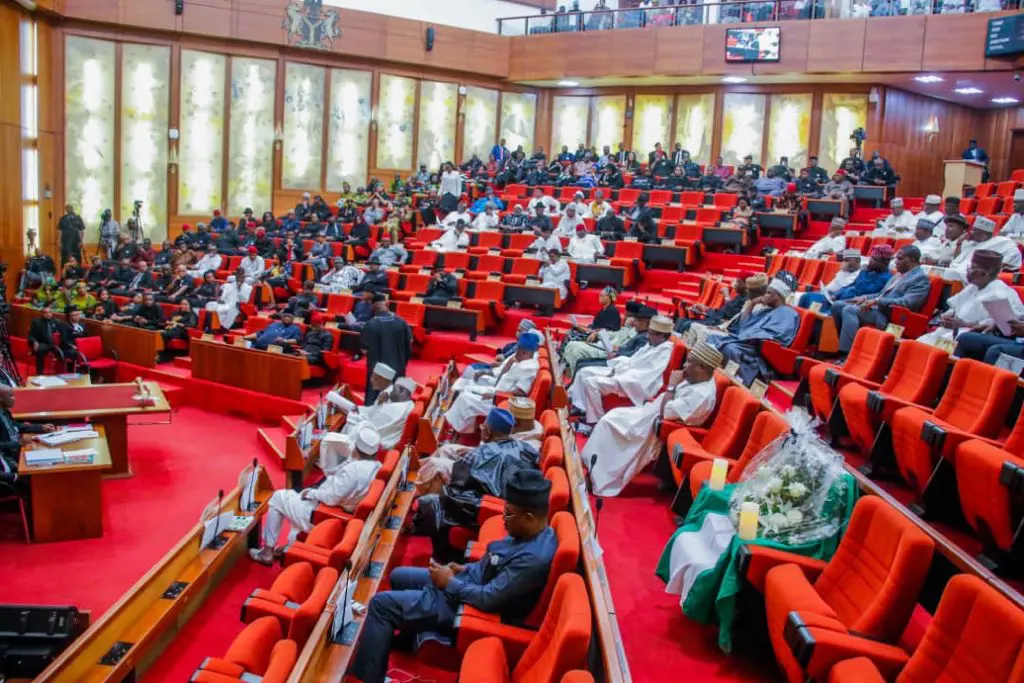
The Senate South Africa xenophobic attacks investigation has taken centre stage in Nigeria’s National Assembly. Senators strongly condemned the continued attacks on Nigerians living in South Africa. They also warned that Nigeria could adopt stronger diplomatic measures if the violence continues.
The debate dominated Tuesday’s plenary session. However, lawmakers refused to immediately cut diplomatic ties with Pretoria. They also rejected proposals to seize the profits of South African companies operating in Nigeria.
Instead, the Senate ordered a fresh investigation. It directed its relevant committees to submit their findings within two legislative weeks.
Senate South Africa Xenophobic Attacks Debate Sparks Fresh Probe
The discussion followed a motion sponsored by Senator Asuquo Ekpeyong. He raised concerns over a reported June 30, 2026 ultimatum targeting Nigerians and other African nationals living in South Africa.
Ekpeyong described the development as a direct threat to lives, businesses and the continued stay of affected foreigners. He urged the Federal Government to act before the situation worsened.
All senators condemned the recurring attacks. They called on the Federal Government to secure firm guarantees from South African authorities regarding the safety of Nigerians.
Lawmakers also noted that the Federal Government had already repatriated almost 1,000 Nigerians who voluntarily returned home.
Senator Salihu Mustapha said Nigeria should no longer remain silent. He argued that continued attacks, looting and intimidation required a stronger diplomatic response if the violence persisted.
Former Senate Leader Yahaya Abdullahi urged caution. He warned that emotional decisions could damage relations between both countries.
He argued that internal political interests in South Africa could be driving the attacks. He also reminded lawmakers that Nigeria supported liberation struggles in South Africa, Namibia, Mozambique and Angola.
Abdullahi further criticised the poor funding of Nigerian foreign missions. He said limited resources had reduced Nigeria’s ability to protect its citizens abroad.
Senate Demands Protection for Nigerians in South Africa
The Senate directed the Ministry of Foreign Affairs and the Nigerian High Commission in Pretoria to obtain written assurances on the safety of Nigerians.
Lawmakers also urged the Federal Government to demand the arrest and prosecution of everyone responsible for the attacks.
In addition, the Senate instructed the Ministry of Foreign Affairs, the Nigerians in Diaspora Commission (NiDCOM) and the Nigerian High Commission to compile detailed records of affected Nigerians.
The records will include deaths, injuries, unlawful detention, displacement and damaged property. The government intends to use the information when pursuing compensation and legal remedies.
Furthermore, lawmakers asked the Federal Government to work with the African Union and other affected countries. They want a continental early warning and accountability system to discourage future xenophobic attacks.
Earlier, Minister of Foreign Affairs Ambassador Bianca Odumegwu-Ojukwu said any retaliatory measures against South Africa should come through the National Assembly.
The Senate also directed its Committees on Foreign Affairs and Diaspora Affairs to review the implementation of its May 5, 2026 resolution on xenophobia.
The committees will also examine previous agreements between Nigeria and South Africa. They must report back within two legislative weeks.
Lawmakers Reject Immediate Diplomatic Sanctions
The debate became more heated after Senator Abdul Ningi proposed cutting diplomatic relations with South Africa if the attacks continued.
Senator Adams Oshiomhole suggested using the profits of South African companies operating in Nigeria to compensate victims.
Deputy Senate President Jibrin Barau opposed both proposals at this stage. He urged lawmakers to wait for the committee’s findings before making major diplomatic decisions.
Barau stressed that Nigeria should respond with verified evidence rather than emotion.
Following his intervention, Ningi withdrew his proposal. However, he requested that Senate records should reflect that the motion had been formally moved and seconded.
Ghana-South Africa Dispute Raises Regional Concern
Diplomatic tensions have also increased between Ghana and South Africa.
Ghana postponed the planned state visit of South African President Cyril Ramaphosa after the killing of Ghanaian citizen Bashiru Isak.
The Ghanaian government said protecting its citizens remained its highest priority. Ramaphosa had planned to visit Ghana in early August for talks on trade, investment and regional cooperation.
Ghana formally protested the killing to South African authorities. It also petitioned the African Union, describing the incident as xenophobic violence.
Earlier, Ghana’s Ministry of Foreign Affairs expressed shock over Isak’s death. It demanded the arrest and prosecution of those responsible.
South Africa rejected Ghana’s claims. Officials insisted there was no evidence linking Isak’s death to the June 30 demonstrations.
Justice Minister Mmamoloko Kubayi said no deaths occurred during the protests. She also accused Ghana of spreading false information that could damage South Africa’s reputation.
Meanwhile, Nigeria has continued evacuating willing citizens from South Africa.
The Ministry of Foreign Affairs confirmed that a fourth Air Peace evacuation flight would depart Johannesburg at midnight.
The aircraft is expected to arrive at Murtala Muhammed International Airport in Lagos by 5 a.m. carrying 270 returnees.
The Senate South Africa xenophobic attacks investigation will shape Nigeria’s next diplomatic response. Lawmakers want verified evidence before considering stronger measures against Pretoria. Nevertheless, they insist that Nigerians abroad deserve better protection.
The committee is expected to submit its report within two legislative weeks. Its findings could determine Nigeria’s future diplomatic actions and influence broader efforts to combat xenophobic violence across Africa.











Leave a comment