

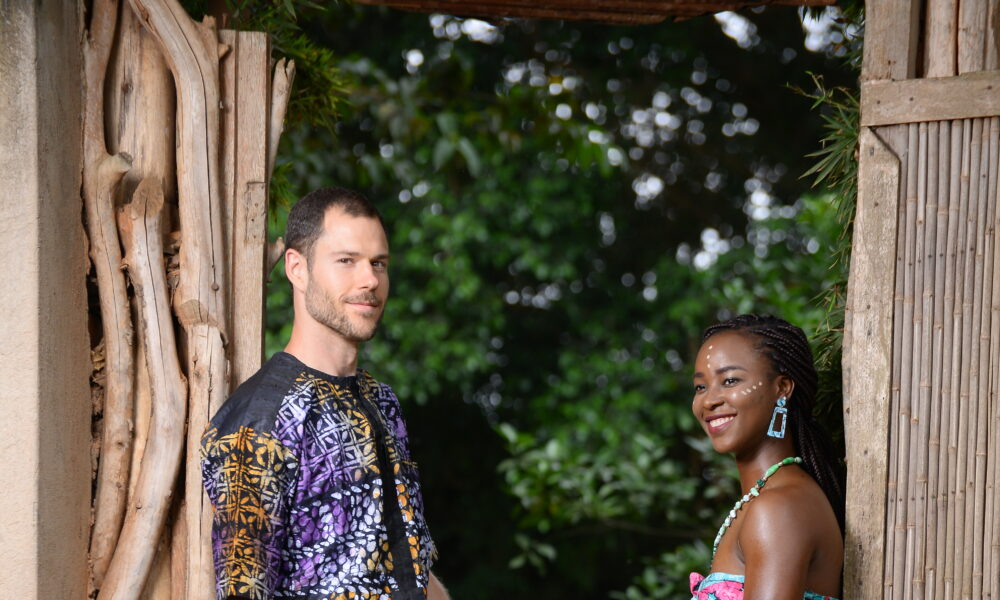
Moving to Nigeria is often associated with Nigerians returning after years abroad. For Pablo and Aanu, however, the decision became a family mission.
The couple left the United States in search of a slower and more intentional life. They first moved to Uganda before eventually settling in Nigeria in 2025.
Today, Pablo and Aanu are raising five children in Nigeria. Their journey has challenged their ideas about success, education, family and what it means to live well.
Their story also offers a different perspective on the popular idea that life abroad is always better.
America Did Not Match The Life They Wanted
Before moving to Nigeria, the family lived in the American Midwest.
Pablo worked as a university professor. The family also owned a comfortable home in the countryside.
Meanwhile, Aanu left her healthcare career to become a full-time mother.
By the time they considered leaving America, they had four children. Their home reflected both sides of their family heritage.
Nigerian food remained important to their household. They sometimes drove for hours to find authentic ingredients.
Nigerian music and Nollywood also filled their home.
The couple also made language part of their children’s upbringing. Aanu spoke Yorùbá with the children, while Pablo spoke Spanish.
The children learned English from their surroundings.
Despite those efforts, the couple felt that something was missing.
Aanu saw limited opportunities in her career. Pablo also felt that his academic income did not match the needs of their growing family.
More importantly, they wanted more than financial survival.
They wanted time, freedom and a stronger family life.
Their First Attempt Was Uganda
Pablo had always been interested in West Africa.
He wanted the family to experience Yorùbá culture directly. Nigeria, Togo and Benin were among the places he considered.
Aanu initially rejected the idea.
She had left Nigeria at 15 and spent much of her life in the United States. Like many members of the diaspora, she had absorbed negative stories about Nigeria.
Security concerns and economic difficulties shaped her perception of the country.
Her family also opposed the idea.
So, the couple looked toward East Africa instead.
They eventually chose Uganda.
The country offered what they wanted at the time. It had a warm climate, fertile land and a quieter pace of life.
In 2023, the family moved there.
Uganda Gave Them A Different Pace
Their two years in Uganda became an important period for the family.
The couple described the experience as a time of healing after years of living within a stressful Western system.
They searched for farmland and expanded their social media platforms.
They also entered the film industry.
Together, they wrote, produced and starred in their first feature film, My Love from Another Land.
The couple also launched their popular “How We Met” YouTube series.
Uganda became even more special when they welcomed another child.
Aanu gave birth to their daughter at home, on the living room floor.
However, the family eventually realised that Uganda was not their permanent destination.
One Visit To Nigeria Changed Everything
The turning point came during a short trip to Nigeria.
The family was still living in Uganda when they decided to visit.
That trip changed their perception of the country.
They felt that the negative image of Nigeria they had encountered in the diaspora did not reflect everything happening on the ground.
Their eldest daughter also played an unexpected role.
After experiencing Nigeria, she told her parents that she wanted to return.
For her, Nigeria meant food, family, fun and sunshine.
That simple observation stayed with Pablo and Aanu.
Soon, Nigeria became a serious option.
Education Became Another Reason To Leave Uganda
Education eventually strengthened their decision.
The couple had briefly enrolled their older children in school in Uganda. They became concerned about what they viewed as limitations within the formal education system.
They felt that the system could restrict creativity and discourage independent thinking.
They also objected to the limited use of native languages and certain disciplinary practices.
Most importantly, they wanted greater control over their children’s education.
They discovered that Uganda placed restrictions on foreigners regarding schooling. The country also prohibited homeschooling.
Nigeria offered them more flexibility.
The family could educate their children at home while remaining close to relatives.
That combination mattered to them.
They also saw economic opportunities that could support their long-term plans.
Their children were reportedly so excited about the move that they began packing almost immediately.
Moving To Nigeria Was Not Easy
Although the family wanted a new beginning, moving to Nigeria came with its own challenges.
For Pablo, language became one of the first major hurdles.
He had learned some Yorùbá from listening to Aanu speak with their children. However, he described his knowledge as “child Yorùbá.”
The local Ondo dialect presented another challenge.
It sounded different from the Yorùbá he had learned.
Pablo also encountered cultural experiences that surprised him.
Some everyday practices differed sharply from what he knew in the United States.
He also had to adjust to the attention that came with being perceived as an òyìnbó, or foreigner.
People often assumed that his appearance meant he had significant wealth.
That assumption attracted scammers and frequent requests for money.
The attention became difficult while he was also trying to keep his five children safe.
Aanu Experienced Reverse Culture Shock
Pablo was not the only person struggling to adjust.
Aanu also faced an unexpected challenge.
She had left Nigeria at 15. She returned roughly two decades later as a wife and mother of five.
She knew the language and had Nigerian roots. Yet adulthood in Nigeria was completely different from the country she remembered as a teenager.
She found herself relearning everyday life.
The economy had changed. The currency had changed. People had changed.
Aanu also struggled with how people viewed her.
Despite speaking Yorùbá fluently, she sometimes felt like an outsider.
She described feeling “not Nigerian enough” in her own country.
Colourism also became an emotional challenge.
She said she experienced comments about her complexion, including comparisons between her skin and that of her children.
At the same time, she watched Pablo deal with the opposite experience.
His lighter complexion often attracted preferential treatment and unwanted attention.
Both therefore had to adjust in different ways.
Nigeria Changed Their Definition Of Success
Their journey also changed what the couple considers a successful life.
For them, success is no longer simply about income or infrastructure.
They now place greater value on time and autonomy.
They want to control their daily routine. They want to grow their own food and spend more time with their children.
They also want to build a self-sustaining lifestyle.
That vision includes owning land, cultivating crops and creating a home that meets many of their family’s needs.
Their experience in America, Uganda and Nigeria helped shape that outlook.
Each country gave them something different.
America provided one kind of stability. Uganda offered space for healing and a slower rhythm.
Nigeria offered cultural connection, family support and the freedom to pursue the lifestyle they wanted.
Their Children’s Heritage Is Central To The Journey
Language remains one of the family’s biggest priorities.
Pablo and Aanu are raising their children to speak Yorùbá, Spanish and English.
They consider multilingualism an important inheritance.
For the couple, language provides more than communication.
It gives their children access to different cultures, histories and ways of understanding the world.
Their goal is to raise children who can move confidently between cultures.
At the same time, they want their children to remain connected to their Nigerian and Spanish heritage.
What They Hope To Build In Nigeria
The family’s long-term goal is self-reliance.
They want to own land and build a home connected to the natural environment.
Food security sits at the centre of that vision.
They want to grow food, provide for their family and teach their children practical skills.
However, their ambitions extend beyond their household.
They hope their lifestyle can eventually contribute to a stronger community.
For Pablo and Aanu, independence begins with having control over basic needs.
From there, they believe families can contribute more meaningfully to society.
A Different Way Of Looking At Home
Pablo and Aanu’s story does not suggest that everyone should leave America or move to Nigeria.
Instead, their experience challenges one popular assumption.
Living abroad does not automatically guarantee a better life.
For this family, a better life means having control over their time, raising their children according to their values and building stronger connections with family and culture.
Their journey from America to Uganda and finally Nigeria shows that home can be something people rediscover.
For Aanu, Nigeria was once the country she left behind as a teenager.
For Pablo, it became a place he had to learn from scratch.
Now, together with their five children, they are trying to build something that feels distinctly their own.
Their story shows that sometimes moving to Nigeria is not about moving backward.
For some families, it can be a deliberate step toward the life they always wanted.






Leave a comment