

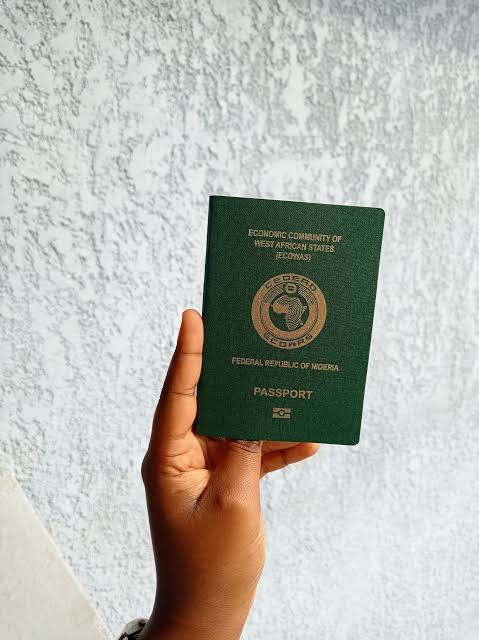
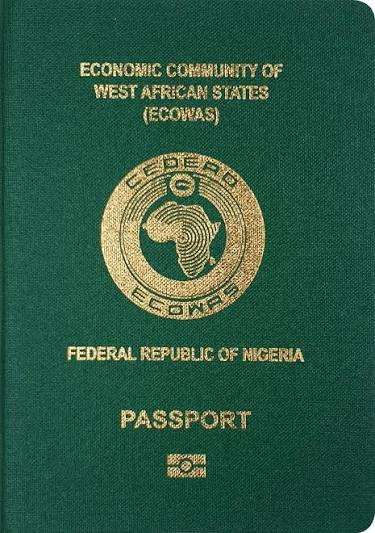
Nigeria’s passport has fallen to 181st out of 196 countries in the latest IziVisa Passport Ranking Index, with visa-free access shrinking to just 24 destinations. The plunge from 90th position in July 2026 is stark, and it demands an honest reckoning with what this ranking says about Nigeria’s standing in the world, what it costs the economy, and why a country of over 200 million people is being out-travelled by smaller, poorer and less endowed neighbours.
A History of Decline
The numbers tell a story of long-term erosion. In 2006, the Nigerian passport ranked 62nd globally . By 2010 it had fallen to 76th, by 2012 to 87th, and by 2015 to 95th . The lowest point came in 2021, when Nigeria ranked 103rd . There was a modest recovery: 98th in 2022, 97th in 2023, 95th in 2024, 94th in 2025, and 92nd in the 2026 Henley Passport Index, with 45 visa-free destinations .
But the Henley index and the IziVisa index use different methodologies. Henley, which assesses 199 passports against 227 destinations using International Air Transport Association data, placed Nigeria at 90th in July 2026 with 44 destinations . The IziVisa ranking, which assesses 196 countries, places Nigeria at 181st with 24 visa-free destinations . The discrepancy is significant, but the direction of travel is not in dispute. Whether measured at 90th or 181st, Nigeria’s passport is weak, and its mobility score has declined over two decades.

What the Ranking Means for the Economy
Passport strength is not a vanity metric. It is a proxy for institutional trust, diplomatic credibility and economic stability. Dr Nduneche Ezurike, a migration and global citizenship expert, put it plainly: “Passport power is the currency of the 21st century. Every time Nigeria moves from visa-on-arrival to visa-required access, it reflects declining international confidence in our security systems, identity management, and economic stability” .
The economic consequences are tangible. Nigerian entrepreneurs cannot attend business meetings, trade fairs or investment summits without navigating costly and time-consuming visa processes. Students face delays and rejections that push them towards competitors in Ghana, Rwanda or South Africa. Professionals seeking to participate in global conferences, fellowships or short-term assignments are deterred by the friction of application. The mobility gap limits Nigeria’s access to global opportunities and weakens its competitiveness .
Tourism suffers in both directions. Inbound tourism is constrained by Nigeria’s own restrictive visa regime, which has moved away from visa-on-arrival towards a stricter e-Visa system with heavier penalties for overstayers . Outbound tourism, which should be a source of soft power and cultural exchange, is hampered by the difficulty Nigerian passport holders face in obtaining entry to major destinations. A country that cannot move its people freely cannot fully participate in the global economy it claims to want.

How the World Sees Nigeria
The ranking is a diplomatic mirror. Migration experts argue that passport strength is a modern indicator of institutional trust and economic credibility . When Nigeria’s passport loses visa-free access, it is not merely an administrative inconvenience. It is a signal that other nations have assessed Nigeria’s security systems, identity management and economic stability and found them wanting.
The comparison with smaller African countries is uncomfortable. Benin Republic enjoys access to about 65 destinations, Ghana to 67, The Gambia to 68, Botswana to 81, and Namibia to 74 . These countries have achieved stronger mobility through deliberate diplomacy, stronger identity systems, regional cooperation and sustained international trust-building. Nigeria, with its vast population and economic weight, trails them.
The global community’s assessment is not driven by prejudice. As one analyst noted, “No country’s passport is categorised low because it is Africa, black or third-world, but on some key parameters like safety, infrastructure, stability of the economy, good governance, visa openness and easy access” .
Five Countries Nigeria Ranks Above
In the July 2026 Henley Passport Index, Nigeria shared the 90th position with the Democratic Republic of the Congo and Turkmenistan, all with 44 destinations . Countries ranked below Nigeria include;South Sudan (41 destinations), Sudan (41 destinations), Libya (39 destinations), Eritrea (38 destinations), Afghanistan (22 destinations, the world’s weakest passport)
The fact that Nigeria’s closest peers are countries emerging from conflict or international isolation is itself a verdict.
Five Countries Nigeria Shares Rankings With
In the July 2026 Henley Index, Nigeria was ranked alongside the Democratic Republic of the Congo and Turkmenistan . In the IziVisa index, Nigeria’s ranking of 181st places it in a different cohort, but the principle remains: Nigeria is grouped with countries whose passports offer minimal global access.
Five Countries Closely Higher Than Nigeria
In the July 2026 Henley Index, the countries immediately above Nigeria included those at 89th and 88th positions. The broader African comparison is more instructive: Ghana (70th globally, 67 destinations), Kenya (68th, 70 destinations), Morocco (67th, 71 destinations), Eswatini (67th, 71 destinations), Lesotho (66th, 73 destinations)
These are not wealthy countries. They are countries that have invested in the diplomatic and institutional work that makes a passport credible.

Why the Ranking Is Falling
The decline has multiple causes. Migration experts point to declining international confidence in Nigeria’s security systems, identity management and economic stability. The country’s National Identification Number infrastructure is not fully integrated with global biometric verification systems, which means other countries cannot easily verify the identity of Nigerian applicants.
Diplomatic reciprocity is another factor. When Nigeria imposes strict visa requirements on citizens of other countries, those countries respond in kind. The recent tightening of Nigeria’s own immigration rules, including the discontinuation of visa-on-arrival and the introduction of heavier penalties for overstayers, may have diplomatic consequences that are not yet fully visible .
The global environment has also shifted. Recent data shows Schengen visa rejection rates for African applicants reaching nearly 27 per cent, and many African governments are citing “lack of reciprocity” as a reason to tighten their own entry requirements. The trend towards stricter border controls affects all African passports, but Nigeria’s weak institutional foundations make it more vulnerable than most.
Recent Immigration Changes Affecting Nigeria
Several recent developments have affected Nigerian travellers.
The United Kingdom has digitised its visa process for Nigerians. From 25 February 2026, all Nigerian nationals applying for a UK visit visa receive an eVisa rather than a physical sticker, with the application requirements otherwise unchanged . The move is presented as an efficiency and security measure, but it does not expand access. It streamlines the process of applying for a visa that was already required.
The United States has continued its restrictive trajectory on immigration. Congressional activity in 2026 has focused on border security, enforcement and tightening eligibility for benefits and employment authorisation, with multiple bills passed or reported that add to grounds of inadmissibility and deportability . For Nigerians, the practical effect is a visa regime that remains difficult, expensive and uncertain.
Within Africa, the picture is mixed. Ethiopia restored visa-on-arrival access to Nigerians following diplomatic engagement, a rare win noted by Nigerian officials . But other African countries, including Ethiopia, Zambia, Zimbabwe, Lesotho, Somalia, Mauritania and São Tomé and Príncipe, have moved Nigeria into stricter visa categories in recent years . The continental trend towards reciprocity and stricter controls is working against Nigerian mobility.
How to Improve
The solutions are not mysterious. Dr Ezurike has recommended the establishment of a National Mobility Taskforce involving Immigration, Foreign Affairs, NIMC and security agencies to pursue the restoration of lost visa-free destinations . He advocates stronger reciprocal visa negotiations and the full integration of Nigeria’s National Identification Number infrastructure with global biometric verification systems .
Beyond that, Nigeria needs to address the underlying drivers: security, economic stability, governance and infrastructure. Countries that have improved their passport rankings, from Rwanda to the United Arab Emirates, did so by investing in digital governance, institutional credibility, diplomacy and national reputation management . Passport strength is not an immigration policy problem. It is a national development problem.
Conclusion: The Cost of a Weak Passport
A passport ranking is not an abstract statistic. It determines whether a Nigerian entrepreneur can close a deal in Dubai, whether a student can attend a conference in London, whether a family can visit relatives in Houston without months of uncertainty. It shapes how the world sees Nigeria and how Nigerians see themselves.
The country’s passport has fallen from 62nd in 2006 to 90th in July 2026 and to 181st in the latest IziVisa index. The direction is clear. Until Nigeria addresses the institutional failures that make its passport untrusted, the ranking will continue to fall, and the cost will be borne by every Nigerian who seeks to move, trade or learn beyond the country’s borders.









Leave a comment