

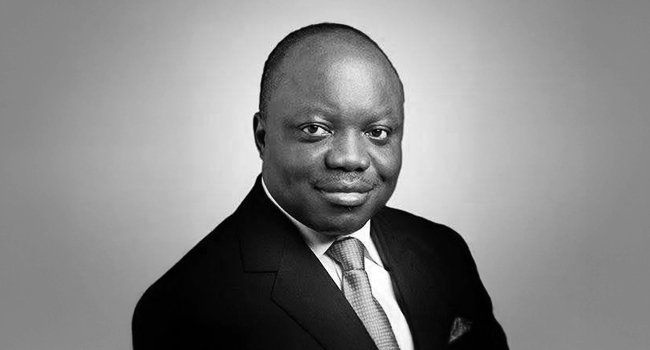
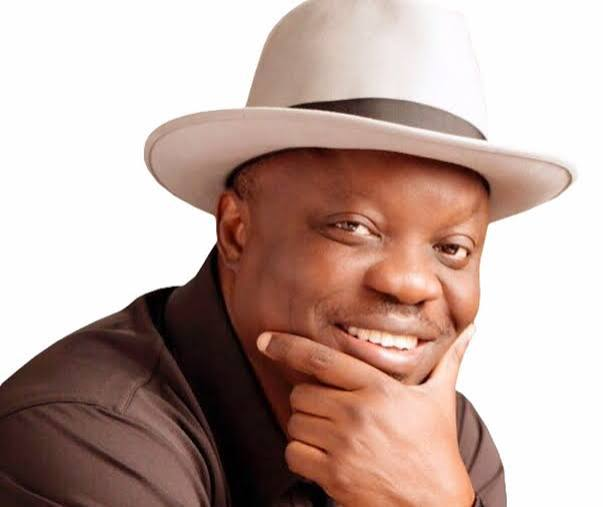
Emmanuel Eweta Uduaghan died on the morning of 19 October 2026 in an Abuja hospital after a period of illness. He was 71, and would have turned 72 on 22 October. He had spent sixteen years in Delta State’s public service, rising from Commissioner for Health to Secretary to the State Government to Governor. But the measure of the man is not in the offices he held. It is in the question he asked long before it became fashionable in Abuja: what happens to an oil state when the oil runs out?
From the Clinic to Government House
Uduaghan was a medical doctor by training. His entry into government came in 1999, when Governor James Ibori appointed him Commissioner for Health. Four years later, he became Secretary to the State Government. By 2007, he had completed an eight-year apprenticeship in the executive and succeeded his cousin as governor, serving two terms until 2015 .
His first term was nearly cut short. In November 2010, the Court of Appeal nullified the 2007 election following a challenge by Great Ogboru. Uduaghan returned to Government House only after winning the January 2011 rerun, and he went on to secure a second term. The episode left him with a reputation for resilience that his allies would later cite as evidence of his political durability.
The Three-Point Agenda and the Delta Beyond Oil Vision
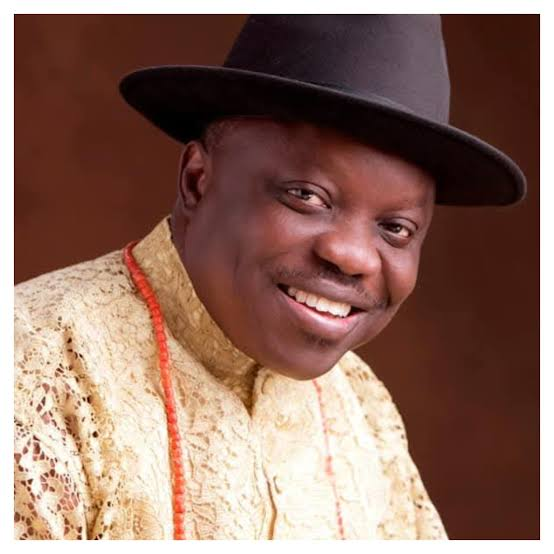
Uduaghan’s governorship was structured around a Three-Point Agenda: Peace and Security, Human Capital Development, and Infrastructure Development . But the policy that defined him, the one that outlived his tenure and entered the national lexicon, was Delta Beyond Oil.
The logic was simple and, in retrospect, prophetic. Delta State derived the bulk of its revenue from crude oil. Oil was finite. A state that did not prepare for the day the oil would run out was a state that had no future. Uduaghan’s administration promoted agriculture, tourism, manufacturing and small and medium enterprises as alternative economic pillars. He supported the federal amnesty programme because, as he put it, no investment would come if pipelines were blowing up.
His critics were less generous. One columnist dismissed his legacy claims as “typical emptiness of the Nigerian politician.” The criticism was sharp, but it missed the larger point. Uduaghan’s significance was not that he solved Delta’s problems. It was that he named one of them before it became conventional wisdom to do so.
The Programmes That Touched Ordinary Lives
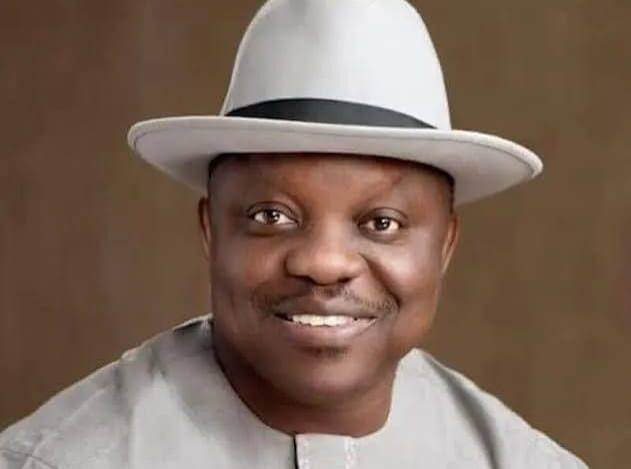
For all the policy language, Uduaghan’s administration produced programmes that ordinary Deltans could see and feel.
His background as a physician shaped his health initiatives. The Free Maternal Healthcare Programme and the Free Under-Five Healthcare Programme removed financial barriers to care for pregnant women and young children. His former Commissioner for Information, Chike Ogeah, described the initiative as one that “revolutionised health services in Nigeria because it was unknown in the country” .
In education, the EduMarshal project was designed to keep children in school during school hours. Parents whose children were found hawking during class time were apprehended and prosecuted. A scholarship scheme awarded N5 million to Delta indigenes who graduated with first-class degrees from Nigerian universities, enabling them to pursue further studies anywhere in the world.
The infrastructure record is visible across the state. The Asaba International Airport stands as his most enduring physical monument, a project that opened up Delta North to investment and travel . Roads and bridges linking riverine communities to the mainland were part of his eight-year building programme.
The Mentor and the Builder of People
The tributes that followed his death revealed a dimension of Uduaghan’s legacy that infrastructure cannot capture: his role as a mentor.
Senator Joel-Onowakpo Thomas, representing Delta South, described Uduaghan as his “political father” and said the former governor “did not just build infrastructure; he built people”. Uduaghan appointed Thomas chairman of Isoko South Local Government Area after the 2007 elections, and in 2009 made him the first Executive Chairman of the Delta State Board of Internal Revenue. “That singular act of confidence changed my life forever,” Thomas said.
The senator recalled that even after leaving office, Uduaghan remained someone he could turn to for advice. “Deltans have lost a detribalised leader, Isoko nation has lost a true friend, and I have lost the very man who considered my growth as his personal responsibility,” he said.
The Political Journey and Its Contradictions
Uduaghan’s post-governorship years were less certain. He left office in 2015 and sought a Senate seat for Delta South, first under the PDP and later under the APC, but the bid failed. He moved between the two parties with a frequency that some found difficult to track: from PDP to APC in 2018, back to the PDP in 2020, and back to the APC again in May 2025.
His political identity was always intertwined with that of Ibori, his cousin and predecessor. President Tinubu’s condolence message specifically named Ibori among those to whom he extended sympathies, a recognition of the familial and political bond that shaped both men’s careers .
The Tributes and the Question
The tributes that followed his death were generous. President Tinubu described him as “a public servant whose leadership was devoted to Delta State’s development and service to our nation”. Governor Sheriff Oborevwori called him “a detribalised leader whose contributions to the development of the state would not be forgotten” and declared three days of mourning, with flags flown at half-mast. Senator Orji Kalu described him as “an accomplished medical doctor, experienced administrator and dedicated public servant” . The Christian Association of Nigeria noted his commitment to dialogue and national unity during periods of political tension.
But tributes are not assessments. The honest assessment of Uduaghan’s legacy must hold two truths together. He was a governor who built tangible things: airports, roads, hospitals, and a generation of leaders who credit him with their start. He was also a politician whose state remained dependent on oil revenues throughout his tenure and beyond, and whose Delta Beyond Oil vision, however prescient, did not fundamentally transform the economy of a state that still waits for the diversification he preached.
His daughter, Orode Uduaghan, the APC candidate for Warri North I Constituency, captured the personal loss in a brief post: “Thank you for everything. I love you yesterday, today and forever. Sleep well Papa” .
His death came three days before his 72nd birthday. He did not live to see whether the state he governed for eight years would ever fully answer the question he posed. That question, more than any airport or stadium, is the legacy that matters. Delta, and Nigeria, are still trying to answer it.






Leave a comment