

Our Political Analysis Desk
The Kwara State governorship contest has evolved from a localized succession battle into a political laboratory that reveals much about the fragility of Nigeria’s ruling party structures and the opportunistic resilience of its opposition.
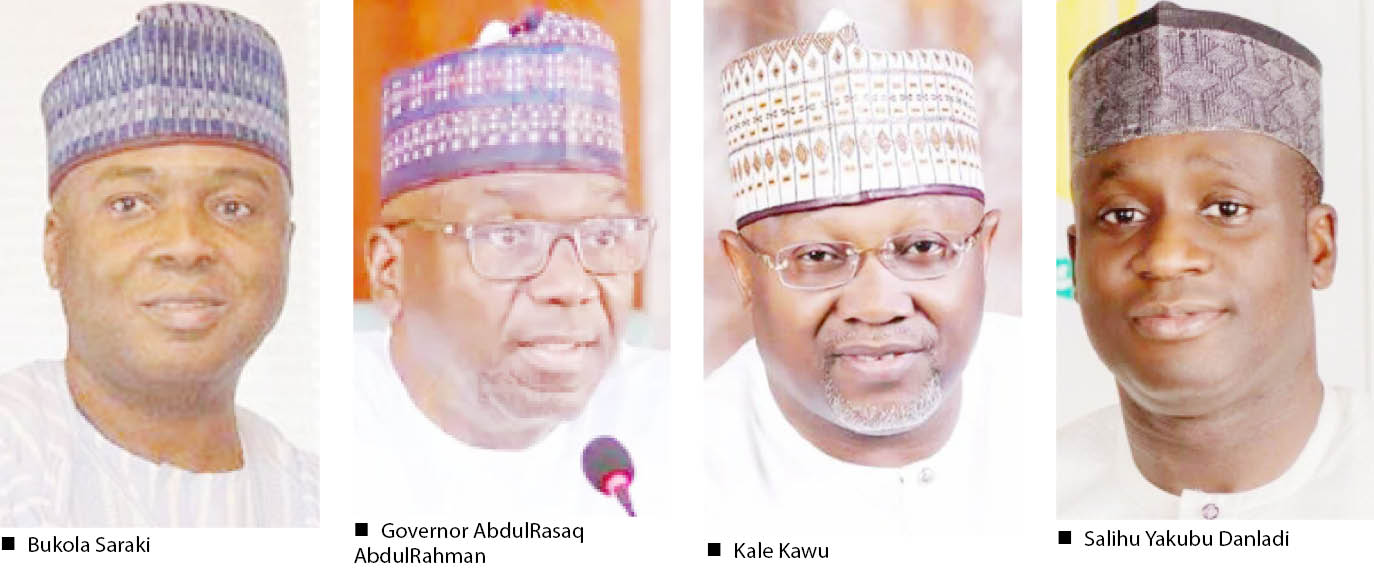
The emergence of Speaker Salihu Yakubu Danladi as the All Progressives Congress candidate, following a primary marked by eleventh-hour reversals, suspended exercises, and the public abandonment of Governor AbdulRahman AbdulRazaq’s preferred successor, Ambassador Abdulfatai Yahaya Seriki, is not merely an internal party affair, it is a seismic event whose shockwaves will reverberate across the 2027 electoral landscape.
It influencing everything from President Bola Tinubu’s Southwest consolidation strategy to the Peoples Democratic Party’s quest for relevance and the broader question of whether incumbency remains an automatic advantage in Nigerian politics.
The Abuja Factor and the Limits of Gubernatorial Power
The most significant revelation from the Kwara APC primary is the definitive demonstration that no governor, regardless of his performance or popularity, can unilaterally determine his successor when the presidency has a competing interest.
Governor AbdulRazaq, who led the Otoge revolution that ended the Saraki dynasty’s decades-long dominance, who won re-election with improved margins, and who has governed without major scandal, publicly endorsed Seriki, secured the withdrawal of eight other aspirants, and appeared to have engineered a seamless succession.
Yet within 24 hours, the entire arrangement collapsed, and Danladi, a candidate from Kwara North, a zone that has governed for less than two years since 1967, emerged as the consensus figure, reportedly with the backing of powerful blocs in Abuja who overrode the governor’s preference.
This dynamic has profound implications for the 2027 presidential election. It signals to every APC governor seeking to anoint a successor that their political survival depends not on their state-level achievements but on their alignment with the presidency’s broader strategic calculations.
For President Tinubu, who faces re-election in 2027, the ability to shape governorship tickets across the federation is not merely about loyalty, it is about building a national turnout machine. A candidate like Danladi from Kwara North, a zone that has long agitated for power, could energise a previously apathetic voting bloc and deliver higher margins for the presidential ticket than Seriki from Ilorin Central, where APC votes are already assured.
However, this top-down intervention carries significant risks: aggrieved governors and their supporters may respond with strategic ambivalence during the presidential election, withholding the kind of grassroots mobilisation that separates victory from defeat.
The Kwara outcome will be closely watched by governors in Kano, Lagos, and Rivers, all of whom are navigating similar succession battles and will calibrate their loyalty to Tinubu based on whether they perceive his interventions as helpful or threatening.
The Otoge Generation and the Credibility Question
The 2019 Otoge movement was not merely a political slogan; it was a generational uprising against the Saraki political machine, driven by young people, civil servants, and business owners who believed that the APC represented a clean break from dynastic rule, corruption, and stagnation.
The movement’s central promise was that power would no longer be a family heirloom but a tool for inclusive development. Six years later, the credibility of that promise is being tested in ways that could depress turnout among the very voters who made Otoge possible.
The chaotic primary process, the perception that Abuja imposed a candidate against the governor’s will, and the lingering suspicion that zoning was weaponised to settle political scores rather than to advance equity, all contribute to a growing narrative that the APC has become indistinguishable from the PDP it replaced.
For the 2027 presidential election, this matters enormously. Kwara State delivered a substantial margin for President Tinubu in 2023, built on the enthusiasm of the Otoge coalition and the governor’s coattails.
If that coalition fragments due to disillusionment with the succession process, the APC could face a significant drop in turnout and vote share in a state that is critical to Tinubu’s Southwest-to-Northwest electoral bridge.
Young voters in particular, who were the foot soldiers of Otoge, are notoriously unforgiving of political betrayals. Many are already questioning what has changed since 2019, pointing to persistent infrastructure deficits, economic hardship, and the perception that the new political class has simply replaced the old without transforming governance.
A low-turnout election in Kwara could ripple across the Southwest, diminishing the APC’s ability to claim a clean sweep of the region and potentially forcing Tinubu to invest more resources in shoring up votes elsewhere.
Saraki’s Second Wind and the Opposition’s Window
For former Senate President Bukola Saraki, the Kwara APC primary chaos represents the most significant political oppourtunity he has had since the Otoge tsunami swept him and his structure into the political wilderness.
The PDP’s consensus choice of Engineer Kale Kawu, a technocrat with a clean record and grassroots connections, combined with the party’s decision to avoid a bruising primary by securing the withdrawal of all other aspirants, stands in stark contrast to the APC’s bloody, televised disarray.
Saraki has learned from 2019; he is not repeating the mistake of forcing a family member or a loyalist onto the ticket. Instead, he is positioning the PDP as the party of unity, process, and inclusion, allowing the APC to self-destruct while quietly rebuilding alliances across the state’s three senatorial districts.
The impact on the 2027 presidential election is direct and potentially transformative. If Saraki successfully reclaims Kwara for the PDP in the governorship race, the psychological and organizational boost to the opposition cannot be overstated.
A PDP victory in Kwara would break the APC’s monopoly on the Southwest, create a pathway for opposition messaging that the Otoge revolution has failed, and provide Saraki with a governorship structure that could deliver votes for any presidential candidate he chooses to support.
Conversely, if the APC manages to reconcile its factions and Danladi wins, Saraki’s political obituary may finally be written, and the PDP’s already weakened national standing would suffer another blow.
The stakes are existential for both men, and the outcome will be interpreted nationally as a bellwether for whether incumbency and federal might can overcome internal dysfunction.
Zoning, Ethnic Arithmetic, and the North’s Political Calculus
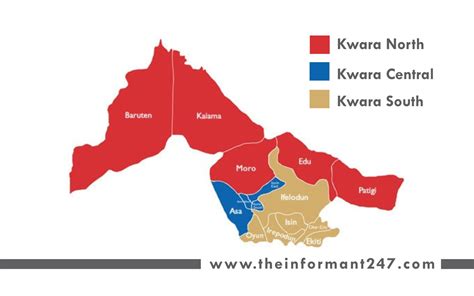
The decision to zone the APC ticket to Kwara North is unprecedented and carries both electoral promise and peril. Kwara North has never produced a democratically elected governor; its three local government areas, Baruten, Edu, Patigi, and Kaiama, have been politically marginalised despite their contributions to the state’s economy.
The agitation for power shift has been growing for decades, and by choosing Danladi, the APC has the oppourtunity to galvanise a voting bloc that has historically turned out in lower numbers due to alienation.
If Danladi can consolidate support across Kwara North’s diverse ethnic groups, Nupe, Baruba, Fulani, and others, and if he can secure credible running mates from Kwara South and Kwara Central, the APC could assemble a coalition that mirrors Nigeria’s own delicate federal balance.
However, the Ilorin factor complicates this arithmetic. The Ilorin Emirate, which dominates Kwara Central, accounts for a significant percentage of the state’s total votes.
Political pundits have long doubted that Ilorin voters would support a non-Ilorin indigene for governor, noting that ethnic and traditional loyalties often override party affiliations. Danladi’s campaign must therefore invest heavily in convincing Ilorin voters that his candidacy represents progress, not exclusion, and that he will govern with fairness.
If he fails, and if Ilorin voters either stay home or vote for the PDP’s Kawu, his path to victory narrows considerably. For the 2027 presidential election, this dynamic illustrates a broader truth about Nigerian politics, zoning can energise marginalized groups but also risks alienating dominant groups, requiring careful balancing that many parties fail to achieve.
The Wild Cards — ADC’s Zakari Mohammed and the Protest Vote
The emergence of the African Democratic Congress candidate, Zakari Mohammed, a former House of Representatives member from Baruten in Kwara North, adds a third dimension to the contest that could prove decisive in a close election.
Mohammed is a kinsman of Danladi, sharing both ethnic and local government origins. His candidacy threatens to split the Kwara North vote, denying Danladi the consolidated bloc he needs to offset potential losses in Ilorin.
For voters who feel that the APC imposed Danladi without adequate consultation or who have grievances against the party’s internal processes, Mohammed offers a protest option that is not the PDP, a way to punish the ruling party without rewarding Saraki’s return.
The ADC lacks the financial muscle of the two major parties, but in an election that could be decided by margins of tens of thousands of votes, a spoiler effect is not trivial.
For the presidential election, the ADC’s performance in Kwara will be watched as an indicator of the health of Nigeria’s multi-party system. If Mohammed attracts significant votes, it could encourage other ADC candidates across the country, potentially fragmenting the opposition in ways that benefit the APC.
If he is marginalized, it reinforces the two-party dominance that has characterised Nigerian politics since 1999. The APC’s national leadership will be monitoring Kwara closely, ready to deploy federal resources to either absorb the ADC through co-optation or neutralise its impact through targeted messaging.
Kwara as Microcosm
The battle for Kwara in 2027 is not an isolated state election; it is a microcosm of the national political struggle, revealing the fault lines of incumbency, the limits of presidential power, the resilience of dynastic politics, and the fickleness of voter enthusiasm.
For President Tinubu, a loss in Kwara would be a significant embarrassment, undermining his claim to have consolidated the Southwest and weakening his negotiating position with other regional power blocs.
For the PDP, a victory would be the first major crack in the APC’s electoral fortress, providing momentum and a narrative of resurgence.
For the people of Kwara, the election offers a choice between continuity with a new face, return to a familiar dynasty, or a protest against both.
Whatever the outcome, the lessons learned in Ilorin will echo across Nigeria’s political landscape, shaping strategies, alliances, and voter behaviour in ways that will determine who governs Nigeria from 2027 onward.








Leave a comment