

Our Political Analysis Desk
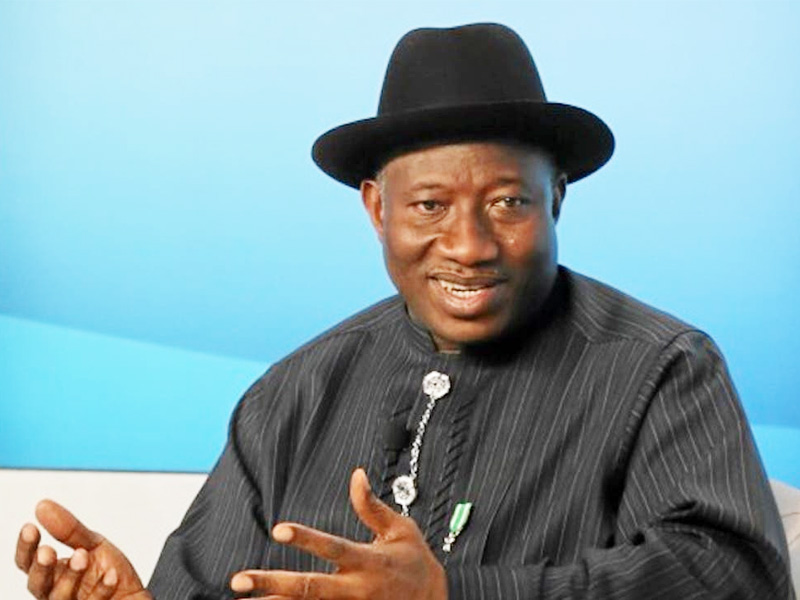
Several years of covering Nigeria’s turbulent political landscape have taught us that no narrative captivates the national imagination quite like the return of a former leader, and the current clamour for the emergence of former President Goodluck Jonathan as the presidential candidate of the Peoples Democratic Party is a masterclass in political nostalgia masking strategic bankruptcy.
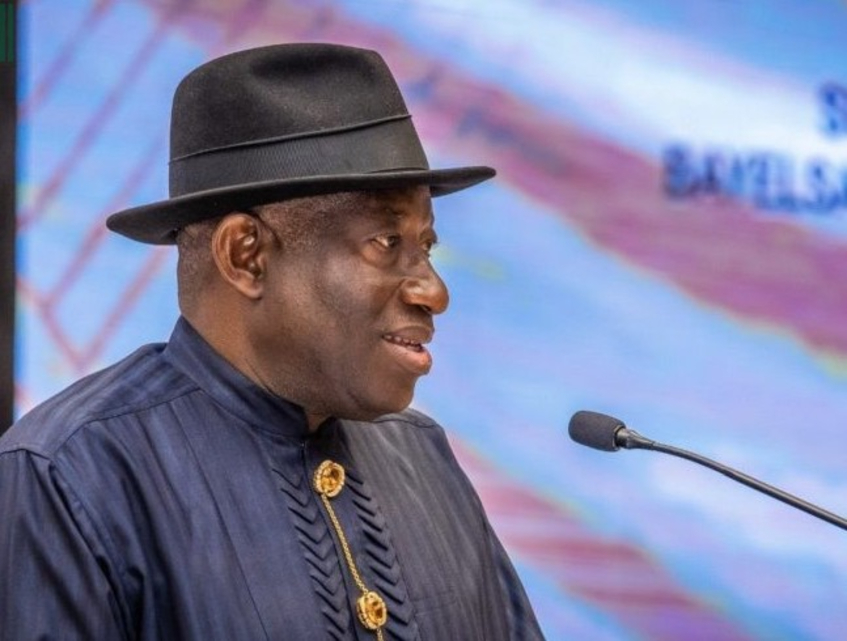
The speculation has reached fever pitch, fuelled by court cases determining his eligibility, reports that the Turaki-led PDP has cleared Jonathan as its sole presidential aspirant, and a steady drumbeat of endorsements from politicians who once abandoned him in 2015 but now sing his praises as though he were an angel descended from heaven. Yet any seasoned analyst who looks beneath the surface sees a conundrum that reveals more about the PDP’s desperation than about Jonathan’s electability.
The current PDP is a shadow of the formidable machine that ruled Nigeria for sixteen uninterrupted years, now factionalised, weakened by defections, and bleeding from internal wounds that have reduced the once-ruling party to a fragmented shell. The Supreme Court’s judgment, while purporting to restore order by nullifying the Ibadan National Convention and affirming the suspension of Senator Samuel Anyanwu, has only deepened the chasm between the Wike faction and the Makinde camp, leaving the party in a state of suspended animation as the 2027 election clock ticks louder.
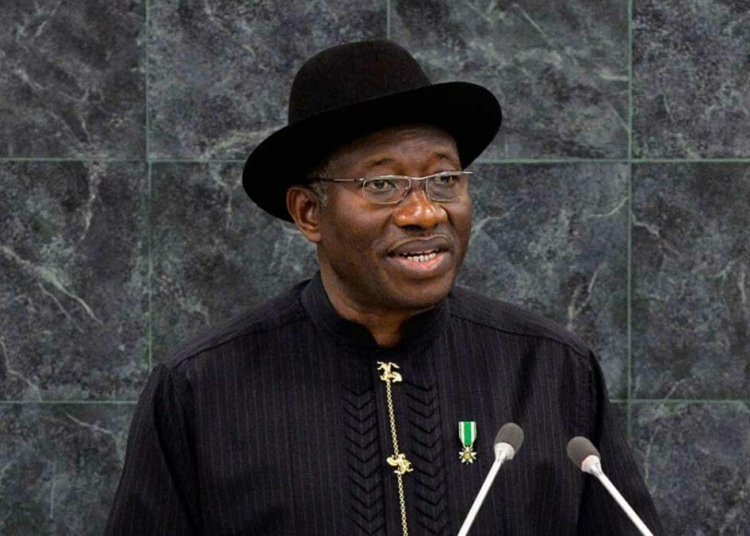
Into this chaos steps the spectre of Jonathan, a man whose entire political career has been defined not by the building of a formidable political base but by what he himself has called “a political miracle”—a series of providential accidents that propelled him from deputy governor to governor to vice president to president following the death of Umaru Yar’Adua.
Jonathan’s rise was providence, not strategy; fate, not organisation, and that distinction matters enormously when considering his ability to challenge President Bola Tinubu, who has spent the last several years methodically constructing a political juggernaut that has swallowed five opposition governors, 78 of 109 senators, and over 280 House of Representatives members, creating a machinery of incumbency that no opponent lacking a robust political base struggle to penetrate.
The confusion surrounding Jonathan’s intentions is itself a window into the dysfunction of the opposition. Some sources insist he has endorsed Peter Obi, pointing to the former Labour Party candidate’s refusal to attack Jonathan as evidence of a quiet understanding. Others report that he is being actively encouraged by a cabal of Northern politicians who see him as a pliable candidate capable of winning sympathy votes without demanding the structural changes that a truly competitive opposition would require.
At one point, his wife, Dame Patience Jonathan, appeared to pour cold water on the speculation, stating that she was pleased to have peace after the tremours of serving the country, a statement that many interpreted as a wife’s plea for her husband to stay retired. Yet the rumours persist, amplified by the recent circulation of a purported automatic presidential ticket award from a faction of the PDP, a document of dubious authenticity that has nevertheless inflamed the political imagination.
The mixed signals from Jonathan’s camp,silence from the man himself, denials from some aides, cryptic statements from others, send all the wrong messages to a electorate that craves clarity and conviction.
What Jonathan possesses, and what makes him so dangerously attractive to a directionless PDP, is goodwill and nostalgia. The goodwill stems from his singular act of statesmanship in 2015, when he called President-elect Muhammadu Buhari to concede defeat before the final results were even announced, thereby averting the bloodshed that many had predicted.
This phone call has burnished his legacy to a shine that his actual governance record never achieved, and even his former critics, like Senator Dino Melaye, have publicly apologised, declaring “once I was blind, now I can see,” while Governor Abdullahi Ganduje famously called Jonathan “an angel” for his peaceful concession.
The nostalgia is more visceral, Nigerians remember, or believe they remember, that the economy was more stable during Jonathan’s tenure, that subsidy removal was not yet a nightmare, that the naira had not yet collapsed to its current depths, and that average families could afford basic necessities without selling their souls.
In the crushing poverty of the Tinubu era, with its harsh reforms and mounting hardships, the Jonathan years have been retrospectively romanticised into a golden age of relative sustainability.
But is goodwill and nostalgia enough to win a presidential election in Nigeria’s current political climate? The answer, from where I sit after fifteen years of watching elections won and lost, is an emphatic no.
Jonathan’s goodwill, however genuine, does not translate into a political movement. The Obidient movement that propelled Peter Obi to a stunning third-place finish in 2023 was a grassroots, digitally native, youth-driven insurgency that registered millions of new voters and created a cult of personality around its candidate. Jonathan lacks anything remotely comparable. He has no street-level army, no social media machinery, no identifiable base of young supporters willing to volunteer, canvass, and die on the hill of his candidacy.
His political network, such as it exists, is composed largely of the same PDP chieftains who lost the 2015, 2019, and 2023 elections,men more interested in accessing state coffers than in transforming Nigeria’s political economy. Without a thorough political movement, Jonathan would enter the 2027 race as a soloist in an orchestra that has not rehearsed, competing against Tinubu’s finely tuned ensemble of governors, senators, local government chairmen, and ward-level loyalists.
There is also the vexed question of constitutionality. Jonathan served one full term as president from 2011 to 2015, following an earlier partial term from 2010 to 2011 after Yar’Adua’s death. The Nigerian Constitution, in Section 137(1)(b), disqualifies any person who has been elected to two terms of office as president. The debate over whether Jonathan’s partial term counts as a full term has now landed in the courts, with a judgment expected on May 26, 2026, that could either clear him to run or slam the door on his ambition.
The legal uncertainty alone is enough to give serious political investors pause, for no rational political actor would pour resources into a candidacy that could be invalidated by a single judicial pronouncement. In Nigeria’s litigious political landscape, where election petitions drag on for years and the courts have become a weapon of political warfare, Jonathan’s eligibility question is a sword hanging over any campaign before it even begins.
Potential voters and financiers who would otherwise consider him must weigh the risk of investing their political capital in a candidate who could slip through the cracks of legal shenanigans before the first ballot is cast.
Yet the fact that Jonathan is being considered at all tells us something profound about the state of the Nigerian opposition. It tells us that after years of losing elections, the PDP and its allies have still not learned the basic lesson that elections are won by structures, not messiahs; by organisation, not nostalgia; by grassroots presence, not goodwill from a phone call made a decade ago.
The opposition parties are still working in silos, unable to forge the kind of unified, ideologically coherent alternative that could challenge the APC’s dominance. They are still searching for a messianic presidential candidate who will magically solve their organisational problems, rather than doing the hard, unglamorous work of building party structures in all 774 local governments, training agents, registering voters, and creating a shadow government ready to govern.
Jonathan’s consideration is a symptom of this pathology,a lazy reach for a familiar face who once held the office, rather than a strategic effort to build something new and sustainable.
Some analysts have suggested that Jonathan’s emergence would serve as a spoiler for Peter Obi, siphoning votes from the South-East and South-South where both men command followings.
A Jonathan candidacy would scramble that calculation, potentially pulling back some of those voters who feel a lingering loyalty to the former president. Yet Obi has played down the Jonathan factor, stating through his spokesperson that he is “focused on rebuilding Nigeria, not on who is contesting,” a diplomatic deflection that masks the real anxiety within the Obidient movement about what a Jonathan candidacy would mean for their coalition.
What Obi has that Jonathan lacks is a thorough, if still developing, political movement, the Obidient structure that spans Nigeria’s diaspora, its universities, its professional associations, and its digital spaces. Albeit recently troubled by some factionalisation, Jonathan has none of that, and without it, even a spoiler role would be limited.
My considered view, after years of watching Nigerian politicians mistake nostalgia for electability, is that Jonathan should continue his statesmanly posture as a former president serving Nigeria in ECOWAS and on international peace missions, making statements that speak truth to power and serving as a moral compass for a nation that has lost its bearings.
He has earned that role through his peaceful concession in 2015, through his quiet diplomacy in crisis zones across Africa, and through the dignity with which he has conducted himself since leaving office.
To throw that legacy away on a quixotic presidential campaign in a party that cannot even agree on who its national chairman is, against an incumbent who has built a machine of staggering proportions, would be to court disgrace and watch his former glory wane.
The PDP should instead focus on rebuilding itself from the ground up, learning from the APC’s organisational playbook, and presenting a candidate who is not a nostalgic throwback but a forward-looking leader with a clear vision, a strong base, and a clean legal slate. Until it does that, the clamour for Jonathan will remain what it has always been; the desperate gasp of a party that has forgotten how to win, reaching for a ghost when it needs an army.










Leave a comment