

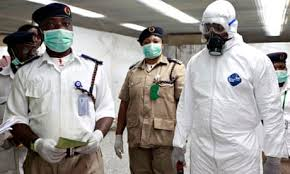
Nigeria has identified 21 states and the Federal Capital Territory (FCT) as areas facing an elevated Ebola infection risk following fresh outbreaks in parts of Africa.
The announcement came from the Nigeria Centre for Disease Control and Prevention (NCDC), which has intensified preparedness efforts across the country. Although Nigeria has not recorded any confirmed Ebola case linked to the current outbreaks, health authorities say the threat of importation remains significant.
The latest assessment follows increasing Ebola cases in the Democratic Republic of Congo (DRC) and Uganda, prompting officials to strengthen surveillance and response measures nationwide.
NCDC Identifies High-Risk States
NCDC Director-General, Jide Idris, disclosed the development on Thursday while addressing concerns over the spread of Ebola in the region.
According to the agency, the states classified as high risk include Lagos, Rivers, Kano, Enugu, Borno, Akwa Ibom, Cross River, Taraba, and Adamawa. The Federal Capital Territory also falls within the high-risk category.
Health officials based their assessment on several factors. These include the presence of international airports, active trade routes, cross-border movement, and porous land borders.
Mr Idris explained that Nigeria remains vulnerable because of its extensive travel connections within Africa and beyond.
“The risk of Ebola importation into Nigeria is high because of international travel, regional population movement, porous borders, and extensive trade networks,” he said.
Moderate-Risk States Require Close Monitoring
In addition to the high-risk locations, the NCDC placed several states under a moderate-risk category.
These states include Ogun, Nasarawa, Kaduna, Plateau, Kogi, Niger, Jigawa, Katsina, Bauchi, Ebonyi, Abia, and Bayelsa.
The agency said these states must maintain strong surveillance systems and remain prepared to respond quickly if any suspected case emerges.
Furthermore, the NCDC urged health authorities in these areas to continue monitoring unusual illness patterns and strengthen disease detection mechanisms.
Officials noted that the classification resulted from a fresh dynamic risk assessment conducted in response to the worsening outbreak situation in East and Central Africa.
Rising Cases in DRC and Uganda Raise Concerns
The NCDC pointed to growing Ebola infections in the Democratic Republic of Congo and Uganda as a major reason for heightened vigilance.
According to the agency, health authorities in the affected countries have reported 1,077 suspected Ebola cases and 247 deaths.
People between the ages of 14 and 45 account for most of the infections recorded during the current outbreak.
The World Health Organisation has also declared the situation a Public Health Emergency of International Concern. Consequently, Nigerian authorities believe immediate preparedness measures are necessary.
Health experts warn that Ebola symptoms can resemble those of malaria and Lassa fever. As a result, healthcare workers may face challenges in detecting infections quickly if they do not maintain a high level of suspicion.
No Approved Vaccine for Current Ebola Strain
The NCDC revealed that the outbreak involves the Bundibugyo strain of the Ebola virus.
According to the agency, no approved vaccine or targeted treatment currently exists for this strain. Therefore, rapid response measures remain the most effective defence against transmission.
Mr Idris stressed the importance of early detection, isolation of suspected cases, contact tracing, infection prevention, and supportive medical care.
He also clarified that Ebola does not spread through the air.
Instead, the virus spreads through direct contact with infected blood, body fluids, contaminated surfaces, or infected animals.
Because of this, health authorities continue to emphasise personal hygiene, proper protective equipment, and strict infection-control practices.
States Ordered to Strengthen Preparedness
The NCDC has directed state governments to activate emergency response systems without delay.
Authorities must increase surveillance at airports, land borders, and other entry points. They must also prepare isolation centres and provide frontline health workers with adequate protective equipment.
Additionally, the agency instructed all affected states to submit readiness reports within 72 hours.
Officials must immediately report any suspected Ebola infection, unusual fever outbreak, or high-risk exposure event.
The NCDC believes these measures will improve the country’s ability to detect and contain potential cases before wider transmission occurs.
Nigeria’s Previous Ebola Success Offers Hope
Nigeria previously demonstrated its ability to respond effectively to Ebola outbreaks.
In 2014, an infected Liberian-American traveller arrived in Lagos and triggered one of the country’s most serious public health emergencies.
However, Nigerian health authorities successfully contained the outbreak through swift action, aggressive contact tracing, and coordinated public health interventions.
That experience remains an important reference point as officials work to prevent another Ebola outbreak.
Nigeria has heightened its preparedness efforts after identifying 21 states and the FCT as vulnerable to Ebola infection risk. While no confirmed case currently exists in the country, health authorities remain on alert due to rising infections in the DRC and Uganda.
The NCDC has called on state governments, healthcare institutions, and frontline workers to strengthen surveillance and response systems. With early detection and rapid action, officials hope to prevent any Ebola importation and protect public health across the country.











Leave a comment