

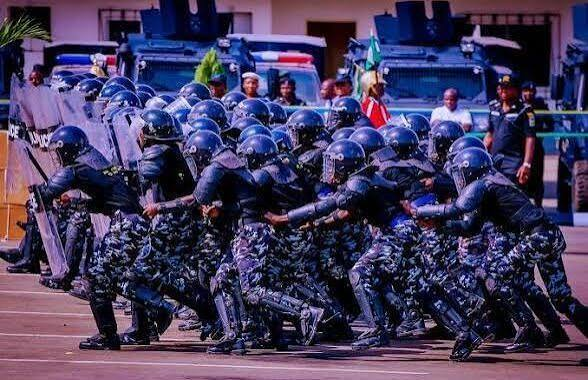
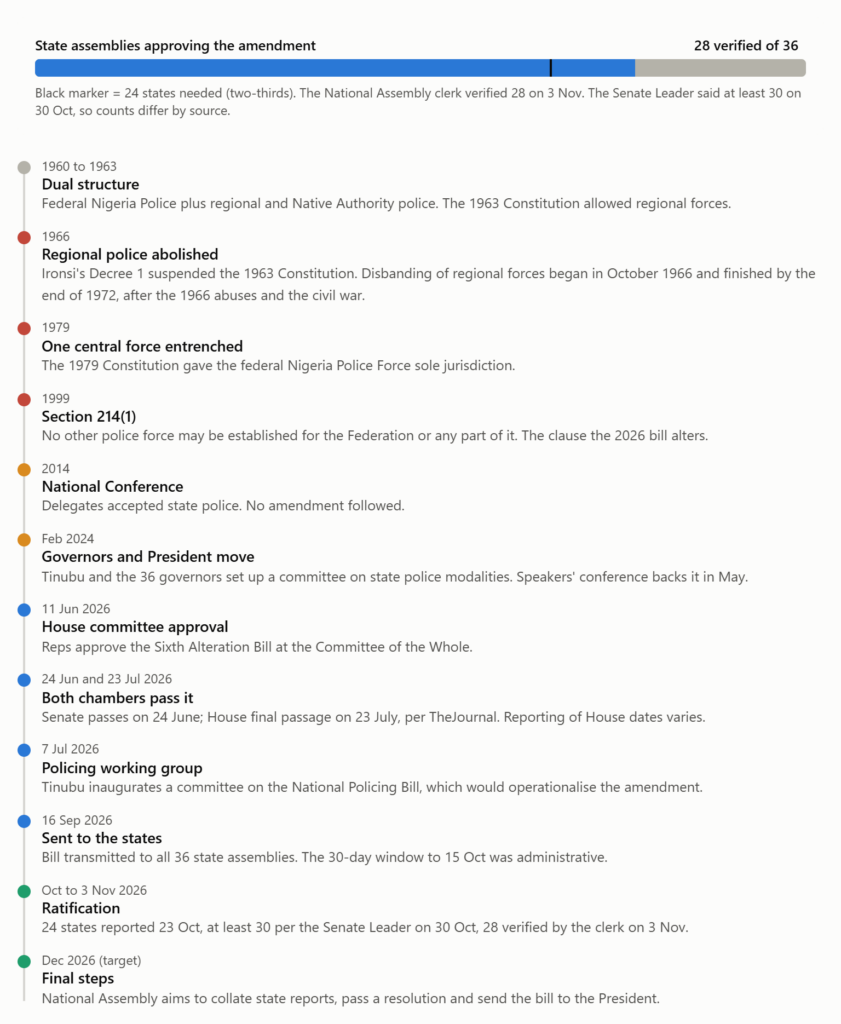
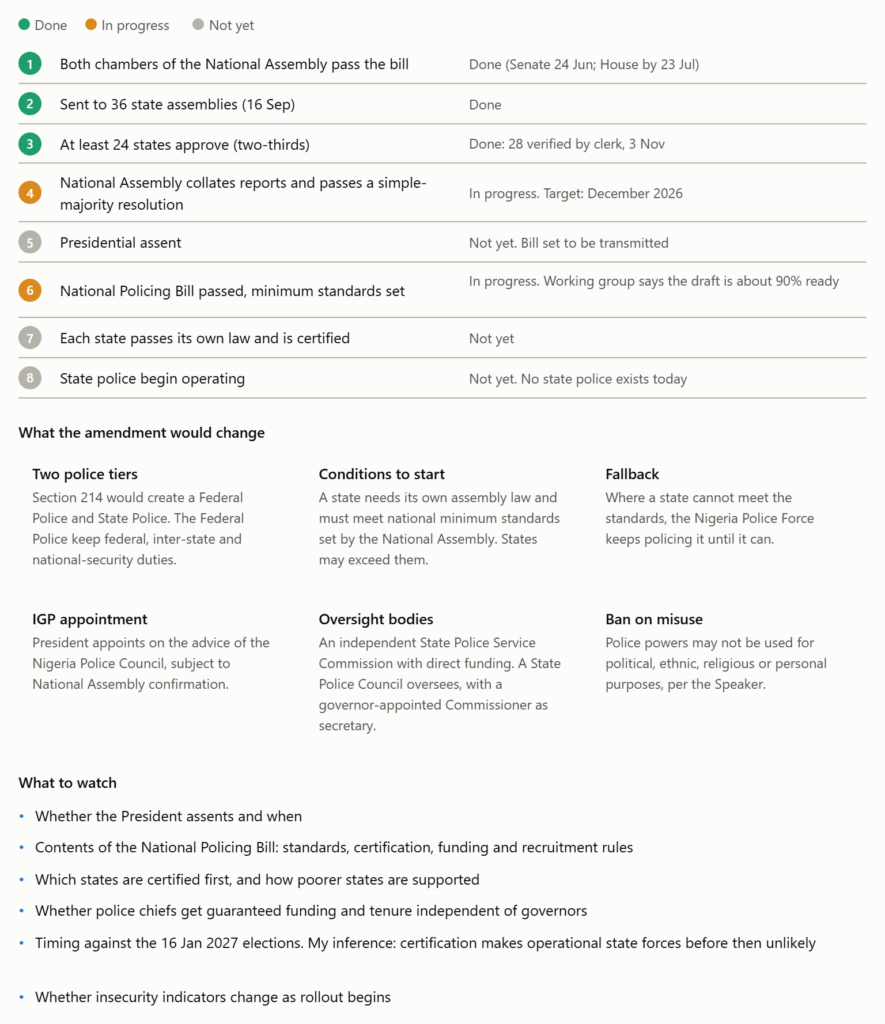
The constitutional machinery for state police in Nigeria is, on paper, nearly complete. As of early November 2026, no fewer than 30 state Houses of Assembly had approved the Constitution Alteration Bill, comfortably exceeding the two-thirds threshold of 24 states required by Section 9(2) of the 1999 Constitution. The National Assembly moved to transmit the bill to President Bola Tinubu for assent, with Deputy Speaker Benjamin Kalu confirming that the Clerk would formally deliver it to the President. The Senate had earlier pledged to enact the legislation before the Christmas recess, with Senator Yemi Adaramodu stating that “before we leave for Christmas, it will be done expeditiously”.
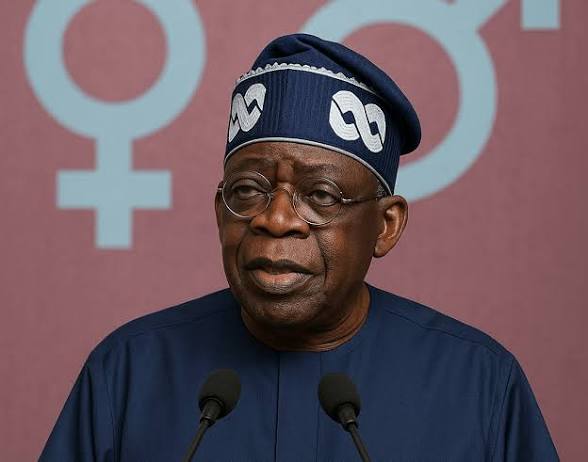
The political consensus is remarkable by Nigerian standards. President Tinubu himself appealed to senators in February 2026 to “tinker with the constitution to accommodate state police,” arguing that decentralised policing would help “take over our forests from marauders, and free our children from fear”. The House of Representatives passed its version in June 2026 by an overwhelming margin of 288 votes to four. The Northern Governors’ Forum endorsed the proposal in May 2025, and the National Economic Council received positions from all 36 states.
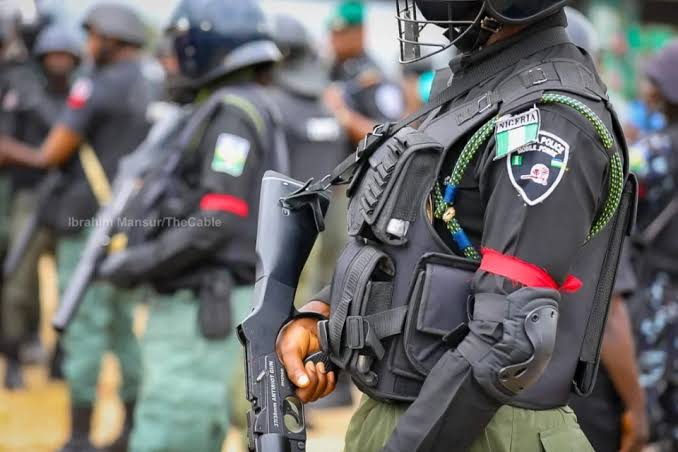
Yet the speed of the legislative process should not be mistaken for the resolution of the underlying question. The bill’s passage through the states has been swift precisely because it defers the hardest decisions. The proposed amendment alters Section 214 to create a Federal Police Service and State Police Services, with state forces requiring a law passed by the relevant State House of Assembly and certification against national minimum standards. Governors would appoint State Commissioners of Police from among serving state police officers, subject to confirmation by the State House of Assembly, and could issue lawful directives on public safety . The federal police could intervene only in cases of complete breakdown of law and order, at a governor’s request, or where a state force becomes unable to function.
The Insecurity Case for Decentralisation

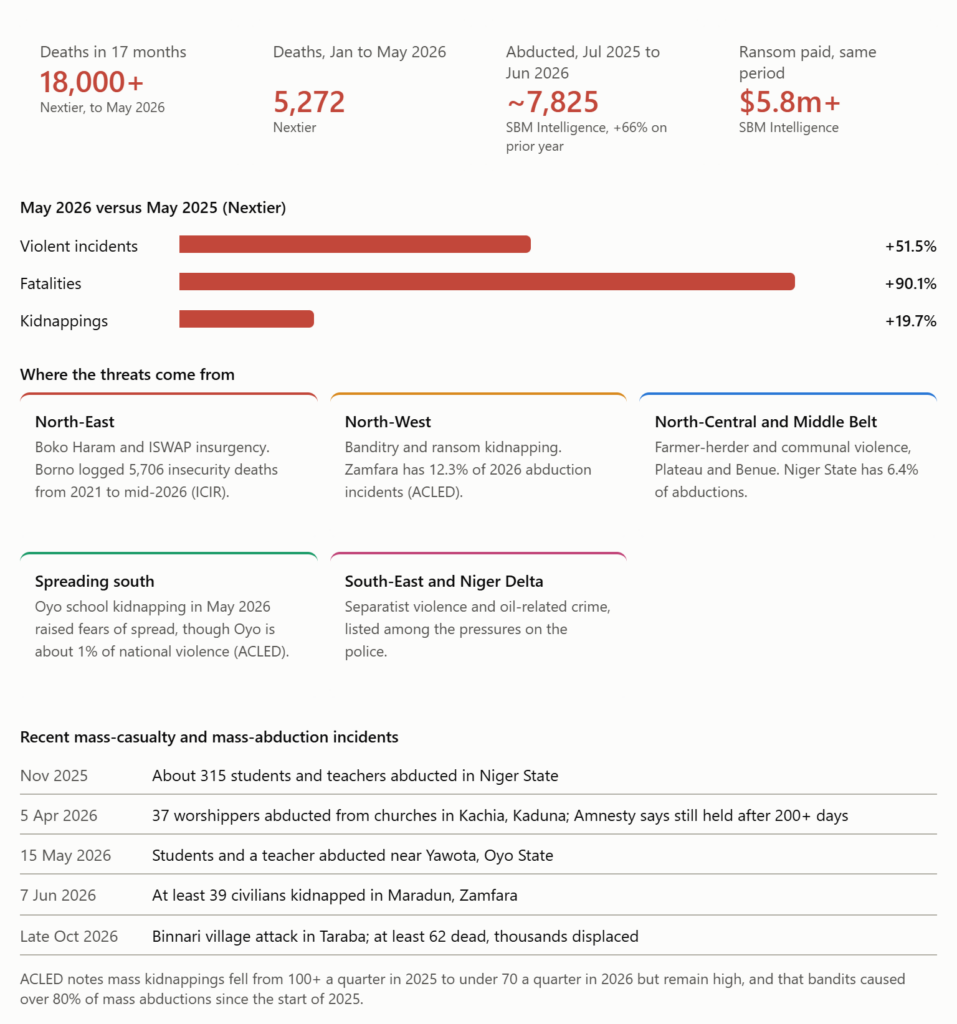
The justification for this restructuring is not abstract. Nigeria’s security statistics for 2025 illustrate a crisis that a centrally controlled force has failed to contain. The HumAngle Security Tracker documented at least 5,580 fatalities and 1,909 incidents of insecurity across the country in 2025, with 2,671 people kidnapped across 299 abduction incidents. A separate database compiled by Nextier Advisory recorded 4,654 violent deaths and 3,141 kidnap victims in 1,274 incidents. The variance between trackers reflects differing methodologies, but the order of magnitude is consistent: thousands dead, thousands abducted, and a federal police architecture that has not prevented either.
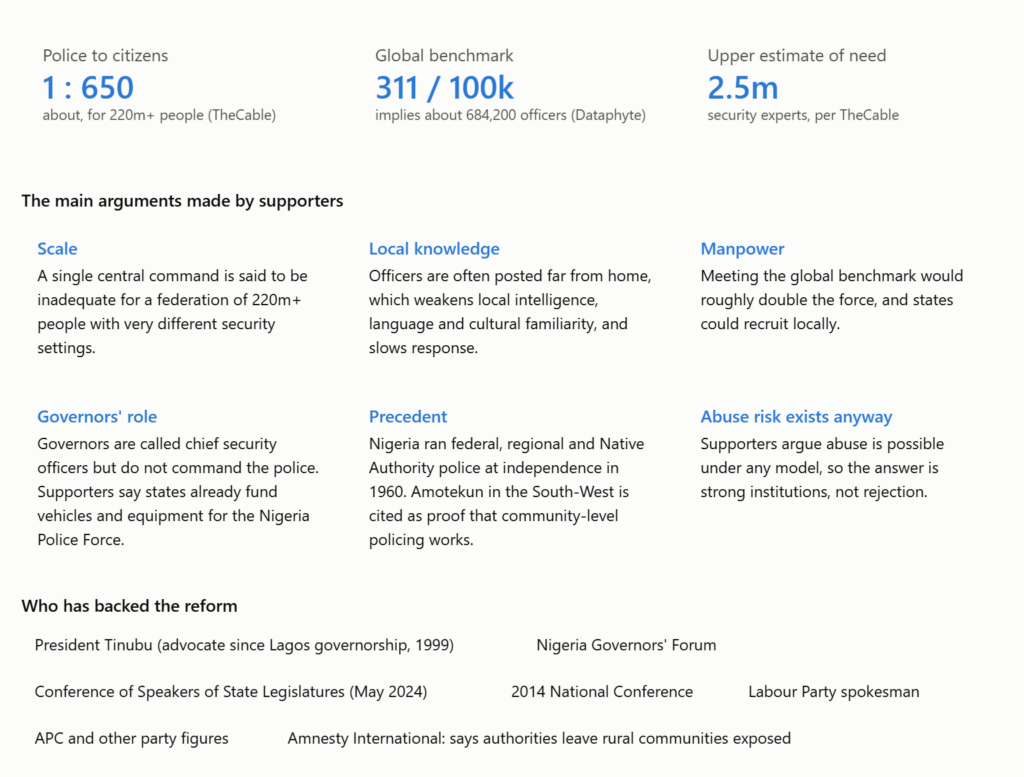
Senator Victor Umeh captured the structural argument during the Senate debate: “We cannot continue to have one central police force to provide security from Kebbi and Calabar to Ikot Abasi. Every security issue is local. Having officers who are indigenes of the states they police will transform intelligence gathering and enable swift response times” . This is the strongest case for state police. A force headquartered in Abuja, deploying officers who do not speak the local language and are rotated every few years, cannot build the community intelligence networks that effective local policing requires.
The Risks That Remain Unresolved
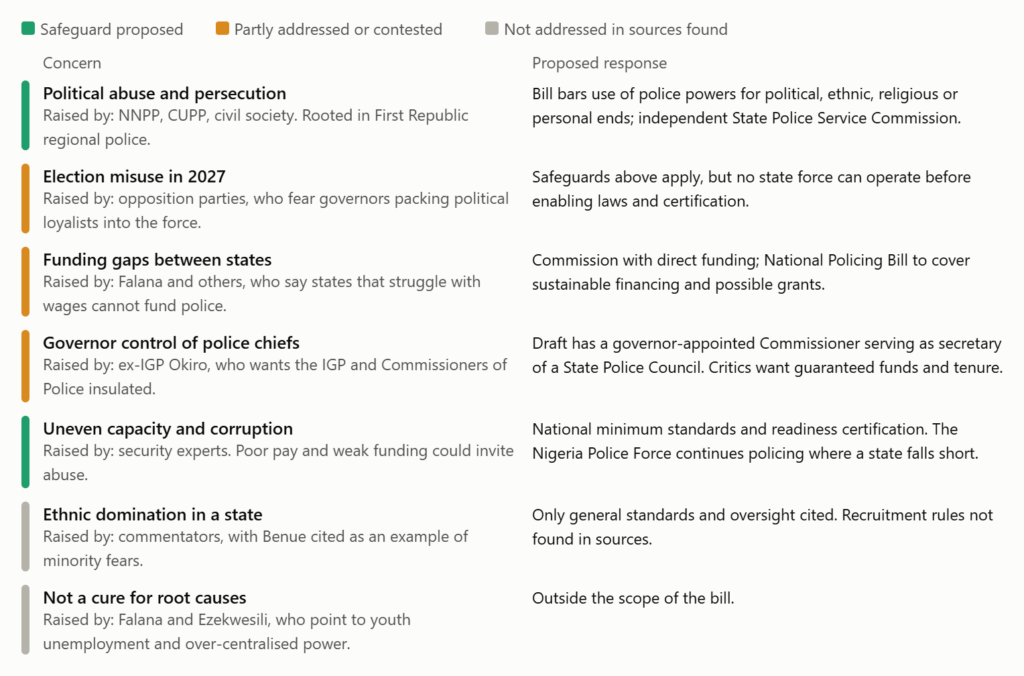
The case against, or at least for caution, rests on concerns that the bill’s drafters have acknowledged but not fully addressed. The proposed amendment includes safeguards against federal interference in state police operations, but it does not include equivalent safeguards against state governors using local forces against political opponents, critics, or journalists. The history of Nigerian state power, at both federal and state levels, provides ample reason for concern. State governors already control regional security outfits such as Amotekun in the South West and Ebube Agu in the South East, which operate without constitutional policing powers. Giving governors constitutionally recognised police forces, without robust independent oversight mechanisms, is a gamble on the restraint of officials who have not consistently demonstrated it.
The funding question is also unresolved. The bill stipulates that state police must be established through state legislation and meet national minimum standards, but it does not specify how states will fund their forces, how the federal government will prevent poorer states from operating under-resourced forces, or how coordination between federal and state police will be managed in practice . The National Economic Council’s repeated postponement of its state police discussion, three times since late 2023, suggests that the fiscal and operational details remain contentious even among governors who support the principle.
African and BRICS Comparisons
Comparisons with other federal systems are instructive, though not directly transferable. South Africa operates a decentralised policing model under its 1996 Constitution, with provincial governments exercising oversight over policing and Community Policing Forums intended to build police-community partnerships. Kenya’s 2010 Constitution similarly devolved certain security functions and created a framework for community policing, though implementation has been uneven. Both countries have struggled with the gap between decentralisation on paper and accountability in practice. South Africa’s police service has been criticised for being top-heavy, with a ratio of generals to other ranks of approximately 1:200, compared with 1:1,000 in India and 1:4,000 in Brazil’s federal force. Decentralisation does not automatically produce efficiency or public trust.
Among the BRICS countries, Brazil and India both operate decentralised policing systems, with state-level forces exercising significant autonomy. Brazil’s military police operate at state level under state secretariats of public security, while India’s state police forces are administered by state governments under federal legislative frameworks. Neither model has eliminated insecurity or political interference in policing. The lesson for Nigeria is that decentralisation is a structural choice, not a solution. It changes the locus of both competence and abuse. Whether it improves outcomes depends on the quality of the oversight mechanisms, the independence of the complaints and accountability processes, and the willingness of state legislatures to hold governors accountable for the forces they control.
What This Means for Nigerians at Home and in the Diaspora
For Nigerians in states where banditry, kidnapping, and communal violence are daily realities, state police could mean faster response times, officers who know the terrain, and intelligence networks rooted in local communities. For Nigerians in states governed by officials with poor human rights records, it could mean a local force deployed against political opponents or critical journalists. The difference will be determined by the quality of state-level institutions, which vary enormously across the federation.
For the diaspora, the establishment of state police raises questions about the accountability mechanisms they can use if relatives are abused by state forces. The current federal police at least offer a single, albeit imperfect, chain of accountability. A patchwork of 36 state forces, each with its own commissioner and governor, creates a more complex landscape for rights advocacy and diaspora engagement.
The 2027 election adds a political dimension. State police will be established under the same political class that will contest that election. Governors who control state police forces during the campaign period will have a significant advantage over challengers. The bill’s silence on the political neutrality of state police during elections is a gap that should be addressed before assent, not after.
The Solution
First, the bill should be amended, before or immediately after assent, to include explicit protections against the political use of state police, including restrictions on deployment for election-related purposes without independent authorisation and mandatory reporting of political interference allegations to the National Police Council.
Second, the National Assembly should establish a clear fiscal framework for state police, including minimum funding standards and a mechanism for federal support to states that cannot independently finance an adequate force, to prevent the emergence of a two-tier policing system where wealthy states are secure and poor states are not.
Third, state Houses of Assembly should establish independent police accountability committees, with civil society representation, to receive and investigate complaints against state police forces. Without independent oversight, the decentralisation of policing will simply decentralise impunity.
The bill is ready. The question is whether the oversight architecture will be ready before the forces begin to operate.












Leave a comment