


The NDC registration victory has fundamentally altered the political calculus for the 2027 presidential election. In a split decision delivered on September 18, a three-member panel of the Court of Appeal in Abuja validated the Nigeria Democratic Congress as a duly registered political party . The ruling set aside a Federal High Court judgment that had ordered the party’s deregistration. This cleared the path for Peter Obi and Rabiu Kwankwaso to contest the presidency on a platform that has now been judicially affirmed.
For democracy in Nigeria, this is a significant moment. For the 2027 election, it is a game-changer.
The NDC Registration Victory: A Triumph for Democracy
The legal battle that culminated in the Appeal Court’s decision was never merely about a party logo or administrative procedure. It was about whether the electoral space would remain open to genuine competition. It was about whether regulatory and judicial instruments could be used to narrow the field before a single vote is cast.
The dispute began when the Peace Movement Party claimed that the NDC’s party logo belonged to it. The PMP argued that it had not been joined in the original proceedings that led to the NDC’s registration . The Federal High Court in Lokoja, in a ruling delivered by Justice Isah Dashen, agreed with the PMP. It voided its earlier order directing INEC to register the NDC. The NDC appealed.
The Court of Appeal’s majority decision, delivered by Justice Mohammed Danjuma and Justice Muslim Sule Hassan, found merit in the NDC’s appeal. The court held that the lower court had engaged in an abuse of power and of the judicial hierarchy. It had sat on appeal over its own previous judgment, delivered on December 10, 2025, which had okayed the registration of the NDC by INEC . Justice Okon Abang dissented, but the majority prevailed.
Seriake Dickson, the NDC’s National Leader, confirmed the outcome. He stated that the party’s registration remains valid and subsisting. The party and its candidates will now fully participate in the 2027 elections and beyond .
This is how democracy should work. Courts exist to protect the integrity of the electoral process. They should not serve as instruments for the exclusion of legitimate political actors. The Appeal Court’s decision reaffirms a fundamental principle: the right to form and register a political party is constitutionally protected. Judicial processes should not be weaponised to truncate that right.

The Implication for Peter Obi and the 2027 Election
For Peter Obi, the NDC registration victory is more than a legal reprieve. It is a validation of his political project at a moment when the forces arrayed against him appeared to be closing in.
The timing is critical. Just days before the Appeal Court ruling, the OK Movement—the political platform mobilising support for the Obi-Kwankwaso ticket—unveiled a 59-member Presidential Campaign Council comprising zonal and state coordinators . The party was preparing for a full-scale national campaign. The deregistration order, if it had stood, would have rendered those preparations moot. The Appeal Court’s decision ensures that the campaign can proceed.
The antagonism that Obi has faced may ultimately rouse more support for him rather than diminish it. Nigerian political history is replete with examples of persecution narratives galvanising opposition support. When a candidate is perceived as being unfairly targeted, sympathy can translate into votes. The NDC’s legal victory reinforces the narrative that Obi is fighting against a system determined to exclude him.
The Obi-Kwankwaso Ticket: A Fusion of Regional Voting Blocs
The true significance of the NDC registration victory lies in what it enables: the Obi-Kwankwaso joint ticket. This is a political fusion that the ruling All Progressives Congress has every reason to fear.
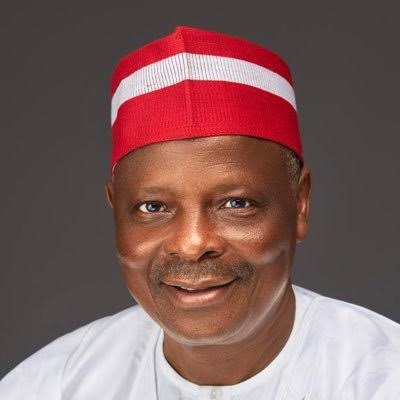
Rabiu Kwankwaso, a former Kano State governor and former Minister of Defence, commands a formidable political machine in Northern Nigeria. In the 2023 presidential election, he polled 1,496,687 votes nationally. His strongest showing was in Kano State, where he secured 997,279 votes—58.59 per cent of the total votes cast in the state . He also performed strongly in Jigawa (98,234 votes), Kaduna (92,969 votes), and Katsina (69,386 votes) . The Kwankwasiyya Movement is not a mere political label. It is a grassroots mobilisation structure with deep roots in Kano and the wider North-West.
Peter Obi, by contrast, demonstrated in 2023 that he could win across the South and in parts of the North-Central. He secured approximately 6.1 million votes nationally, winning 12 states including Lagos and the Federal Capital Territory . His victories were overwhelming in the South-East: 93.91 per cent in Enugu, 79.83 per cent in Ebonyi, and 77.13 per cent in Imo . He also won Delta State with 55.56 per cent, Edo State with 56.97 per cent, and Cross River with 43.15 per cent . In Lagos, the most populous state and the APC’s traditional stronghold, Obi secured 582,454 votes to Tinubu’s 572,606—a stunning upset . In Benue, he polled 308,372 votes, narrowly losing to Tinubu’s 310,468 .
The fusion of these two voting blocs is the crux of the threat. Kwankwaso delivers the North-West, particularly Kano, where he has demonstrated the capacity to mobilise nearly a million votes. Obi delivers the South-East, the South-South, and significant portions of the North-Central, including Lagos and Benue. A joint ticket consolidates these regional strengths. It creates a national coalition that the APC cannot easily counter.
Kwankwaso himself has articulated the rationale for the alliance. He stated that the decision was based on national balance, equity, and democratic change . He acknowledged that in 2023, he knew little about Obi. But over four years, he came to realise that Obi was someone he could work with. The agreement, he said, was for the South to produce the president for one term. After that, the political arrangement would return to the North . This is a political compact rooted in mutual interest. It is precisely this fusion that makes the ticket dangerous for the ruling party.
The Counter-Offensive: APC’s Determined Resistance
The NDC may be celebrating, but it must not rest on its oars. The Benue blockade that Obi faced recently was not an isolated incident. It was a signal that the APC machine is working tirelessly to deliver in states that are known grounds for Peter Obi. It was also a warning to state governors to demonstrate loyalty to the President.
Nyesom Wike’s recent pronouncement, describing governors as “lazy,” has added a new dimension to the political calculations . Wike, the Minister of the Federal Capital Territory, has been positioning himself as the President’s most zealous defender. His Rainbow Coalition, whatever its stated purpose, has created confusion within the APC’s own ranks. The APC Governors’ Forum accused him of breeding confusion that could affect Tinubu’s electoral fortunes. But Wike’s rhetoric also serves as a warning to governors: prove your loyalty, or face the consequences.
The Obi vs Soludo matter is equally instructive. The Anambra governor’s attacks on Obi’s record are not merely about state finances. They are about political allegiance. Soludo’s alignment with the federal establishment sends a message to other South-East leaders: there are alternatives to the Obi political project. Some South-East leaders may have their allegiance to Tinubu. They may seek to sway votes away from Obi, reducing his margins in his own geopolitical zone.
These are the headwinds that the NDC and the Obi-Kwankwaso ticket must navigate. The APC will not concede any state without a fight. The Benue blockade showed that even a humanitarian visit can be weaponised. The legal challenges to Obi’s candidacy showed that regulatory instruments will be deployed. The economic pressures on state governors showed that federal power will be leveraged to secure loyalty.
A Truly Nigerian Party: The NDC’s Composition
What makes the NDC competitve is its composition. The party presents a truly national character. Its National Leader is Senator Henry Seriake Dickson, a former governor of Bayelsa State from the Niger Delta. Its presidential candidate, Peter Obi, hails from the South-East. Its vice-presidential candidate, Rabiu Kwankwaso, comes from the North-West.
This is a ticket that cuts across Nigeria’s three major geopolitical zones. It is not a regional party masquerading as a national one. It is a coalition of forces from the South-East, the South-South, and the North-West, bound together by a shared commitment to democratic change.
The NDC’s zoning of its presidential ticket to the South for a single term was a strategic decision. It created the conditions for the Obi-Kwankwaso alliance . It reflected an understanding that national unity requires power-sharing arrangements that rotate across regions. It is a model that stands in stark contrast to the winner-takes-all politics that has characterised much of Nigeria’s political history.
The Road Ahead
The Court of Appeal’s decision is a victory for democracy. It affirms that the judiciary can serve as a check on the abuse of regulatory power. It ensures that the 2027 election will feature a genuinely competitive contest, not a coronation.
But the road ahead is fraught with obstacles. The APC will use every instrument at its disposal to retain power. The Benue blockade, the Soludo attacks, the legal challenges, the economic pressures on governors—these are the tactics of a party that understands the threat it faces.
The NDC must be prepared. It must build a campaign structure capable of mobilising voters across the country. It must defend its candidates against legal and physical attacks. It must articulate a message that resonates beyond the regions where Obi and Kwankwaso already have strong support.
The Obi-Kwankwaso ticket is dangerous—not in the sense of being reckless, but in the sense of being a genuine threat to the status quo. It fuses two of the most formidable political movements in Nigeria today. It offers a vision of a country where power rotates, where regions are not marginalised, and where governance is accountable.
For Nigerians who have grown weary of the politics of exclusion and division, the NDC offers an alternative. Whether that alternative can overcome the machinery of incumbency is the question that will define the 2027 election.







Leave a comment