

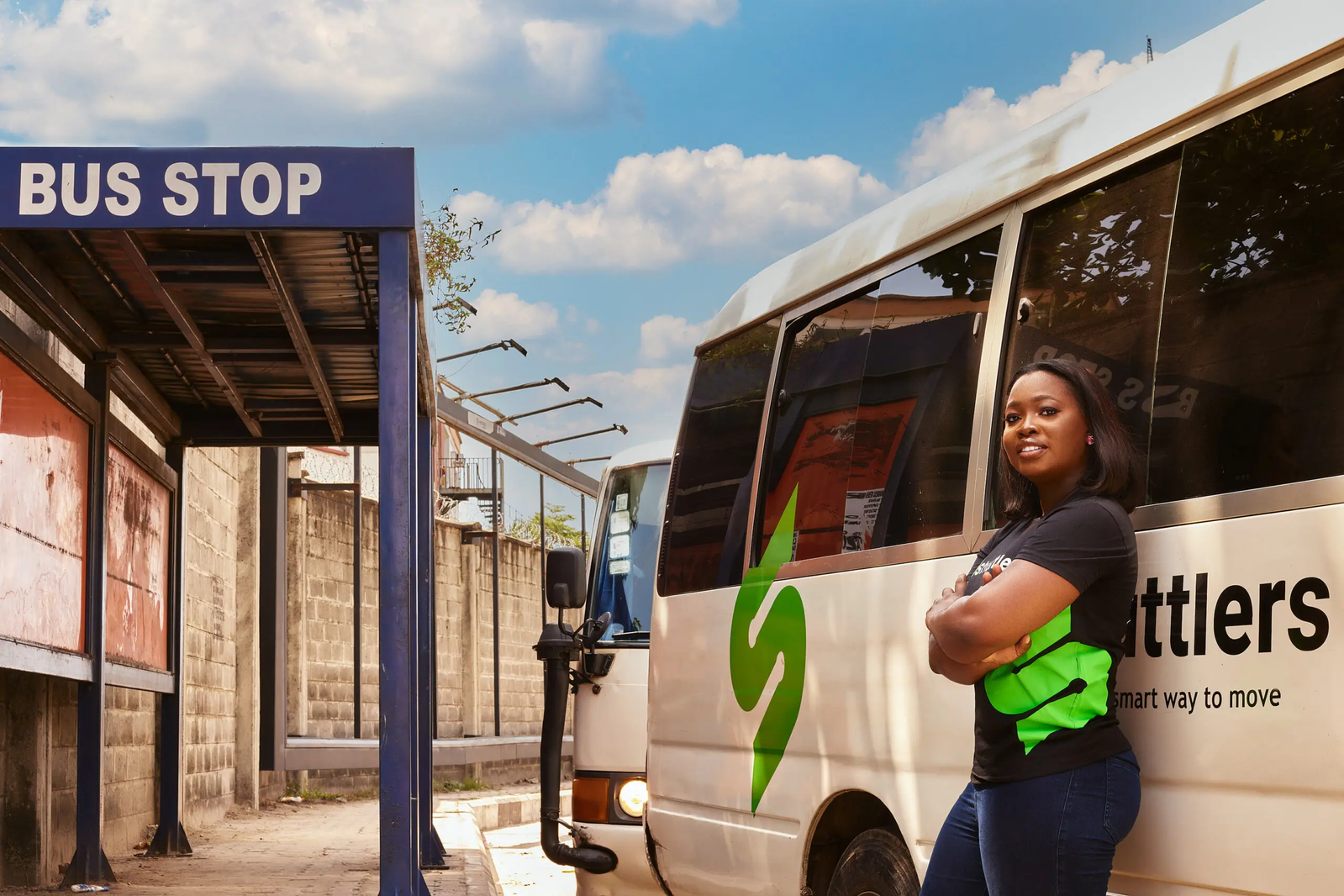
Shuttlers is preparing to launch a new shared ride service in Lagos as commuters search for alternatives after Uber’s exit from Nigeria.
The mobility startup will introduce Shuttlers Pod on September 25.
The service will allow up to four commuters to share one car.
Unlike its scheduled bus service, Pod will collect passengers from their homes. It will then drop each rider at their individual destination.
The new service comes shortly after Uber ended its Nigerian operations following 12 years in the market.
For Shuttlers, the timing creates an opportunity to attract commuters who relied on private ride-hailing services.
However, the company is entering a difficult market.
Shared car services have struggled in Nigeria before. Shuttlers itself has also tested different approaches to solving the problem.
Now, the startup believes better technology and a stronger transport network can make the model work.
How Shuttlers Pod will work
Pod will operate differently from conventional ride-hailing platforms.
Passengers must book their trips in advance through the Shuttlers app.
Users will enter their home address and destination. They will then select an available departure time.
Shuttlers plans to organise Lagos into different clusters. The company will gradually activate the service across those areas.
Available departure times could include 6:30 a.m., 7 a.m., 8 a.m. and 9:30 a.m.
However, a Pod will not operate with just one passenger.
The company wants multiple commuters heading in similar directions to share the vehicle.
A shared Pod needs at least three passengers before it can operate.
Customers can also invite friends or neighbours through a link generated after booking.
That could help commuters fill a Pod faster.
Shuttlers will not, however, match passengers simply because they have the same destination.
The company will consider where passengers live when creating each route.
Why Shuttlers is returning to doorstep pickups
Door-to-door transport is not new to Shuttlers.
The company initially launched with a doorstep-to-doorstep model.
It later abandoned the approach and moved to fixed bus stops.
According to co-founder and CEO Damilola Olokesusi, the original model was difficult to coordinate without the necessary technology.
The company also discovered that the model was not profitable.
Shuttlers eventually adopted scheduled buses operating on fixed routes and times.
That model became the foundation of its growth.
The company says it has now completed more than 10 million journeys.
It also operates more than 430 buses across Lagos, Abuja and Port Harcourt.
Yet the bus model has one major weakness.
Passengers must first find their way to a bus stop.
That can be difficult during Lagos rush hours.
Flooding can make the problem even worse.
Some commuters spend between 10 and 20 minutes getting to their pickup point.
Others miss buses because their local transport arrives late.
For some potential customers, that first part of the journey is enough to make them choose a private car instead.
Pod is designed to solve that problem.
Uber’s exit creates a new opportunity
Shuttlers announced Pod just two days after Uber confirmed its departure from Nigeria.
The company had already been developing the product before Uber left.
Olokesusi said Shuttlers had been exploring ways to reach customers outside its existing bus network.
Pod had also been under consideration for about two years.
The company developed a prototype and began internal testing.
Uber’s exit then gave the startup a reason to accelerate the launch.
The opportunity is clear.
Thousands of Nigerians who previously used Uber now have fewer ride-hailing choices.
Bolt and inDrive remain active. However, Shuttlers is targeting customers with a different proposition.
The company wants to offer a more affordable private-car experience by allowing several passengers to split the cost.
The economics could be difficult
The biggest question is whether the numbers will work.
Shuttlers pays fleet operators a fixed amount for each scheduled trip.
It then has to fill enough seats to cover that cost.
That model works differently with buses.
A 30-seat bus can carry several passengers while leaving some seats empty.
A four-seat Pod has much less room for error.
If one seat is empty, the vehicle loses 25% of its potential passenger capacity.
Former Hytch CEO Laolu Onifade believes that creates a significant challenge.
He noted that inflation has reduced consumer purchasing power.
At the same time, there is a limit to what commuters can afford to pay.
Shuttlers will therefore have to balance affordability with profitability.
Pod fares could start from ₦4,000
Shuttlers expects a Pod seat on some routes to cost between ₦4,000 and ₦4,500.
If three passengers share a vehicle, the trip could generate between ₦12,000 and ₦13,500.
Four passengers would generate between ₦16,000 and ₦18,000.
Those figures are before Shuttlers pays the fleet operator and covers its own operating costs.
The fares are designed to compete with private ride-hailing trips.
Olokesusi estimated that a ride-hailing journey on some comparable routes could cost between ₦10,000 and ₦15,000.
That gives Shuttlers a clear selling point.
Customers can potentially pay less by sharing the vehicle.
However, lower fares only work if enough passengers use the service.
Occupancy will determine success
Pod’s business model depends heavily on occupancy.
Shuttlers needs enough people travelling along similar routes at similar times.
It also needs those customers to make repeat bookings.
This is where the startup faces its biggest test.
A Pod carrying four passengers can generate more revenue than one carrying three.
A single passenger, however, could make the economics difficult.
Shuttlers therefore encourages customers to bring friends and neighbours into their bookings.
The company also requires riders to commit to at least two trips per week.
That requirement could help create predictable demand.
It could also discourage customers who prefer spontaneous travel.
Why previous carpooling startups struggled
Nigeria has already seen several attempts to build sustainable carpooling businesses.
Companies such as Hytch, Ridebliss and GoMyWay explored different versions of shared transport.
Some struggled to raise enough funding.
Others faced problems with customer behaviour and the incentives for drivers.
Traditional carpooling often depends on private vehicle owners offering spare seats.
Those drivers may already be travelling to their destination.
The extra passengers only provide additional income.
That creates a problem for platforms.
Drivers and riders can connect through the app, exchange phone numbers and arrange future trips privately.
The platform can then lose the transaction.
Shuttlers believes its approach avoids some of those problems.
The company will not depend on private individuals using their personal cars.
Instead, it will work with fleet operators.
Shuttlers will rely on fleet operators
Shuttlers currently works with about 160 fleet operators.
Together, they supply more than 400 vehicles to its platform.
The operators employ the drivers and manage their vehicles.
Shuttlers plans to use a similar structure for Pod.
The arrangement gives the company more control over vehicle standards and driver operations.
It also provides fleet operators with predictable work.
According to Olokesusi, Shuttlers pays operators a fixed amount for scheduled trips.
The company can therefore guarantee revenue to its transport partners.
That model could encourage operators to prioritise Shuttlers over competing platforms.
However, it also places the occupancy risk on Shuttlers.
If a four-seat Pod runs with only two passengers, the company still has to meet its agreement with the operator.
Trust is another major factor
Technology alone may not determine whether Pod succeeds.
Trust will also matter.
Passengers will share a vehicle with people they do not know.
Shuttlers plans to monitor trips through a live operations team.
It also intends to use AI to identify unusual activity.
The company believes its years of running scheduled transport give it an advantage.
It has already built relationships with commuters, drivers and fleet operators.
That existing network could help reduce some of the uncertainty around the new service.
Lagos commuters must sacrifice spontaneity
Pod offers a cheaper alternative to private ride-hailing.
But there is a trade-off.
Customers must plan ahead.
They cannot simply open the app and request a car whenever they want.
They must select a departure time and commit to the service.
They may also have to wait for other passengers to join.
For commuters who value convenience above everything else, that could be a problem.
However, price-sensitive customers may be willing to make that trade.
This is particularly relevant in Lagos, where transportation costs have become a major concern for many workers.
Shuttlers is testing a familiar idea with new technology
The concept behind Pod is not entirely new.
Shared rides have been attempted in Nigeria before.
What has changed is the technology available to coordinate them.
Shuttlers can now use software and AI to group commuters based on their locations and travel times.
The company can also use its existing transport data to identify areas with strong demand.
More than 1,000 people had reportedly joined the Pod waitlist when the company discussed the product with TechCabal.
Their requests had already revealed popular potential routes.
Victoria Island is among the initial areas targeted by the service.
The company plans to expand gradually as it learns from customer behaviour.
Can Shuttlers make shared rides work?
The launch presents Shuttlers with both an opportunity and a major business challenge.
Uber’s departure has created space in Lagos’ mobility market.
Yet winning those customers will require more than offering a cheaper ride.
Shuttlers must fill enough seats.
It must keep fleet operators satisfied.
It must maintain reliable pickup times.
Most importantly, it must convince commuters that sharing a car with strangers is worth the savings.
The company has already shown that Nigerians can adapt to scheduled transport.
Its bus network has built a customer base around fixed routes and departure times.
Pod now tests whether that behaviour can move from buses to cars.
If enough commuters living in the same areas choose the same departure times, the model could become viable.
If demand remains too fragmented, the economics could become difficult.
For now, Shuttlers shared rides represent one of the more interesting experiments in Lagos’ post-Uber transport market.
The real test begins when the first Pods start picking up passengers on September 25.













Leave a comment