

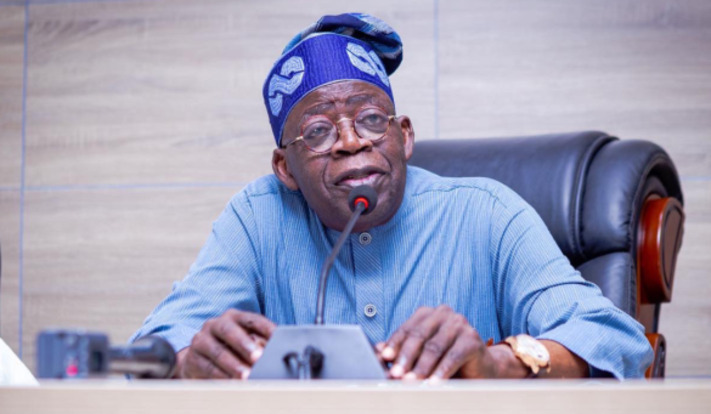
President Bola Ahmed Tinubu has called for major reforms to the global governance system and international financial institutions.
He made the call at the 2026 BRICS Summit in New Delhi, India. Vice President Kashim Shettima delivered the president’s remarks at the meeting.
Tinubu said global institutions must reflect today’s economic and demographic realities. He also argued that developing nations deserve stronger representation in global decision-making.
According to him, Nigeria supports reforms to the United Nations and the international financial system. He said the transformation promoted by BRICS should also extend to the wider international system.
Tinubu seeks stronger global institutions
The president described BRICS as an important platform for strengthening the voice of the Global South.
He said the bloc could help promote a more inclusive international order. However, he urged member countries to move beyond discussions and formal commitments.
Tinubu called for practical action and measurable development results.
He said global cooperation should produce clear benefits for people and economies. This, he noted, requires stronger institutions that can respond to changing global realities.
Nigeria has continued to push for greater representation for Africa in major international institutions. The country has also supported reforms to the UN Security Council.
Tinubu said these reforms remain important as the global balance of economic and demographic power changes.
Nigeria highlights investment opportunities
Beyond governance reforms, Tinubu used the summit to promote Nigeria as an investment destination.
He invited investors to explore opportunities in the Nigerian economy. He described the country as a gateway to Africa’s growing market under the African Continental Free Trade Area.
Nigeria, he said, welcomes stronger BRICS partnerships across several key sectors.
These include trade, agriculture, food security, energy and infrastructure. Manufacturing, healthcare and critical minerals were also highlighted.
Tinubu said such partnerships should deliver more than capital investment.
He stressed the importance of technology transfer and local value addition. He also said investments should help create jobs and strengthen domestic production.
For Nigeria, stronger industrial partnerships could support economic growth while expanding opportunities for businesses and workers.
Tinubu calls for technology partnerships
The president also urged BRICS nations to deepen cooperation in emerging technologies.
He identified artificial intelligence, digital infrastructure and financial technology as important areas.
Telecommunications, cybersecurity, biotechnology and advanced manufacturing were also included.
Tinubu warned that countries that fail to develop technological capacity could become increasingly dependent on others.
“A nation that owns no technology risks renting its future,” he said.
The remark underlined his call for countries in the Global South to build stronger domestic capabilities.
Nigeria has increasingly placed technology, innovation and digital infrastructure at the centre of its economic development plans.
Modi highlights BRICS influence
Indian Prime Minister Narendra Modi also addressed the summit.
While opening the 18th BRICS Leaders’ Summit, Modi said confidence in the bloc had grown among Global South countries.
He said this was partly because members felt their voices were being heard and their experiences respected.
Modi also pointed to the diversity within BRICS as one of its major strengths.
He said cooperation among members was helping to advance skills development, employment and enterprise.
Knowledge-sharing was another area he identified as important to the bloc’s development agenda.
What Nigeria wants from BRICS
Nigeria’s position at the summit reflects its wider interest in stronger South-South cooperation.
The country is seeking partnerships that can support investment, industrial growth and access to technology.
At the same time, Tinubu’s call for global governance reform places Nigeria within a broader debate about the role of developing countries.
Many Global South countries have argued that existing international institutions do not fully reflect current economic realities.
For Nigeria, reforms could provide greater space for African countries to influence decisions on global finance, security and development.
However, achieving such changes will require sustained diplomatic engagement among BRICS members and other developing economies.
Tinubu therefore urged the bloc to turn its discussions into practical programmes.
The focus, he said, should remain on partnerships that deliver measurable development outcomes.
Nigeria’s participation also gives the country an opportunity to promote its market, resources and growing technology ecosystem.
As BRICS expands its influence, Abuja is seeking to position Nigeria as an important partner in Africa’s economic future.











Leave a comment