

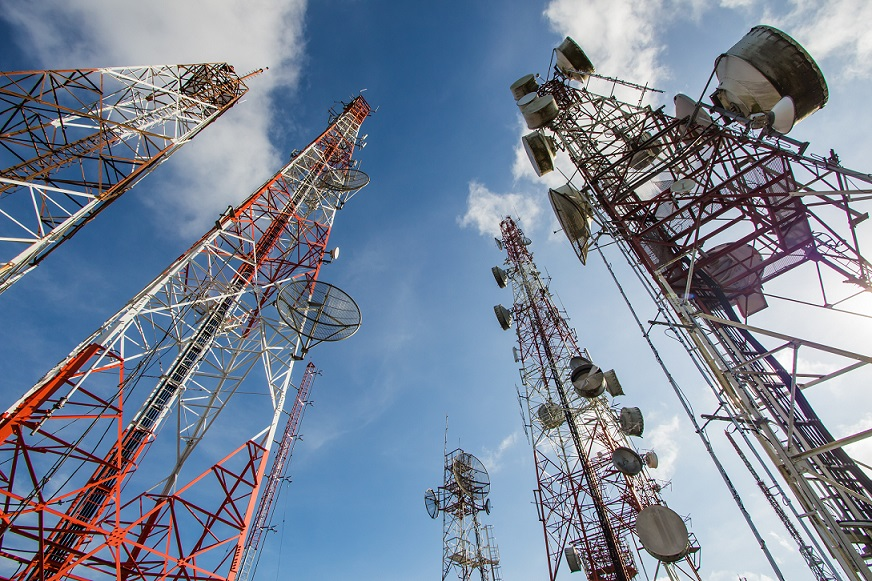
Nigeria telecom infrastructure has changed how people live, work and do business. Yet, the growth has not reached every part of the country.
Fresh data on telecom infrastructure shows a sharp gap between states. Lagos and Abuja have built extensive fibre networks and host thousands of base stations. Meanwhile, 18 states still have less than 2,000 kilometres of fibre.
The gap raises fresh concerns about Nigeria’s digital future.
The country marks 25 years of GSM services this month. Commercial GSM services began on August 5, 2001. Since then, Nigeria’s telecom sector has grown at a remarkable pace.
Telephone connections have jumped from about 400,000 NITEL lines in 2000 to 320 million connected lines in 2026.
However, only about 189 million lines remained active as of May.
Broadband penetration has also grown. It reached 56.11 per cent by May 2026, with about 121 million people using broadband services.
Despite that progress, millions of Nigerians still struggle to connect.
Lagos Leads as Northern and Rural States Lag
Lagos remains Nigeria’s biggest telecom hub.
The state has 11,586.7 kilometres of fibre and 7,996 base transceiver station (BTS) sites. The Federal Capital Territory follows with 6,973.13 kilometres of fibre and 2,884 BTS sites.
Several other states have also built strong networks.
Edo has 4,789.72 kilometres of fibre. Rivers has 4,616.01 kilometres, while Kano has 4,616.71 kilometres.
Kaduna records 4,339.85 kilometres. Ogun has 4,246.48 kilometres, while Delta has 4,202.62 kilometres.
Other states above the 2,000-kilometre mark include Niger, Benue, Oyo, Anambra, Plateau and Kwara.
Together, these states form a large part of Nigeria’s digital backbone.
Their networks support mobile calls, internet services, banking, online businesses and other digital activities.
However, the picture changes sharply outside these areas.
Eighteen states have less than 2,000 kilometres of fibre.
Bayelsa has just 656.87 kilometres and 436 BTS sites. Ebonyi has 586.92 kilometres and 422 BTS sites.
Zamfara records 1,100.98 kilometres and 362 BTS sites. Yobe has 1,526.82 kilometres and 433 BTS sites.
Taraba has 1,549.5 kilometres of fibre and 673 BTS sites.
These figures show how uneven telecom development remains across Nigeria.
Millions Still Lack Basic Mobile Access
The infrastructure gap has real consequences for Nigerians.
In February 2025, Communications, Innovation and Digital Economy Minister Bosun Tijani said about 21 million Nigerians lacked basic mobile connectivity.
Those people live across 4,834 communities. Most of the communities are in rural areas.
The Universal Service Provision Fund (USPF) has also tracked the problem.
In 2013, about 36.8 million people lived in unserved or underserved areas. By 2024, the figure had dropped to 23 million.
USPF Secretary Yomi Arowosafe said those 23 million people live across more than 3,000 communities.
Most of these communities are rural.
Security problems have made the situation worse in parts of northern Nigeria.
Some communities have experienced telecom shutdowns because of banditry and other security threats. Operators have also struggled to return to some locations after attacks damaged their equipment.
Zamfara is one example.
Shinkafi, Zurmi, Birnin Magaji and Kaura Namoda remain among the areas facing serious connectivity challenges.
Other affected communities include Sardauna, Kurmi, Karim Lamido, Illela, Sabon Birni, Isa and Gudu.
Birnin Gwari, Kachia, Kaura, Giwa, Kajuru and Chikun also face network challenges.
Southern Nigeria has a different problem.
Riverine communities in Bayelsa, Delta and Ondo can be difficult to reach. Border communities also have low population levels in many cases.
For network operators, such areas may not generate enough revenue to justify the cost of new infrastructure.
Insecurity Makes Telecom Expansion Risky
Security remains one of the biggest barriers to network expansion.
Borno, for instance, has 1,012.52 kilometres of fibre and 579 BTS sites.
Insurgency has made several parts of the state difficult for operators.
Jigawa has 970.1 kilometres of fibre and 565 BTS sites. Low commercial returns also make expansion difficult in some parts of the state.
Building a telecom network costs millions of dollars.
Operators must pay for fibre, towers, equipment, power and maintenance. They also need workers to maintain the sites.
A small rural customer base may not generate enough revenue to cover those costs.
That creates a difficult cycle.
Operators naturally invest more in areas with strong demand. Less profitable communities then receive fewer network upgrades.
Over time, the gap becomes wider.
Poor Power Supply Adds to the Problem
Telecom companies also face a major power challenge.
Operators run more than 40,000 BTS sites across Nigeria. Many sites cannot depend fully on the national grid.
As a result, companies must spend heavily on alternative power sources.
Telecom operators are estimated to spend about 30 per cent of their operating expenses on energy.
MTN Nigeria Chief Operating Officer Ayham Mousa said power problems affect network performance.
According to him, operators spend about 20 to 30 per cent of their expenses on power across their sites.
He also said about 70 per cent of downtime can be linked to power shortages, fibre cuts and vandalism.
That adds pressure to an industry already dealing with high operating costs.
Fibre Cuts and Vandalism Threaten Networks
Physical damage is another major problem.
Telecom operators recorded more than 27,685 fibre cuts within one year.
They also recorded about 27,000 access denial incidents and 4,210 theft cases.
Such incidents disrupt services and increase repair costs.
Operators must often send engineers to repair damaged fibre and equipment. In areas affected by insecurity, reaching those sites can take even longer.
Gbenga Adebayo, Chairman of the Association of Licensed Telecom Operators of Nigeria (ALTON), said operators continue to repair damaged infrastructure.
He said telecom companies work with security agencies to access difficult locations.
“We’ve not abandoned any territory of the country,” Adebayo said.
According to him, operators replace assets damaged by vandalism when security conditions allow them to reach the affected sites.
Right-of-Way Charges Remain a Major Barrier
The cost of deploying fibre also depends on state government policies.
Right-of-Way (RoW) charges are a major part of that cost.
By mid-2026, about 15 states had completely removed RoW charges for telecom operators.
The Nigerian Communications Commission (NCC) said Lagos, Kogi, Edo, Oyo, Kaduna, Kwara and Niger were among the states that had waived the fees.
Another 16 states adopted the recommended national rate of N145 per linear metre.
However, ALTON says the real cost can be higher.
Adebayo said some states remove RoW charges but impose other fees.
These may include development levies, education levies, environmental charges and capital deployment fees.
According to him, such charges can still make telecom projects expensive.
Some states also take too long to approve applications.
These delays can discourage operators from expanding into new locations.
Operators Want Better Investment Conditions
Industry experts say the government must make underserved areas more attractive to investors.
An ATCON member who spoke anonymously identified commercial viability as a major challenge.
The industry executive also cited insecurity and poor electricity supply.
Operators often provide their own power at BTS sites. They also face extra costs when they maintain equipment in remote areas.
Layer3 founder and CEO Oyaje Idoko said investors must consider the business case before entering a new community.
“As a private investor, before we extend service to a new community, we must ask whether it is commercially viable,” Idoko said.
He added that poor electricity supply and low purchasing power can make some communities difficult markets.
Adebayo also said telecom operators cannot solve Nigeria’s quality-of-service problems through investment alone.
He argued that issues such as fibre cuts, RoW delays, vandalism and multiple charges must also receive attention.
Digital Gaps Could Hurt Rural Economies
The telecom gap affects more than phone calls and internet browsing.
National Association of Telecom Subscribers of Nigeria (NATCOMs) President Deolu Ogunbanjo warned that poor connectivity could hurt economic growth.
He also linked the problem to rural-to-urban migration.
Many underserved communities lack access to services such as telemedicine and online education.
Poor connectivity can also limit digital banking and e-commerce.
Businesses may avoid communities where reliable internet access is unavailable.
Better infrastructure could therefore create new economic opportunities outside Nigeria’s major cities.
Government Plans 90,000km Fibre Network
The Federal Government is now pushing a major plan to close the gap.
Project BRIDGE aims to deploy 90,000 kilometres of fibre across all 774 local government areas.
The African Development Bank Group has provided a $200 million loan for the project.
The European Bank for Reconstruction and Development has also committed $100 million.
NCC Executive Vice Chairman Dr Aminu Maida said the national backbone must connect with last-mile infrastructure.
He said Fibre-to-the-Home would play an important role in bringing the network into homes, offices, schools and hospitals.
Communications Minister Bosun Tijani also announced that physical work on the nationwide fibre project would begin soon.
According to Tijani, the government has completed its resource mobilisation and contractual processes.
“We are now at the point where, in a few weeks, we should start to lay that fibre,” he said.
The minister said the project would connect every state, local government area and ward in Nigeria.
Nigeria Must Close the Gap
Nigeria has achieved a lot since the GSM revolution began 25 years ago.
The country now has hundreds of millions of connected lines. Broadband also supports millions of Nigerians every day.
Still, the progress remains uneven.
Lagos and other major cities enjoy far better infrastructure than many rural communities. Insecurity has also slowed expansion in several northern states.
High operating costs create another obstacle.
The government must therefore look beyond simply laying more fibre.
Better security will help operators protect their networks. Reliable electricity will reduce operating costs. Lower deployment charges will also encourage investment.
Public-private partnerships could help bring services to communities that cannot attract private investment alone.
Satellite broadband and other technologies may also help reach remote areas.
Project BRIDGE could become a major turning point.
However, laying 90,000 kilometres of fibre will not solve the problem by itself.
Nigeria must ensure that the new network reaches homes, schools, hospitals, businesses and rural communities.
After 25 years of telecom growth, the next phase should focus on inclusion.
The goal should not only be a bigger telecom industry.
It should be a Nigeria where geography does not decide who gets access to the digital economy.









Leave a comment